Ghost Fitness/Collagen/How can I speed up tendon healing?
How can I speed up tendon healing?
The short answer
Nothing shortens the stages, so release the brakes: rest in place of early loading, smoking, steroid injection into the tendon, fluoroquinolones, poor blood sugar, sleep debt, under-eating. Then load it on a physiotherapist's programme, isometrics for pain, collagen if wanted.
- The clockinflammatory days, proliferative weeks, remodelling months to over a year; nothing compresses it
- The brakesimmobilisation instead of early controlled loading; smoking; corticosteroid injection; fluoroquinolones; poor blood sugar; sleep debt; under-eating
- The acceleratora progressive loading programme; heavy isometric holds for pain early
- The adjunct15g collagen or gelatin with vitamin C about an hour before the session; a marker trial and one small outcome trial
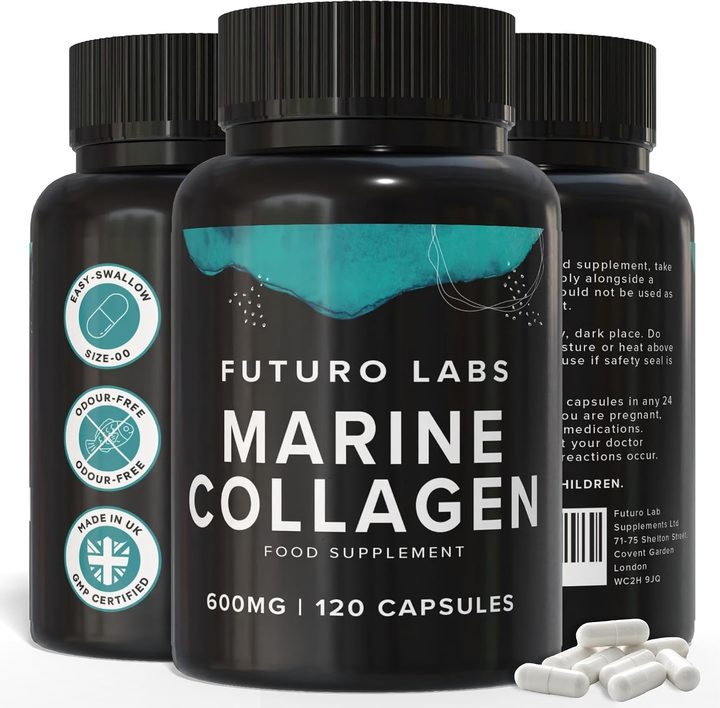
Our brand: the worked example on this page
Futuro Labs Marine Collagen
- 28p a day
- 120 capsules, 2 capsules daily
- Lab tested
- Made in the UK
The adjunct at habit scale, on its true terms: Futuro Labs Marine Collagen on Amazon UK, 2 capsules, 1200mg hydrolysed type 1 marine collagen with 12mg vitamin C at 15% NRV plus zinc, 120 for £16.99, 28p a day, lab tested and UK made, below the 15g protocol dose and carrying vitamin C's collagen formation sentence rather than a tendon claim. Full label breakdown. The stages are walked on the collagen and tendon healing page; the ligament version on the speed up ligament healing page; the antibiotic warning on the causes of tendonitis page.
Why there is no accelerator, and the brakes that are on
How can I speed up tendon healing is asked by every lifter with a sore patellar tendon and every runner with a thick Achilles, and the honest answer has to begin by removing the accelerator from the picture, because a tendon heals on a clock that nothing swallowed, injected or applied has been shown to shorten. The clock runs through three stages: inflammatory days in which damaged tissue is cleared and repair cells recruited, proliferative weeks in which fibroblasts lay down a disorganised scar of mostly type III collagen, and remodelling months to over a year in which type I collagen replaces type III, fibres align to load and the tissue regains most but not all of its original strength. Tendon is slow because it is designed to be: dense, aligned collagen with few cells and a sparse blood supply is what gives a tendon its tensile strength, and the same features give it a low metabolic rate and a long repair time, a trade that cannot be renegotiated by a supplement. What a reader can do is notice that a tendon often heals slower than its own clock because something is holding it back, and that the brakes, unlike the clock, are within reach. The first and most common brake is rest in place of loading: complete rest or immobilisation after the first few days produces weaker, more disorganised healing tissue than early controlled loading, because tendon cells raise collagen synthesis in response to strain and lower it when unloaded, so the instinct to rest a sore tendon until it stops hurting is the brake most readers are pressing hardest. The second is smoking, which impairs blood flow and oxygen delivery and slows repair across tendon, ligament and bone, among the best documented of all modifiable brakes. The third is corticosteroid injection into or around the tendon, which relieves pain for a period and weakens the tendon, with an association with rupture that is why clinicians have moved away from it for most tendinopathies. The fourth is the fluoroquinolone class of antibiotics, which carries a regulator's tendon warning, with the Achilles the usual site and risk higher in older adults and with concurrent steroids, so a reader prescribed one with an active tendon problem mentions the tendon to the prescriber. The remaining brakes are systemic: poorly controlled blood sugar slows connective tissue repair, sleep debt lowers the hormonal environment repair runs in, and an under-fed body in a hard deficit has less protein and energy to build with, so a reader dieting hard through a tendon injury has a brake on they may not have noticed.
Releasing the brakes, pressing the only accelerator, and adding the adjunct
Releasing the brakes is the speeding up a reader can actually do, and it is a list to work through rather than a product to buy. Stop smoking, or at least do not start a tendon rehab while continuing. Decline a steroid injection unless a specialist has a specific reason for it and has explained the trade. Mention an active tendon problem to any prescriber considering a fluoroquinolone. Eat enough, with complete protein at around 1.6 to 2.2g per kilogram and no aggressive deficit while the tendon heals, and sleep. And stop resting: with a physiotherapist's assessment in hand, replace rest with a progressive loading programme, which is the only thing in the whole picture that resembles an accelerator, not because it shortens the stages but because it is the signal that drives the remodelling stage to produce aligned type I collagen rather than disorganised scar, and because a tendon that is loaded heals towards strength while a tendon that is rested heals towards weakness. The programme typically begins with heavy isometric holds, five holds of around forty-five seconds at roughly seventy percent of maximum in the patellar tendon research, which reduce tendon pain for around forty-five minutes afterwards and let the heavier work begin, then progresses through slow heavy resistance and eccentric loading to the energy-storage work the tendon will be asked to do in sport, with a criteria-based return rather than a calendar one. The adjunct, if a reader wants it, is collagen with vitamin C taken about an hour before the loading session: 15g of gelatin or hydrolysed collagen with vitamin C doubled a blood marker of collagen synthesis in the Baar trial when timed to a loading bout, and 2.5g a day of collagen peptides beside a six-month calf-strengthening programme improved Achilles function and return to running against placebo in one small manufacturer-funded trial, so the adjunct has a marker trial and one small outcome trial, both beside loading and neither in a rested tendon, which is why it is listed after the brakes and the programme rather than before them. No tendon claim is authorised for collagen in the UK and the honest tub does not print one. The worked example is a habit dose and is stated as such: two capsules, 1200mg hydrolysed type 1 marine collagen with 12mg vitamin C plus zinc, 120 for £16.99 at 28p a day, lab tested and UK made, below the 15g protocol dose, with vitamin C's contribution to normal collagen formation for the normal function of cartilage and bones as its lawful sentence. How can I speed up tendon healing: you cannot, but you can stop slowing it, load it properly, and take the adjunct beside the session if you want the small evidence it has.
| The item | Brake or accelerator | What it does to healing | What to do |
|---|---|---|---|
| The three stages | Neither | Inflammatory days, proliferative weeks, remodelling months; nothing shortens them | Accept the clock |
| Rest or immobilisation after the first days | Brake | Weaker, more disorganised healing tissue than early controlled loading | Replace with a loading programme |
| Smoking | Brake | Impaired blood flow and oxygen; slower connective tissue repair | Stop |
| Corticosteroid injection into the tendon | Brake | Short pain relief; weakened tendon; rupture association | Decline unless a specialist has a specific reason |
| Fluoroquinolone antibiotics | Brake | Regulator's tendon warning; Achilles most often | Tell the prescriber about the tendon |
| Poor blood sugar, sleep debt, under-eating | Brakes | Slower repair; less to build with | Eat enough complete protein, sleep, no hard deficit |
| Progressive loading with early isometrics | The accelerator | Drives aligned type I collagen; isometrics cut pain for about forty-five minutes | A physiotherapist's programme, criteria-based return |
| Collagen with vitamin C an hour before loadingOurs | Adjunct | A marker trial at 15g; one small Achilles outcome trial at 2.5g; beside loading only | Optional; the worked example's 1200mg capsule sits below the protocol dose |
What to check on the label
- Accept that nothing shortens the stages: tendon is slow by design.
- Release the brakes: smoking, steroid injection, fluoroquinolones, under-eating.
- Replace rest with loading: the only accelerator.
- Use isometric holds for pain early: forty-five seconds, five times.
- Add the adjunct beside the session if wanted: collagen with vitamin C an hour before.
Our brand
The worked example: Futuro Labs Marine Collagen
Futuro Labs Marine Collagen: 2 capsules daily, 1200mg hydrolysed type 1 marine collagen with 12mg vitamin C and 1.5mg zinc (15% NRV each), 120 capsules for £16.99, 60 days at 28p a day, lab-tested, UK GMP made. Slim veggie-shell capsules, odour free. Fish derived: pescatarian, not vegetarian or vegan.
- Collagen per serving
- 1200mg hydrolysed type 1 marine (fish)
- Co-factors
- vitamin C 12mg (15% NRV), zinc 1.5mg (15% NRV)
- Serving
- 2 capsules a day
- Bottle
- 120 capsules, 60 days
- Price
- £16.99 (28p a day)
- Capsule
- slim size 00, veggie shell, odour free
Questions people also ask
How do you speed up tendon healing?
By removing what slows it rather than adding what speeds it, since nothing shortens the healing stages: stop smoking, avoid steroid injection into the tendon, flag the tendon to anyone prescribing a fluoroquinolone, eat and sleep enough, and replace rest with a physiotherapist's progressive loading programme, which drives the remodelling stage towards aligned type I collagen.
Should I rest a sore tendon completely?
Beyond the first few days, no: prolonged rest or immobilisation produces weaker, more disorganised healing tissue than early controlled loading, because tendon cells build in response to strain, so the assessment is a physiotherapist's and the treatment is a loading programme with pain kept at a tolerable level, not rest until it stops hurting.
Do steroid injections help tendons heal?
They relieve pain for a period and weaken the tendon, with an association with rupture, which is why clinicians have moved away from them for most tendinopathies; a specialist may still use one for a specific reason and will explain the trade, and it is listed here as a brake on healing rather than an aid.
Does collagen speed up tendon healing?
It does not shorten the stages. Taken with vitamin C about an hour before a loading session, 15g doubled a collagen synthesis marker in one trial and 2.5g a day beside six months of calf strengthening improved Achilles function and return to running in one small outcome trial, so it is an adjunct beside loading with small evidence, and nothing in a rested tendon.
Which antibiotics affect tendons?
The fluoroquinolone class carries a regulator's warning for tendinopathy and tendon rupture, most often at the Achilles, with risk higher in older adults and alongside corticosteroids; a reader with an active tendon problem mentions it to the prescriber, who may choose an alternative where one is suitable.
Sources
- The impaired tendon healing literature: corticosteroid injection into or around a tendon weakens it and is associated with rupture, fluoroquinolone antibiotics carry a tendon warning, smoking and poorly controlled diabetes slow connective tissue repair, prolonged immobilisation produces weaker and more disorganised healing tissue than early controlled loading, and non-steroidal anti-inflammatory drugs show mixed effects on tendon-to-bone healing in experimental work, the recognised brakes a clinician removes rather than accelerators a patient can add. PubMed record
- The tendon healing literature: after acute injury or surgical repair a tendon heals through an inflammatory stage of days, a proliferative stage of weeks in which fibroblasts lay down disorganised, mostly type III collagen with high cellularity and water, and a remodelling stage of months to over a year in which type I collagen replaces type III, fibres align to load and the tissue approaches but does not fully regain its original strength, with early controlled loading improving the outcome over immobilisation. PubMed record
- The isometric loading and tendon pain literature: in patellar tendinopathy, five heavy isometric holds of around forty-five seconds at roughly seventy percent of maximum reduced tendon pain immediately and for around forty-five minutes afterwards, more than an isotonic protocol, so isometric holds are used early in tendon rehabilitation for pain relief while the progressive programme is built, a within-session effect and not a cure. PubMed record
- The Achilles tendinopathy collagen trial: a small randomised placebo-controlled trial giving 2.5 grams a day of specific collagen peptides alongside a calf-strengthening programme for six months reported greater improvement in a tendon function and pain score and earlier return to running than the exercise programme with placebo, around twenty participants, manufacturer-funded, the one collagen tendon trial with a clinical outcome, in tendinopathy alongside loading and not in rupture repair. PubMed record