Ghost Fitness/Collagen/How much collagen should I take for tendon repair?
How much collagen should I take for tendon repair?
The short answer
A dose per session, not per day: around 15g of gelatin or hydrolysed collagen, a level scoop, with roughly 50mg of vitamin C about an hour before each loading or rehabilitation session, on the days the tendon is loaded, for the months a tendon takes to remodel, as an adjunct inside a physiotherapist's programme whose load does the repairing, with daily energy and protein underneath it and no claim for collagen.
- The dosearound 15g of gelatin or hydrolysed collagen, a level scoop, with roughly 50mg of vitamin C
- The timingabout an hour before each loading or rehabilitation session
- The calendaron the days the tendon is loaded, for the months a tendon takes to remodel
- Underneathadequate energy and protein through the injury; the daily vitamin C reference value; the load does the repairing; no claim
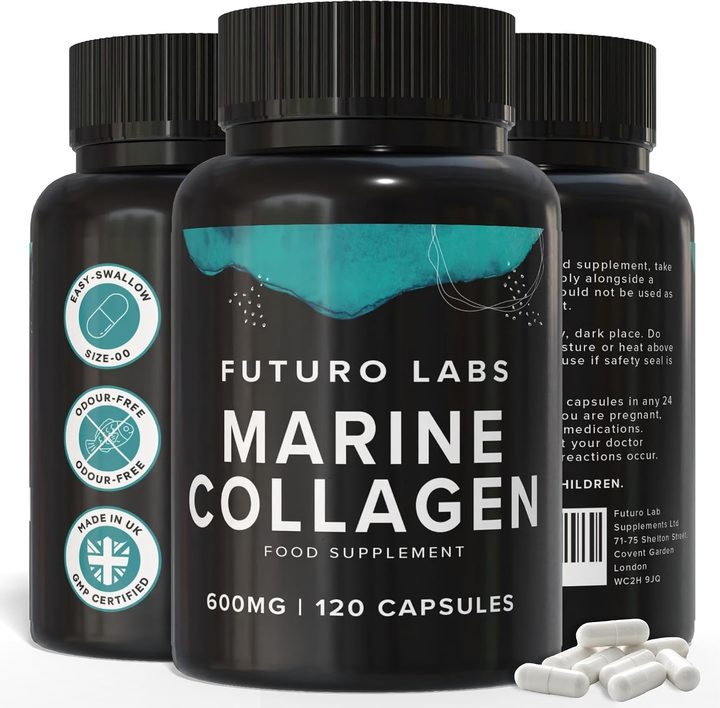
Our brand: the worked example on this page
Futuro Labs Marine Collagen
- 28p a day
- 120 capsules, 2 capsules daily
- Lab tested
- Made in the UK
A daily vitamin C line for the days in between, with the collagen dose stated plainly as below the protocol's 15g: Futuro Labs Marine Collagen on Amazon UK, 2 capsules, 1200mg hydrolysed type 1 marine collagen with 12mg vitamin C at 15% NRV plus zinc, 120 for £16.99, 28p a day. Full label breakdown. Whether the pairing is good for tendons is on the tendons page; how much for joint repair on the joint repair dose page.
The dose per session, and why the repair dose is written on a calendar rather than a clock
How much collagen should I take for tendon repair, and how much daily, is a question that assumes a daily pill, and the honest page rewrites it as a dose per session, because the only research behind tendon repair is timed to a session and a tendon repairs on a calendar of months. The dose: around 15g of gelatin or hydrolysed collagen, a level scoop of powder, with roughly 50mg of vitamin C, a small tablet or a glass of orange juice, taken about an hour before a session that loads the tendon, the gelatin and vitamin C literature's protocol, from small, short studies that measured markers of collagen synthesis in the blood and found them raised, which is a marker result and not a healing result, the tendons page's distinction, so the dose is a research adjunct and not a treatment, with no authorised claim for collagen in the UK. Why a calendar rather than a clock: the protocol's logic is that a loading session raises collagen synthesis in the loaded tendon and the substrate and cofactor should be in the blood when it does, peptides peaking around the hour after a dose, so the dose belongs to the session and not to the day, taken on the days the tendon is loaded, in a rehabilitation programme three or four times a week, and not needed on the rest days when no stimulus is being applied, and it belongs to every loaded day for the months a tendon takes to remodel, tendon collagen turning over slowly and rehabilitation running for months rather than weeks, the connective tissue adaptation literature's timescale. A reader who takes 15g every day regardless of loading has spent more than the protocol needs, and a reader who takes it once and rests has spent it on a day with no stimulus.
What does the repairing, what sits underneath the protocol every day, the reader in between sessions, and the calendar filed
What does the repairing is the load, and the protocol is an assistant to it. Chronic tendon pain shows a degenerative, failed-healing picture on histology rather than a classic inflammatory one, the tendinosis literature's reframing, and the treatment that repairs it is progressive loading, slow heavy isometrics that settle the pain and then heavy slow eccentrics and concentrics that rebuild the capacity, guided by a physiotherapist and adjusted by the pain response, outperforming rest, passive treatments and injections in the trials, the tendinopathy literature's programme and the Achilles literature's eccentric tradition, so the sessions on the calendar are the treatment and the collagen an hour before them is the adjunct, with a reader who takes the collagen and skips the loading having taken the assistant and left the worker at home. What sits underneath the protocol every day, on loaded days and rest days alike, is what a repairing tendon needs regardless: adequate energy and protein through the injury, since an injured athlete who restricts to avoid weight gain works against the repair, the injured-athlete nutrition literature's guard rail, with protein at around 1.6 grams per kilogram from complete sources and no cut run through a rehabilitation; and the daily vitamin C reference value of 80mg from fruit, vegetables or a tablet, since the cofactor for collagen cross-linking is a daily-intake matter and not a pre-session one, the scurvy literature's lesson, with the register's sentence being that vitamin C contributes to normal collagen formation for the normal function of cartilage and bones. The reader in between sessions, then, has a daily layer and a session layer: the daily layer of food, protein and vitamin C every day, which a capsule with vitamin C built in covers for the vitamin C line beside a modest collagen dose stated as below the protocol's 15g, and the session layer of a level scoop with vitamin C an hour before each loaded session, from a powder, for the months of the programme. The calendar filed: around 15g with roughly 50mg of vitamin C an hour before each loading session as the dose, loaded days for months as the calendar, progressive loading as the repair, energy, protein and daily vitamin C underneath, and the protocol as an adjunct with no claim inside a physiotherapist's programme, with the worked example being a daily vitamin C line for the days in between, £16.99 for 120 at 28p a day.
| The layer | What | When |
|---|---|---|
| The session dose | Around 15g of gelatin or hydrolysed collagen, a level scoop, with roughly 50mg of vitamin C | About an hour before each loading or rehabilitation session |
| The calendar | Loaded days only, three or four a week in a programme | For the months a tendon takes to remodel |
| The repair itself | Progressive loading: isometrics, then heavy slow eccentrics and concentrics | Every session, guided by a physiotherapist |
| The daily layer | Adequate energy and protein through the injury; the 80mg vitamin C reference value | Every day, loaded or not |
| What the research measured | Collagen synthesis markers, raised, in small short studies | A marker, not a healing result; no claim |
| The capsule on its true termsOurs | 1200mg type 1 with 12mg vitamin C, below the protocol's 15g | The daily vitamin C line for the days in between |
The verdict, a level scoop with vitamin C an hour before each loaded session for the months of a programme, and load that does the repairing
How much collagen should I take for tendon repair: a dose per session rather than per day, around 15g of gelatin or hydrolysed collagen, a level scoop, with roughly 50mg of vitamin C about an hour before each loading or rehabilitation session, taken on the days the tendon is loaded for the months a tendon takes to remodel, as a research adjunct from small marker-based studies with no authorised claim for collagen, inside a physiotherapist's progressive loading programme whose load does the repairing, with adequate energy and protein through the injury and the daily vitamin C reference value sitting underneath it every day, loaded or not. A daily vitamin C line for the days in between, with the collagen dose stated plainly as below the protocol's 15g: Futuro Labs Marine Collagen, 1200mg type 1 with 12mg vitamin C, 120 for £16.99 at 28p a day.
What to check on the label
- Dose per session: a level scoop with vitamin C an hour before loading.
- Follow the calendar: loaded days only, for months.
- Let the load repair: isometrics, then heavy slow loading, with a physiotherapist.
- Keep the daily layer: energy, protein and the vitamin C reference value every day.
- Read the research as a marker: an adjunct, no claim.
Our brand
The worked example: Futuro Labs Marine Collagen
Futuro Labs Marine Collagen: 2 capsules daily, 1200mg hydrolysed type 1 marine collagen with 12mg vitamin C and 1.5mg zinc (15% NRV each), 120 capsules for £16.99, 60 days at 28p a day, lab-tested, UK GMP made. Slim veggie-shell capsules, odour free. Fish derived: pescatarian, not vegetarian or vegan.
- Collagen per serving
- 1200mg hydrolysed type 1 marine (fish)
- Co-factors
- vitamin C 12mg (15% NRV), zinc 1.5mg (15% NRV)
- Serving
- 2 capsules a day
- Bottle
- 120 capsules, 60 days
- Price
- £16.99 (28p a day)
- Capsule
- slim size 00, veggie shell, odour free
Questions people also ask
How much collagen per day for tendon repair?
It is better counted per session: around 15g of gelatin or hydrolysed collagen with roughly 50mg of vitamin C about an hour before each loading or rehabilitation session, on the days the tendon is loaded, for the months of the programme, since the research timed the dose to the session and a rest day has no stimulus for it to assist.
How long should I take collagen for a tendon injury?
For the months of the rehabilitation programme: tendon collagen turns over slowly and progressive loading rebuilds a tendon over months rather than weeks, so the pre-session dose runs alongside the loaded sessions for as long as the physiotherapist's programme does, with the daily energy, protein and vitamin C layer continuing throughout.
Does collagen actually repair tendons?
The load repairs them and the collagen may assist: progressive loading outperforms rest, passive treatments and injections in the tendinopathy trials, while the collagen and vitamin C pre-loading studies measured raised collagen synthesis markers rather than healing, so the dose is a research adjunct inside a loading programme with no authorised claim.
Should I take collagen on rest days during tendon rehab?
The protocol dose is not needed on a day with no loading stimulus, since it is timed to the session, but the daily layer is, adequate energy and protein through the injury and the 80mg vitamin C reference value, which a capsule with vitamin C built in covers for the vitamin C line beside a modest collagen dose.
What else does a healing tendon need besides collagen?
The things that do most of the work: a progressive loading programme guided by a physiotherapist, time measured in months, adequate energy and protein through the injury rather than a cut, the daily vitamin C that the cofactor for collagen cross-linking requires, and patience with a tissue that remodels more slowly than muscle.
Sources
- The gelatin and vitamin C pre-exercise research (Shaw, Baar and colleagues): 15g gelatin with vitamin C taken about an hour before loading, studied for markers of collagen synthesis, the protocol behind the tendon-training conversation. PubMed record
- The Achilles loading-rehabilitation literature: progressive tendon-loading programmes, the eccentric heel-drop tradition among them, form the established core of Achilles tendinopathy care. PubMed record
- Review literature on nutrition for injured athletes: maintaining energy availability and protein intake through an injury supports the rehabilitation period, while severe restriction works against it. PubMed record
- The tendinopathy literature: histology of chronic tendon pain shows a degenerative, failed-healing picture rather than a classic inflammatory one, reframing the old tendonitis label and its treatment logic. PubMed record