Ghost Fitness/Collagen/How much collagen for joint repair?
How much collagen for joint repair?
The short answer
No dose repairs a joint: cartilage barely self-repairs, having no blood supply, and no product holds a repair claim. What adapts is tendon and bone under progressive loading, where the 15g protocol rides as a stop-two adjunct.
- The verb's problemrepair means regeneration: nothing sold does that anywhere
- The biologyarticular cartilage is avascular: famously poor self-repair
- What does adapttendon and bone respond to progressive loading over months
- The honest adjunctthe 15g-with-C protocol: stop-two, beside the loading
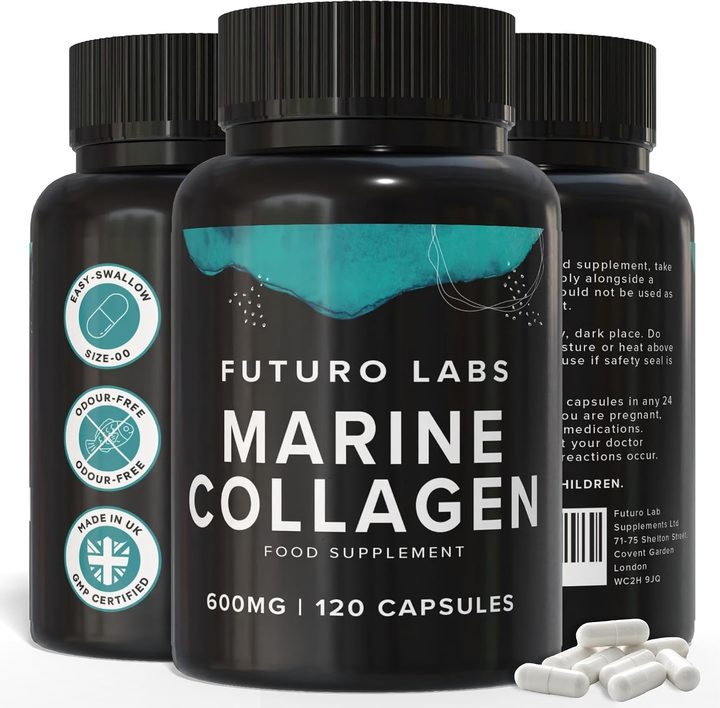
Our brand: the worked example on this page
Futuro Labs Marine Collagen
- 28p a day
- 120 capsules, 2 capsules daily
- Lab tested
- Made in the UK
The lawful line beside a loading programme: Futuro Labs Marine Collagen on Amazon UK, 1200mg hydrolysed type 1 with vitamin C at 15% NRV holding the cartilage-function maintenance sentence, £16.99 for 60 days at 28p. Full label breakdown. The knee sort is on the knee page; the two-tissue prescription on the tendons-and-joints page.
The verb audited against the tissue, and why cartilage is the aisle's worst battlefield
Repair is the strongest verb the joint aisle uses and the joint surface is the worst place in the body to promise it, so teach the biology before quoting any milligram. Articular cartilage, the smooth bearing surface this query is really asking about, is avascular: it has no blood supply of its own, drawing nutrition slowly by diffusion from joint fluid, and it is sparsely populated, chondrocytes scattered through a dense matrix they can maintain but barely rebuild, which is why cartilage is famous across all of medicine for poor intrinsic repair, why a meniscus tear or a worn surface does not heal the way a cut on your arm does, and why regenerating cartilage remains a frontier for surgical and cell-based research rather than something any swallowed product has ever demonstrated. Set the register beside that biology and the two agree completely: no collagen product holds a repair, regeneration or restoration claim for joints at any dose, from any source, of any type, the lawful vocabulary in the whole territory being maintenance grammar, vitamin C contributing to normal collagen formation for the normal function of cartilage, manganese holding normal connective-tissue formation, both threshold sentences about supporting ordinary upkeep, never verbs about rebuilding what wear removed, so the dose question as asked has a one-word answer, none, and a product sold on joint repair has priced a verb that neither the biology nor the law will underwrite.
What genuinely adapts, where the protocol honestly rides, and the plan the verb was reaching for
The honest hope inside this query deserves its real answer, because tissue around a joint is not all cartilage and not all hopeless: tendon and bone are vascularised, living, load-responsive tissues that genuinely adapt, tendons stiffening and thickening under progressive loading programmes over months, bone remodelling under impact and resistance work on the same patient timescale, which is why every rehabilitation pathway this site routes to is built on graded loading rather than shopping, the adaptation being real, slow, earned and professionally programmable. That is also where collagen's one adjacent lane honestly rides: the pre-loading protocol, roughly 15g of gelatine or hydrolysed collagen with vitamin C about an hour before tendon-loading sessions, graded here as everywhere, stop-two research, synthesis markers moved in blood and bench models, patient outcomes unproven, an optional adjunct inside a physio-framed programme, never a repair purchase, and specifically a tendon lane, the avascular surface this page opened with remaining outside its evidence entirely. The plan the repair verb was reaching for, assembled without it: sort the joint's story as the knee page teaches, tendon patterns to loading programmes, joint-surface patterns to the first-line trio, exercise little and often, weight management, education, with professional review naming what is actually going on; hold the triage lines, swelling, locking, instability and night pain seeing a GP or physio before any aisle; fund the claims tier's pennies if the cupboard wants covering, C, manganese and vitamin D at their thresholds; run the protocol only inside its honest tendon context; and let the repair budget buy the one thing with evidence at the joint, the programme, supervised, progressive and measured in months, which no milligram ever was.
| The tissue | The biology | The honest intervention |
|---|---|---|
| Articular cartilage | Avascular, sparse cells: poor self-repair | The first-line trio and professional review |
| Tendon | Vascularised, load-responsive: adapts over months | Progressive loading; the protocol as stop-two adjunct |
| Bone | Remodels under impact and resistance | Training, calcium, vitamin D per guidance |
| The register | No repair claim exists at any dose | Maintenance grammar only: C and manganese |
| The triage lines | Swelling, locking, instability, night pain | GP or physio before any shelf |
| The budget | Programmes carry the evidence | Supervised loading beats every milligram |
The verdict, delivered at the joint surface
How much collagen for joint repair: none, because repair is a verb the joint surface cannot honour and the register does not license, cartilage's avascular biology making it medicine's famous poor healer and no product holding a repair claim at any dose, while the tissues that genuinely adapt, tendon and bone, answer to progressive loading over months, with the 15g-with-C protocol riding beside tendon work as its honest stop-two adjunct. The worked example holds the territory's one lawful line: Futuro Labs Marine Collagen, 1200mg hydrolysed type 1 with 12mg vitamin C at 15% NRV speaking the cartilage-function maintenance sentence, 1.5mg zinc alongside, lab tested, UK made, £16.99 for 60 days at 28p a day, priced for upkeep grammar and never for the verb this page just returned to the biology that owns it.
What to check on the label
- Repair means regeneration: nothing swallowed has ever shown it.
- Cartilage is avascular: medicine's famous poor self-healer.
- Tendon and bone adapt: progressive loading, measured in months.
- The protocol is a tendon adjunct: stop-two, inside a programme.
- Triage before shopping: swelling, locking and night pain see a professional.
Our brand
The worked example: Futuro Labs Marine Collagen
Futuro Labs Marine Collagen: 2 capsules daily, 1200mg hydrolysed type 1 marine collagen with 12mg vitamin C and 1.5mg zinc (15% NRV each), 120 capsules for £16.99, 60 days at 28p a day, lab-tested, UK GMP made. Slim veggie-shell capsules, odour free. Fish derived: pescatarian, not vegetarian or vegan.
- Collagen per serving
- 1200mg hydrolysed type 1 marine (fish)
- Co-factors
- vitamin C 12mg (15% NRV), zinc 1.5mg (15% NRV)
- Serving
- 2 capsules a day
- Bottle
- 120 capsules, 60 days
- Price
- £16.99 (28p a day)
- Capsule
- slim size 00, veggie shell, odour free
Questions people also ask
Can any collagen dose rebuild joint cartilage?
No: articular cartilage is avascular with famously poor self-repair, no swallowed product has demonstrated regeneration, and no repair claim exists at any dose or type.
Why do tendons respond when cartilage doesn't?
Blood supply and biology: tendon is vascularised and load-responsive, adapting to progressive programmes over months, while the joint surface relies on slow diffusion and sparse cells.
Where does the 15g protocol fit into joint problems?
Only the tendon lane: roughly 15g with vitamin C an hour before physio-framed loading sessions, a stop-two adjunct beside the programme that does the demonstrated work.
What supplements are lawful to keep for joints at all?
The maintenance tier: vitamin C and manganese carrying the cartilage and connective-tissue formation sentences at threshold, vitamin D per UK guidance, pennies each and mostly diet-met.
What actually helps a worn joint surface?
The first-line trio with professional review: exercise little and often, weight management where it applies, education and paced activity, with surgical pathways belonging to the clinic, not the aisle.
Sources
- The cartilage biology literature: articular cartilage is avascular with sparse chondrocytes, giving it famously poor intrinsic repair capacity compared with vascularised tissues like bone and tendon. PubMed record
- The gelatin and vitamin C pre-exercise research (Shaw, Baar and colleagues): 15g gelatin with vitamin C taken about an hour before loading, studied for markers of collagen synthesis, the protocol behind the tendon-training conversation. PubMed record
- Futuro Labs Marine Collagen listing and label: 1200mg hydrolysed type 1 marine collagen per 2-capsule serving with 12mg vitamin C and 1.5mg zinc at 15% NRV each, 120 capsules, independently lab tested, UK made. https://www.amazon.co.uk/dp/B0C2J7N364
- EFSA Panel on Dietetic Products, Nutrition and Allergies. Scientific Opinion on the substantiation of health claims related to magnesium. EFSA Journal 2010;8(10):1807. https://efsa.onlinelibrary.wiley.com/doi/10.2903/j.efsa.2010.1807