Ghost Fitness/Collagen/How much collagen should a 50 year old woman take?
How much collagen should a 50 year old woman take?
The short answer
The collagen dose never ages: the same three lanes serve 50, 60 or 25. The number that does change is the daily protein target, which rises for older adults, and collagen still contributes nothing toward it.
- The unaged lanes1-2g habit, 2.5-10g trial band, 15g protocol: identical at any age
- The number that risesthe daily protein target: higher for older adults than the baseline
- The counting rule, unchangedcollagen's grams never join that rising target
- The age-relevant programmeresistance training, protein, calcium, vitamin D: the bone-and-muscle work
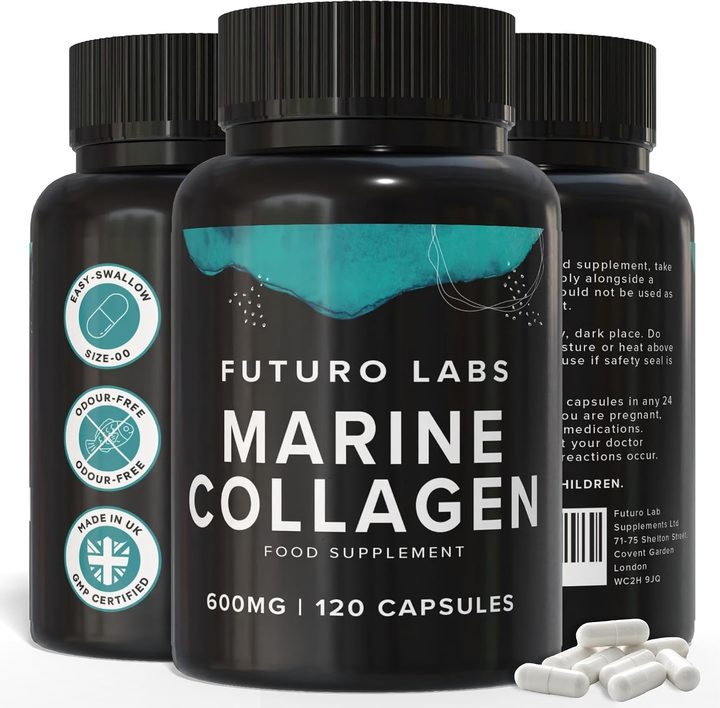
Our brand: the worked example on this page
Futuro Labs Marine Collagen
- 28p a day
- 120 capsules, 2 capsules daily
- Lab tested
- Made in the UK
The habit lane at any birthday: Futuro Labs Marine Collagen on Amazon UK, 1200mg hydrolysed type 1 with vitamin C and zinc at 15% NRV, £16.99 for 60 days at 28p. Full label breakdown. The unsexed table is on the woman's dose page; the lane flowchart on the how-much page.
The lanes restated once, unaged, and the number in this territory that genuinely moves
The collagen half of this question answers exactly as it did for the unsexed table, because no dose in this category is aged any more than it is sexed: the cofactor habit runs 1-to-2g daily with vitamin C and zinc at 15% NRV doing the lawful work, the skin-trial band runs 2.5-to-10g for deliberate participants, its evidence base already built largely on women in this reader's age range, and the protocol runs roughly 15g with C before loading sessions for the training reader, no study, claim or label anywhere adjusting a single gram for a fiftieth or sixtieth birthday, the 60-year-old variant answering identically. What makes this page worth its slug is the number in the territory that genuinely does move with age, and it is not on the collagen tub: the daily protein target rises, the ageing-muscle literature converging on higher intakes for older adults than the general baseline, commonly 1.0-to-1.2g per kilogram and more with training, because ageing muscle grows anabolic-resistant, responding less to each feeding and needing more complete protein per day and per meal to hold and build tissue, the sarcopenia file's central practical finding, and the twist this site's readers will see coming lands unchanged at any age, collagen's grams still contribute nothing toward that rising target, the missing tryptophan and third-strength leucine disqualifying them at 50 exactly as at 25, so the woman doing this arithmetic counts her meat, dairy, eggs, soy and complete scoops toward the higher number and lets the collagen ride outside it.
The programme the birthday actually changes, the gates, and the honest shopping answer assembled
What a 50th or 60th birthday genuinely changes is the programme around the tub, and it deserves the page's second half. The bone file: from the menopause transition, declining oestrogen accelerates bone loss, and the levers with evidence are the ones the bone pages map, resistance and impact training, dietary calcium, vitamin D per UK guidance through the winter months, and the raised complete-protein intake above, collagen's only lawful part in that programme being vitamin C's collagen-formation sentence for normal bones, riding at 15% NRV. The muscle file: the same resistance training doing double duty, the anabolic-resistance finding making progressive strength work the single most valuable prescription in this territory, two-to-three sessions weekly, with protein distributed across meals rather than crowded into one. The gates, more likely relevant at this age and stated plainly: any medication means the pharmacist-first line from the interactions page, the passenger audit run on whatever blend is in hand; and new joint pain, unexplained symptoms or the checklist territory of the deficiency-decode page route to the GP, not the aisle. The honest shopping answer assembled for the reader who came for one: keep or start the habit at 1-to-2g if the cofactor sentences appeal, two capsules at 28p covering it; consider the trial band's 2.5g-plus powder only with instrument-shaped expectations; spend the real money and attention on the complete protein and the training the birthday actually raised; and let the tub's number stay exactly where it was at 25, because it never had an age dial, only the programme around it did.
| The item | At 50 or 60 | The note |
|---|---|---|
| The collagen lanes | Unchanged: 1-2g, 2.5-10g, 15g | No dose anywhere carries an age dial |
| The daily protein target | Rises: ~1.0-1.2g/kg and more with training | Anabolic resistance: the number that moves |
| Collagen's counting rule | Still zero toward that target | Missing tryptophan disqualifies at any age |
| The bone programme | Training, calcium, vitamin D, protein | C's bone sentence rides at 15% NRV |
| The muscle prescription | Progressive resistance, 2-3 sessions weekly | The territory's most valuable line |
| The gates | Medication and new symptoms | Pharmacist and GP, more relevant than ever |
The verdict, unchanged on one tub and raised on the plate
How much collagen should a 50-year-old woman take, or a 60-year-old: the same as anyone, 1-to-2g for the cofactor habit, 2.5-to-10g for deliberate trial-band participation, 15g with C for the protocol, no gram anywhere carrying an age dial, while the number that genuinely rises with the birthday sits on the plate, the daily complete-protein target climbing for older adults against anabolic resistance, with collagen still contributing nothing toward it and the real programme being training, calcium, vitamin D and distributed protein. The worked example serves the unaged lane as ever: Futuro Labs Marine Collagen, 1200mg hydrolysed type 1 with 12mg vitamin C and 1.5mg zinc at 15% NRV, lab tested, UK made, £16.99 for 60 days at 28p a day, the same two capsules at 50 as at 25, beside a plate that the birthday genuinely changed.
What to check on the label
- No collagen dose ages: the three lanes serve any birthday.
- The protein target rises instead: older muscle needs more, distributed.
- Collagen still counts for none of it: the rule survives every decade.
- The programme is the change: training, calcium, vitamin D.
- The gates matter more now: pharmacist on medication, GP on new symptoms.
Our brand
The worked example: Futuro Labs Marine Collagen
Futuro Labs Marine Collagen: 2 capsules daily, 1200mg hydrolysed type 1 marine collagen with 12mg vitamin C and 1.5mg zinc (15% NRV each), 120 capsules for £16.99, 60 days at 28p a day, lab-tested, UK GMP made. Slim veggie-shell capsules, odour free. Fish derived: pescatarian, not vegetarian or vegan.
- Collagen per serving
- 1200mg hydrolysed type 1 marine (fish)
- Co-factors
- vitamin C 12mg (15% NRV), zinc 1.5mg (15% NRV)
- Serving
- 2 capsules a day
- Bottle
- 120 capsules, 60 days
- Price
- £16.99 (28p a day)
- Capsule
- slim size 00, veggie shell, odour free
Questions people also ask
What is the right collagen dose for a woman over 50?
The same lanes as any adult: 1 to 2g for the cofactor habit, 2.5 to 10g for the skin-trial band, roughly 15g with vitamin C for the protocol. No dose anywhere carries an age dial.
Should a 60-year-old woman take more collagen than a 50-year-old?
No: the variant answers identically, the number that rises with age being the daily complete-protein target, not anything on the collagen tub.
Why does protein need increase after 50?
Anabolic resistance: ageing muscle responds less to each feeding, so older adults hold and build tissue better at roughly 1.0 to 1.2g per kilogram and more with training, distributed across meals.
Does collagen help with menopause bone loss?
Its lawful part is small: vitamin C's collagen-formation sentence for normal bones at 15% NRV, while the evidenced levers are resistance training, calcium, vitamin D and the raised protein intake.
What matters most in this territory besides diet?
Progressive resistance training, two to three sessions weekly: the single most valuable prescription against sarcopenia and bone loss, with medication and new symptoms routed to pharmacist and GP.
Sources
- Review literature on protein intake and muscle mass in older adults: higher protein intakes support the maintenance of muscle in ageing, the evidence base behind the register's protein and muscle-mass claims mattering more with age. PubMed record
- The menopause and bone literature: the decline in oestrogen around menopause accelerates bone loss in the following years, the reason bone health guidance sharpens for post-menopausal women. PubMed record
- Futuro Labs Marine Collagen listing and label: 1200mg hydrolysed type 1 marine collagen per 2-capsule serving with 12mg vitamin C and 1.5mg zinc at 15% NRV each, 120 capsules, independently lab tested, UK made. https://www.amazon.co.uk/dp/B0C2J7N364
- EFSA Panel on Dietetic Products. Scientific opinion on Dietary Reference Values for fats: Adequate Intake of 250mg combined EPA and DHA per day for adults. EFSA Journal 2010;8(3):1461. https://www.efsa.europa.eu/en/efsajournal/pub/1461