Ghost Fitness/Collagen/What is the best collagen for 60 year old woman UK?
What is the best collagen for 60 year old woman UK?
The short answer
The honest spec is age-blind and the marketing is not: a 60 year old woman is the collagen aisle's prime target. Her real list is the post-menopause bone programme, protein, vitamin D and loading work, with the 28p rider last.
- The prime targetbeauty, menopause and bone anxiety: the aisle's triple pitch at her
- The bone realityoestrogen decline accelerates bone loss in the post-menopause years
- Her real programmeD, dietary calcium, protein, loading and balance work
- The riderthe same 28p claim-free label as for everyone, bought last
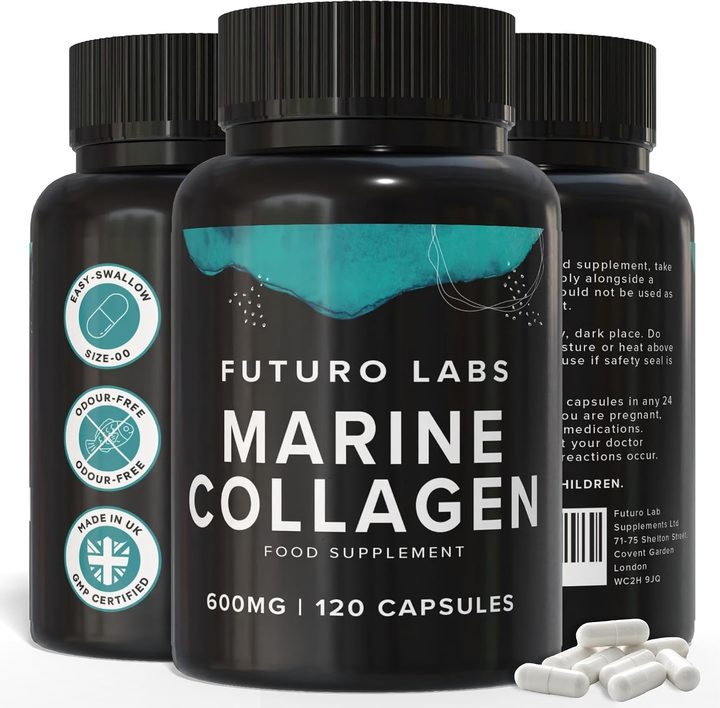
Our brand: the worked example on this page
Futuro Labs Marine Collagen
- 28p a day
- 120 capsules, 2 capsules daily
- Lab tested
- Made in the UK
The rider, priced like one: Futuro Labs Marine Collagen on Amazon UK, 1200mg hydrolysed type 1 with vitamin C and zinc at 15% NRV, slim capsules, £16.99 for 60 days at 28p. Full label breakdown. The 50s worth test is on the 50s page; the over-70 gates on the women-over-70 page.
Naming the target: why this demographic gets the aisle's heaviest marketing
The most useful sentence this page can open with is the one the pouches never print: a woman around 60 is the collagen industry's prime target, the demographic its packaging, influencer rosters and ad spend are most precisely aimed at, and knowing why is half the defence. The pitch triangulates three real things about the decade and sells against each: visible skin change, real and driven by the sun-volume-time physiology the skin pages map, pitched with before-after imagery no claim supports; menopause, real and recent, pitched with hormone-adjacent wellness language despite collagen holding no menopause-related claim of any kind; and bone anxiety, the most legitimate concern of the three, pitched by association, collagen-is-in-bones, despite collagen sitting nowhere on the bone claims list. Three genuine concerns, three borrowed pitches, one demographic paying the aisle's highest prices for its prettiest pouches, and the honest reframe is not that her concerns are wrong, they are the decade's real agenda, but that the aisle answers none of them, which frees the budget for the programme that does.
Her actual list: the bone programme sharpened, and everything in its order
The list's headline is bone, because the physiology is specific to her: the decline in oestrogen around menopause accelerates bone loss in the years that follow, which is exactly why bone guidance sharpens for post-menopausal women and why her version of the standing programme carries real weight, vitamin D at the 10-microgram advice and reasonably year-round from here, dietary calcium met deliberately, dairy, fortified alternatives, greens, tinned fish with bones, protein at 1.2g-plus per kilogram holding its bone-maintenance claim as well as its muscle one, and the non-negotiable partner, loading exercise, resistance work two-plus days a week plus impact her joints tolerate, because bone answers to load the way the tendon pages' tissue answers to strain, with balance work joining as the falls arithmetic begins to matter. The conversations sit beside the programme: any fracture from a modest fall, notable height loss, a strong family history or early menopause are reasons to raise bone health assessment with her GP, a routine and useful conversation rather than an alarming one, and the pharmacist gate stands in front of every new bottle as the medicine list grows. Then the decade's remainder in order, the protein-and-strength pairing against sarcopenia, vitamin C and the connective-tissue lines cleared by an ordinary week, and, last and honestly, the rider: collagen holds no claim for her at 60 exactly as it holds none for anyone, its fair purchase being the standing spec, a stated type 1 hydrolysate at true capsule scale, vitamin C and zinc at 15% NRV, tested, slim, 28 pence, bought behind the programme and never instead of it, with the rose-gold menopause-adjacent premium shelf declined by name-of-genre: same peptides, dearer pouch, borrowed decade.
| The concern | The aisle's pitch at her | The honest answer |
|---|---|---|
| Visible skin change | Before-after imagery, no claim behind it | Sunscreen, the retinoid conversation, sleep: the skin pages' ranking |
| Menopause | Hormone-adjacent wellness language | No collagen menopause claim exists: GP for symptoms that need one |
| Bone anxiety | Collagen-is-in-bones association | The real programme: D, calcium, protein, loading, balance |
| The bone physiology | Never mentioned on a pouch | Oestrogen decline accelerates post-menopause bone loss: hence the programme |
| The assessment conversation | Absent from the aisle | Fracture, height loss, family history: raise it with the GP |
| The riderOurs | Priced at prime-target premiums | The same 28p honest label as everyone's, bought last |
The verdict, and the target audience un-targeted
What is the best collagen for a 60 year old woman in the UK: the same honest label as for anyone, because the spec is age-blind even though the marketing is anything but, and the page's real work is naming her as the aisle's prime target and handing her the programme the pitches gesture at, the post-menopause bone routine of vitamin D, dietary calcium, protein and loading work with the GP assessment conversation where her history warrants it, the strength habit against the decade's muscle slope, and the skin honesty of sunscreen over supplements. The rider, for the woman who wants it, is the standing specification: Futuro Labs Marine Collagen, 1200mg hydrolysed type 1 in slim capsules with 12mg vitamin C and 1.5mg zinc at 15% NRV, lab tested, UK made, £16.99 for 60 days at 28p a day, one label at one price for every demographic, which is precisely what makes it the un-targeted answer.
What to check on the label
- Name the targeting: beauty, menopause and bone anxiety, triangulated at her.
- The bone physiology is real: post-menopause loss accelerates, hence the programme.
- The programme is D, calcium, protein, loading: with balance work joining.
- Raise assessment where history warrants: fracture, height loss, family history.
- The rider is age-blind and last: 28p, C aboard, behind the programme.
Our brand
The worked example: Futuro Labs Marine Collagen
Futuro Labs Marine Collagen: 2 capsules daily, 1200mg hydrolysed type 1 marine collagen with 12mg vitamin C and 1.5mg zinc (15% NRV each), 120 capsules for £16.99, 60 days at 28p a day, lab-tested, UK GMP made. Slim veggie-shell capsules, odour free. Fish derived: pescatarian, not vegetarian or vegan.
- Collagen per serving
- 1200mg hydrolysed type 1 marine (fish)
- Co-factors
- vitamin C 12mg (15% NRV), zinc 1.5mg (15% NRV)
- Serving
- 2 capsules a day
- Bottle
- 120 capsules, 60 days
- Price
- £16.99 (28p a day)
- Capsule
- slim size 00, veggie shell, odour free
Questions people also ask
Is collagen especially good for women around 60?
No claim says so at any age: she is the aisle's prime marketing target, not its proven beneficiary, and her decade's real programme is bone, protein and strength work.
Why does bone health matter more after menopause?
Oestrogen decline accelerates bone loss in the following years: the reason guidance sharpens, and the reason vitamin D, dietary calcium, protein and loading exercise lead her list.
Should a 60 year old woman ask about a bone assessment?
Where history warrants: a fracture from a modest fall, notable height loss, strong family history or early menopause are all good reasons to raise it with a GP.
Does collagen help with menopause symptoms?
No menopause-related claim exists for collagen: symptoms that need addressing are a GP conversation, and the hormone-adjacent wellness pitch is borrowed language.
What is the honest collagen buy at this age?
The age-blind spec: a stated type 1 hydrolysate at true capsule scale, vitamin C and zinc at 15% NRV, tested, slim and 28p, purchased behind the programme, never instead of it.
Sources
- The menopause and bone literature: the decline in oestrogen around menopause accelerates bone loss in the following years, the reason bone health guidance sharpens for post-menopausal women. PubMed record
- SACN report on vitamin D and health: the basis of UK government advice that adults consider a 10 microgram vitamin D supplement, particularly through autumn and winter. https://www.gov.uk/government/publications/sacn-vitamin-d-and-health-report
- Review literature on protein intake and muscle mass in older adults: higher protein intakes support the maintenance of muscle in ageing, the evidence base behind the register's protein and muscle-mass claims mattering more with age. PubMed record
- EFSA Panel on Dietetic Products, Nutrition and Allergies. Scientific Opinion on the substantiation of health claims related to magnesium. EFSA Journal 2010;8(10):1807. https://efsa.onlinelibrary.wiley.com/doi/10.2903/j.efsa.2010.1807
- Futuro Labs Marine Collagen listing and label: 1200mg hydrolysed type 1 marine collagen per 2-capsule serving with 12mg vitamin C and 1.5mg zinc at 15% NRV each, 120 capsules, independently lab tested, UK made. https://www.amazon.co.uk/dp/B0C2J7N364