Ghost Fitness/Collagen/Is collagen and vitamin C good for tendons?
Is collagen and vitamin C good for tendons?
The short answer
Markers, not tendons: the pre-loading studies gave around 15g of gelatin or collagen with vitamin C an hour before loading and measured markers of collagen synthesis in the blood, not tendon thickness, stiffness, pain or healing. So the pairing is good for a marker in small studies, plausibly good for a tendon, and unproven for a tendon outcome, with the load doing the work it may assist and no claim for collagen.
- What was givenaround 15g of gelatin or hydrolysed collagen with roughly 50mg of vitamin C about an hour before a loading session
- What was measuredmarkers of collagen synthesis in the blood: raised
- What was not measuredtendon thickness, stiffness, pain, injury rate, healing in a person
- The registerno claim for collagen; vitamin C contributes to normal collagen formation for cartilage and bones
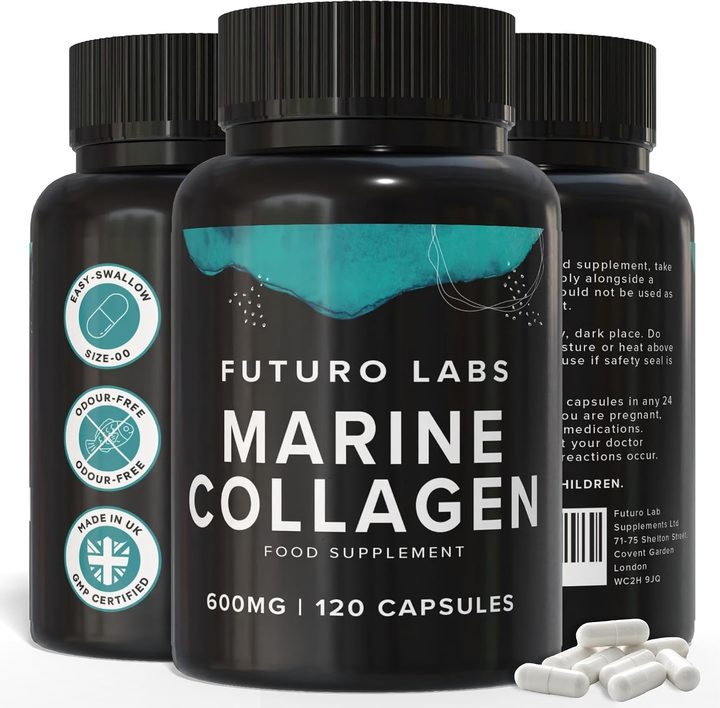
Our brand: the worked example on this page
Futuro Labs Marine Collagen
- 28p a day
- 120 capsules, 2 capsules daily
- Lab tested
- Made in the UK
The vitamin C half built into a capsule, with the collagen dose stated plainly as below the protocol's 15g: Futuro Labs Marine Collagen on Amazon UK, 2 capsules, 1200mg hydrolysed type 1 marine collagen with 12mg vitamin C at 15% NRV plus zinc, 120 for £16.99, 28p a day. Full label breakdown. The protocol itself is on the gelatin and vitamin C page; the repair dose on a rehab calendar on the tendon repair dose page.
What the research gave and what it measured, and the gap between a marker and a tendon
Is collagen and vitamin C good for tendons is a question with a research answer that the shelf rounds up, and the honest page keeps the rounding out, because good for a marker and good for a tendon are different claims and only one of them has been tested. What the research gave: the pre-loading studies gave around 15g of gelatin or hydrolysed collagen with roughly 50mg of vitamin C about an hour before a bout of exercise designed to load connective tissue, on the logic that the exercise raises collagen synthesis in the loaded tendon and ligament and that the amino acids and the cofactor should be in the blood when it does, the gelatin and vitamin C literature's protocol. What it measured: markers of collagen synthesis in the blood, the propeptides released as new collagen is made, sampled in the hours after the session, and it found them raised in the gelatin-and-vitamin-C condition against placebo, which is a real and interesting result in a small, short, marker-based study design. What it did not measure is the gap: it did not measure tendon thickness or stiffness by imaging over months, tendon pain in people with tendinopathy, injury rates in a training population, healing time after a tear or return to sport after a rehabilitation, the outcomes a lifter would mean by good for tendons, so the research answer is that the pairing is good for a synthesis marker in small studies, plausibly good for a tendon by the logic that a raised marker reflects more collagen being made in loaded tissue, and unproven for any tendon outcome, a distinction the rehabilitation literature keeps and the shelf drops.
Why the pairing is plausible anyway, what a tendon actually needs, where the protocol lives, and the markers filed
Why the pairing is plausible anyway, since a reader deserves the logic as well as the caveat: a tendon is collagen, built by cells that lay down chains from glycine, proline and hydroxyproline and cross-link them with enzymes that need vitamin C as a cofactor, the scurvy literature's lesson that a body without the cofactor cannot maintain its collagen, and a loading session is the stimulus that tells those cells to build, the connective tissue adaptation literature's finding that tendon remodels to load on a slower timescale than muscle, so supplying substrate and cofactor at the moment of stimulus is a sensible idea whose marker result is consistent with it, which is why the protocol appears in rehabilitation contexts and why this site describes it as a research adjunct rather than dismissing it. What a tendon actually needs is the list the adjunct sits beside, in order: progressive load, which builds a healthy tendon and is the core of tendinopathy rehabilitation, outperforming rest and passive treatments in the trials, the tendinopathy literature's programme; time, tendon collagen turning over slowly and rehabilitation running for months; adequate energy and protein through an injury, the injured-athlete nutrition literature's guard rail that restriction works against repair; and the daily vitamin C that the reference value supplies, since the cofactor is a daily-intake matter, the scurvy point again, with collagen holding no authorised claim in the UK and vitamin C's sentence being that it contributes to normal collagen formation for the normal function of cartilage and bones, the register's allocation. Where the protocol lives, then, is inside a physiotherapist's loading programme, taken about an hour before each rehabilitation or loading session at around 15g of collagen or gelatin with vitamin C, as an adjunct whose evidence is a marker and whose logic is plausible, and not instead of the load, the time or the food, and a reader who takes the pairing without the programme has bought the adjunct and skipped the treatment. The markers filed: around 15g with vitamin C an hour before loading as the protocol, synthesis markers raised as the result, tendon outcomes unmeasured as the gap, plausibility from the cofactor logic, load and time as what a tendon needs, and the protocol living inside a programme, with the worked example being the vitamin C half built into a capsule whose collagen dose is stated plainly as below the protocol's 15g, £16.99 for 120 at 28p a day.
| The question | The research | The honest answer |
|---|---|---|
| What was given? | Around 15g of gelatin or collagen with roughly 50mg of vitamin C an hour before loading | The pre-loading protocol |
| What was measured? | Markers of collagen synthesis in the blood after the session | Raised: a real marker result |
| What was not measured? | Tendon thickness, stiffness, pain, injury rate, healing, return to sport | Unproven for any tendon outcome |
| Why plausible? | Substrate and cofactor at the moment of stimulus; the cofactor logic of scurvy | Consistent with the marker; not a tendon result |
| What a tendon needs | Progressive load, time, energy and protein through injury, daily vitamin C | The adjunct sits beside these, not instead |
| Where the protocol lives | Inside a physiotherapist's loading programme, an hour before each session | An adjunct, no claim; vitamin C's sentence for collagen formation |
The verdict, good for a marker, plausible for a tendon, unproven for an outcome, and useful only inside the programme that does the work
Is collagen and vitamin C good for tendons: good for a marker of collagen synthesis in small studies that gave around 15g of gelatin or hydrolysed collagen with roughly 50mg of vitamin C about an hour before a loading session and found the marker raised, plausibly good for a tendon by the cofactor logic that substrate and vitamin C at the moment of stimulus help the cells that build collagen, and unproven for any tendon outcome, since thickness, stiffness, pain, injury rate and healing were not measured, so the pairing is a research adjunct with no collagen claim that lives inside a physiotherapist's progressive loading programme, the load, the time, the energy and protein through injury and the daily vitamin C doing the work it may assist. The vitamin C half built into a capsule, with the collagen dose stated plainly as below the protocol's 15g: Futuro Labs Marine Collagen, 1200mg type 1 with 12mg vitamin C, 120 for £16.99 at 28p a day.
What to check on the label
- Read the research for what it measured: a synthesis marker, not a tendon.
- Grant the logic: substrate and cofactor at the moment of stimulus.
- Withhold the outcome claim: thickness, pain and healing were not measured.
- Load the tendon: the treatment the adjunct sits beside.
- Run the protocol inside a programme: an hour before each session, with a physiotherapist.
Our brand
The worked example: Futuro Labs Marine Collagen
Futuro Labs Marine Collagen: 2 capsules daily, 1200mg hydrolysed type 1 marine collagen with 12mg vitamin C and 1.5mg zinc (15% NRV each), 120 capsules for £16.99, 60 days at 28p a day, lab-tested, UK GMP made. Slim veggie-shell capsules, odour free. Fish derived: pescatarian, not vegetarian or vegan.
- Collagen per serving
- 1200mg hydrolysed type 1 marine (fish)
- Co-factors
- vitamin C 12mg (15% NRV), zinc 1.5mg (15% NRV)
- Serving
- 2 capsules a day
- Bottle
- 120 capsules, 60 days
- Price
- £16.99 (28p a day)
- Capsule
- slim size 00, veggie shell, odour free
Questions people also ask
Does collagen with vitamin C help tendons heal?
It is unproven for healing: the pre-loading studies measured markers of collagen synthesis in the blood after a loading session, not healing time, pain or return to sport, so the pairing is good for a marker in small studies and plausible for a tendon by the cofactor logic, with progressive loading, time and adequate energy and protein doing the healing it may assist.
What is the collagen and vitamin C protocol for tendons?
Around 15g of gelatin or hydrolysed collagen with roughly 50mg of vitamin C about an hour before a loading session, from small, short, marker-based studies that found collagen synthesis markers raised, run as a research adjunct inside a physiotherapist's programme rather than instead of one, with no authorised claim for collagen.
Why does vitamin C matter for tendons?
Because the enzymes that hydroxylate and cross-link new collagen use vitamin C as a cofactor, without which a body cannot maintain its collagen, the lesson of scurvy, so the daily reference value from fruit, vegetables or a tablet keeps the cofactor available and the register authorises vitamin C contributes to normal collagen formation for the normal function of cartilage and bones.
Is there a health claim for collagen and tendons?
No: collagen holds no authorised health claim in the UK in any form, and the only register sentence that mentions collagen belongs to vitamin C for normal collagen formation for the normal function of cartilage, bones, skin and blood vessels, so a tub that says tendon support says something the register does not allow.
What actually heals a tendon?
Progressive loading guided by a physiotherapist, which outperforms rest, passive treatments and injections in the tendinopathy trials, over the months that tendon collagen takes to remodel, with adequate energy and protein through the injury and the daily vitamin C the reference value supplies, and the collagen pairing as an adjunct to that programme at most.
Sources
- The gelatin and vitamin C pre-exercise research (Shaw, Baar and colleagues): 15g gelatin with vitamin C taken about an hour before loading, studied for markers of collagen synthesis, the protocol behind the tendon-training conversation. PubMed record
- The scurvy literature: vitamin C deficiency impairs collagen synthesis through failed proline and lysine hydroxylation, producing the classic connective-tissue signs that resolve with vitamin C repletion. PubMed record
- The tendinopathy and loaded-joint pain literature: pain at the patellar, Achilles, rotator cuff and elbow tendons in lifters is a load-management problem, treated by progressive tendon loading, technique and volume adjustment, with rest alone and passive treatments performing poorly, and no supplement, omega-3 included, altering the course in the trials. PubMed record
- The connective tissue adaptation literature: tendon and ligament remodel to training load on a slower timescale than muscle, a mismatch implicated in overuse injury when progression follows muscular gains. PubMed record