Ghost Fitness/Collagen/What should you look for in gelatin vitamin c tendon?
What should you look for in gelatin vitamin c tendon?
The short answer
The basket is two items: any plain food-grade gelatine, around 15g per serving, and any vitamin C source near 50mg, even orange juice. Dissolve warm, take about an hour before loading work, and expect marker-level evidence only.
- Item oneplain food-grade gelatine: ~15g per serving, any supermarket tub
- Item twovitamin C near 50mg: a small tablet or a glass of orange juice
- The assemblydissolve warm, roughly an hour before the loading session
- The receiptpennies per serving: no branded product improves the paper's basket
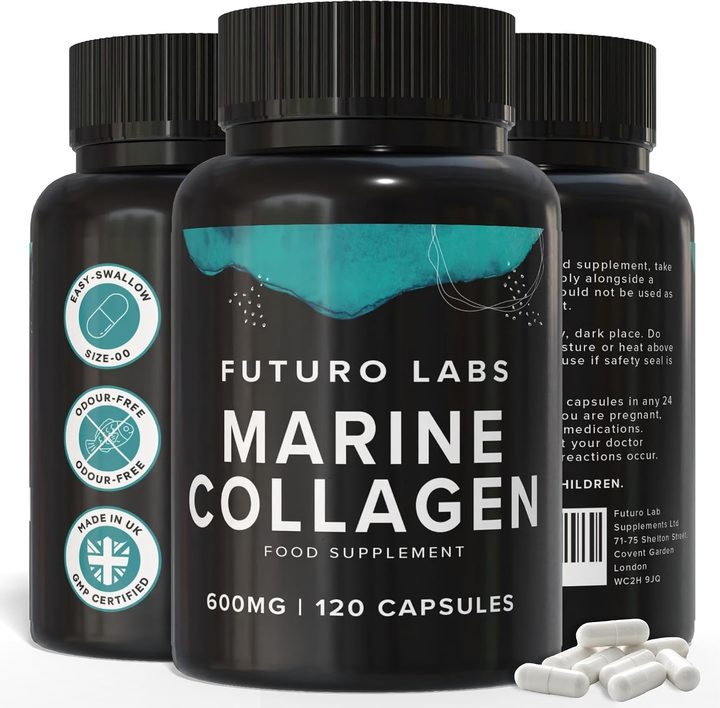
Our brand: the worked example on this page
Futuro Labs Marine Collagen
- 28p a day
- 120 capsules, 2 capsules daily
- Lab tested
- Made in the UK
The capsule habit is a different lane entirely, priced as one: Futuro Labs Marine Collagen on Amazon UK, 1200mg hydrolysed type 1 with vitamin C and zinc at 15% NRV, £16.99 for 60 days at 28p. Full label breakdown. The study-methods shopping list is on the tendon look-for page; the three C numbers on the vitamin C page.
The basket, item by item, with the paper's own receipts attached
This query is the pre-loading protocol asking for its shopping list, so build the basket exactly as the research built it, item by item with receipts. Item one, the gelatine, and the look-for is deliberately anticlimactic: the foundational lab work used ordinary food-grade gelatine, the same unflavoured beef gelatine the supermarket baking aisle sells in tubs and sachets, no peptide branding, no type numerals, no tendon imagery, so what you look for is plainness itself, powdered rather than leaf for easy measuring, unflavoured, any honest brand, with hydrolysed collagen powder standing in acceptably per the spec pages for readers who prefer a cold-dissolving version, at a mild price premium the evidence never demanded. The serving arithmetic: around 15 grams, three to four teaspoons, the dose the protocol literature centred, physically impossible in capsules per the 25-capsule arithmetic and trivially easy as a warm drink. Item two, the vitamin C, and the look-for is equally modest: the studies paired the gelatine with roughly 50 milligrams of C, famously delivered in the original work partly as orange juice, so any source clears it, a small tablet, a fraction of most C supplements, or simply the glass of juice, the three-numbers page's middle figure, comfortably above the 12mg claim threshold and nowhere near any ceiling. Two items, both generic, total cost in pennies per serving, and the basket is complete.
The assembly instructions, the receipt compared, and the expectations label stapled on
Assembly: dissolve the gelatine in a small amount of hot water, top up to drinkable, add the juice or take the tablet alongside, and time the drink roughly an hour before the loading session it is meant to accompany, the timing following the amino availability curve the research measured, with the physio-programmed loading work itself remaining the active ingredient the drink only garnishes, per every tendon page this site has written. The receipt comparison is where the look-for question earns its keep, because the shelf sells this basket back at a markup: branded tendon collagen products, collagen-and-C sachets at boutique prices, capsule products wearing the protocol's citations around doses fifty times too small, and the honest audit runs the same two lines every time, does the product deliver about 15 grams per serving, and does it cost meaningfully more than gelatine plus juice, with any no-and-yes pair returning the reader to the baking aisle. And the expectations label, stapled to the basket as firmly as the site staples it everywhere: the evidence behind this protocol is stop-two evidence, engineered-ligament work and collagen-synthesis blood markers in small studies, not healed tendons, not pain outcomes, not a claim, which is why the honest framing is a cheap, plausible, unproven adjunct to rehabilitation a physiotherapist is running, worth its pennies to the reader who wants every marginal lever and worth nothing as a substitute for the loading programme, the months, and the professional in the loop.
| The item | The look-for | The receipt |
|---|---|---|
| Gelatine | Plain, food-grade, powdered, unflavoured: any honest brand | Pennies per 15g serving from the baking aisle |
| The dose | Around 15g: three to four teaspoons | Impossible in capsules: the 25-capsule arithmetic |
| Vitamin C | Roughly 50mg from any source | A small tablet, or the original studies' orange juice |
| The assembly | Dissolve warm, drink about an hour pre-loading | The session itself remains the active ingredient |
| The branded shelf | 15g per serving, or walk away | No product improves the paper's own basket |
| The evidence label | Markers and lab tissue, not outcomes | A cheap unproven adjunct, never a treatment |
The verdict, carried out of the shop
What should you look for in gelatin and vitamin C for tendon: almost nothing, which is the finding, the basket being two generic items, plain food-grade gelatine at around 15 grams and any vitamin C source near 50 milligrams, assembled warm about an hour before the loading work that does the real lifting, priced in pennies, and labelled honestly as marker-level evidence riding a physio's programme. The worked example serves the different, daily lane at its own honest scale: Futuro Labs Marine Collagen, 1200mg hydrolysed type 1 with 12mg vitamin C and 1.5mg zinc at 15% NRV, lab tested, UK made, £16.99 for 60 days at 28p a day, the habit product, while the protocol stays where the papers left it, in the baking aisle with a glass of orange juice.
What to check on the label
- Two generic items: plain gelatine and any ~50mg vitamin C source.
- 15g is the serving: teaspoons and warm water, never capsules.
- An hour before loading: the session remains the active ingredient.
- Audit the branded shelf in two lines: the dose, then the receipt.
- Staple the evidence label on: markers, not outcomes, no claim.
Our brand
The worked example: Futuro Labs Marine Collagen
Futuro Labs Marine Collagen: 2 capsules daily, 1200mg hydrolysed type 1 marine collagen with 12mg vitamin C and 1.5mg zinc (15% NRV each), 120 capsules for £16.99, 60 days at 28p a day, lab-tested, UK GMP made. Slim veggie-shell capsules, odour free. Fish derived: pescatarian, not vegetarian or vegan.
- Collagen per serving
- 1200mg hydrolysed type 1 marine (fish)
- Co-factors
- vitamin C 12mg (15% NRV), zinc 1.5mg (15% NRV)
- Serving
- 2 capsules a day
- Bottle
- 120 capsules, 60 days
- Price
- £16.99 (28p a day)
- Capsule
- slim size 00, veggie shell, odour free
Questions people also ask
What gelatine should I buy for the tendon protocol?
Any plain food-grade gelatine: the research used ordinary unflavoured beef gelatine of baking-aisle grade, powdered for easy measuring, with hydrolysed collagen an acceptable cold-dissolving substitute.
How much vitamin C goes with it?
Around 50mg from any source: a small tablet or a glass of orange juice, as the original studies used, comfortably above the 12mg claim threshold with no timing precision required.
When do I take the drink?
Roughly an hour before the loading session it accompanies, following the amino availability curve the research measured, with the programmed exercise doing the actual work.
Are branded tendon collagen products better than this basket?
None improves the paper's own basket: audit any candidate on two lines, about 15g per serving and a price near gelatine-plus-juice, and walk on any failure.
Will this heal my tendon?
The evidence is marker-level only, lab tissue and synthesis blood markers, not healed tendons or pain outcomes: a cheap unproven adjunct to physio-led rehabilitation, never a treatment.
Sources
- The gelatin and vitamin C pre-exercise research (Shaw, Baar and colleagues): 15g gelatin with vitamin C taken about an hour before loading, studied for markers of collagen synthesis, the protocol behind the tendon-training conversation. PubMed record
- Review literature on tendinopathy management: progressive, load-based rehabilitation is the established core of treatment, typically guided by a physiotherapist, with passive approaches and complete rest performing worse. PubMed record
- Futuro Labs Marine Collagen listing and label: 1200mg hydrolysed type 1 marine collagen per 2-capsule serving with 12mg vitamin C and 1.5mg zinc at 15% NRV each, 120 capsules, independently lab tested, UK made. https://www.amazon.co.uk/dp/B0C2J7N364
- EFSA Panel on Dietetic Products, Nutrition and Allergies. Scientific Opinion on the substantiation of health claims related to magnesium. EFSA Journal 2010;8(10):1807. https://efsa.onlinelibrary.wiley.com/doi/10.2903/j.efsa.2010.1807