Ghost Fitness/Collagen/What causes tendonitis?
What causes tendonitis?
The short answer
One cause and several accelerators. The cause: load rising faster than the tendon can adapt, tendon adapting over months, muscle in weeks. Accelerators: sudden volume jumps, new ranges, poor recovery, age, smoking, some antibiotics. Not a cause: a collagen shortfall.
- The one causeload rising faster than the tendon can adapt: tendon in months, muscle in weeks
- Training acceleratorssudden volume or intensity jumps, new exercises and ranges, compression positions, poor recovery
- Body and drug acceleratorsage and the years after menopause, smoking, corticosteroids, fluoroquinolone antibiotics
- Not a causea dietary collagen shortfall: no tendon problem is a collagen deficiency
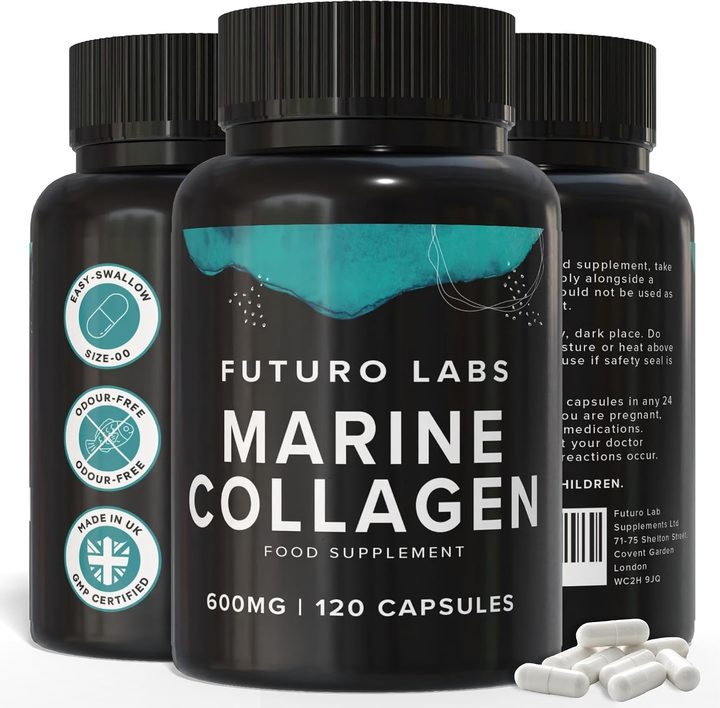
Our brand: the worked example on this page
Futuro Labs Marine Collagen
- 28p a day
- 120 capsules, 2 capsules daily
- Lab tested
- Made in the UK
Stated as the adjunct it is: Futuro Labs Marine Collagen on Amazon UK, 2 capsules, 1200mg hydrolysed type 1 marine collagen with 12mg vitamin C at 15% NRV plus zinc, 120 for £16.99, 28p a day, lab tested and UK made, a dose below the ~15g pre-loading protocol and taken for the vitamin C line, which fixes no cause on this page. Full label breakdown. The symptoms are on the four symptoms page; the timescale mismatch on the tendons after training page; the supplement question on the best supplement for tendonitis page.
The one cause: load rising faster than the tendon can adapt
What causes tendonitis has a one-line answer and a longer list, and the honest page gives the line first because the list only makes sense as variations on it: tendon pain is caused by load exceeding the tendon's current capacity, and most often by load rising faster than the tendon can adapt to it. The mechanism is a mismatch of clocks. Muscle responds to training in weeks, strength climbing quickly through neural adaptation and then hypertrophy, and a lifter running a good programme adds weight to the bar month on month; tendon and ligament respond to the same training on a timescale of months, stiffening and thickening slowly as the collagen matrix remodels, the connective tissue adaptation literature's finding that the slow tissue lags the fast one. So the tendon that is loaded by a muscle three months stronger than it was is being asked for capacity it has not built, and the tissue's response to repeated load beyond capacity is the failed-healing change the biopsies show, disorganised collagen, increased ground substance, new vessels and nerves, and pain. That is the cause, and it explains the pattern every lifter recognises: tendon pain arrives after the good months, not the bad ones, after the block where the squat went up fast, after the return from a layoff when the muscle memory came back quicker than the tendon did, after the new sport or the new job that loaded a tendon in a way the training never had. It also explains why the established management is load and not rest, since the tendon's problem is capacity, and capacity is built by progressive loading over the months the tendon needs, guided by pain during and after the session rather than by avoiding it, the tendinopathy rehabilitation literature's core, while rest lowers the load without raising the capacity and leaves the gap intact for the return.
The accelerators, the thing that is not a cause, and where collagen sits
The accelerators are everything that widens the gap between load and capacity faster than a steady programme would, and they fall into training, body and drug groups. Training accelerators: a sudden jump in volume, frequency or intensity, the extra session, the new block, the return from holiday at the old weights; a new exercise or a deeper range that loads the tendon at an angle or length it has not adapted to, the first months of deep squats, of dips, of overhead work, of hill running; compression positions, in which the tendon is pressed against bone under load, the Achilles in deep dorsiflexion, the hamstring tendon at the sit bone in deep hip flexion, the rotator cuff overhead, since compression plus tension is harder on a tendon than tension alone; and poor recovery, short sleep and sessions spaced too closely for the slow tissue to remodel between them. Body accelerators: age, since tendon stiffens, loses water and adapts more slowly across the decades; the years after menopause, when the fall in oestrogen changes tendon behaviour and tendon problems become commoner; body weight, which is load on every lower-limb tendon at every step; and smoking, which impairs blood flow and healing across tendon, ligament, bone and skin. Drug accelerators, printed because they are documented and often missed: corticosteroids, oral or injected near a tendon, weaken tendon tissue; and the fluoroquinolone class of antibiotics carries a documented association with tendinopathy and rupture, most often the Achilles, higher in older adults and with steroids alongside, recognised in the regulator's safety communications, so a lifter who develops tendon pain during or after a course tells whoever prescribed it. Then the thing that is not a cause: a collagen shortfall in the diet. Tendon pain is a load and adaptation problem, not a nutritional deficiency, and no tendon problem in the literature is caused by eating too little collagen, so a reader who believes their tendonitis is a sign they need collagen has the causation backwards, and collagen's place is the one it holds on every tendon page of this site, an adjunct to the loading programme as research, around fifteen grams with roughly 50mg of vitamin C an hour before loading having doubled a collagen synthesis marker in a small trial, a marker result with no outcome and no claim, discussed with the physiotherapist and never bought instead of the assessment and the programme. The worked example is stated as that adjunct: two capsules, 1200mg hydrolysed type 1 marine collagen with 12mg vitamin C plus zinc, 120 for £16.99 at 28p a day, lab tested and UK made, a dose below the protocol's grams and taken for vitamin C's collagen formation sentence, fixing none of the causes above. What causes tendonitis: load outrunning a slow tissue, accelerated by jumps, ranges, compression, poor recovery, age, smoking and two drug classes, and not by the collagen aisle.
| The item | What it is | The mechanism |
|---|---|---|
| The cause | Load rising faster than the tendon can adapt | Muscle adapts in weeks, tendon remodels over months; the gap is the injury |
| Training accelerators | Sudden volume or intensity jumps; new exercises and ranges; compression positions; poor recovery | Each widens the gap faster than a steady programme |
| Body accelerators | Age; the years after menopause; body weight; smoking | Slower adaptation, more load, impaired healing |
| Drug accelerators | Corticosteroids near or in the tendon; fluoroquinolone antibiotics | Documented tendon weakening and rupture association |
| Not a cause | A dietary collagen shortfall | Tendon pain is load and adaptation, not deficiency |
| The management | Progressive loading guided by pain, physiotherapist-led | Raises capacity toward the load; rest only lowers the load |
| The adjunctOurs | Two capsules, 1200mg marine collagen with 12mg vitamin C, 28p a day | Below the ~15g protocol; the vitamin C line; discussed with the physio |
What to check on the label
- Look for the fast month: tendon pain follows the good block.
- Add load in steps the tendon can follow: months, not weeks.
- Watch new ranges and compression positions: the angle matters.
- Tell the prescriber: tendon pain on a fluoroquinolone or steroids is documented.
- Do not blame your diet: no tendonitis is a collagen deficiency.
Our brand
The worked example: Futuro Labs Marine Collagen
Futuro Labs Marine Collagen: 2 capsules daily, 1200mg hydrolysed type 1 marine collagen with 12mg vitamin C and 1.5mg zinc (15% NRV each), 120 capsules for £16.99, 60 days at 28p a day, lab-tested, UK GMP made. Slim veggie-shell capsules, odour free. Fish derived: pescatarian, not vegetarian or vegan.
- Collagen per serving
- 1200mg hydrolysed type 1 marine (fish)
- Co-factors
- vitamin C 12mg (15% NRV), zinc 1.5mg (15% NRV)
- Serving
- 2 capsules a day
- Bottle
- 120 capsules, 60 days
- Price
- £16.99 (28p a day)
- Capsule
- slim size 00, veggie shell, odour free
Questions people also ask
Why do I get tendonitis when my training is going well?
Because that is when it happens: muscle strength climbs in weeks while tendon remodels over months, so a good block that adds weight to the bar quickly loads a tendon that has not caught up, and the gap between the load and the tendon's capacity is the cause of the pain.
Can antibiotics cause tendonitis?
One class can: the fluoroquinolone antibiotics carry a documented association with tendinopathy and tendon rupture, most often the Achilles, with higher risk in older adults and with corticosteroids alongside, recognised in the regulator's safety communications, so tendon pain during or after a course is reported to whoever prescribed it.
Is tendonitis caused by a lack of collagen?
No: tendon pain is a load and adaptation problem and no tendon problem in the literature is a dietary collagen deficiency, so the causation runs the other way, and collagen's role is an adjunct to the loading programme as research rather than a fix for a shortfall that was never the cause.
Does age cause tendonitis?
Age accelerates it: tendon stiffens, loses water and adapts more slowly across the decades, and tendon problems become commoner in the years after menopause as oestrogen falls, so the same jump in load widens the gap further in an older tendon and the steps have to be smaller.
What is the best way to prevent tendonitis when lifting?
Add load at a pace the slow tissue can follow, in steps over months rather than weeks, introduce new exercises and deeper ranges gradually, space hard sessions so the tendon remodels between them, sleep, do not smoke, and treat any warm-up-pattern pain as a signal to hold the load rather than push through it.
Sources
- The connective tissue adaptation literature: tendon and ligament remodel to training load on a slower timescale than muscle, a mismatch implicated in overuse injury when progression follows muscular gains. PubMed record
- The tendinopathy and loaded-joint pain literature: pain at the patellar, Achilles, rotator cuff and elbow tendons in lifters is a load-management problem, treated by progressive tendon loading, technique and volume adjustment, with rest alone and passive treatments performing poorly, and no supplement, omega-3 included, altering the course in the trials. PubMed record
- The fluoroquinolone and tendon literature: the fluoroquinolone class of antibiotics carries a documented association with tendinopathy and tendon rupture, most often the Achilles, with risk higher in older adults and with concurrent corticosteroids, recognised in the regulator's safety communications and the product information, one of the few drug exposures with a tendon warning attached. PubMed record
- The smoking and tissue healing literature: smoking impairs blood flow, oxygen delivery and healing across bone, tendon, ligament and wound repair, one of the best-documented modifiable brakes on recovery. PubMed record