Ghost Fitness/Collagen/What are the 4 symptoms of tendonitis?
What are the 4 symptoms of tendonitis?
The short answer
Four, as a lifter meets them: pain that eases with warming up and returns after; tenderness under one finger; stiffness first thing or after sitting; and load the tendon took last month it cannot take now.
- Symptom one, the warm-up patternpain at the start that eases as the tendon warms and returns after or next morning
- Symptom two, point tendernessone spot under a fingertip on the tendon itself
- Symptoms three and fourstiffness after rest easing in minutes; lost capacity, sometimes thickening
- Not these foura sudden pop with a gap; a hot swollen joint: assessment, not a supplement
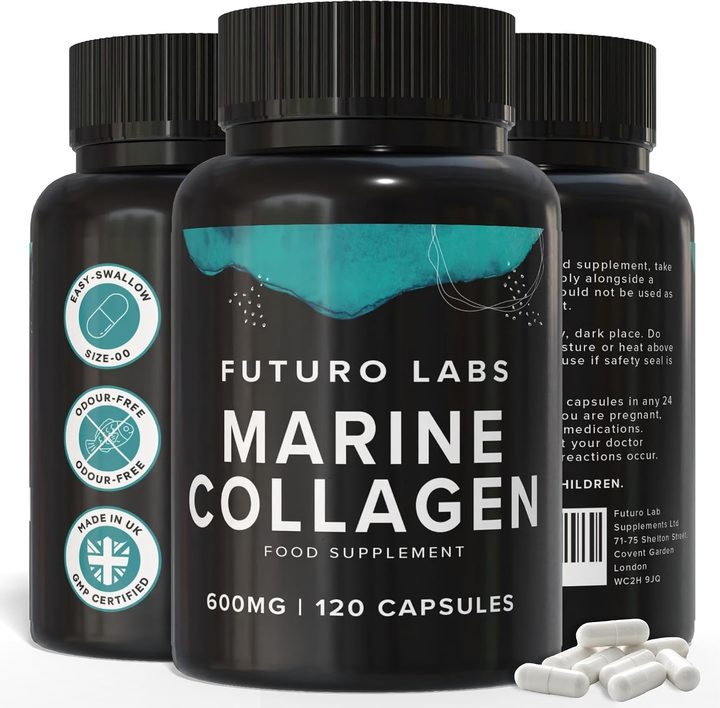
Our brand: the worked example on this page
Futuro Labs Marine Collagen
- 28p a day
- 120 capsules, 2 capsules daily
- Lab tested
- Made in the UK
The adjunct, stated as one: Futuro Labs Marine Collagen on Amazon UK, 2 capsules, 1200mg hydrolysed type 1 marine collagen with 12mg vitamin C at 15% NRV plus zinc, 120 for £16.99, 28p a day, lab tested and UK made, a dose below the ~15g pre-loading protocol and taken for the vitamin C line, never for these symptoms. Full label breakdown. Whether collagen is worth taking for tendonitis is on the worth taking page; what causes it on the causes page; the best supplement question on the best supplement for tendonitis page.
The four symptoms, taken in the order a session presents them
What are the four symptoms of tendonitis is a question the textbooks answer with a list and a lifter answers with a session, so this page walks the list in the order a training day presents it, because that order is itself the most useful diagnostic. Symptom one, the warm-up pattern: the tendon hurts at the start, the first sets of squats for a patellar tendon, the first minutes of a run for an Achilles, the first presses for a shoulder or the first curls for an outer elbow, and the pain eases as the tissue warms and the session goes on, then returns afterwards, that evening or the next morning, and this pattern of pain that warms out and comes back is the signature of tendon pain, since most joint pain does the opposite and worsens as a session goes on, so a lifter who can describe the warm-up pattern has already told an assessor most of what they need. Symptom two, point tenderness: tendon pain is local, and pressing along the tendon finds one spot under a single fingertip that reproduces it, just below the kneecap at the patellar tendon, a few centimetres above the heel on the Achilles, the bony point of the outer elbow, the front of the shoulder where the long head of the biceps runs, whereas joint pain is usually diffuse and hard to pin with a finger. Symptom three, stiffness after rest: the first steps out of bed in the morning, or standing up after an hour at a desk, bring a stiff, tight tendon that eases within a few minutes of moving, the same warm-up pattern in miniature, and the morning version is often the symptom a lifter notices first and ignores longest. Symptom four, lost capacity: the load, depth, speed or volume the tendon took a month ago now provokes it, the jump that was fine is not, the fifth set is the one that hurts, and sometimes the tendon itself is visibly or palpably thicker than its partner on the other side, which is the tissue's failed-healing change made visible. Four symptoms, and a lifter who has all four has a tendon problem that the loading literature describes as load exceeding the tendon's current capacity, which is why the established management is a progressive loading programme, usually physiotherapist-guided, and not rest.
The two that are not tendonitis, the word itself, and where collagen sits
Two presentations are not these four and the honest page prints them, because a lifter who searches for tendonitis symptoms with one of these has a different problem and a different urgency. The first: a sudden pop or snap, often felt or heard, followed by a gap that can be felt in the tendon, an inability to push off the foot or to straighten the knee against gravity, or a visible change in the muscle's shape, which is the rupture picture and needs assessment the same day, since a ruptured tendon is a surgical or specialist decision and not a rehabilitation programme. The second: a joint that is hot, red and swollen, especially with fever or a general feeling of being unwell, which is not a tendon problem at all and needs urgent assessment, since an infected or acutely inflamed joint is a medical matter with a clock on it. Neither of these is a supplement question and this site says so plainly. Then the word itself, because it misleads treatment: tendonitis means inflammation of a tendon, and the histology of chronic tendon pain, the biopsies from painful Achilles and patellar tendons, shows a degenerative, failed-healing picture, disorganised collagen, increased ground substance, new blood vessels and nerve ingrowth, with little of the inflammatory cell picture the -itis implies, which is why the field now says tendinopathy, why anti-inflammatory approaches and rest do little for the chronic version, and why the established management is progressive load, the eccentric heel-drop tradition for the Achilles and its descendants for every other tendon, guided by pain during and after loading rather than by avoiding it. Where collagen sits in all this is the last paragraph and not the first, and it sits as an adjunct: a small crossover trial found around fifteen grams of gelatin or hydrolysed collagen with roughly 50mg of vitamin C an hour before loading roughly doubled a blood marker of collagen synthesis, the basis of the pre-loading protocol some physiotherapists use alongside the programme, a marker result with no outcome trial and no claim, so collagen does not treat any of the four symptoms and is discussed with the physiotherapist running the loading programme, never bought instead of the assessment. The worked example is stated as the adjunct it is: two capsules, 1200mg hydrolysed type 1 marine collagen with 12mg vitamin C plus zinc, 120 for £16.99 at 28p a day, lab tested and UK made, a dose well below the protocol's fifteen grams and taken for vitamin C's collagen formation sentence, the register's only collagen line, while the protocol lifter buys the grams as gelatin or powder. The four symptoms: the warm-up pattern, the fingertip spot, the morning stiffness and the lost capacity; the two that are not: the pop and the hot joint; and the treatment, a loading programme with an assessment at its start.
| The symptom | How it presents | What it tells you |
|---|---|---|
| One: the warm-up pattern | Hurts at the start, eases as it warms, returns after or next morning | Tendon rather than joint; joint pain usually worsens through a session |
| Two: point tenderness | One spot under a fingertip on the tendon itself | Local tissue; diffuse pain points elsewhere |
| Three: stiffness after rest | First steps out of bed or after a long sit, easing in minutes | The warm-up pattern in miniature; often the first sign ignored |
| Four: lost capacity | Last month's load, depth or volume now provokes it; sometimes thickening | Load has exceeded the tendon's current capacity |
| Not these: the pop | Sudden snap, a gap, cannot push off or straighten | Rupture picture: same-day assessment |
| Not these: the hot joint | Hot, red, swollen, perhaps fever | Not a tendon problem: urgent assessment |
| The adjunctOurs | Two capsules, 1200mg marine collagen with 12mg vitamin C, 28p a day | Below the ~15g protocol; the vitamin C line; discussed with the physio, not bought instead |
What to check on the label
- Note the warm-up pattern: eases with warming, returns after.
- Find the spot with one finger: tendon pain is local.
- Count the morning stiffness: it is the first sign.
- Compare last month's load: lost capacity is symptom four.
- A pop or a hot joint is different: get assessed, do not supplement.
Our brand
The worked example: Futuro Labs Marine Collagen
Futuro Labs Marine Collagen: 2 capsules daily, 1200mg hydrolysed type 1 marine collagen with 12mg vitamin C and 1.5mg zinc (15% NRV each), 120 capsules for £16.99, 60 days at 28p a day, lab-tested, UK GMP made. Slim veggie-shell capsules, odour free. Fish derived: pescatarian, not vegetarian or vegan.
- Collagen per serving
- 1200mg hydrolysed type 1 marine (fish)
- Co-factors
- vitamin C 12mg (15% NRV), zinc 1.5mg (15% NRV)
- Serving
- 2 capsules a day
- Bottle
- 120 capsules, 60 days
- Price
- £16.99 (28p a day)
- Capsule
- slim size 00, veggie shell, odour free
Questions people also ask
How do I know if it is tendonitis or joint pain?
By the warm-up pattern and the finger: tendon pain hurts at the start, eases as the tissue warms and returns afterwards, and can be pinned to one spot under a fingertip on the tendon itself, whereas joint pain tends to worsen through a session and is diffuse, with an assessment settling anything the pattern does not.
Is tendonitis actually inflammation?
Mostly not in the chronic form: biopsies of painful Achilles and patellar tendons show a degenerative, failed-healing picture with disorganised collagen and new vessels rather than inflammatory cells, which is why the field says tendinopathy and why progressive loading rather than rest or anti-inflammatory approaches is the established management.
What are the warning signs that tendon pain is something worse?
A sudden pop or snap with a gap in the tendon and an inability to push off or straighten against gravity, the rupture picture needing same-day assessment, and a hot, red, swollen joint with or without fever, which is not a tendon problem and needs urgent assessment; neither is a supplement question.
Does collagen treat tendonitis symptoms?
No: collagen treats none of the four symptoms, and its place is as an adjunct to a loading programme, around fifteen grams with roughly 50mg of vitamin C an hour before the session having doubled a collagen synthesis marker in a small trial, a marker result with no outcome trial and no claim, discussed with the physiotherapist running the rehabilitation.
Should I rest a tendon that hurts?
Complete rest is not the established management for chronic tendon pain: progressive loading guided by pain during and after the session, usually physiotherapist-led, is, with the load reduced to what the tendon currently tolerates and built back over months, while a sudden pop or a hot joint is assessed before anything is loaded.
Sources
- The tendinopathy and loaded-joint pain literature: pain at the patellar, Achilles, rotator cuff and elbow tendons in lifters is a load-management problem, treated by progressive tendon loading, technique and volume adjustment, with rest alone and passive treatments performing poorly, and no supplement, omega-3 included, altering the course in the trials. PubMed record
- The tendinopathy literature: histology of chronic tendon pain shows a degenerative, failed-healing picture rather than a classic inflammatory one, reframing the old tendonitis label and its treatment logic. PubMed record
- Review literature on tendinopathy management: progressive, load-based rehabilitation is the established core of treatment, typically guided by a physiotherapist, with passive approaches and complete rest performing worse. PubMed record
- The gelatin and vitamin C pre-exercise research (Shaw, Baar and colleagues): 15g gelatin with vitamin C taken about an hour before loading, studied for markers of collagen synthesis, the protocol behind the tendon-training conversation. PubMed record