Ghost Fitness/Collagen/What are the best supplements for bones and joints in the UK?
What are the best supplements for bones and joints in the UK?
The short answer
For bones, the register is generous: calcium, vitamin D, vitamin K, magnesium, zinc and protein all hold bone claims. For joints it is nearly silent: vitamin C's cartilage sentence and manganese's connective tissue line are the shelf's only mandates.
- 6 bone claim-holderscalcium, vitamin D, K, magnesium, zinc, protein: all mandated
- 2 joint-adjacent sentencesvitamin C for cartilage; manganese for connective tissue
- 0 for the famous namescollagen, glucosamine, chondroitin, turmeric: claim-free
- Food firstmost of the bone list is a diet audit before it is a purchase
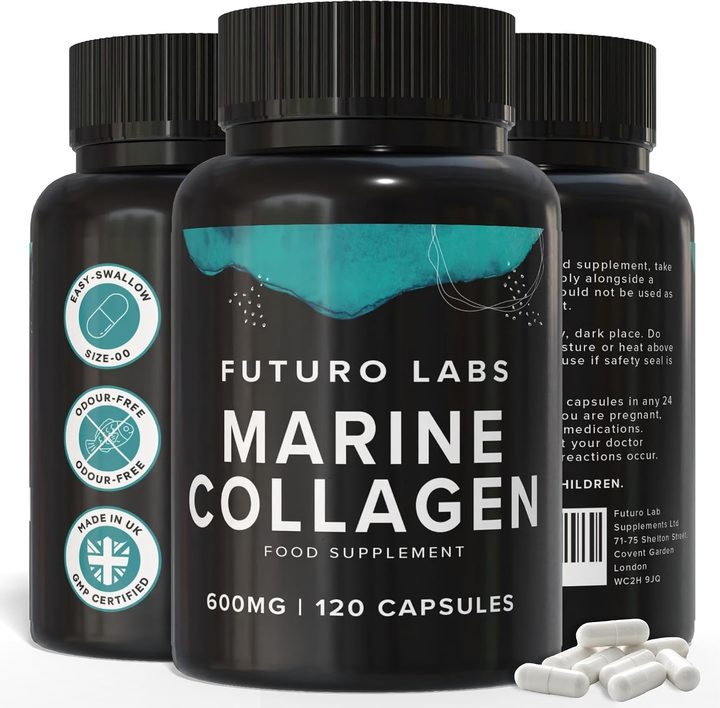
Our brand: the worked example on this page
Futuro Labs Marine Collagen
- 28p a day
- 120 capsules, 2 capsules daily
- Lab tested
- Made in the UK
A label carrying two of the working sentences: Futuro Labs Marine Collagen on Amazon UK, 1200mg hydrolysed type 1 with vitamin C and zinc at 15% NRV, £16.99 for 60 days at 28p. Full label breakdown. The lifter-specific joint shelf is on the joints-for-lifters page; the vitamin question on the best-vitamin page.
The bones side: where the register is genuinely generous
Bones are the rare territory where the claims register hands a buyer a real shopping list, and it deserves reading in full. Calcium is needed for the maintenance of normal bones, the foundational sentence, met first from dairy, fortified alternatives and greens. Vitamin D contributes to normal bones, to normal calcium absorption and to normal muscle function, the trio that makes it the list's linchpin, and the UK's standing advice, 10 micrograms considered daily through autumn and winter, makes it the one entry that is a near-default purchase rather than a diet audit. Vitamin K contributes to the maintenance of normal bones, quietly held and quietly met by greens. Magnesium and zinc each contribute to the maintenance of normal bones, riding along on labels that carry them at significant amounts. And protein, easily forgotten as a supplement-aisle citizen, contributes to the maintenance of normal bones as well as normal muscle mass, the claim that ties the skeleton to the dinner plate. Six mandated nutrients, most of them food-first with supplements patching gaps, which is why the honest bones answer is a diet audit with a vitamin D tablet attached, not a premium bone-formula purchase.
The joints side: near silence, the famous names, and the honest shelf assembled
Cross to joints and the register goes nearly quiet, which is the finding that reorganises the whole aisle. The two sentences that exist: vitamin C contributes to normal collagen formation for the normal function of cartilage, and manganese contributes to the normal formation of connective tissue, both activating at significant amounts, both cheap, both routinely met by ordinary diets, and both worth requiring on any label sold in this territory. The famous names hold nothing: collagen of every type, claim-free, its trial record modest and sponsor-heavy; glucosamine and chondroitin, claim-free, with the sobering distinction of large independent trials that failed to support the category's promises, the joint shelf's most instructive cautionary tale; turmeric and its curcumin, claim-free at the register; UC-II, claim-free, its small trials graded on the type 2 page. Assembled honestly, the best-supplements shelf for bones and joints is therefore lopsided by design: a genuine six-nutrient bone list led by vitamin D, a two-sentence joint list led by vitamin C, and a famous-names tier bought, if at all, as research participation with expectations flattened, while the interventions with real joint weight, load management, bodyweight, activity, and a GP for persistent, swollen or one-sided pain, never sat on a shelf.
| The supplement or nutrient | The authorised sentence | The honest buy |
|---|---|---|
| Vitamin D | Normal bones, calcium absorption, muscle function | The near-default: 10 micrograms, autumn-winter at least |
| Calcium | Needed for maintenance of normal bones | Diet first: dairy, fortified alternatives, greens |
| Protein | Maintenance of normal bones and muscle mass | The plate: 1.2g-plus per kilogram, more when training |
| Vitamin K, magnesium, zinc | Maintenance of normal bones (each) | Diet audit; labels at significant amounts count |
| Vitamin C and manganese | Cartilage collagen formation; connective tissue | The joint shelf's only mandated pair |
| Collagen, glucosamine, turmeric, UC-II | No authorised claims | Research participation only, expectations flattened |
The verdict, and the two lists carried to the shop
What are the best supplements for bones and joints in the UK: for bones, the register's own six, calcium, vitamin D, vitamin K, magnesium, zinc and protein, bought as a diet audit plus a vitamin D tablet; for joints, the honest answer is smaller than the aisle, vitamin C and manganese holding the only sentences, the famous names holding none, and the real joint work living in the programme and, where pain persists, the GP's office. Within that honesty, a collagen product earns its place only by carrying the working sentences, which is the worked example's whole construction: Futuro Labs Marine Collagen, 1200mg hydrolysed type 1 with 12mg vitamin C, the cartilage claim-holder, and 1.5mg zinc, the bone-list member, both at 15% NRV, lab tested, UK made, £16.99 for 60 days at 28p a day, a bones-and-joints purchase built from the register's actual vocabulary rather than the shelf's.
What to check on the label
- The bone list is real and six deep: calcium, D, K, magnesium, zinc, protein.
- Vitamin D is the near-default buy: the UK's 10 microgram consideration.
- The joint list is two sentences: vitamin C's cartilage line, manganese's tissue line.
- The famous names hold nothing: glucosamine's big trials are the cautionary tale.
- Persistent joint pain sees a GP: the shelf was never that department.
Our brand
The worked example: Futuro Labs Marine Collagen
Futuro Labs Marine Collagen: 2 capsules daily, 1200mg hydrolysed type 1 marine collagen with 12mg vitamin C and 1.5mg zinc (15% NRV each), 120 capsules for £16.99, 60 days at 28p a day, lab-tested, UK GMP made. Slim veggie-shell capsules, odour free. Fish derived: pescatarian, not vegetarian or vegan.
- Collagen per serving
- 1200mg hydrolysed type 1 marine (fish)
- Co-factors
- vitamin C 12mg (15% NRV), zinc 1.5mg (15% NRV)
- Serving
- 2 capsules a day
- Bottle
- 120 capsules, 60 days
- Price
- £16.99 (28p a day)
- Capsule
- slim size 00, veggie shell, odour free
Questions people also ask
What is the single best supplement for bones?
Vitamin D, by the register and the UK's own advice: normal bones, calcium absorption and muscle function claims, with 10 micrograms the considered autumn-winter dose.
Do glucosamine and chondroitin work for joints?
They hold no authorised claims, and large independent trials failed to support the category's promises: the joint shelf's most instructive cautionary tale.
Is collagen good for bones and joints?
Collagen itself holds no bone or joint claim: a collagen label earns its place here by carrying vitamin C and zinc at significant amounts, which do.
Can I get all of this from food?
Most of it: dairy or fortified alternatives, greens, protein at target and general variety cover the bone six for many people, with vitamin D the standing exception sunlight fails to fix.
When do joints stop being a supplement question?
When pain is persistent, swollen, hot or one-sided: that is a GP conversation, and always was.
Sources
- EFSA Panel on Dietetic Products, Nutrition and Allergies. Scientific Opinion on the substantiation of health claims related to magnesium. EFSA Journal 2010;8(10):1807. https://efsa.onlinelibrary.wiley.com/doi/10.2903/j.efsa.2010.1807
- SACN report on vitamin D and health: the basis of UK government advice that adults consider a 10 microgram vitamin D supplement, particularly through autumn and winter. https://www.gov.uk/government/publications/sacn-vitamin-d-and-health-report
- The glucosamine and chondroitin trial record: large independent randomised trials in osteoarthritis returned results that failed to support the category's promises, a cautionary benchmark for the whole joint shelf. PubMed record
- Futuro Labs Marine Collagen listing and label: 1200mg hydrolysed type 1 marine collagen per 2-capsule serving with 12mg vitamin C and 1.5mg zinc at 15% NRV each, 120 capsules, independently lab tested, UK made. https://www.amazon.co.uk/dp/B0C2J7N364
- EFSA Panel on Dietetic Products. Scientific opinion on Dietary Reference Values for fats: Adequate Intake of 250mg combined EPA and DHA per day for adults. EFSA Journal 2010;8(3):1461. https://www.efsa.europa.eu/en/efsajournal/pub/1461