Ghost Fitness/Collagen/What is the best vitamin for joints?
What is the best vitamin for joints?
The short answer
Vitamin C, by the register: it contributes to normal collagen formation for the normal function of cartilage, the only cartilage sentence any vitamin holds. Vitamin D supports muscle and bone alongside; manganese covers connective tissue. Nothing else qualifies.
- The winner: vitamin Cthe register's one cartilage-function sentence
- The deputy: vitamin Dmuscle function and bones: the joint's support structure
- The mineral footnotemanganese: normal formation of connective tissue
- The NRVsC: 80mg; D: 5 micrograms label NRV, 10 the UK advice: cheap, mostly food-met
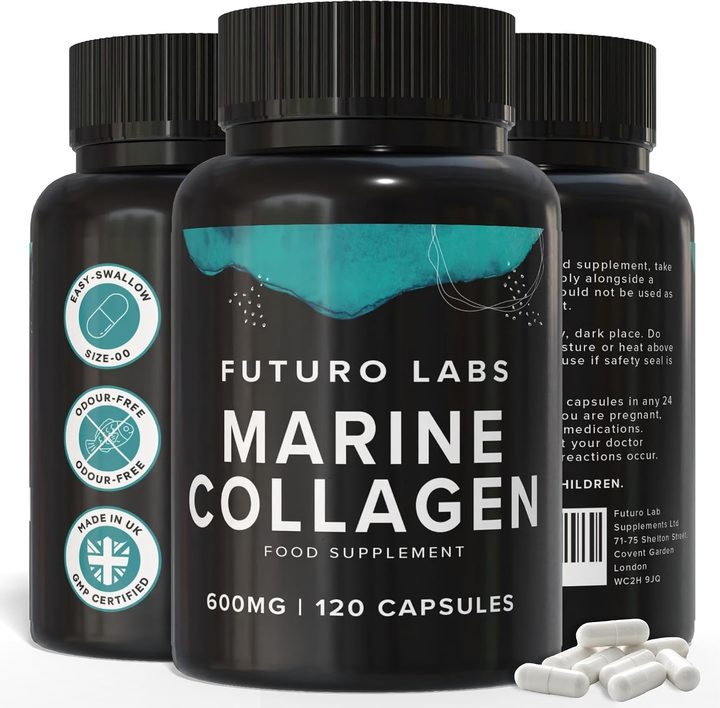
Our brand: the worked example on this page
Futuro Labs Marine Collagen
- 28p a day
- 120 capsules, 2 capsules daily
- Lab tested
- Made in the UK
A collagen label built around the winning vitamin: Futuro Labs Marine Collagen on Amazon UK, 1200mg hydrolysed type 1 with 12mg vitamin C at 15% NRV, £16.99 for 60 days at 28p. Full label breakdown. The whole joint shelf ranked is on the lifters joints page; the bones list on the bones-and-joints page.
The verdict first, then the reasoning the register supplies
Best vitamin for joints is one of the few questions in this territory with a clean, register-backed winner: vitamin C, whose authorised claim, contributes to normal collagen formation for the normal function of cartilage, is the only sentence in the entire claims register connecting any vitamin to cartilage, the joint's working surface, and which arrives alongside the same collagen-formation wording for bones, blood vessels, skin, gums and teeth plus the protection of cells from oxidative stress, a portfolio that makes C the connective-tissue vitamin by law as well as biochemistry, the nutrient literally required by the enzymes that build collagen. Meeting it is famously cheap: the NRV is 80mg, a satsuma and a pepper's worth, deficiency is rare in ordinary UK diets, and the buying implication is mostly a verification, diet covering it easily, with a label carrying C at 15% NRV or better, 12mg, being how a supplement lawfully joins the sentence rather than how a shortfall gets fixed. The winner, in other words, is decisive and undramatic, which is exactly what a register-first ranking tends to produce.
The supporting cast, the disqualified, and the question behind the question
Rank the rest and the podium fills quickly. Vitamin D, the deputy: no cartilage sentence, but claims for normal muscle function and normal bones, the structures that hold and move every joint, plus the UK's standing 10-microgram autumn-winter advice that makes it the aisle's one near-default purchase, a joint-supporting buy by honest adjacency. Manganese, the mineral footnote admitted for completeness: contributes to the normal formation of connective tissue, a genuine sentence, met by tea, grains and nuts so routinely that it is a verification rather than a purchase. The disqualified, named so the marketing cannot re-enter them: vitamin E, whose claims cover oxidative stress and nothing joint-shaped; the B vitamins, energy metabolism territory; vitamin K, bones only; and every joint-branded multivitamin whose formula is those non-qualifiers around a token C, the label pattern this page exists to X-ray. And the question behind the question deserves its standing answer: a reader hunting the best vitamin for joints is usually managing discomfort, and the interventions with real weight remain the programme, load management, bodyweight, activity, sleep, protein, with pain that is persistent, swollen, hot or one-sided going to a GP, the vitamin verdict above being the shelf's honest answer rather than the body's whole one.
| The nutrient | The authorised sentence | The honest buy |
|---|---|---|
| Vitamin C: the winnerOurs | Collagen formation for normal cartilage function | Diet covers it; a label at 15% NRV joins the sentence |
| Vitamin D: the deputy | Normal muscle function; normal bones | The near-default: 10 micrograms, autumn-winter minimum |
| Manganese: the footnote | Normal formation of connective tissue | Tea, grains, nuts: a verification, not a purchase |
| Vitamin E | Oxidative stress only | Disqualified from joint labels |
| B vitamins, vitamin K | Energy metabolism; bones only | Disqualified likewise |
| Joint-branded multivitamins | Usually non-qualifiers around token C | X-ray the label before paying the theme |
The verdict, and the sentence carried to the shelf
What is the best vitamin for joints: vitamin C, by the only cartilage sentence the register contains, with vitamin D the honest deputy through its muscle and bone claims and manganese the completeness footnote, while E, K and the B family never qualified and the joint-branded formulas built on them are theme without payload. Carried to the shelf, the finding is a habit: verify the C is met, keep the D per the UK advice, and require any joint-territory label to hold the winning sentence at threshold. The worked example is built on exactly that construction: Futuro Labs Marine Collagen, 1200mg hydrolysed type 1 with 12mg vitamin C at 15% NRV, the cartilage claim-holder aboard by design, plus zinc, lab tested, UK made, £16.99 for 60 days at 28p a day, a joint-aisle label whose vitamin is the substance rather than the garnish, which is what winning this page's question actually looks like.
What to check on the label
- Vitamin C wins by the register: the only cartilage sentence any vitamin holds.
- Vitamin D is the honest deputy: muscle function and bones, 10 micrograms.
- Manganese is the footnote: connective tissue, met by tea and grains.
- E, K and the Bs never qualified: X-ray the joint-branded formulas.
- The body's whole answer is the programme: and a GP for persistent pain.
Our brand
The worked example: Futuro Labs Marine Collagen
Futuro Labs Marine Collagen: 2 capsules daily, 1200mg hydrolysed type 1 marine collagen with 12mg vitamin C and 1.5mg zinc (15% NRV each), 120 capsules for £16.99, 60 days at 28p a day, lab-tested, UK GMP made. Slim veggie-shell capsules, odour free. Fish derived: pescatarian, not vegetarian or vegan.
- Collagen per serving
- 1200mg hydrolysed type 1 marine (fish)
- Co-factors
- vitamin C 12mg (15% NRV), zinc 1.5mg (15% NRV)
- Serving
- 2 capsules a day
- Bottle
- 120 capsules, 60 days
- Price
- £16.99 (28p a day)
- Capsule
- slim size 00, veggie shell, odour free
Questions people also ask
Why is vitamin C the best vitamin for joints?
The register's own words: it contributes to normal collagen formation for the normal function of cartilage, the only cartilage sentence any vitamin holds, and the enzymes that build collagen require it.
How much vitamin C do joints need?
The NRV is 80mg and ordinary diets clear it easily: this is a verification, not a megadose territory, and a label at 15% NRV lawfully carries the sentence.
Is vitamin D good for joints too?
By honest adjacency: its claims cover normal muscle function and bones, the structures around every joint, and the UK's 10-microgram advice makes it the near-default buy.
Do joint multivitamins work?
Read them: most are non-qualifying vitamins arranged around a token C. The theme is not a claim, and the label pattern deserves the X-ray this page provides.
What if my joints actually hurt?
The vitamin verdict is the shelf's answer, not the body's: load management, bodyweight and activity carry the weight, and persistent, swollen or one-sided pain is a GP conversation.
Sources
- EFSA Panel on Dietetic Products, Nutrition and Allergies. Scientific Opinion on the substantiation of health claims related to magnesium. EFSA Journal 2010;8(10):1807. https://efsa.onlinelibrary.wiley.com/doi/10.2903/j.efsa.2010.1807
- SACN report on vitamin D and health: the basis of UK government advice that adults consider a 10 microgram vitamin D supplement, particularly through autumn and winter. https://www.gov.uk/government/publications/sacn-vitamin-d-and-health-report
- EFSA Panel on Dietetic Products. Scientific opinion on Dietary Reference Values for fats: Adequate Intake of 250mg combined EPA and DHA per day for adults. EFSA Journal 2010;8(3):1461. https://www.efsa.europa.eu/en/efsajournal/pub/1461
- Futuro Labs Marine Collagen listing and label: 1200mg hydrolysed type 1 marine collagen per 2-capsule serving with 12mg vitamin C and 1.5mg zinc at 15% NRV each, 120 capsules, independently lab tested, UK made. https://www.amazon.co.uk/dp/B0C2J7N364