Ghost Fitness/Collagen/What is the best vitamin for tendonitis?
What is the best vitamin for tendonitis?
The short answer
No vitamin treats tendonitis: the kernel of truth is vitamin C, whose severe deficiency historically caused connective tissue failure, a disease modern diets have retired. Meet C's sentences, keep D for the muscles doing the loading, and let rehab treat.
- 0 treatment vitaminsno vitamin treats tendonitis or any condition
- The kernel of truthsevere C deficiency once meant connective tissue failure: scurvy
- Why it barely appliesordinary modern diets retire the disease: sufficiency, not therapy
- The adjacent Dmuscle function: the calves and quads doing the rehab loading
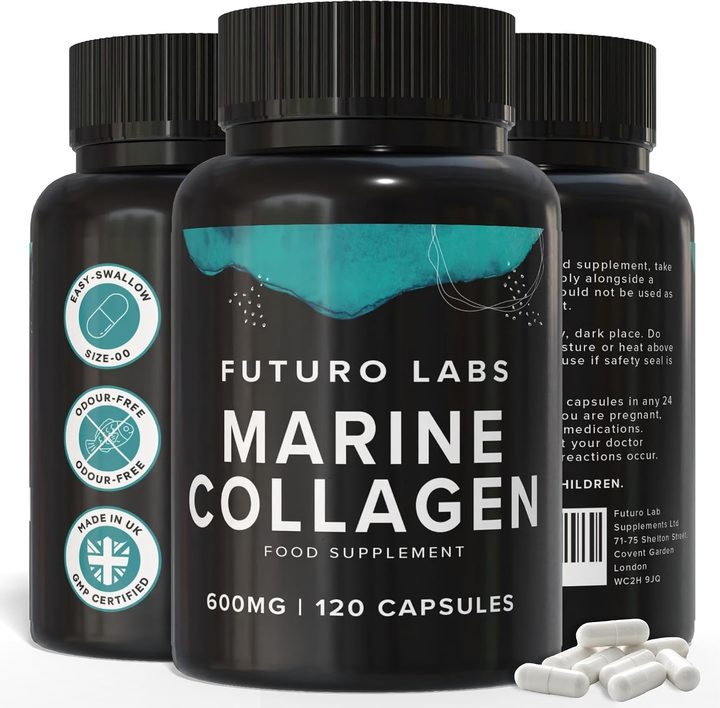
Our brand: the worked example on this page
Futuro Labs Marine Collagen
- 28p a day
- 120 capsules, 2 capsules daily
- Lab tested
- Made in the UK
The C at threshold, honestly framed: Futuro Labs Marine Collagen on Amazon UK, 1200mg hydrolysed type 1 with 12mg vitamin C at 15% NRV, £16.99 for 60 days at 28p. Full label breakdown. The condition frame is on the tendonitis page; the vitamin rankings on the joints vitamin page.
The kernel of truth, told properly: what scurvy proves and does not prove
Behind this question sits one genuinely true fact, and telling it properly is the whole page: vitamin C is required by the enzymes that build collagen, and in severe deficiency the body's connective tissue genuinely fails, wounds reopening, gums bleeding, tendons and vessels weakening, the historical disease scurvy, the one place in all of nutrition where a vitamin and connective-tissue breakdown are directly, causally linked. That fact is the question's honest kernel, and its boundaries matter as much as its truth: scurvy is a disease of profound, prolonged deficiency, essentially retired by ordinary modern diets where a satsuma and half a pepper clear the 80mg NRV, which means the mechanism proves sufficiency matters, a deficient body builds collagen badly, and does not prove that extra helps, a sufficient body given more vitamin C does not build tendons faster, the supplementation trials never showing megadose C treating tendinopathy and the register authorising maintenance sentences, contributes to normal collagen formation for the normal function of cartilage and bones among its tissues, not treatment ones. So the best-vitamin question resolves the way condition questions here always do: no vitamin treats tendonitis, the honest action is verifying C is simply met, by diet routinely, by a label at 15% NRV if a supplement is passing anyway, and the disease that made the question sound plausible is one the reader almost certainly does not have.
The supporting cast, and the page's business ended where the treatment begins
Two adjacencies complete the honest vitamin picture. Vitamin D, the perennial deputy: no tendon sentence exists, but its muscle-function claim is honestly relevant to tendinopathy in a way worth stating precisely, because the rehab that treats a tendon is delivered by muscles, the calf loading an Achilles, the quads and forearm muscles loading their neighbours, and a body meeting the UK's 10-microgram advice keeps the machinery doing the loading in its normal working order, adjacency, not therapy, and the near-default purchase for its own standing reasons. The disqualified, named briefly so the tendon-branded formulas cannot recruit them: vitamin E's oxidative-stress wording, the B family's energy metabolism, vitamin K's bones, none tendon-shaped, and a tendonitis formula built on them around a token C is theme without payload, the X-ray this site applies on sight. With the vitamins settled, the page ends where every condition page ends, at the treatment: persistent tendon pain is assessed, GP or physiotherapist, the graded loading programme the assessment produces is the intervention, complete rest performs worse per the reviews, snaps and sudden loss of function are urgent care, and the shelf's whole lawful contribution, the C verified, the D maintained, the sufficiency floor met, rides alongside a programme that was always going to do the actual work.
| The item | The honest status | The move |
|---|---|---|
| Vitamin C's kernel | Severe deficiency causes connective failure: scurvy | The mechanism proves sufficiency matters, not that extra treats |
| The modern reality | Ordinary diets retire the disease: 80mg NRV, easily met | Verify it, by diet or a label at 15% NRV |
| Vitamin D | Muscle function: the machinery doing the rehab loading | The near-default 10 micrograms, adjacency not therapy |
| E, K and the Bs | No tendon-shaped sentences | Disqualified: X-ray the formulas built on them |
| The treatment | Assessed, graded, progressive loading | The physio programme: where the work happens |
| Red flags | A snap, sudden weakness, rapid swelling | Urgent care, before any of the above |
The verdict, and the kernel filed at its true size
What is the best vitamin for tendonitis: none treats it, and the question's kernel of truth, vitamin C's genuine causal link to connective tissue through the retired disease of scurvy, files at its true size as a sufficiency fact, met by an ordinary week's fruit and veg and carried by labels at 15% NRV, with vitamin D maintained for the muscles that deliver the rehab and the rest of the alphabet disqualified. The treatment remains the assessed, graded loading programme, and the worked example serves the sufficiency verdict exactly: Futuro Labs Marine Collagen, 1200mg hydrolysed type 1 with 12mg vitamin C at the 15% NRV threshold, lab tested, UK made, £16.99 for 60 days at 28p a day, a label whose vitamin does precisely what the register says and nothing the question hoped.
What to check on the label
- No vitamin treats tendonitis: condition questions end at the programme.
- The kernel is scurvy: real, causal, and retired by modern diets.
- Sufficiency, not therapy: extra C does not build tendons faster.
- D serves the loading muscles: adjacency at 10 micrograms.
- Snaps are urgent care: before any vitamin conversation.
Our brand
The worked example: Futuro Labs Marine Collagen
Futuro Labs Marine Collagen: 2 capsules daily, 1200mg hydrolysed type 1 marine collagen with 12mg vitamin C and 1.5mg zinc (15% NRV each), 120 capsules for £16.99, 60 days at 28p a day, lab-tested, UK GMP made. Slim veggie-shell capsules, odour free. Fish derived: pescatarian, not vegetarian or vegan.
- Collagen per serving
- 1200mg hydrolysed type 1 marine (fish)
- Co-factors
- vitamin C 12mg (15% NRV), zinc 1.5mg (15% NRV)
- Serving
- 2 capsules a day
- Bottle
- 120 capsules, 60 days
- Price
- £16.99 (28p a day)
- Capsule
- slim size 00, veggie shell, odour free
Questions people also ask
Does vitamin C help tendonitis?
It cannot treat it: the honest fact is that severe deficiency impairs collagen synthesis, the retired disease scurvy, so C needs meeting, not megadosing, and rehab does the treating.
Should I take high-dose vitamin C for a sore tendon?
No evidence supports it: a sufficient body given extra C does not build tendon faster, and the register's sentences are maintenance wording at ordinary amounts.
Is vitamin D relevant to tendon problems?
By adjacency: its muscle-function claim covers the calves and quads that deliver the loading rehab, which is why the standing 10-microgram advice keeps its place.
Are tendonitis vitamin formulas worth buying?
Read them: usually E, Bs and K, none tendon-shaped, around a token C. Theme without payload, priced by the checks and declined by them.
What actually treats tendonitis?
An assessment and the graded loading programme it produces, progressed over months: complete rest performs worse, and snaps or sudden weakness are urgent care.
Sources
- The vitamin C deficiency literature: severe deficiency impairs collagen synthesis and produces connective tissue failure, the historical disease scurvy, essentially absent on ordinary modern diets. PubMed record
- Review literature on tendinopathy management: progressive, load-based rehabilitation is the established core of treatment, typically guided by a physiotherapist, with passive approaches and complete rest performing worse. PubMed record
- EFSA Panel on Dietetic Products, Nutrition and Allergies. Scientific Opinion on the substantiation of health claims related to magnesium. EFSA Journal 2010;8(10):1807. https://efsa.onlinelibrary.wiley.com/doi/10.2903/j.efsa.2010.1807
- SACN report on vitamin D and health: the basis of UK government advice that adults consider a 10 microgram vitamin D supplement, particularly through autumn and winter. https://www.gov.uk/government/publications/sacn-vitamin-d-and-health-report