Ghost Fitness/Collagen/What vitamin deficiency causes tendonitis?
What vitamin deficiency causes tendonitis?
The short answer
Run the causation test. Vitamin C fails: scurvy is connective tissue failure, not tendonitis, and rare. Vitamin D half passes: lower in some cohorts, inconsistent, confounded, no trial. The rest fail. Load outpacing adaptation causes tendonitis; test vitamin D.
- Vitamin Cfails: deficiency causes scurvy's connective tissue failure, not tendonitis; rare in the UK
- Vitamin Dhalf passes: lower levels in some tendinopathy and rotator cuff cohorts; inconsistent, confounded, no trial of correction
- B12, E, K and the restfail: no association
- The exposure that passesload rising faster than the tendon adapts; accelerators: age, volume jumps, smoking, fluoroquinolones
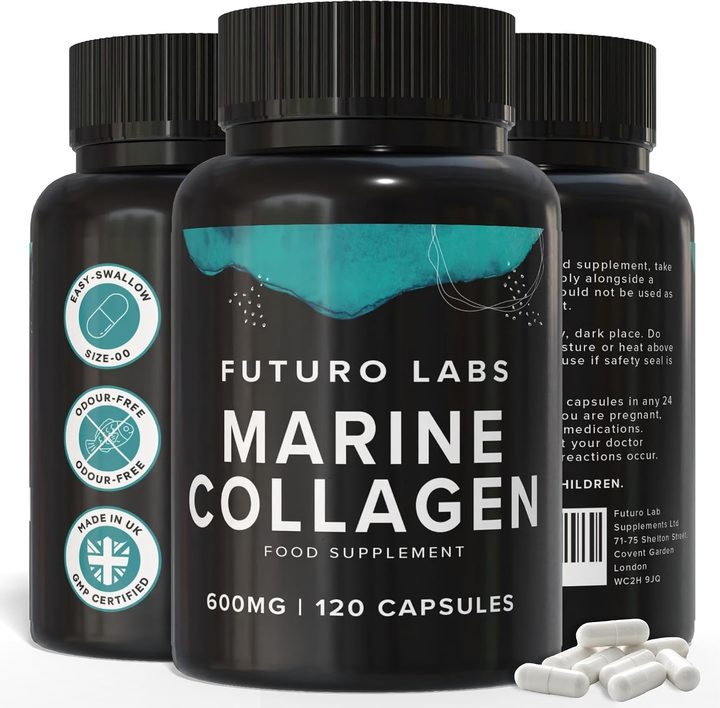
Our brand: the worked example on this page
Futuro Labs Marine Collagen
- 28p a day
- 120 capsules, 2 capsules daily
- Lab tested
- Made in the UK
The cofactor that does hold a collagen sentence, on its true terms: Futuro Labs Marine Collagen on Amazon UK, 2 capsules, 1200mg hydrolysed type 1 marine collagen with 12mg vitamin C at 15% NRV plus zinc, 120 for £16.99, 28p a day, lab tested and UK made, the vitamin C contributing to normal collagen formation for cartilage and bones and nothing on the label about tendonitis. Full label breakdown. The kernel of truth about vitamin C is on the best vitamin for tendonitis page; the cause and accelerators on the causes of tendonitis page; deficiencies ranked by UK prevalence on the deficiency and muscle and joint pain page.
The causation test, and vitamin C in the dock
What vitamin deficiency causes tendonitis is a question that assumes its own answer, that some deficiency does, and the honest page tests the assumption rather than picking a vitamin to satisfy it, using the test epidemiologists apply before blaming any exposure for any disease. The test has several criteria. Strength and consistency: is the association between the deficiency and tendonitis large, and does it appear in study after study rather than in one? Dose response: do worse deficiencies produce more tendonitis? Temporality: does the deficiency come before the tendon problem rather than after it, since an injured, inactive person's blood values change for reasons that have nothing to do with cause? Plausibility: is there a mechanism by which the deficiency would damage a tendon? And experiment: when the deficiency is corrected in a trial, does the tendonitis improve or stop occurring? An exposure that passes all of these is a cause; one that passes some is an association worth watching; one that passes none is a shelf story. Vitamin C goes into the dock first because the shelf names it most often, on the reasoning that collagen needs vitamin C and tendons are collagen. The plausibility criterion is passed, since vitamin C is the cofactor for the hydroxylases that fold collagen chains and without it connective tissue fails. Every other criterion fails. Severe vitamin C deficiency causes scurvy, whose signs are bleeding gums, bruising, poor wound healing, fatigue and joint pain from bleeding into joints, a general connective tissue failure that is not tendonitis and is not confined to tendons; scurvy is rare in the UK, confined to very restricted diets, alcohol dependence and some eating disorders, and a reader with patellar tendon pain who eats any fruit or vegetables is not deficient. No study shows a dose response between vitamin C status and tendinopathy, no study shows low vitamin C preceding tendinopathy in otherwise fed adults, and no trial shows that giving vitamin C to a replete person treats or prevents tendonitis; the register's sentence, vitamin C contributes to normal collagen formation for the normal function of cartilage and bones, is a maintenance sentence describing what the vitamin permits, and it is as far as the evidence goes. Vitamin C fails the test as a cause and remains what it always was, a cofactor met from food that the collagen protocol includes because the enzymes need it present.
Vitamin D half passes, the rest fail, and the exposure that passes everything
Vitamin D goes into the dock second and is the only vitamin that comes out with anything, so the honest page is careful about how much. The association criterion is partly met: several observational studies report lower vitamin D levels in groups with rotator cuff tears, rotator cuff tendinopathy and some other tendinopathies than in comparison groups. Consistency is not met: other cohorts find no difference, and reviews describe the evidence as inconsistent and low in quality. Temporality is doubtful, since a person with a painful shoulder does less outdoors and their vitamin D falls as a consequence of the injury rather than a cause of it, and the studies cannot tell the directions apart. Dose response has not been shown. Plausibility is indirect: vitamin D's established role is in muscle function and bone, so a deficient person has weaker muscle around the joint and more load falling on the tendon, a route through the muscle rather than through the tendon's own biology. And the experimental criterion is empty: no randomised trial shows that correcting vitamin D treats tendinopathy or prevents it. So vitamin D half passes, which makes it an association worth a blood test in a UK adult with persistent tendinopathy, because vitamin D insufficiency is common through a UK winter and correcting it at the guidance dose of ten micrograms a day is cheap and right for other reasons, and not a cause, since a reader who corrects it and keeps loading badly will keep the tendonitis. The remaining vitamins, B12, E, K, A and the B group, fail at the first criterion for want of any association with tendonitis in the literature, and the minerals that the connective tissue sentences belong to, copper and zinc, have deficiency states that weaken connective tissue generally and are rare, with no tendonitis link. The exposure that passes every criterion is not a vitamin: it is load rising faster than the tendon can adapt, the association strong and consistent across every tendinopathy studied, the dose response clear in training volume data, the temporality obvious, the mechanism known in tenocyte biology, and the experiment run thousands of times in every rehab clinic where progressive loading treats it; with age, sudden volume or range increases, poor recovery, smoking and fluoroquinolone antibiotics as the accelerators that make the same load injure sooner. The honest page therefore answers the question with no, names vitamin D as the one worth testing, and sends the reader to a physiotherapist for the loading programme that treats the actual cause, adding that a swollen, hot or hour-stiff joint or a tendon that hurts at rest and at night is a doctor's assessment rather than a vitamin's. The worked example is the cofactor pairing stated on its true terms: two capsules, 1200mg hydrolysed type 1 marine collagen with 12mg vitamin C at 15% of its reference value plus zinc, 120 for £16.99 at 28p a day, lab tested and UK made, the vitamin C carrying its collagen formation sentence for cartilage and bones, the collagen below the research band and holding no claim, and nothing on the label about tendonitis, because no vitamin deficiency causes it.
| The accused | Association | Plausibility | Experimental evidence | Verdict |
|---|---|---|---|---|
| Vitamin C deficiency | None with tendonitis; scurvy is general connective tissue failure, rare in the UK | Yes: cofactor for the collagen hydroxylases | None; replete people gain nothing from more | Fails as a cause |
| Vitamin D deficiency | Lower levels in some rotator cuff and tendinopathy cohorts; inconsistent; confounded by season and activity | Indirect, through muscle and bone | No trial of correction treating or preventing tendinopathy | Half passes: worth a blood test, not a cause |
| Vitamin B12 deficiency | None with tendonitis | No tendon mechanism | None | Fails |
| Vitamins E, K, A and the B group | None | None specific to tendon | None | Fail |
| Copper and zinc deficiency | Rare; general connective tissue weakness | Yes: cross-linking and remodelling enzymes | None in tendonitis | Fail as a cause; met from food |
| Load rising faster than adaptation | Strong and consistent across every tendinopathy | Tenocyte mechanobiology | Progressive loading treats it in every clinic | Passes: the cause |
| Accelerators | Age, sudden volume or range increases, poor recovery, smoking, fluoroquinolones | Known mechanisms | Documented | Make the same load injure sooner |
| The worked exampleOurs | Vitamin C's collagen formation sentence; nothing about tendonitis | Cofactor present | Two capsules, 1200mg marine collagen with 12mg vitamin C plus zinc, 28p a day | On its true terms |
What to check on the label
- Test the accused before blaming it: association, dose, timing, mechanism, trial.
- Acquit vitamin C: scurvy is not tendonitis and is rare.
- Check vitamin D in persistent tendinopathy: an association, not a cause.
- Convict the load: rising faster than the tendon adapts.
- See a doctor for a hot, swollen or night-painful tendon: not a vitamin question.
Our brand
The worked example: Futuro Labs Marine Collagen
Futuro Labs Marine Collagen: 2 capsules daily, 1200mg hydrolysed type 1 marine collagen with 12mg vitamin C and 1.5mg zinc (15% NRV each), 120 capsules for £16.99, 60 days at 28p a day, lab-tested, UK GMP made. Slim veggie-shell capsules, odour free. Fish derived: pescatarian, not vegetarian or vegan.
- Collagen per serving
- 1200mg hydrolysed type 1 marine (fish)
- Co-factors
- vitamin C 12mg (15% NRV), zinc 1.5mg (15% NRV)
- Serving
- 2 capsules a day
- Bottle
- 120 capsules, 60 days
- Price
- £16.99 (28p a day)
- Capsule
- slim size 00, veggie shell, odour free
Questions people also ask
Is there a vitamin deficiency that causes tendonitis?
No deficiency passes the causation test: vitamin C deficiency causes scurvy's general connective tissue failure, not tendonitis, and is rare in the UK; vitamin D shows lower levels in some tendinopathy cohorts but inconsistently, confounded by season and activity, with no trial of correction; the rest show no association, and load outpacing the tendon's adaptation is the cause.
Can low vitamin D cause tendon problems?
It is associated with them in some observational studies of rotator cuff and other tendinopathies, but the findings are inconsistent, a painful shoulder reduces time outdoors and lowers vitamin D as a consequence, and no randomised trial shows that correcting it treats or prevents tendinopathy; a UK adult with persistent tendinopathy may reasonably have it checked, and ten micrograms a day through winter is guidance anyway.
Does vitamin C deficiency cause tendonitis?
No. Severe deficiency causes scurvy, with bleeding gums, bruising, poor wound healing and joint pain, a failure of connective tissue everywhere rather than a tendon condition, and it is rare in the UK outside very restricted diets; vitamin C is the cofactor for the collagen enzymes and its role in a replete person is maintenance, met from food.
What actually causes tendonitis?
Load rising faster than the tendon can adapt, tendon adapting over months while muscle adapts in weeks, the association strong and consistent across every tendinopathy and treated by progressive loading; age, sudden increases in training volume or range, poor recovery, smoking and fluoroquinolone antibiotics are the accelerators that make the same load injure sooner.
Should I get blood tests for tendonitis?
For ordinary load-related tendinopathy, a physiotherapist's assessment and a loading programme come first; a UK adult with persistent tendinopathy may reasonably have vitamin D checked given how common winter insufficiency is, and a tendon or joint that is hot, swollen, stiff for an hour in the morning or painful at rest and at night is a doctor's assessment, since those are not load patterns.
Sources
- The causal inference criteria in epidemiology: attributing an effect to an exposure rests on strength and consistency of association, a dose-response gradient, temporality, biological plausibility, specificity and experimental evidence, the Bradford Hill considerations, against which anecdotal side effects are tested before being accepted as caused. PubMed record
- The vitamin D and tendinopathy literature: observational studies report lower vitamin D levels in some groups with rotator cuff tears and tendinopathy, with inconsistent findings across cohorts, confounding by age, activity and season, no randomised trial showing that correcting vitamin D treats or prevents tendinopathy, and a biological plausibility resting on vitamin D's role in muscle rather than tendon. PubMed record
- The vitamin C deficiency literature: severe deficiency impairs collagen synthesis and produces connective tissue failure, the historical disease scurvy, essentially absent on ordinary modern diets. PubMed record
- The tendinopathy and loaded-joint pain literature: pain at the patellar, Achilles, rotator cuff and elbow tendons in lifters is a load-management problem, treated by progressive tendon loading, technique and volume adjustment, with rest alone and passive treatments performing poorly, and no supplement, omega-3 included, altering the course in the trials. PubMed record