Ghost Fitness/Collagen/How to speed up ligament healing?
How to speed up ligament healing?
The short answer
Two columns. Accelerable: time to assessment, the start of protected loading, range of motion, strength and proprioception, a criteria-based return. Not accelerable: the inflammatory days, proliferative weeks and remodelling months. Effort on the first, patience on the second.
- Accelerable: the startassessment in days not weeks; protected loading early, not after a fortnight of rest
- Accelerable: around the jointrange of motion regained by moving within pain; strength and proprioception rebuilt on the muscle's faster clock
- Accelerable: the returnby criteria, strength symmetry and capacity tests, sooner than by calendar
- Not accelerableinflammatory days, proliferative weeks of type III collagen, remodelling months to a year of type I: the tissue's clock
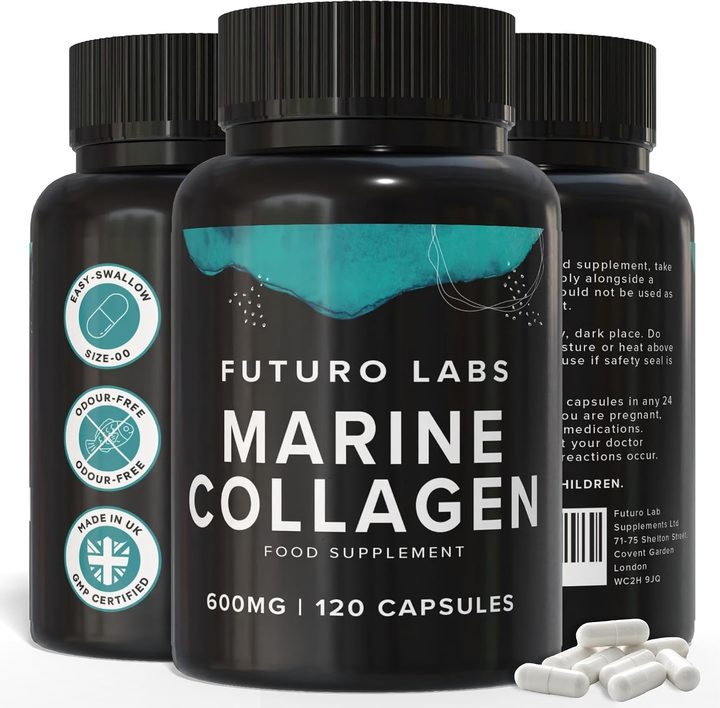
Our brand: the worked example on this page
Futuro Labs Marine Collagen
- 28p a day
- 120 capsules, 2 capsules daily
- Lab tested
- Made in the UK
The adjunct that speeds neither column: Futuro Labs Marine Collagen on Amazon UK, 2 capsules, 1200mg hydrolysed type 1 marine collagen with 12mg vitamin C at 15% NRV plus zinc, 120 for £16.99, 28p a day, lab tested and UK made, below the ~15g protocol and taken for vitamin C's collagen formation sentence through the months the second column takes. Full label breakdown. The phases are on the heal ligaments faster page; the word naturally audited on the naturally page; walking on a torn ligament on the walking page.
The accelerable column: everything around the ligament that a physiotherapist can shorten
How to speed up ligament healing is a question that usually gets one of two wrong answers, that nothing can be sped up or that a supplement can speed it, and the honest page gives the right one, which is that the process has two columns, one that can be shortened and one that cannot, and that speeding up ligament healing means knowing which is which. The accelerable column first, because it is where a reader's effort pays. The time from injury to a correct assessment: a sprained ankle, a twisted knee or a wrenched thumb that is assessed by a physiotherapist within days starts the right programme within days, while one that is rested and guessed at for a fortnight starts it a fortnight later, and that fortnight is the single largest avoidable delay in most ligament recoveries, with the four-step rule and bony tenderness deciding whether an X-ray comes first. The start of protected loading: the ligament healing literature's central finding is that controlled early loading, within pain, with a brace or tape while the joint is unstable, produces a stronger and better-organised repair than immobilisation, so loading that begins in the first days rather than after a fortnight on the sofa does not shorten the phases but produces a better tissue at the end of them and avoids the deconditioning that would otherwise have to be undone. Range of motion: a joint immobilised for even a couple of weeks stiffens, its capsule tightening and its surrounding muscles shortening, and that stiffness is then a separate problem to be solved before loading can progress, whereas a joint moved gently within pain from the start keeps its range and skips that problem entirely, a real acceleration of the overall timeline achieved by not creating a delay. Strength and proprioception around the joint: a torn ligament switches off the muscles around it through pain and swelling and damages the nerve endings that tell the brain where the joint is, and both losses are restored by training on the muscle's clock, which runs in weeks rather than the ligament's months, so a lifter who trains the quadriceps and hamstrings around a healing knee ligament or the peroneals and balance around a healing ankle from the early weeks arrives at the remodelling phase with a joint that is stable from the outside while the ligament matures inside, which is as close to speeding up as the biology allows. And the date of return: the return-to-sport literature finds that athletes who return by criteria, strength symmetry between the sides, hop and capacity tests, sport-specific movement without giving way, re-injure less than those who return on a calendar date, and because criteria can be met before a conservative calendar expires, a criteria-based return is often earlier as well as safer, the accelerable column's last and largest line.
The non-accelerable column, where effort is wasted and patience is the only tool, and where collagen sits
The non-accelerable column is the ligament itself, and the honest page is plain that nothing shortens it. The inflammatory phase runs for days: the torn fibres bleed, clot and are cleared, inflammatory cells signal the repair, and the phase ends when it ends. The proliferative phase runs for weeks: fibroblasts arrive and lay down a scar of disorganised, mostly type III collagen, bulky and weak, and no nutrient, device or technique has been shown to make them do it faster, since fibroblasts work at a rate set by their own signalling and the tension they feel, not by how much raw material is queued. The remodelling phase runs for months to a year or more: type I collagen replaces type III, fibres align to the loads placed on them, and the tissue approaches without fully regaining its original strength, a maturation that proceeds at the collagen's own cross-linking pace and that the pain stopping, which happens early in this phase, does nothing to hurry. Effort spent trying to accelerate this column is wasted and sometimes harmful, since the usual attempts, loading a scar that feels healed, returning to sport on a date, or buying something that promises faster healing, either re-tear the repair and restart all three phases or spend money on a clock nobody owns. Patience is the only tool here, and the first column is what makes the patience bearable, because a lifter who has done everything accelerable is training around a stable joint while the ligament finishes its work. Nutrition holds the floor beneath both columns, protein at 1.6 to 2.2 grams per kilo, adequate energy, no smoking, and collagen sits where every ligament page on this site puts it: the pre-loading protocol, around fifteen grams with roughly 50mg of vitamin C an hour before the loading session, doubled a collagen synthesis marker in a small trial that grew stiffer engineered ligaments, and one small six-month trial at five grams daily improved chronic ankle instability, so it is a marker adjunct with one small outcome trial, timed to the first column's sessions, improving perhaps the tissue the second column produces and speeding neither. The worked example is that adjunct on its true terms: two capsules, 1200mg hydrolysed type 1 marine collagen with 12mg vitamin C plus zinc, 120 for £16.99 at 28p a day, lab tested and UK made, below the protocol's grams, taken for vitamin C's collagen formation sentence through the months. How to speed up ligament healing: assess in days, load early and protected, keep the range, train the muscles and the balance, return by criteria, and let the ligament take the time it takes.
| The part | Column | How it is shortened or why it cannot be | The evidence |
|---|---|---|---|
| Time to assessment | Accelerable | A physiotherapist in days; the four-step rule for an X-ray first | The largest avoidable delay |
| Start of protected loading | Accelerable | Within pain from the first days, braced while unstable | Stronger, better-organised repair than immobilisation |
| Range of motion | Accelerable | Moved gently from the start; stiffness never created | A delay avoided rather than a phase shortened |
| Strength and proprioception | Accelerable | Trained from the early weeks on the muscle's clock | A stable joint from the outside while the ligament matures |
| The date of return | Accelerable | By criteria: symmetry, capacity, sport-specific tests | Earlier and safer than a calendar |
| The inflammatory days | Not accelerable | Clotting and clearing at the tissue's pace | Nothing shortens it |
| The proliferative weeks | Not accelerable | Fibroblasts lay down type III at their own rate | Not substrate-limited |
| The remodelling months | Not accelerable | Type I replaces type III; cross-linking matures | The pain stops long before it ends |
| The collagen protocol | Beside the first column's sessions | ~15g with vitamin C an hour before loading; a marker and one small ankle trial | Speeds neither column |
| The worked exampleOurs | On its true terms | Two capsules, 1200mg marine collagen with 12mg vitamin C, 28p a day | The vitamin C line through the months |
What to check on the label
- Get assessed in days: the largest avoidable delay.
- Load early and protected: a better repair, not a faster one.
- Keep the joint moving within pain: never let it stiffen.
- Train the muscles and balance around it: stability from outside.
- Return by criteria: earlier and safer than a date.
Our brand
The worked example: Futuro Labs Marine Collagen
Futuro Labs Marine Collagen: 2 capsules daily, 1200mg hydrolysed type 1 marine collagen with 12mg vitamin C and 1.5mg zinc (15% NRV each), 120 capsules for £16.99, 60 days at 28p a day, lab-tested, UK GMP made. Slim veggie-shell capsules, odour free. Fish derived: pescatarian, not vegetarian or vegan.
- Collagen per serving
- 1200mg hydrolysed type 1 marine (fish)
- Co-factors
- vitamin C 12mg (15% NRV), zinc 1.5mg (15% NRV)
- Serving
- 2 capsules a day
- Bottle
- 120 capsules, 60 days
- Price
- £16.99 (28p a day)
- Capsule
- slim size 00, veggie shell, odour free
Questions people also ask
What can speed up ligament healing?
The parts around the ligament: an assessment in days rather than weeks, protected loading from the first days, range of motion kept by moving within pain, strength and proprioception rebuilt in the surrounding muscles on their faster clock, and a return by criteria rather than calendar, while the ligament's own inflammatory, proliferative and remodelling phases run at the tissue's pace.
Can you make a ligament heal faster with supplements?
No supplement shortens the phases: fibroblasts lay down and remodel collagen at a rate set by their signalling and the tension they feel, not by substrate, and the collagen protocol, around fifteen grams with vitamin C an hour before loading, is a marker adjunct with one small ankle instability trial, taken beside the sessions and speeding neither column.
Should I rest a ligament injury to speed healing?
Complete rest slows the overall recovery: it produces a weaker, less organised repair than controlled early loading, lets the joint stiffen and the surrounding muscles switch off, and creates problems that then have to be solved before loading can progress, so the accelerable approach is protection while unstable with movement within pain from the start.
How long does a ligament take to heal?
Through three phases on the tissue's clock: inflammatory days, proliferative weeks laying down disorganised type III collagen, and remodelling months to a year or more in which type I replaces it and aligns to load, with the pain stopping early in the last phase and the return decided by strength and capacity criteria rather than by the calendar.
Does training the muscles around a joint help the ligament heal?
It helps the joint while the ligament heals: a torn ligament switches off the surrounding muscles and damages the joint's position sense, both restored by training in weeks rather than the ligament's months, so a lifter who trains around a healing knee or ankle from the early weeks has a joint stable from the outside while the ligament matures inside, the closest thing to acceleration the biology allows.
Sources
- The ligament healing literature: healing proceeds through an inflammatory phase of days, a proliferative phase of weeks in which fibroblasts lay down disorganised type III collagen, and a remodelling phase of months to a year or more in which the scar matures toward type I collagen and aligns to load, with controlled early loading producing stronger repair than immobilisation and the healed ligament remaining mechanically inferior to the original for a long time. PubMed record
- The return-to-sport literature: criteria-based progression, strength symmetry and capacity tests rather than calendar dates, is associated with lower re-injury after ligament injury. PubMed record
- The chronic ankle instability collagen trial: a six-month randomised placebo-controlled trial giving five grams a day of specific collagen peptides to athletes with chronic ankle instability reported improved subjective ankle stability scores and fewer ankle sprains in the following months than placebo, around fifty participants, manufacturer-funded, the one collagen trial in a ligament-related condition with a clinical outcome. PubMed record
- The gelatin and vitamin C pre-exercise research (Shaw, Baar and colleagues): 15g gelatin with vitamin C taken about an hour before loading, studied for markers of collagen synthesis, the protocol behind the tendon-training conversation. PubMed record