Ghost Fitness/Collagen/Do supplements help with tendonitis repair?
Do supplements help with tendonitis repair?
The short answer
Repair is the shelf's word, not the biopsy's: tendons remodel under progressive load over months. The honest verbs: vitamin C contributes to normal collagen formation; collagen raised a synthesis marker in one small trial; everything else, no tendon trial.
- The biopsya failed-healing picture that remodels only under progressive load over months
- Vitamin Ccontributes to normal collagen formation: a register sentence, met from food
- Collagen with vitamin C~15g an hour before loading doubled a synthesis marker in one small trial: a marker, not an outcome
- Omega-3, curcumin, magnesium, gelsno tendon trial; joint or pain evidence elsewhere; gels ease pain without changing tissue
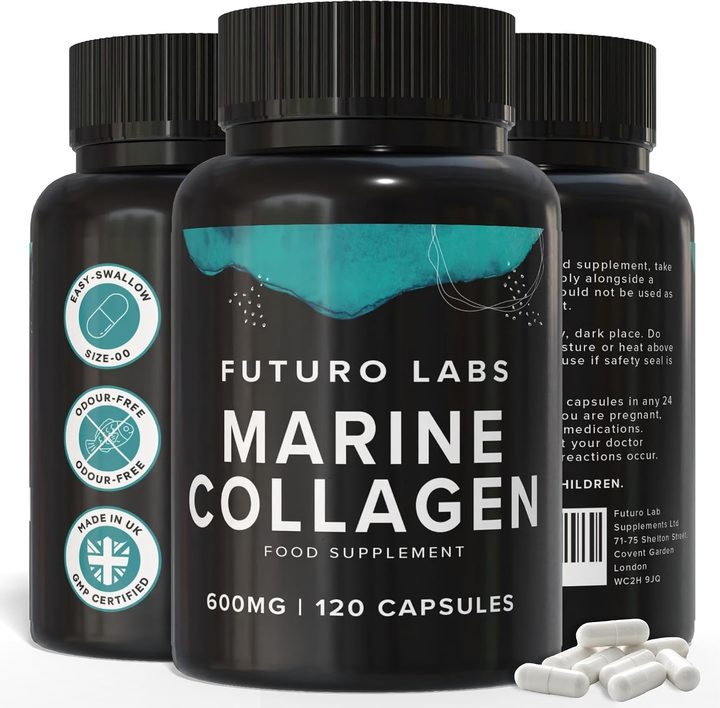
Our brand: the worked example on this page
Futuro Labs Marine Collagen
- 28p a day
- 120 capsules, 2 capsules daily
- Lab tested
- Made in the UK
The adjunct, stated as one: Futuro Labs Marine Collagen on Amazon UK, 2 capsules, 1200mg hydrolysed type 1 marine collagen with 12mg vitamin C at 15% NRV plus zinc, 120 for £16.99, 28p a day, lab tested and UK made, below the ~15g protocol and taken for vitamin C's collagen formation sentence, never for repair. Full label breakdown. The symptoms are on the four symptoms page; the causes on the causes page; the worth question on the worth taking page.
Repair is the shelf's word: what the biopsy shows and what changes it
Do supplements help with tendonitis repair is a question that carries its answer in its verb, because repair is the word the shelf prints and not the word the tendon literature uses, and the honest page starts by looking at what a painful tendon actually is before asking what a capsule could do to it. The biopsies of chronically painful tendons, Achilles and patellar most studied, show a failed-healing picture rather than an inflamed one: disorganised collagen where the fibres should run in parallel, increased ground substance and water, more and smaller cells, new blood vessels growing in and nerves following them, which is where the pain comes from, and little of the inflammatory cell infiltrate the word tendonitis implies, the reason the field says tendinopathy. That picture changes in one documented way. Under progressive loading, built up over months and guided by the tendon's response during and after each session, the tissue remodels: collagen realigns to the load, the water content falls, the tendon stiffens toward normal and the pain recedes, the tendinopathy rehabilitation literature's core and the reason the established management is a loading programme, usually physiotherapist-guided, with the eccentric heel-drop tradition for the Achilles as its ancestor and its descendants for every other tendon. Nothing on any shelf has been shown to change that biopsy picture, and repair, if the word is used at all, is what load does over months while the lifter does the sessions. That reframing is the whole answer, and it also sets the honest test for each supplement: not does it repair, which none has been shown to, but what is the largest true verb it can carry, and does that verb earn a place beside the programme or instead of it. The rest of the page applies that test item by item, and the answer for every item is that its verb is smaller than repair and that its place, where it has one, is beside the loading and never instead of the assessment that should start it.
The honest verb for each shelf item, and the adjunct stated as one
Vitamin C first, because it has the largest true verb on the shelf and it is still a small one: vitamin C contributes to normal collagen formation for the normal function of cartilage, bones, skin, teeth, gums and blood vessels, the register's authorised sentence, because it is the cofactor for the enzymes that hydroxylate and cross-link collagen and its severe deficiency historically produced connective tissue failure, and a reader eating fruit and vegetables has met it, so its verb is contributes, met from food, and not repairs. Collagen with vitamin C second: a small crossover trial gave around fifteen grams of gelatin with roughly 50mg of vitamin C an hour before six minutes of skipping and roughly doubled a blood marker of collagen synthesis against placebo, with engineered ligaments grown in the participants' serum coming out stiffer and richer in collagen, the basis of the pre-loading protocol some physiotherapists use beside the loading programme, and its honest verb is raised a synthesis marker in one small trial, a marker and not a tendon outcome, no injury trial, no claim, an adjunct discussed with the physiotherapist and timed to the session. Omega-3 third: no tendon trial, its joint evidence being in rheumatoid arthritis at around 2.7 grams a day alongside standard treatment and its sports evidence being soreness in the untrained, so its verb for tendons is none. Curcumin fourth: no tendon trial, its evidence being modest pain reductions in knee osteoarthritis in short trials, a different tissue and a different disease, so its tendon verb is none. Magnesium fifth: a register sentence for normal muscle function and none for tendon, so its tendon verb is none, though the muscle doing the loading needs it. Topical anti-inflammatory gels sixth, since the shelf sells them beside the capsules: they ease pain in some soft tissue conditions, a real verb and a recognised option with pharmacist guidance, and they change nothing in the tissue, with the caution that blunting the pain and the inflammatory signalling around a loading programme may blunt the adaptation the programme is meant to produce, so they are used for comfort and not mistaken for repair. And the injectable compounds the forums push under the word peptides are unlicensed, untested and prohibited territory this site does not enter. The verbs totalled: contributes, raised a marker, none, none, none, eases pain. None is repair, and the one thing that does remodel a tendon is the programme. The worked example is stated as the adjunct it is: two capsules, 1200mg hydrolysed type 1 marine collagen with 12mg vitamin C plus zinc, 120 for £16.99 at 28p a day, lab tested and UK made, below the protocol's fifteen grams, taken for vitamin C's collagen formation sentence, the register's only collagen-adjacent line, while the protocol lifter buys the grams as gelatin or powder and takes them an hour before the session the physiotherapist set. Do supplements help with tendonitis repair: they carry smaller verbs than repair, one of them earns a seat beside the loading as research, and the repair is the loading.
| The item | The shelf's verb | The honest verb | Its place |
|---|---|---|---|
| Progressive loading | Not on the shelf | Remodels the tendon over months | The treatment, physiotherapist-guided, after an assessment |
| Vitamin C | Repairs connective tissue | Contributes to normal collagen formation; a register sentence | Met from food; the cofactor |
| Collagen with vitamin C | Rebuilds tendons | Raised a synthesis marker in one small trial at ~15g an hour before loading | An adjunct beside the programme, as research |
| Omega-3 | Anti-inflammatory for tendons | No tendon trial; joint evidence in rheumatoid arthritis | None for tendons |
| Curcumin | Natural tendon healer | No tendon trial; knee osteoarthritis pain evidence | None for tendons |
| Magnesium | Tendon and muscle recovery | Normal muscle function; no tendon sentence | The loading muscle, not the tendon |
| Topical anti-inflammatory gels | Treats tendonitis | Eases pain; changes no tissue; may blunt adaptation | Comfort, with pharmacist guidance; not repair |
| The worked exampleOurs | None printed | Two capsules, 1200mg marine collagen with 12mg vitamin C, 28p a day, below the protocol | The vitamin C sentence; the protocol lifter buys the grams |
What to check on the label
- Replace repair with remodel: load does it, over months.
- Start with an assessment: then the programme.
- Give each supplement its true verb: contributes, a marker, none.
- Use the collagen protocol beside the sessions: ~15g with vitamin C an hour before, as research.
- Use gels for comfort only: they change no tissue.
Our brand
The worked example: Futuro Labs Marine Collagen
Futuro Labs Marine Collagen: 2 capsules daily, 1200mg hydrolysed type 1 marine collagen with 12mg vitamin C and 1.5mg zinc (15% NRV each), 120 capsules for £16.99, 60 days at 28p a day, lab-tested, UK GMP made. Slim veggie-shell capsules, odour free. Fish derived: pescatarian, not vegetarian or vegan.
- Collagen per serving
- 1200mg hydrolysed type 1 marine (fish)
- Co-factors
- vitamin C 12mg (15% NRV), zinc 1.5mg (15% NRV)
- Serving
- 2 capsules a day
- Bottle
- 120 capsules, 60 days
- Price
- £16.99 (28p a day)
- Capsule
- slim size 00, veggie shell, odour free
Questions people also ask
What actually repairs a tendon?
Progressive loading over months: the biopsy picture of a painful tendon, disorganised collagen, new vessels and nerves, remodels under a physiotherapist-guided loading programme built up gradually and monitored by pain during and after each session, the established management and the only intervention shown to change the tissue.
Does collagen repair tendons?
No trial says so: around fifteen grams of gelatin or hydrolysed collagen with roughly 50mg of vitamin C an hour before loading doubled a blood marker of collagen synthesis in one small crossover trial, the basis of a pre-loading protocol used beside rehabilitation, a marker result with no tendon outcome trial and no claim.
Is omega-3 or turmeric good for tendonitis?
Neither has a tendon trial: omega-3's joint evidence is in rheumatoid arthritis at around 2.7 grams a day alongside standard treatment, and curcumin's is modest pain reduction in knee osteoarthritis in short trials, a different tissue and disease, so their honest tendon verb is none.
Do anti-inflammatory gels help tendonitis heal?
They ease pain in some soft tissue conditions and change nothing in the tendon, with the caution that dulling pain and inflammatory signalling around a loading programme may blunt the adaptation the programme is meant to produce, so they are used for comfort with pharmacist guidance and not mistaken for repair.
What vitamin is best for tendon repair?
Vitamin C holds the only relevant sentence, contributing to normal collagen formation for the normal function of cartilage and bones as the cofactor for the enzymes that cross-link collagen, a maintenance role met from fruit and vegetables and paired with collagen in the pre-loading protocol, and its verb is contributes rather than repairs.
Sources
- The tendinopathy literature: histology of chronic tendon pain shows a degenerative, failed-healing picture rather than a classic inflammatory one, reframing the old tendonitis label and its treatment logic. PubMed record
- Review literature on tendinopathy management: progressive, load-based rehabilitation is the established core of treatment, typically guided by a physiotherapist, with passive approaches and complete rest performing worse. PubMed record
- The gelatin and vitamin C pre-exercise research (Shaw, Baar and colleagues): 15g gelatin with vitamin C taken about an hour before loading, studied for markers of collagen synthesis, the protocol behind the tendon-training conversation. PubMed record
- The vitamin C deficiency literature: severe deficiency impairs collagen synthesis and produces connective tissue failure, the historical disease scurvy, essentially absent on ordinary modern diets. PubMed record