Ghost Fitness/Collagen/Can collagen help with tendonitis?
Can collagen help with tendonitis?
The short answer
As an adjunct, not a fix: the one trial gave 15g with vitamin C an hour before loading and doubled a synthesis marker, no outcome measured. The thread's fortnight fixes were the rest and the rehab. Loading treats tendonitis.
- The trial~15g gelatin with ~50mg vitamin C an hour before loading: a synthesis marker doubled; a handful of people; no outcome
- The thread's fortnighttendons remodel over months; the fortnight's fix was rest, a changed grip or the programme
- The thread's twenty grams at nightno untimed daily dose and no night dose has a tendon trial; the protocol is an hour before
- The confoundereveryone who improved changed the load; load is what tendons respond to
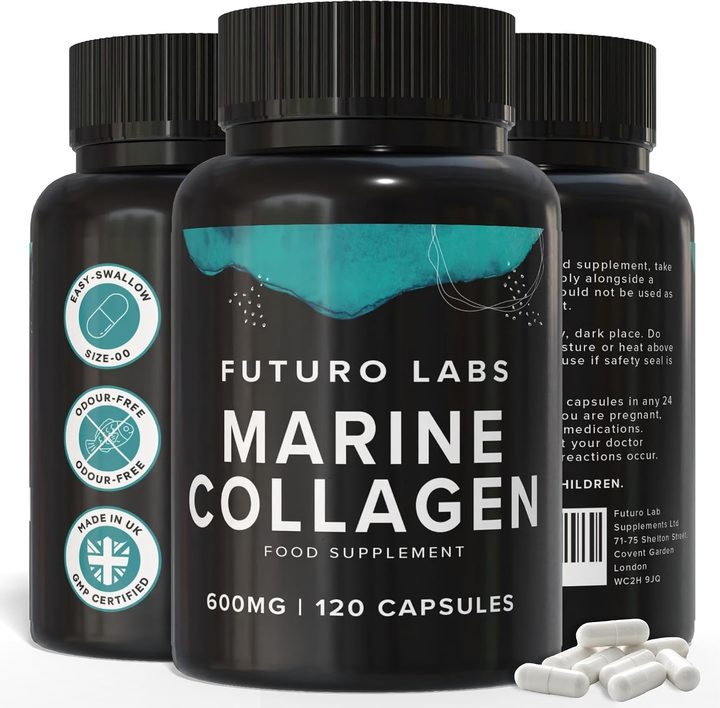
Our brand: the worked example on this page
Futuro Labs Marine Collagen
- 28p a day
- 120 capsules, 2 capsules daily
- Lab tested
- Made in the UK
The adjunct on its true terms: Futuro Labs Marine Collagen on Amazon UK, 2 capsules, 1200mg hydrolysed type 1 marine collagen with 12mg vitamin C at 15% NRV plus zinc, 120 for £16.99, 28p a day, lab tested and UK made, below the protocol's ~15g and taken for vitamin C's collagen formation sentence, while the protocol lifter buys the grams as gelatin or powder for the hour before the session. Full label breakdown. Whether it is worth it is on the worth taking page; the verbs on the supplements for repair page; the causes on the causes page.
The thread audited: the fortnight, the twenty grams, the night dose and the any-collagen claim
Can collagen help with tendonitis is a question most readers arrive at from a forum thread, the secondary searches say so, and the honest page audits the thread against the one trial that exists, claim by claim, because the thread and the trial disagree on almost everything and a lifter with a sore elbow deserves to know which one to believe. The trial first, so the audit has a ruler: a small crossover study gave around fifteen grams of gelatin with roughly 50mg of vitamin C an hour before six minutes of skipping, and measured a blood marker of collagen synthesis, which roughly doubled against placebo, while engineered ligaments grown in the participants' serum came out stiffer and richer in collagen; a handful of participants, a marker and not an injury outcome, no tendon pain measured, no claim resulting, and the basis of the pre-loading protocol some physiotherapists use beside a loading programme. Now the thread. Claim one, it fixed my elbow in a fortnight: tendons remodel over months under progressive load, the trial measured a blood marker an hour after a dose and nothing about pain at all, and a fortnight is not a timescale on which any tendon tissue changes, so a fortnight's fix was something else that started the same week, the rest from the provoking lift, the changed grip, the straps, the lighter block or the physiotherapist's programme, and the collagen was standing next to it. Claim two, take twenty grams a day: the trial gave around fifteen grams, timed an hour before the loading session, because the peptides peak in blood over the following hour or two and the loading is what tells the tendon to use them, and no untimed daily dose at any gram count has a tendon trial, so twenty grams at breakfast is a joint-trial dose taken for a tendon reason with no evidence connecting the two. Claim three, take it at night: night is the shelf's favourite hour and it has no tendon evidence whatever, the only timed collagen protocol being an hour before the session, so a night dose for a tendon is the wrong preposition, after and not before, on the wrong clock. Claim four, any collagen works: the trial used gelatin with vitamin C, and the vitamin C is not decorative, since it is the cofactor for the enzymes that hydroxylate and cross-link collagen and holds the register's only collagen sentence, so a collagen powder without vitamin C, or a capsule with a token amount taken without regard to timing, is not the protocol, and a reader running the protocol takes the fifteen grams with the vitamin C an hour before the session, as the trial did.
The confounder the thread never names, and the honest answer with the adjunct stated as one
The confounder is the paragraph the thread never writes, and it is the whole of the audit: every poster who got better also did something to the load. Read any tendonitis thread with that in mind and the pattern is plain, the poster who started collagen also switched to straps, or dropped the curls, or took a deload week, or saw a physiotherapist, or simply rested the elbow for the fortnight while waiting for the collagen to work, and then credited the tub, because the tub was the thing they bought and the rest was the thing they did without noticing. Tendons respond to load, in both directions: load rising faster than the tissue can adapt is the cause, and progressive load built back over months under a programme is the treatment, the tendinopathy rehabilitation literature's core, and any intervention that arrives alongside a change in load will look like it worked, which is why the field runs trials and the forum runs anecdotes. So the honest answer to can collagen help with tendonitis is yes, as an adjunct, and the word adjunct carries the whole weight: collagen with vitamin C, around fifteen grams an hour before the loading session, raised a synthesis marker in a small trial and is used by some physiotherapists beside the programme on the strength of that marker, a research-grade addition that costs pennies a session and carries flat expectations, discussed with the physiotherapist running the programme and timed to their sessions, and it helps with tendonitis in exactly the way a cofactor helps a process that the load is driving, which is to say it might make the programme's tissue response a little larger and it does nothing on its own. Bought instead of the assessment and the programme it is worth less than nothing, because it delays the thing that works while the reader waits for a fortnight that will not come. Two exclusions before the worked example, because they share the search: a sudden pop with a gap in the tendon and an inability to push off or straighten is the rupture picture and a same-day assessment, and a hot, red, swollen joint is not a tendon problem and needs urgent assessment, and neither is a collagen question. The worked example is the adjunct stated as one: two capsules, 1200mg hydrolysed type 1 marine collagen with 12mg vitamin C plus zinc, 120 for £16.99 at 28p a day, lab tested and UK made, below the protocol's fifteen grams, taken for vitamin C's collagen formation sentence, the register's only collagen-adjacent line, while the protocol lifter buys the grams as gelatin or powder for the hour before the session the physiotherapist set and takes the capsules on the other days if at all. Can collagen help with tendonitis: as a timed adjunct to the loading that treats it, as research, and not as the fortnight fix the thread remembers, which was the rest.
| The claim | The thread says | The trial says | The verdict |
|---|---|---|---|
| Speed | Fixed my elbow in a fortnight | A blood marker measured an hour after a dose; no pain outcome | Tendons remodel over months; the fortnight was the rest or the rehab |
| Dose | Twenty grams a day | ~15g gelatin, timed an hour before loading | No untimed daily dose has a tendon trial |
| Timing | Take it at night | An hour before the session | Night has no tendon evidence; wrong preposition |
| Product | Any collagen works | Gelatin with ~50mg vitamin C, the cross-linking cofactor | Without vitamin C and timing it is not the protocol |
| The confounder | Never mentioned | Load is the variable tendons respond to | Everyone who improved changed the load |
| The honest answer | A fix | An adjunct beside a loading programme, as research | Discussed with the physiotherapist; never instead of the assessment |
| The worked exampleOurs | None | Two capsules, 1200mg marine collagen with 12mg vitamin C, 28p a day, below the protocol | The vitamin C line; the protocol lifter buys the grams |
What to check on the label
- Read the thread for the load change: it is always there.
- Run the protocol as the trial did: ~15g with vitamin C, an hour before loading.
- Ignore night dosing for tendons: no evidence, wrong preposition.
- Book the assessment first: the programme is the treatment.
- Expect an adjunct's result: flat, and beside the rehab.
Our brand
The worked example: Futuro Labs Marine Collagen
Futuro Labs Marine Collagen: 2 capsules daily, 1200mg hydrolysed type 1 marine collagen with 12mg vitamin C and 1.5mg zinc (15% NRV each), 120 capsules for £16.99, 60 days at 28p a day, lab-tested, UK GMP made. Slim veggie-shell capsules, odour free. Fish derived: pescatarian, not vegetarian or vegan.
- Collagen per serving
- 1200mg hydrolysed type 1 marine (fish)
- Co-factors
- vitamin C 12mg (15% NRV), zinc 1.5mg (15% NRV)
- Serving
- 2 capsules a day
- Bottle
- 120 capsules, 60 days
- Price
- £16.99 (28p a day)
- Capsule
- slim size 00, veggie shell, odour free
Questions people also ask
Should I take collagen if I have tendonitis?
As an adjunct beside a physiotherapist's loading programme, if at all: around fifteen grams of gelatin or hydrolysed collagen with roughly 50mg of vitamin C an hour before the loading session doubled a collagen synthesis marker in one small trial, a marker with no outcome trial and no claim, discussed with the physiotherapist and never bought instead of the assessment.
Why do people on Reddit say collagen cured their tendonitis?
Because something else changed the same week: every poster who improved also rested the provoking lift, switched to straps, took a lighter block or started rehabilitation, and tendons respond to load in both directions, so the tub standing beside the load change got the credit, which is why the field runs trials and the forum runs anecdotes.
How much collagen should I take for tendonitis?
The trial's dose, timed: around fifteen grams of gelatin or hydrolysed collagen with roughly 50mg of vitamin C about an hour before the tendon loading session, not twenty grams at breakfast, since no untimed daily dose has a tendon trial and the loading is what tells the tendon to use the peptides.
Does it matter which collagen I take for tendonitis?
The vitamin C matters more than the animal: the trial used gelatin with vitamin C, the cofactor for the enzymes that cross-link collagen and the holder of the register's only collagen sentence, so a collagen without it, or taken without regard to timing, is not the protocol, while marine or bovine hydrolysate at the same grams with the same vitamin C would be.
How long does collagen take to help tendonitis?
It does not help on its own timescale: the marker rose within an hour in the trial and tendon tissue remodels over months under the loading programme, so the adjunct is taken before each session for the months the programme runs, and a fortnight's improvement is the rest or the rehabilitation rather than the collagen.
Sources
- The gelatin and vitamin C pre-exercise research (Shaw, Baar and colleagues): 15g gelatin with vitamin C taken about an hour before loading, studied for markers of collagen synthesis, the protocol behind the tendon-training conversation. PubMed record
- The tendinopathy and loaded-joint pain literature: pain at the patellar, Achilles, rotator cuff and elbow tendons in lifters is a load-management problem, treated by progressive tendon loading, technique and volume adjustment, with rest alone and passive treatments performing poorly, and no supplement, omega-3 included, altering the course in the trials. PubMed record
- Review literature on tendinopathy management: progressive, load-based rehabilitation is the established core of treatment, typically guided by a physiotherapist, with passive approaches and complete rest performing worse. PubMed record
- The collagen peptide absorption literature: after oral hydrolysed collagen, small peptides such as prolyl-hydroxyproline and hydroxyprolyl-glycine appear in blood for several hours alongside free amino acids, and in cell and animal work these peptides act on fibroblasts and chondrocytes, the mechanism proposed for why hydrolysed collagen might do more than an equal quantity of its free amino acids, a hypothesis with human marker data behind it and no human outcome claim. PubMed record