Ghost Fitness/Collagen/Do supplements help with tendons and ligaments?
Do supplements help with tendons and ligaments?
The short answer
One protein, two attachments: both are type 1 collagen adapting to load over months. Supplements are a floor and one adjunct: protein, vitamin C's sentence, and ~15g collagen with vitamin C an hour before loading, a marker result.
- The shared biologydense type 1 collagen, sparse cells, poor blood supply; muscle to bone and bone to bone; months to adapt
- The shared protocol~15g gelatin with ~50mg vitamin C an hour before loading: a synthesis marker doubled; engineered ligaments stiffer; no outcome
- The one differencetendons: a loading literature for chronic pain; ligaments: a healing literature for sprains
- The shared auditvitamin C, manganese, copper, zinc hold sentences; omega-3, curcumin, glucosamine have no trial; protein 1.6 to 2.2g per kilo is the floor
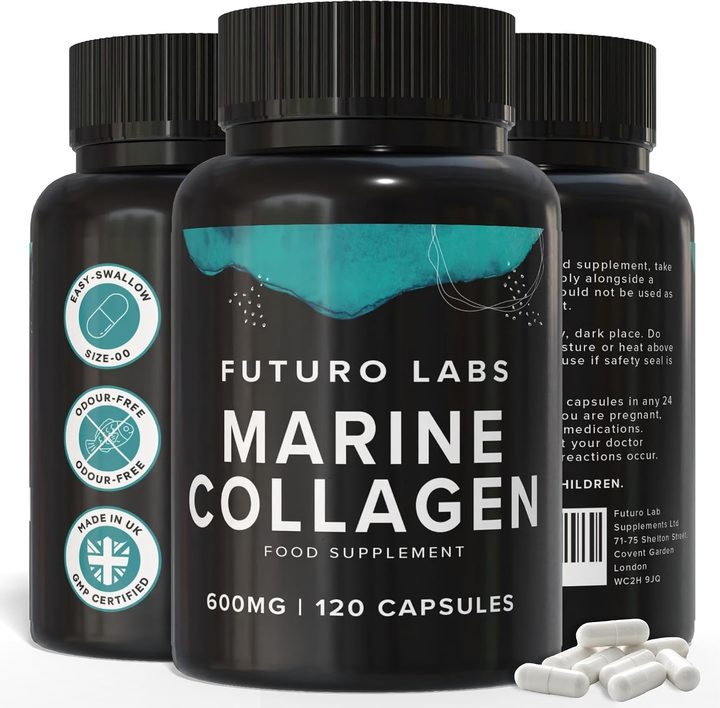
Our brand: the worked example on this page
Futuro Labs Marine Collagen
- 28p a day
- 120 capsules, 2 capsules daily
- Lab tested
- Made in the UK
The adjunct for both attachments: Futuro Labs Marine Collagen on Amazon UK, 2 capsules, 1200mg hydrolysed type 1 marine collagen with 12mg vitamin C at 15% NRV plus zinc, 120 for £16.99, 28p a day, lab tested and UK made, below the ~15g protocol and taken for vitamin C's collagen formation sentence, while the protocol lifter buys the grams as powder for the hour before the session. Full label breakdown. Ligament healing by phase is on the heal ligaments faster page; the tendon verbs on the supplements for tendonitis repair page; the connective tissue sentences on the best supplements for tendons and ligaments page.
One protein, two attachments: the shared biology and the shared protocol
Do supplements help with tendons and ligaments is a question that names two tissues most readers treat as one, and the honest page agrees with the readers on the biology and then shows the one place the two differ, because the answer about supplements is almost entirely shared and the one difference decides which literature a reader is in. The shared biology first. Tendons and ligaments are the same protein with two attachments: both are dense, parallel-fibred type 1 collagen with a little type 3 and minor collagens, sparse fibroblast-type cells scattered through the matrix, and a poor blood supply compared with muscle, which is why both are pale, both are slow and both are cold to the touch after a session while the muscle beside them is warm. A tendon joins muscle to bone and transmits force, so it is loaded every time the muscle contracts; a ligament joins bone to bone and limits motion, so it is loaded when the joint reaches the end of a range or is pushed sideways. Both remodel to progressive load on a clock of months rather than the weeks muscle needs, the connective tissue adaptation literature's mismatch that causes most lifters' tendon problems, and both, when torn, heal slowly through phases and remain mechanically inferior to the original for a long time. The shared protocol follows from the shared protein. The one collagen trial that reached either tissue gave around fifteen grams of gelatin with roughly 50mg of vitamin C an hour before six minutes of skipping and roughly doubled a blood marker of collagen synthesis against placebo, and then grew engineered ligaments in the participants' serum and found them stiffer and richer in collagen, so the trial's own tissue model was a ligament while its clinical use, the pre-loading protocol, has spread mostly through tendon rehabilitation, and the mechanism, small peptides and the vitamin C cofactor arriving in the blood as the load tells the tissue to build, applies to both attachments equally and to neither by outcome, since no injury or pain trial exists for either. So the protocol is one adjunct for two tissues: fifteen grams with vitamin C an hour before the session the physiotherapist set, whether that session is loading a painful Achilles or rehabilitating a sprained ankle ligament, taken as research beside the programme and never instead of the assessment that should start it.
The one difference in evidence, the shared supplement audit, and the adjunct stated as one
The one difference is in what goes wrong and what the literature is about. Tendons have a tendinopathy literature: chronic tendon pain from load outrunning capacity, a failed-healing picture on biopsy rather than inflammation, and a management built on progressive loading programmes guided by pain, the eccentric heel-drop tradition for the Achilles and its descendants for the patellar, elbow and shoulder tendons, over months, with rupture as the acute exception. Ligaments have a healing literature: sprains and tears from a joint pushed past its range, an inflammatory phase of days, a proliferative phase of weeks laying down disorganised type III collagen, and a remodelling phase of months to a year maturing the scar toward type I, managed by protection and relative rest early, controlled progressive loading through the middle, and a return by criteria rather than calendar at the end, with complete tears of some ligaments a surgical decision. A reader with a tendon is in a chronic-load story and a reader with a ligament is usually in an acute-healing story, and the supplement question is the same in both. The shared audit, then, item by item. Protein at 1.6 to 2.2 grams per kilo from complete sources is the floor, since both tissues are built from amino acids the injured, less active lifter still has to eat, and collagen counts toward that floor on the label and not toward muscle. Vitamin C contributes to normal collagen formation for the normal function of cartilage, bones, skin, gums, teeth and blood vessels, the register's sentence and the cofactor for the enzymes that cross-link collagen in both tissues, met from fruit and vegetables and paired with collagen in the protocol. Manganese contributes to the normal formation of connective tissue and copper to the maintenance of normal connective tissues, register sentences met from a varied diet, and zinc's sentences run to skin and to protein synthesis; none is a treatment and each is a nutrient a deficient reader would be short of. Omega-3, curcumin and glucosamine have no tendon or ligament trial, their evidence lying in rheumatoid arthritis, knee osteoarthritis pain and osteoarthritis respectively, so their honest verb for these two tissues is none. Smoking impairs healing in both tissues and is the one habit with clear evidence of lengthening every phase. And the injectable compounds forums push under the word peptides are unlicensed, untested and prohibited territory this site does not enter. The audit totalled: a floor of protein and a few maintenance sentences, one adjunct with a marker behind it, nothing with an outcome, and load doing the adapting and the healing in both tissues. The worked example is the adjunct for both attachments on its true terms: two capsules, 1200mg hydrolysed type 1 marine collagen with 12mg vitamin C plus zinc, 120 for £16.99 at 28p a day, lab tested and UK made, below the protocol's fifteen grams, taken for vitamin C's collagen formation sentence, while the protocol lifter buys the grams as gelatin or powder for the hour before the session. Do supplements help with tendons and ligaments: the same way for both, as a floor and one adjunct, with the load the physiotherapist sets doing what the tissues actually respond to.
| The item | Tendons | Ligaments | Shared or different |
|---|---|---|---|
| The tissue | Type 1 collagen, muscle to bone, transmits force | Type 1 collagen, bone to bone, limits motion | Shared protein, different attachment |
| The clock | Adapts to load over months | Adapts and heals over months to a year | Shared |
| What goes wrong | Chronic tendinopathy from load outrunning capacity; rupture acutely | Sprains and tears from a joint pushed past range | Different literature |
| What treats it | Progressive loading programme, physiotherapist-led | Protect, then controlled loading, then criteria-based return; surgery for some complete tears | Load in both |
| The collagen protocol | ~15g with ~50mg vitamin C an hour before the session | The same; the trial's own model was an engineered ligament | Shared adjunct; no outcome trial for either |
| The sentences | Vitamin C collagen formation; manganese and copper connective tissue; protein the floor | The same | Shared |
| No trial | Omega-3, curcumin, glucosamine | The same | Shared none |
| The worked exampleOurs | Two capsules, 1200mg marine collagen with 12mg vitamin C plus zinc, 28p a day | The same | Below the protocol; the vitamin C line |
What to check on the label
- Treat them as one protein: the supplement answer is shared.
- Know which story you are in: chronic tendon load, or acute ligament healing.
- Hold the floor: 1.6 to 2.2g protein per kilo, no smoking.
- Use the protocol beside the session: ~15g with vitamin C an hour before, as research.
- Expect load to do the work: in both tissues, over months.
Our brand
The worked example: Futuro Labs Marine Collagen
Futuro Labs Marine Collagen: 2 capsules daily, 1200mg hydrolysed type 1 marine collagen with 12mg vitamin C and 1.5mg zinc (15% NRV each), 120 capsules for £16.99, 60 days at 28p a day, lab-tested, UK GMP made. Slim veggie-shell capsules, odour free. Fish derived: pescatarian, not vegetarian or vegan.
- Collagen per serving
- 1200mg hydrolysed type 1 marine (fish)
- Co-factors
- vitamin C 12mg (15% NRV), zinc 1.5mg (15% NRV)
- Serving
- 2 capsules a day
- Bottle
- 120 capsules, 60 days
- Price
- £16.99 (28p a day)
- Capsule
- slim size 00, veggie shell, odour free
Questions people also ask
What is the difference between a tendon and a ligament?
The attachment: both are dense type 1 collagen with sparse cells and poor blood supply, but a tendon joins muscle to bone and transmits force while a ligament joins bone to bone and limits motion, so tendons go wrong chronically under load and ligaments acutely when a joint is pushed past its range, and both adapt and heal over months.
Does collagen work for ligaments as well as tendons?
By the same mechanism and the same evidence: the one trial gave around fifteen grams of gelatin with vitamin C an hour before loading, doubled a collagen synthesis marker and grew stiffer engineered ligaments in the participants' serum, so the protocol applies to both tissues as a marker adjunct beside the rehabilitation, with no injury outcome trial for either.
What vitamins help tendons and ligaments?
Those with register sentences met from food: vitamin C contributes to normal collagen formation as the cross-linking cofactor, manganese to the normal formation of connective tissue and copper to its maintenance, all maintenance roles a deficient reader would be short of and none a treatment, with protein at 1.6 to 2.2 grams per kilo the floor beneath them.
Do omega-3 or turmeric help tendons and ligaments?
Neither has a tendon or ligament trial: omega-3's joint evidence is in rheumatoid arthritis and curcumin's in knee osteoarthritis pain, different tissues and diseases, so their honest verb for tendons and ligaments is none, and glucosamine's osteoarthritis record is the same answer.
How do you actually strengthen tendons and ligaments?
With progressive load over months, the only intervention both tissues are shown to respond to: a physiotherapist-guided loading programme for a painful tendon, and protection then controlled loading then a criteria-based return for a healing ligament, with nutrition holding the floor and the collagen protocol as a research adjunct beside the sessions.
Sources
- The gelatin and vitamin C pre-exercise research (Shaw, Baar and colleagues): 15g gelatin with vitamin C taken about an hour before loading, studied for markers of collagen synthesis, the protocol behind the tendon-training conversation. PubMed record
- The tendinopathy and loaded-joint pain literature: pain at the patellar, Achilles, rotator cuff and elbow tendons in lifters is a load-management problem, treated by progressive tendon loading, technique and volume adjustment, with rest alone and passive treatments performing poorly, and no supplement, omega-3 included, altering the course in the trials. PubMed record
- The ligament healing literature: healing proceeds through an inflammatory phase of days, a proliferative phase of weeks in which fibroblasts lay down disorganised type III collagen, and a remodelling phase of months to a year or more in which the scar matures toward type I collagen and aligns to load, with controlled early loading producing stronger repair than immobilisation and the healed ligament remaining mechanically inferior to the original for a long time. PubMed record
- Retained Regulation (EC) No 1924/2006 on nutrition and health claims made on foods, and the Great Britain nutrition and health claims register. https://www.gov.uk/government/publications/great-britain-nutrition-and-health-claims-nhc-register