Ghost Fitness/Collagen/Do any supplements help tendon repair?
Do any supplements help tendon repair?
The short answer
Ask the tenocyte. It rebuilds tendon in response to load and needs substrate, vitamin C, iron, copper, zinc and enough protein, met from food. Collagen with vitamin C before loading has small evidence. Glucosamine, MSM, turmeric, omega-3: not listed.
- The signalmechanical load; tenocytes raise synthesis after loading and lower it when unloaded; no supplement replaces it
- The shopping listglycine, proline, lysine; vitamin C and iron for the hydroxylases; copper for cross-linking; zinc for remodelling; enough energy and protein
- The timed substrate15g collagen or gelatin with vitamin C about an hour before loading; a marker trial and one small outcome trial
- Not on the listglucosamine, chondroitin, MSM, turmeric, omega-3; injectable peptides are unlicensed and prohibited
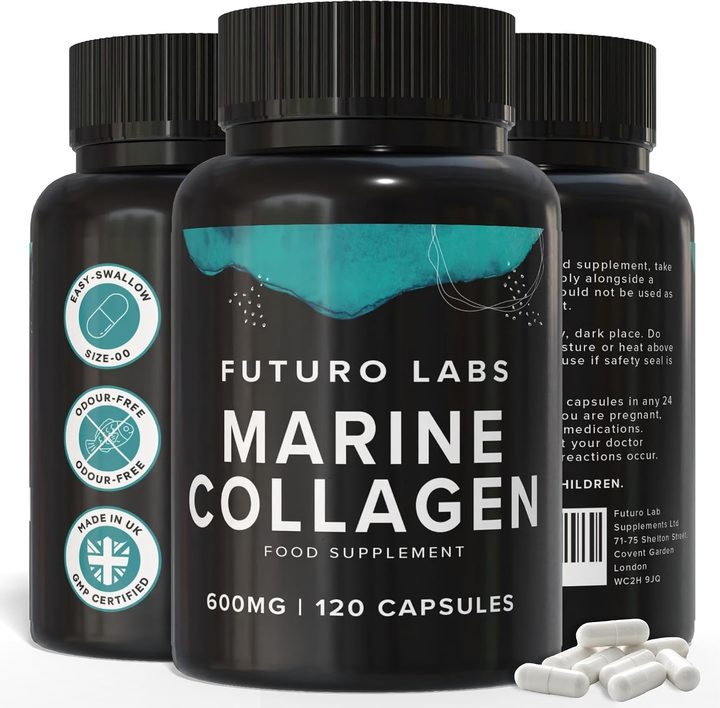
Our brand: the worked example on this page
Futuro Labs Marine Collagen
- 28p a day
- 120 capsules, 2 capsules daily
- Lab tested
- Made in the UK
The list's cofactor with a collagen top-up, on its true terms: Futuro Labs Marine Collagen on Amazon UK, 2 capsules, 1200mg hydrolysed type 1 marine collagen with 12mg vitamin C at 15% NRV plus zinc, 120 for £16.99, 28p a day, lab tested and UK made, below the 15g protocol dose and carrying vitamin C's and zinc's sentences rather than a tendon claim. Full label breakdown. The shelf swept left to right is on the best supplement for tendon repair page; the rope argument on the heal tendons page; the enzymes and their cofactors on the vitamin for tendon repair page.
What rebuilds tendons: the cell, the signal, and the shopping list
Do any supplements help tendon repair is a question whose forum version, what rebuilds tendons, is the better one to answer, because the literal answer to it, a cell, tells a reader immediately which supplements can matter and which cannot. Tendons are rebuilt by tenocytes, the sparse, elongated cells that live between the collagen fibres and make, maintain and remodel the matrix around them, and tenocytes take their instructions from one signal, mechanical strain. When a tendon is loaded, the cells sense the strain through their attachments to the matrix and raise collagen synthesis, with a peak around a day after the session and a period of net breakdown before net gain; when a tendon is unloaded, synthesis falls and the matrix it maintains loses quality. This is why progressive loading is the treatment of tendinopathy and why early controlled loading heals a repaired tendon better than immobilisation, and it is the first fact about supplements: no capsule delivers the signal, so nothing on a shelf makes a tenocyte work, and a supplement taken by a rested tendon is substrate delivered to a cell that is not building. Given the signal, the cell needs a short shopping list to act on it, and the list is where supplements can enter. It needs amino acid substrate, since collagen is a third glycine and rich in proline and lysine, supplied by dietary protein and, for a reader eating 1.6 to 2.2g per kilogram, supplied in surplus. It needs vitamin C and iron as cofactors for the prolyl and lysyl hydroxylases that hydroxylate the chains, without which collagen cannot fold into its triple helix, the mechanism of scurvy's connective tissue failure. It needs copper for lysyl oxidase, the enzyme that cross-links collagen fibrils outside the cell and gives tendon its rope strength. It needs zinc for the matrix metalloproteinases and other enzymes that remodel old matrix as new is laid down. And it needs the body around it fed, since a hard energy deficit slows every repair. Every item on the list is met from an ordinary varied diet, and the UK register's sentences match it exactly: vitamin C contributes to normal collagen formation for the normal function of cartilage and bones, copper to the maintenance of normal connective tissues, zinc to normal protein synthesis, iron to normal oxygen transport; all maintenance sentences, none of them repair, because the list is what the cell needs to do its job and not what makes it do more.
Where a supplement can help, where it cannot, and the names that are not on the list
Where a supplement can help follows from the list: it fills a gap on it or it times an item to the signal. A gap is rare in a well-fed lifter and real in some readers, the vegan with a low iron and zinc intake, the dieter in a long deficit, the reader whose fruit and vegetable intake is near zero and whose vitamin C is marginal, the UK adult short of vitamin D through winter whose stabilising muscle around the joint is weaker for it; for those readers the supplement is the missing item, cheap and specific, and the tendon benefits because the cell's list is complete again, not because the supplement did anything a steak would not. Timing is the collagen protocol's contribution: 15g of gelatin or hydrolysed collagen with vitamin C about an hour before the loading session raises blood glycine, proline and small collagen peptides to a peak that coincides with the strain signal, and the Baar trial measured a doubled blood marker of collagen synthesis against placebo with engineered ligaments in the participants' serum showing more collagen and stiffness, while one small six-month trial of 2.5g of collagen peptides beside calf strengthening in Achilles tendinopathy reported better function and earlier return to running than the exercise with placebo. That is the supplement evidence for tendon repair in full: a cofactor list met from food, and one timed-substrate protocol with a marker trial and a small outcome trial, both beside loading. The names that fill the forum threads and are not on the list deserve a sentence each. Glucosamine and chondroitin are cartilage molecules with a joint rationale and mixed knee osteoarthritis trials, and no tendon repair trial. MSM and turmeric or curcumin are anti-inflammatory candidates with small joint pain trials and nothing in tendon, and tendinopathy is in any case a load problem rather than an inflammatory one. Omega-3 has a joint stiffness literature in inflammatory arthritis and no tendon repair evidence. The injectable peptides that recur in forum threads, pushed as tendon healers, are unlicensed medicines in the UK, sold outside any quality control, with animal data only and a place on the prohibited list in sport, so they are not supplements at all and a reader who injects one is outside the law and inside a risk nobody has measured. What rebuilds tendons is therefore the tenocyte, under a loading programme a physiotherapist has built, with its list filled from the plate, and the only supplement question with evidence is whether to time collagen and vitamin C to the session. The worked example is the habit version of that pairing and is stated on its true terms: two capsules, 1200mg hydrolysed type 1 marine collagen with 12mg vitamin C at 15% of its reference value plus zinc, 120 for £16.99 at 28p a day, lab tested and UK made, below the 15g protocol dose, carrying vitamin C's collagen formation sentence and zinc's protein synthesis sentence and no tendon claim, because collagen holds none. Do any supplements help tendon repair: those that complete the cell's list where it is short, and the one that times substrate to load, and nothing that works in place of the load.
| The item | What the cell uses it for | Where it comes from | Supplement evidence for tendon |
|---|---|---|---|
| Mechanical load | The signal that raises collagen synthesis | A progressive loading programme | No supplement supplies it |
| Glycine, proline, lysine | Collagen chain substrate | Dietary protein at 1.6 to 2.2g per kilogram | Collagen with vitamin C an hour before loading: a marker trial and one small outcome trial |
| Vitamin C and iron | Cofactors for the hydroxylases that fold the chains | Fruit, vegetables, meat, pulses | Fill a gap if deficient; maintenance sentences |
| Copper | Lysyl oxidase, the cross-linking enzyme | Nuts, seeds, shellfish, whole grains | Fill a gap if deficient; a connective tissue maintenance sentence |
| Zinc | Matrix remodelling enzymes | Meat, dairy, pulses, seeds | Fill a gap if deficient; a protein synthesis sentence |
| Energy and protein overall | Repair runs on a fed body | The plate | No hard deficit during rehab |
| Glucosamine, MSM, turmeric, omega-3; injectable peptides | Not on the list | Cartilage and inflammation rationales; unlicensed injectables | No tendon repair trials; the injectables are prohibited |
| The worked exampleOurs | Vitamin C and zinc with a collagen top-up | Two capsules, 1200mg marine collagen with 12mg vitamin C plus zinc, 28p a day | Below the protocol dose; no tendon claim |
What to check on the label
- Load the tendon: the only signal the cell reads.
- Fill the list from the plate: protein, vitamin C, iron, copper, zinc.
- Supplement only a real gap: vegan iron and zinc, winter vitamin D.
- Time collagen with vitamin C to the session if wanted: small evidence.
- Leave the forum injectables alone: unlicensed and prohibited.
Our brand
The worked example: Futuro Labs Marine Collagen
Futuro Labs Marine Collagen: 2 capsules daily, 1200mg hydrolysed type 1 marine collagen with 12mg vitamin C and 1.5mg zinc (15% NRV each), 120 capsules for £16.99, 60 days at 28p a day, lab-tested, UK GMP made. Slim veggie-shell capsules, odour free. Fish derived: pescatarian, not vegetarian or vegan.
- Collagen per serving
- 1200mg hydrolysed type 1 marine (fish)
- Co-factors
- vitamin C 12mg (15% NRV), zinc 1.5mg (15% NRV)
- Serving
- 2 capsules a day
- Bottle
- 120 capsules, 60 days
- Price
- £16.99 (28p a day)
- Capsule
- slim size 00, veggie shell, odour free
Questions people also ask
What rebuilds tendons?
Tenocytes, the tendon's own cells, in response to mechanical load: they raise collagen synthesis after a loading session and lower it when unloaded, which is why a progressive loading programme is the treatment and why nothing swallowed makes a tendon rebuild on its own; supplements can only supply items the cell uses, and food usually already does.
What are good supplements for repairing tendons?
None repairs a tendon. A supplement helps where the tenocyte's list has a gap, vitamin C, iron, copper or zinc in a restricted diet, vitamin D through a UK winter, and collagen with vitamin C about an hour before loading has a marker trial and one small Achilles outcome trial as a timed substrate beside the programme; everything else on the shelf lacks tendon evidence.
Does glucosamine help tendons?
No tendon repair trial exists for glucosamine or chondroitin, which are cartilage molecules with a joint rationale and mixed knee osteoarthritis results; a tendon is type I collagen rather than cartilage and is treated by loading, so glucosamine is not on the tenocyte's list.
Are peptide injections safe for tendon repair?
The injectable peptides promoted in forums are unlicensed medicines in the UK, sold without quality control, supported by animal data only and prohibited in sport; they are not supplements, and a reader who injects one has left the law and entered a risk nobody has measured, so the honest answer is to leave them alone.
Do I need extra vitamin C for tendon repair?
Only if your intake is short: vitamin C is the cofactor for the enzymes that fold collagen chains and its sentence in the UK register is normal collagen formation for the normal function of cartilage and bones, a maintenance role met by ordinary fruit and vegetable intake, with the protocol's vitamin C included because the hydroxylases need it present when the substrate arrives.
Sources
- The tenocyte mechanobiology literature: tendon cells sense and respond to mechanical strain through their matrix attachments, increasing collagen synthesis and matrix turnover after loading with a peak around a day later and a window of net loss before net gain, with unloading reducing synthesis and matrix quality, the cellular basis for progressive loading as the treatment of tendinopathy and for the timing of the collagen pre-loading protocol. PubMed record
- The collagen biosynthesis literature: procollagen chains are hydroxylated by prolyl and lysyl hydroxylases that require vitamin C and iron as cofactors, glycosylated, assembled and secreted, then cross-linked outside the cell by lysyl oxidase, a copper-dependent enzyme, with zinc-dependent enzymes remodelling the matrix, so the cofactors of collagen synthesis are vitamin C, iron, copper and zinc, each with a register sentence for connective tissue or collagen formation. PubMed record
- The gelatin and vitamin C pre-exercise research (Shaw, Baar and colleagues): 15g gelatin with vitamin C taken about an hour before loading, studied for markers of collagen synthesis, the protocol behind the tendon-training conversation. PubMed record
- The Achilles tendinopathy collagen trial: a small randomised placebo-controlled trial giving 2.5 grams a day of specific collagen peptides alongside a calf-strengthening programme for six months reported greater improvement in a tendon function and pain score and earlier return to running than the exercise programme with placebo, around twenty participants, manufacturer-funded, the one collagen tendon trial with a clinical outcome, in tendinopathy alongside loading and not in rupture repair. PubMed record