Ghost Fitness/Collagen/Can tendons heal naturally?
Can tendons heal naturally?
The short answer
Three answers. A partial tear: yes, through three stages, protected then loaded. A chronically painful tendon: natural healing that stalled, restarted by progressive load, not rest. A complete Achilles rupture: boot rehabilitation matches surgery on function, decided with a specialist.
- The partial tearheals naturally through inflammatory days, proliferative weeks and remodelling months; stronger for controlled loading than rest
- The chronic painful tendonnatural healing that stalled in a stage-two picture; progressive loading restarts it; rest does not
- The complete Achilles rupturenon-operative early functional rehabilitation matches surgery on function; higher re-rupture, fewer complications; a specialist's decision
- Collagen across all three~15g with vitamin C an hour before loading: a marker adjunct beside the programme; one small tendinopathy trial
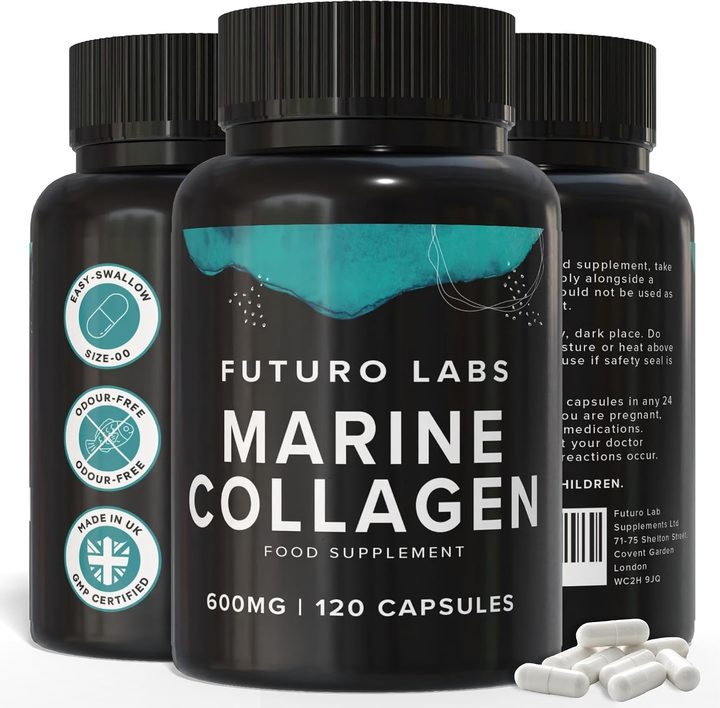
Our brand: the worked example on this page
Futuro Labs Marine Collagen
- 28p a day
- 120 capsules, 2 capsules daily
- Lab tested
- Made in the UK
The adjunct across all three: Futuro Labs Marine Collagen on Amazon UK, 2 capsules, 1200mg hydrolysed type 1 marine collagen with 12mg vitamin C at 15% NRV plus zinc, 120 for £16.99, 28p a day, lab tested and UK made, below the ~15g protocol and taken for vitamin C's collagen formation sentence through the months a tendon takes. Full label breakdown. The stages are on the tendon healing stages page; the two repairs on the collagen for tendon repair page; the restart cycle on the tendons heal faster page.
Situations one and two: the partial tear that heals naturally, and the chronic tendon that stalled
Can tendons heal naturally is a question with three different tendons hidden inside it, and each has its own natural answer, so the honest page separates them, because a yes meant for a strain is dangerous on a rupture and a no meant for a rupture is defeatist on a strain. Situation one is the acute partial tear, the strain that hurt sharply on a lift or a sprint, swelled and did not part the tendon, so that the muscle still works through it. This heals naturally, and it heals the way every tendon injury heals: an inflammatory stage of days, in which the torn fibres bleed, clot and are cleared; a proliferative stage of weeks, in which fibroblasts lay down a scar of disorganised, mostly type III collagen, bulky and weak; and a remodelling stage of months to a year, in which type I collagen replaces type III, fibres align to the loads placed on them and the tendon approaches its original strength. Natural does not mean untouched: the tendon healing literature's central finding is that controlled early loading through the proliferative and remodelling stages produces a stronger, better-organised repair than immobilisation, because fibroblasts align the collagen they make to the tension they feel, so the natural healing of a partial tear is protection in the first days and progressive loading after, under a physiotherapist, with the return by tests rather than by the pain stopping, which it does long before the remodelling is done. Situation two is the chronic painful tendon, tendinopathy, the lifter's usual problem, the patellar tendon that hurts on squats or the Achilles that warms up and returns, and here the honest answer is that this is natural healing that already failed. The biopsies show a stage-two picture that never progressed, disorganised collagen, high cellularity and water, new vessels and the nerves that grow in with them and carry the pain, a healing response that stalled because the load that caused the problem never gave the tissue a clean chance to remodel. It does not heal by being left alone: rest removes the load without restoring the capacity, so the tendon is as unready when the reader returns as when they stopped, and the flare, rest, detraining, restart cycle is how tendinopathies last for years. It heals when progressive loading, built up over months and guided by pain during and after each session, gives the fibroblasts the tension to align to and restarts the remodelling the tissue failed to finish, the eccentric heel-drop tradition for the Achilles and its descendants for every other tendon, so the natural answer for situation two is yes, once the load is put back in the right amount, and no, if natural means waiting.
Situation three: the complete rupture and the non-operative route, and where collagen sits across all three
Situation three is the complete rupture, the tendon that parted, most often the Achilles on a push-off with a sound like a kick from behind, and here can tendons heal naturally has a specific and surprising answer from the trials. A completely ruptured Achilles can heal without surgery: non-operative treatment, the foot held pointed down in a boot with the ends of the tendon approximated, and early functional rehabilitation, weight bearing and controlled movement introduced within weeks rather than months of casting, produces function, strength and return to activity comparable to surgical repair in randomised trials and meta-analyses, with a somewhat higher re-rupture rate for the non-operative route and a higher rate of wound and nerve complications for surgery, the two routes trading risks rather than one being right. That makes the natural route real, evidenced and available, and it makes it a decision rather than a default, taken with a specialist on the reader's tendon, age, activity and the gap between the ends on ultrasound, since some ruptures and some people do better with a repair, and a reader who decides alone to let a rupture heal naturally has skipped the assessment that tells them whether theirs is one of those. Other ruptures have other answers: a distal biceps tendon rupture is usually repaired surgically in an active person because function is lost otherwise, a rotator cuff tear is managed by size, age and symptoms, and none of them is a decision for a supplement page beyond saying it is a specialist's. Collagen sits across all three situations in one place, as the pre-loading protocol: around fifteen grams of gelatin or hydrolysed collagen with roughly 50mg of vitamin C an hour before a loading session roughly doubled a blood marker of collagen synthesis in a small trial, and one small six-month clinical trial in Achilles tendinopathy found 2.5 grams of specific peptides beside calf strengthening improved function against placebo, so some physiotherapists use the protocol as an adjunct to the loading sessions in situations one and two, and as a mechanism-based adjunct discussed with the team in situation three, a marker and one small trial with no claim, and nothing at all in the days before loading begins or in any situation without the programme. The worked example is that adjunct on its true terms: two capsules, 1200mg hydrolysed type 1 marine collagen with 12mg vitamin C plus zinc, 120 for £16.99 at 28p a day, lab tested and UK made, below the protocol's grams, taken for vitamin C's collagen formation sentence through the months a tendon takes. Can tendons heal naturally: a partial tear does, under protection and then load; a chronically painful tendon has already failed to and heals when the load is put back correctly; and a ruptured Achilles can, in a boot with early rehabilitation, if a specialist agrees it is the right route for that tendon.
| The situation | What it is | The natural answer | The condition |
|---|---|---|---|
| The acute partial tear | A strain that did not part the tendon | Yes, through three stages over months to a year | Protected in the first days, then loaded progressively under a physiotherapist; return by tests |
| The chronic painful tendon | Tendinopathy: natural healing that stalled in a stage-two picture | Yes, once progressive load restarts the remodelling | Rest does not heal it; the flare-rest-restart cycle makes it last years |
| The complete Achilles rupture | The tendon parted | It can: non-operative early functional rehabilitation in a boot matches surgery on function in trials | Higher re-rupture rate, fewer complications; a specialist's decision on the tendon and person |
| Other ruptures | Distal biceps, rotator cuff | Case by case | Usually repaired if function is lost; a specialist's |
| Nutrition across all three | The floor | Protein 1.6 to 2.2g per kilo, energy, no smoking | Holds the clock at its maximum speed |
| The collagen protocol | ~15g with vitamin C an hour before loading; one small 2.5g tendinopathy trial | A marker adjunct beside the sessions | Nothing before loading begins; nothing without the programme |
| The worked exampleOurs | Two capsules, 1200mg marine collagen with 12mg vitamin C, 28p a day | Below the protocol | The vitamin C line through the months |
What to check on the label
- Name the situation: strain, stalled tendon, or rupture.
- Strain: protect, then load: return by tests.
- Stalled tendon: load restarts it: rest does not.
- Rupture: see a specialist first: the boot route is real and is a decision.
- Use collagen beside the sessions: never as the natural alternative to them.
Our brand
The worked example: Futuro Labs Marine Collagen
Futuro Labs Marine Collagen: 2 capsules daily, 1200mg hydrolysed type 1 marine collagen with 12mg vitamin C and 1.5mg zinc (15% NRV each), 120 capsules for £16.99, 60 days at 28p a day, lab-tested, UK GMP made. Slim veggie-shell capsules, odour free. Fish derived: pescatarian, not vegetarian or vegan.
- Collagen per serving
- 1200mg hydrolysed type 1 marine (fish)
- Co-factors
- vitamin C 12mg (15% NRV), zinc 1.5mg (15% NRV)
- Serving
- 2 capsules a day
- Bottle
- 120 capsules, 60 days
- Price
- £16.99 (28p a day)
- Capsule
- slim size 00, veggie shell, odour free
Questions people also ask
Can a torn tendon heal on its own?
A partial tear can, through inflammatory, proliferative and remodelling stages over months to a year, protected early and loaded progressively after under a physiotherapist; a complete rupture is a specialist's decision, with the ruptured Achilles healing without surgery in a boot with early functional rehabilitation in the trials, at a higher re-rupture rate than repair.
Does tendonitis heal naturally with rest?
No: chronic tendon pain is natural healing that stalled in a disorganised state, and rest removes the load without restoring the tendon's capacity, so the reader returns as unready as they stopped; it heals when progressive loading, physiotherapist-guided over months, gives the fibroblasts a tension to align to and restarts the remodelling.
Can an Achilles rupture heal without surgery?
Yes, in the right person: randomised trials and meta-analyses find non-operative treatment with early functional rehabilitation in a boot produces function and return to activity comparable to surgical repair, with a somewhat higher re-rupture rate and fewer wound and nerve complications, so it is a real route chosen with a specialist on the tendon, the person and the gap on ultrasound.
How long does a tendon take to heal naturally?
Months to over a year for the remodelling to mature: days for the inflammatory stage, weeks for the proliferative stage, and months to a year or more for type I collagen to replace type III and align to load, with the pain stopping months before the tissue is strong, which is why return is by tests rather than by feel.
Does collagen help a tendon heal naturally?
As an adjunct beside the loading, not as the natural alternative to it: around fifteen grams with roughly 50mg of vitamin C an hour before a loading session doubled a collagen synthesis marker in a small trial, and one small trial found 2.5 grams beside calf strengthening improved Achilles tendinopathy against placebo, a marker and one small outcome with no claim, useless without the programme.
Sources
- The tendon healing literature: after acute injury or surgical repair a tendon heals through an inflammatory stage of days, a proliferative stage of weeks in which fibroblasts lay down disorganised, mostly type III collagen with high cellularity and water, and a remodelling stage of months to over a year in which type I collagen replaces type III, fibres align to load and the tissue approaches but does not fully regain its original strength, with early controlled loading improving the outcome over immobilisation. PubMed record
- The tendinopathy literature: histology of chronic tendon pain shows a degenerative, failed-healing picture rather than a classic inflammatory one, reframing the old tendonitis label and its treatment logic. PubMed record
- The Achilles rupture management literature: randomised trials and meta-analyses comparing surgical repair with non-operative treatment using early functional rehabilitation in a boot find similar functional outcomes and return to activity, with non-operative treatment carrying a somewhat higher re-rupture rate and surgery a higher complication rate, so both are accepted routes decided with a specialist. PubMed record
- The Achilles loading-rehabilitation literature: progressive tendon-loading programmes, the eccentric heel-drop tradition among them, form the established core of Achilles tendinopathy care. PubMed record