Ghost Fitness/Collagen/What kind of collagen is best for weight loss?
What kind of collagen is best for weight loss?
The short answer
No kind, because no collagen holds a weight claim and the trials show nothing: even as protein, capsule doses are trivial and collagen is incomplete, so whey does that job better. The deficit does the losing; collagen never did.
- 0 weight claimsno collagen of any kind holds one, at any dose
- ~5 kcalwhat a 1200mg capsule serving contributes: a rounding error
- Incomplete proteinno tryptophan, low leucine: the decode that matters
- The mechanism that worksa calorie deficit, guarded by complete protein and training
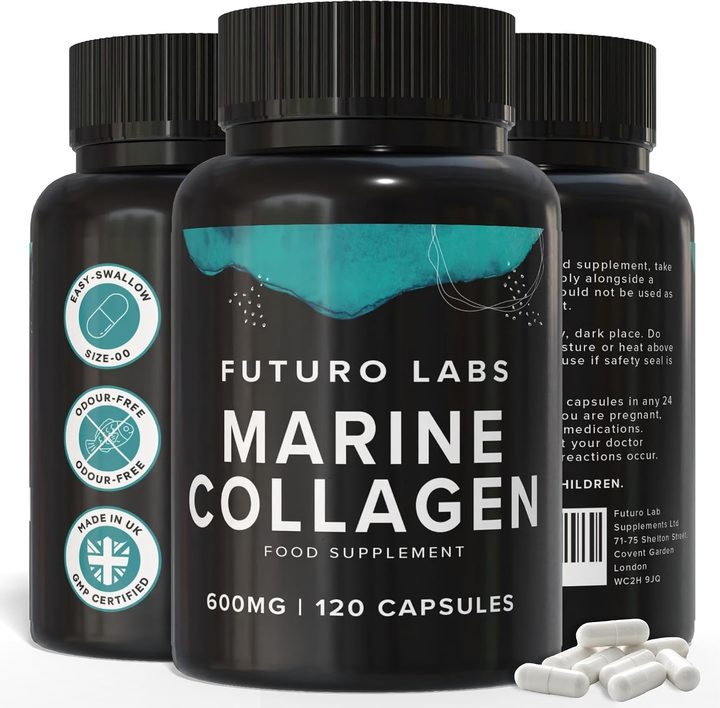
Our brand: the worked example on this page
Futuro Labs Marine Collagen
- 28p a day
- 120 capsules, 2 capsules daily
- Lab tested
- Made in the UK
Bought for what it is, never for weight: Futuro Labs Marine Collagen on Amazon UK, 1200mg hydrolysed type 1 with vitamin C and zinc at 15% NRV, £16.99 for 60 days at 28p. Full label breakdown. The buying standard is on the lifters page; the female-marketed version of this question on its own page.
Why no kind can win: the claims, the trials, and the belly-fat variant
A best-kind question assumes a working mechanism to optimise, so audit the mechanism first. Claims: no collagen, in any type, source or format, holds an authorised weight, fat-loss, metabolism, appetite or body-composition claim, the register's weight vocabulary belonging to other territories entirely. Trials: the collagen literature is busy with skin, joints and connective tissue and essentially silent on weight outcomes, no credible randomised record showing collagen supplementation drives fat loss, which is exactly the silence the claims register reflects. The marketing's remaining foothold is the protein story, collagen is protein and protein aids weight management, and it survives arithmetic poorly: a capsule serving's 1200mg is roughly five calories of protein, a rounding error against any day's intake, and even a generous 15g powder scoop contributes what half a chicken breast does, at several times the price per gram of protein. The belly-fat variant collapses fastest of all: no food, supplement or exercise targets fat loss to a region, spot reduction being the industry's oldest ghost, so best collagen for belly fat is a question with two false premises stacked, the collagen one and the belly one.
The incomplete-protein decode, and where the weight effort honestly goes
The decode that permanently settles the protein story: collagen is an incomplete protein, containing no tryptophan and running low on leucine, the amino acid that triggers muscle protein synthesis, which means it cannot even count toward protein requirements the way food proteins do and makes it close to the worst protein on the shelf for the one job protein genuinely performs in a diet phase, preserving muscle while the scale drops. A reader whose cutting logic runs through protein should buy the protein that does the job: whey, or food, complete sources at a fraction of collagen's price per useful gram, dosed toward the 1.6-to-2.2g-per-kilogram band that carries the actual muscle-mass mandate. The weight effort itself goes where every honest weight page on this site sends it: the calorie deficit, the only mechanism on the table, engineered through food choices that keep it livable; complete protein guarding the muscle; training telling the body what to keep; and sleep protecting the adherence everything depends on. Collagen's honest place in a diet phase is unchanged from any other month: a modest, incomplete protein bought for its own reasons, the vitamin C and zinc claim-holders aboard, at a capsule scale that never pretended to move a scale.
| The pitch | The record | The verdict |
|---|---|---|
| Collagen burns fat or boosts metabolism | No claim exists; the trials are silent on weight | False: nothing to optimise |
| Collagen is protein, and protein helps | 1200mg is ~5 kcal; 15g is half a chicken breast, dearly | Arithmetic retires it |
| Collagen protein preserves muscle in a cut | Incomplete: no tryptophan, low leucine | Whey or food does the actual job |
| Best collagen for belly fat | Spot reduction does not exist | Two false premises stacked |
| The deficit, protein, training, sleep | The mechanism and its guards | Where the effort honestly goes |
| Collagen bought for its own reasons | The C and zinc claim-holders aboard | Fine: just never for weight |
The verdict, and the kind-question dissolved
What kind of collagen is best for weight loss: no kind, because the job does not exist for any kind to win, no claim, no trial record, a protein contribution that is trivial at capsule scale and incomplete at any scale, and a belly-fat variant built on spot-reduction folklore. The reader's plan goes back to the deficit, complete protein, training and sleep, none of them sold in this aisle, and collagen returns to its honest shelf as a modest protein carrying the register's real vitamin C and zinc sentences. The worked example is priced for exactly that honesty: Futuro Labs Marine Collagen, 1200mg hydrolysed type 1 with 12mg vitamin C and 1.5mg zinc at 15% NRV, lab tested, UK made, £16.99 for 60 days at 28p a day, a product that has never once claimed to move a scale, which in this corner of the aisle is the distinguishing feature.
What to check on the label
- No collagen holds a weight claim: the trials are silent and so is the register.
- The protein story fails arithmetic: ~5 kcal per capsule serving.
- Incomplete protein, low leucine: whey or food does the muscle-guarding job.
- Belly-fat targeting does not exist: spot reduction is the oldest ghost.
- The deficit does the losing: protein, training and sleep guard it.
Our brand
The worked example: Futuro Labs Marine Collagen
Futuro Labs Marine Collagen: 2 capsules daily, 1200mg hydrolysed type 1 marine collagen with 12mg vitamin C and 1.5mg zinc (15% NRV each), 120 capsules for £16.99, 60 days at 28p a day, lab-tested, UK GMP made. Slim veggie-shell capsules, odour free. Fish derived: pescatarian, not vegetarian or vegan.
- Collagen per serving
- 1200mg hydrolysed type 1 marine (fish)
- Co-factors
- vitamin C 12mg (15% NRV), zinc 1.5mg (15% NRV)
- Serving
- 2 capsules a day
- Bottle
- 120 capsules, 60 days
- Price
- £16.99 (28p a day)
- Capsule
- slim size 00, veggie shell, odour free
Questions people also ask
Does collagen help you lose weight?
No: no authorised weight claim exists for any collagen, and the trial literature is silent on weight outcomes. The mechanism that works is a calorie deficit.
Is collagen good protein for dieting?
It is incomplete, with no tryptophan and low leucine: close to the worst protein on the shelf for preserving muscle in a cut. Whey or food does that job at a fraction of the price.
What about collagen for belly fat specifically?
Spot reduction does not exist for any food, supplement or exercise: the belly-fat framing stacks a second false premise on the first.
Should I stop taking collagen while cutting?
No need: it coexists with a deficit fine. Just count it honestly, a few calories at capsule scale, and buy it for the vitamin C route rather than the scale.
What supplements actually help weight loss?
None do the losing: the deficit does. Complete protein guards muscle, and caffeine is the one shelf item with modest training-adjacent utility, priced honestly elsewhere on this site.
Sources
- Systematic review evidence on omega-3 (fish oil) supplementation and body weight in adults: no clinically meaningful effect on weight or fat mass across randomized trials. PubMed record
- EFSA Panel on Dietetic Products, Nutrition and Allergies. Scientific Opinion on the substantiation of health claims related to magnesium. EFSA Journal 2010;8(10):1807. https://efsa.onlinelibrary.wiley.com/doi/10.2903/j.efsa.2010.1807
- The collagen peptide trial literature: randomised controlled studies of hydrolysed collagen supplementation across skin, joint and connective-tissue outcomes, typically at 2.5g to 15g daily, with small effects and frequent industry funding. PubMed record
- Futuro Labs Marine Collagen listing and label: 1200mg hydrolysed type 1 marine collagen per 2-capsule serving with 12mg vitamin C and 1.5mg zinc at 15% NRV each, 120 capsules, independently lab tested, UK made. https://www.amazon.co.uk/dp/B0C2J7N364