Ghost Fitness/Collagen/Which vitamin is best for ligament repair?
Which vitamin is best for ligament repair?
The short answer
None accelerates any healing phase: vitamins support sufficiency across all three, the inflammatory days, the collagen-laying weeks and the remodelling months. Vitamin C's cofactor role sits in that middle phase, which is the sentence's mechanism, not a speed control.
- Phase 1: daysthe inflammatory clean-up: protection and protected movement
- Phase 2: weeksproliferation: new collagen laid, C's cofactor territory
- Phase 3: monthsremodelling: graded load organises the repair
- The vitamin verdictsufficiency across all three; acceleration of none
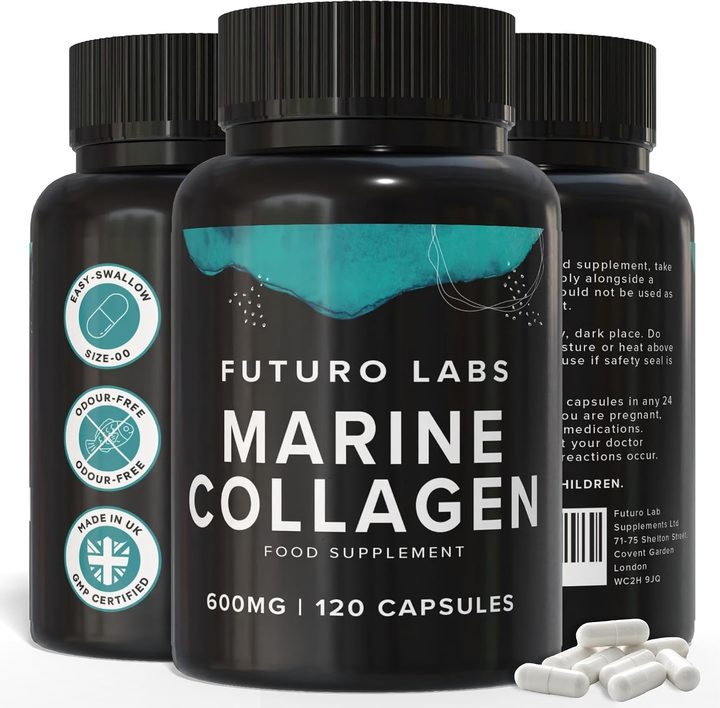
Our brand: the worked example on this page
Futuro Labs Marine Collagen
- 28p a day
- 120 capsules, 2 capsules daily
- Lab tested
- Made in the UK
The middle phase's cofactor, at threshold: Futuro Labs Marine Collagen on Amazon UK, 1200mg hydrolysed type 1 with 12mg vitamin C at 15% NRV, £16.99 for 60 days at 28p. Full label breakdown. The grading that owns the plan is on the ligament repair page; the tendonitis vitamin twin on its own page.
The three phases, drawn plainly, because the timeline is the answer's skeleton
A healing ligament moves through three overlapping phases, and drawing them is the clearest way to answer a vitamin question honestly. Phase one, the inflammatory days: the injury site is cleaned and secured, swelling and tenderness doing their unglamorous work, the clinical business being protection, protected movement as advised, and the grading that decides everything downstream. Phase two, the proliferative weeks: fibroblasts arrive and lay new collagen, a rapid, disorganised scaffold across the damage, the phase where the tissue is literally being rebuilt from amino acids and where the body's synthesis machinery runs hottest. Phase three, the remodelling months: the disorganised scaffold is slowly reorganised along lines of stress, fibres aligning to load, strength returning gradually, the phase that explains both the tissue's long clock and why graded loading is the treatment, mechanical stress being the signal the remodelling reads. Three phases, one immediate consequence for this page's question: a vitamin that repaired ligaments would have to accelerate one of them, and none does, no vitamin shortening the inflammatory days, hastening the proliferative weeks or compressing the remodelling months in any trial, which is why no repair claim exists and why the honest answer is about floors, not accelerators.
Where each nutrient sits on the timeline, and the mechanism read at its true size
Lay the register over the timeline and each sentence finds its phase without gaining a speed control. Vitamin C sits squarely in phase two: the prolyl and lysyl hydroxylases laying that new collagen require it as a cofactor, which is the precise mechanism behind the register's collagen-formation sentences and the reason severe deficiency historically meant wounds that would not close, and the honest reading is the tendonitis page's exactly, a deficient body builds the scaffold badly, a sufficient body builds it normally, and a sufficient body given extra builds it no faster, sufficiency being a floor the phase stands on rather than a pedal it answers to. Protein spans phases two and three as the bulk supply, the amino acids the scaffold and its remodelling are made of, maintained at 1.2g-plus per kilogram through the layoff per the injury pages. Copper and manganese hold their literal connective-tissue sentences across the rebuild, verified through an ordinary diet. Vitamin D serves phase three by adjacency, the muscle-function claim covering the musculature that delivers the graded loading the remodelling reads. And the whole timeline answers to the clinical plan above it: the grade decides the pathway, protected movement then progressive strengthening for stretches and partial tears, orthopaedic routes for the ruptures that will not reunite, with calories, protein and sleep guarded throughout and the phases given the one thing they actually respond to, appropriate load at the appropriate time, prescribed by the professional watching them happen.
| The phase | What happens | The nutrients' honest role |
|---|---|---|
| Days: inflammatory | Clean-up and securing; grading happens here | None accelerate it: protection and assessment lead |
| Weeks: proliferative | New collagen laid: the scaffold | Vitamin C's cofactor seat; protein the bulk supply |
| Months: remodelling | Scaffold reorganised along lines of stress | Graded load is the signal; D serves the loading muscles |
| Across all phases | The rebuild's running costs | Calories, protein, copper, manganese: the floor |
| The verdict | Sufficiency supports; nothing accelerates | No repair claim exists, and the timeline shows why |
The verdict, and the timeline signed at the bottom
Which vitamin is best for ligament repair: none repairs, because repair is three phases no vitamin accelerates, and the honest map seats each nutrient at its floor, vitamin C's cofactor role in the collagen-laying weeks, the mechanism behind its sentences and not a speed control, protein across the rebuild, copper and manganese at their literal lines, vitamin D beside the muscles that deliver the remodelling's one true signal, graded load. The plan above the timeline is the grade's, and the worked example serves the middle phase's floor at threshold: Futuro Labs Marine Collagen, 1200mg hydrolysed type 1 with 12mg vitamin C at 15% NRV, lab tested, UK made, £16.99 for 60 days at 28p a day, a cofactor carried honestly through a healing that was always going to take its months.
What to check on the label
- Healing runs in three phases: days, weeks, months, none accelerable.
- C's seat is the collagen-laying weeks: cofactor mechanism, not speed control.
- Protein spans the rebuild: 1.2g-plus per kilogram, maintained.
- Graded load is the remodelling's signal: the plan the grade writes.
- Sufficiency is a floor, not a pedal: no repair claim exists, and the timeline shows why.
Our brand
The worked example: Futuro Labs Marine Collagen
Futuro Labs Marine Collagen: 2 capsules daily, 1200mg hydrolysed type 1 marine collagen with 12mg vitamin C and 1.5mg zinc (15% NRV each), 120 capsules for £16.99, 60 days at 28p a day, lab-tested, UK GMP made. Slim veggie-shell capsules, odour free. Fish derived: pescatarian, not vegetarian or vegan.
- Collagen per serving
- 1200mg hydrolysed type 1 marine (fish)
- Co-factors
- vitamin C 12mg (15% NRV), zinc 1.5mg (15% NRV)
- Serving
- 2 capsules a day
- Bottle
- 120 capsules, 60 days
- Price
- £16.99 (28p a day)
- Capsule
- slim size 00, veggie shell, odour free
Questions people also ask
Which vitamin speeds up ligament healing?
None: healing runs through inflammatory days, collagen-laying weeks and remodelling months, and no vitamin shortens any phase in any trial. Sufficiency is a floor, not an accelerator.
Why does vitamin C matter for ligaments then?
The enzymes laying new collagen in the proliferative phase require it as a cofactor: the mechanism behind its register sentences, satisfied at ordinary intakes.
What actually drives the remodelling phase?
Mechanical load: the graded strengthening a physiotherapist prescribes is the signal the reorganising fibres read, which is why the programme is the treatment.
What should I eat while a ligament heals?
Enough: calories maintained, protein at 1.2g-plus per kilogram, and the connective-tissue floor of C, copper and manganese met through an ordinary varied diet.
Does vitamin D help ligament recovery?
By adjacency: its muscle-function claim covers the musculature delivering the graded loading, the near-default 10 micrograms serving the phase from beside it.
Sources
- The vitamin C deficiency literature: severe deficiency impairs collagen synthesis and produces connective tissue failure, the historical disease scurvy, essentially absent on ordinary modern diets. PubMed record
- Review literature on tendinopathy management: progressive, load-based rehabilitation is the established core of treatment, typically guided by a physiotherapist, with passive approaches and complete rest performing worse. PubMed record
- EFSA Panel on Dietetic Products, Nutrition and Allergies. Scientific Opinion on the substantiation of health claims related to magnesium. EFSA Journal 2010;8(10):1807. https://efsa.onlinelibrary.wiley.com/doi/10.2903/j.efsa.2010.1807
- Review literature on nutrition for injured athletes: maintaining energy availability and protein intake through an injury supports the rehabilitation period, while severe restriction works against it. PubMed record
- Review literature on protein intake and muscle mass in older adults: higher protein intakes support the maintenance of muscle in ageing, the evidence base behind the register's protein and muscle-mass claims mattering more with age. PubMed record