Ghost Fitness/Collagen/What type of collagen is best for connective tissue?
What type of collagen is best for connective tissue?
The short answer
On the register, the phrase belongs to two minerals: copper maintains normal connective tissues and manganese supports their formation, with vitamin C's collagen sentences alongside. No collagen type owns it, because digestion pools every numeral before any tissue is reached.
- The umbrella termconnective tissue spans tendon, ligament, fascia, cartilage, bone, skin
- The phrase's ownerscopper and manganese: the register's literal connective-tissue lines
- The newest frontierfascia-targeted collagen: the routing myth in fresh clothing
- The numeral verdictpooled in digestion, as every type page found
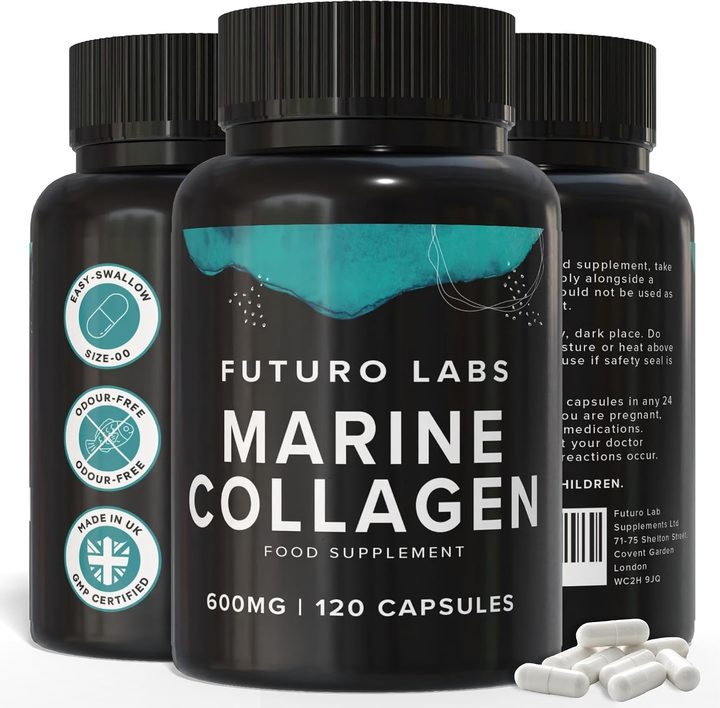
Our brand: the worked example on this page
Futuro Labs Marine Collagen
- 28p a day
- 120 capsules, 2 capsules daily
- Lab tested
- Made in the UK
A label carrying the cofactor beside the peptides: Futuro Labs Marine Collagen on Amazon UK, 1200mg hydrolysed type 1 with vitamin C and zinc at 15% NRV, £16.99 for 60 days at 28p. Full label breakdown. The routing myth in full is on the type page; the assembly map on the ligaments-and-joints page.
The umbrella opened: what connective tissue actually covers, and where the types live
Connective tissue is an umbrella far wider than the marketing that borrows it, and opening it properly reframes the question. The family covers tendon and ligament, the dense regular tissues this section's injury pages map; cartilage, the joint surface; bone, connective tissue mineralised; fascia, the continuous fibrous webbing around muscles that has lately become the aisle's newest frontier; the dermis of skin; and, in the textbook's full generosity, even blood and fat, connective tissues by classification if not by marketing. Across that family the collagen types distribute as the type pages established: type 1 dominating tendon, ligament, bone, fascia and skin, the structural workhorse and virtually the entire supplement shelf; type 2 dominating cartilage; type 3 running alongside 1. Which sets up the marketing syllogism one more time, match the swallowed numeral to the target tissue, and retires it one more time with the section's standing mechanism: hydrolysed collagen of any type is digested to one unaddressed pool of peptides and amino acids before any tissue is reached, no numeral survives the gut, no trial crowns one, and the fascia-targeted products now appearing are simply the routing myth in its freshest clothing, borrowing a young research field's vocabulary with no fascia claim, no fascia trials of consequence, and the same pooled peptides as everything beside them.
Who owns the phrase on the register, and the honest connective-tissue buy
Here is the decode this page exists to deliver, and it has a pleasing exactness: search the UK claims register for the literal phrase connective tissue and the entries that return belong to two minerals, copper contributes to the maintenance of normal connective tissues, and manganese contributes to the normal formation of connective tissue, the two least-marketed names in the entire territory holding the only sentences that use the words the pouches print, with vitamin C's portfolio standing alongside as the phrase's functional partner, contributes to normal collagen formation for the normal function of cartilage, bones, skin, blood vessels and gums, the cofactor chemistry that makes collagen in every family member. Collagen itself, in any type, owns not one entry. So the honest connective-tissue buy inverts the aisle completely: verify the phrase's actual owners are met, copper through nuts, seeds, shellfish and wholegrains, manganese through tea and grains, both routine verifications; keep the C at its sentences, by diet or a label at 15% NRV; hold protein at target as the family's bulk supply; and then, if collagen is wanted at all, buy it as this section always specifies, any honest type 1 at a stated dose with the cofactor aboard, chosen by dose, testing and price rather than by a numeral the stomach deletes, with the fascia-branded premium declined alongside every other type-count premium before it. The phrase, it turns out, was never collagen's to sell.
| The candidate | Register entries using the phrase | The honest read |
|---|---|---|
| Copper | Maintenance of normal connective tissues | The phrase's literal owner: verified through diet |
| Manganese | Normal formation of connective tissue | The co-owner: tea and grains clear it |
| Vitamin C | Collagen formation for cartilage, bones, skin, vessels | The functional partner: the cofactor sentences |
| Collagen, any type | None | The pouches print a phrase the label cannot hold |
| Fascia-targeted collagen | None: a young field, no claims | The routing myth's freshest clothing |
| The buyOurs | Type 1 at a stated dose, C aboard, tested | Chosen by checks, never by numeral |
The verdict, and the phrase returned to its owners
What type of collagen is best for connective tissue: none owns the territory it names, the umbrella spanning tendon to skin, the numerals pooling in digestion as every type page found, and the register's literal connective-tissue sentences belonging to copper and manganese with vitamin C's cofactor portfolio beside them, three names the pouches never headline holding every word the pouches print. The honest buy verifies the owners through an ordinary week's eating and then, if wanted, takes the section's standing specification, which the worked example meets: Futuro Labs Marine Collagen, 1200mg hydrolysed type 1 at a stated dose with 12mg vitamin C, the functional partner, and 1.5mg zinc at 15% NRV, lab tested, UK made, £16.99 for 60 days at 28p a day, a label that carries the chemistry rather than the borrowed phrase, which is the only version of best the register was ever going to sign.
What to check on the label
- Connective tissue is a wide umbrella: tendon to skin, bone to fascia.
- Copper and manganese own the literal phrase: the register's exact words.
- Vitamin C is the functional partner: the cofactor sentences across the family.
- No collagen type holds an entry: the numerals pool in digestion.
- Fascia products are the myth's new clothes: young field, no claims, same peptides.
Our brand
The worked example: Futuro Labs Marine Collagen
Futuro Labs Marine Collagen: 2 capsules daily, 1200mg hydrolysed type 1 marine collagen with 12mg vitamin C and 1.5mg zinc (15% NRV each), 120 capsules for £16.99, 60 days at 28p a day, lab-tested, UK GMP made. Slim veggie-shell capsules, odour free. Fish derived: pescatarian, not vegetarian or vegan.
- Collagen per serving
- 1200mg hydrolysed type 1 marine (fish)
- Co-factors
- vitamin C 12mg (15% NRV), zinc 1.5mg (15% NRV)
- Serving
- 2 capsules a day
- Bottle
- 120 capsules, 60 days
- Price
- £16.99 (28p a day)
- Capsule
- slim size 00, veggie shell, odour free
Questions people also ask
Which collagen type targets connective tissue best?
None: connective tissue spans tendon to skin, digestion pools every numeral into one peptide supply, and no register entry for the phrase belongs to any collagen.
Who does hold connective-tissue claims then?
Copper, for the maintenance of normal connective tissues, and manganese, for their normal formation: the register's literal owners, with vitamin C's collagen-formation sentences alongside.
Is fascia-targeted collagen a real category?
It is the routing myth in fresh clothing: fascia research is young, no fascia claims exist, and the peptides pool identically to every other pouch's.
How do I actually support connective tissue through diet?
Meet the owners: copper from nuts, seeds and shellfish, manganese from tea and grains, vitamin C from ordinary fruit and veg, and protein at target as the family's bulk supply.
If I still buy collagen, which one?
Any honest type 1 at a stated dose with the vitamin C cofactor aboard at 15% NRV, tested and fairly priced: chosen by the checks, never by a numeral the stomach deletes.
Sources
- EFSA Panel on Dietetic Products, Nutrition and Allergies. Scientific Opinion on the substantiation of health claims related to magnesium. EFSA Journal 2010;8(10):1807. https://efsa.onlinelibrary.wiley.com/doi/10.2903/j.efsa.2010.1807
- Futuro Labs Marine Collagen listing and label: 1200mg hydrolysed type 1 marine collagen per 2-capsule serving with 12mg vitamin C and 1.5mg zinc at 15% NRV each, 120 capsules, independently lab tested, UK made. https://www.amazon.co.uk/dp/B0C2J7N364
- The collagen peptide trial literature: randomised controlled studies of hydrolysed collagen supplementation across skin, joint and connective-tissue outcomes, typically at 2.5g to 15g daily, with small effects and frequent industry funding. PubMed record
- EFSA Panel on Dietetic Products. Scientific opinion on Dietary Reference Values for fats: Adequate Intake of 250mg combined EPA and DHA per day for adults. EFSA Journal 2010;8(3):1461. https://www.efsa.europa.eu/en/efsajournal/pub/1461