Ghost Fitness/Collagen/What type of collagen is best for joints?
What type of collagen is best for joints?
The short answer
Less than the front label implies: hydrolysed collagen is digested to peptides whatever its type, the body does not route type II to your knees, and no trial crowns a type. Dose, vitamin C and label honesty outrank the numeral.
- The taxonomytype 1 skin and tendon, type 2 cartilage, type 3 alongside 1
- The routing mytheaten type II does not travel to knees: digestion breaks the address
- 0 crowning trialsno credible head-to-head puts one type above another
- What outranks the numeraldose at true scale, vitamin C at threshold, testing shown
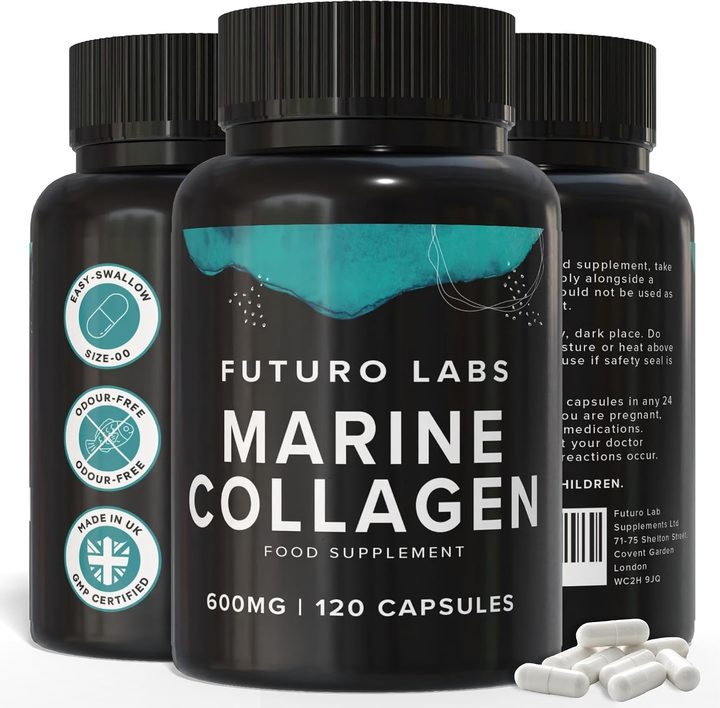
Our brand: the worked example on this page
Futuro Labs Marine Collagen
- 28p a day
- 120 capsules, 2 capsules daily
- Lab tested
- Made in the UK
A label ranked by the things that outrank the numeral: Futuro Labs Marine Collagen on Amazon UK, 1200mg hydrolysed type 1 with vitamin C at 15% NRV, £16.99 for 60 days at 28p. Full label breakdown. The type 2 shelf in detail is on the type 2 page; the whole joint ranking on the lifters joints page.
The taxonomy in one paragraph, and the marketing logic built on it
The type system is real anatomy: type 1 collagen dominates skin, tendon, ligament and bone, the body's structural workhorse and most supplements' content; type 2 dominates cartilage, the joint surface; type 3 runs alongside type 1 in skin and vessels, which is why bovine products pair them; and the deeper catalogue, types 5, 10 and the rest, appears on premium labels mostly as menu length. On that anatomy the joint aisle builds a syllogism it never states out loud: cartilage is type 2, therefore eating type 2 serves cartilage, therefore the best type for joints is the one matching the tissue, a like-repairs-like logic with genuine intuitive pull and a fatal flaw the next section names. Before naming it, note what the syllogism sells: type-2-forward joint formulas at a premium over ordinary hydrolysates, multi-type five-collagen blends priced on catalogue length, and front labels where the numeral does the work the evidence cannot, the exact pattern a label-first site exists to X-ray.
The routing myth retired, and the checks that actually decide the buy
The flaw: you are not assembled from labelled parts, and digestion does not read addresses. Hydrolysed collagen of any type is broken in the gut to small peptides and free amino acids, glycine, proline, hydroxyproline, a pool the body draws on wherever its own synthesis is running, with no mechanism marking type-2-derived fragments for delivery to knees, which is why the like-repairs-like syllogism fails at its middle step and why the trial literature, read honestly, has never crowned a type: the daily-hydrolysate joint studies used type 1 and mixed peptides as often as type 2 and found the same modest, sponsor-flavoured signals; the famous pre-loading protocol used plain gelatin, typeless in marketing terms; and the one genuinely different product, 40mg undenatured UC-II, works, if it works, through an oral-tolerance mechanism that is precisely not the eating-building-blocks story, and holds no claim either. Retire the routing myth and the buying decision collapses onto the checks that were always doing the work: a dose stated at its true scale, capsule 1-to-2g or powder 10g, never a numeral implying otherwise; vitamin C at 15% NRV, the ingredient holding the register's one actual cartilage sentence; source, testing and dates per the standard; and the price divided honestly, with type-count premiums declined on principle. The numeral describes the raw material's origin; the label describes whether anyone should buy it.
| The proposition | The status | The buyer's move |
|---|---|---|
| Type 2 for joints, because cartilage is type 2 | The routing myth: digestion breaks the address | Retire the syllogism |
| Trials crowning a type for joints | None: type 1, mixed and gelatin studies read the same | Stop shopping by numeral |
| UC-II as the exception | A different 40mg mechanism, still claim-free | The type 2 page grades it |
| Multi-type blends at a premium | Catalogue length as marketing | Decline the type-count premium |
| Vitamin C's cartilage sentenceOurs | The register's one real entry here | Require it at 15% NRV on any joint-aisle label |
| Dose, source, testing, price | The checks that always decided it | The standard, numeral-blind |
The verdict, and the numeral demoted to a footnote
What type of collagen is best for joints: none by routing, because eaten collagen arrives as an unaddressed peptide pool whatever its numeral, none by trial, because the literature crowns no type, and none by claim, because the register is silent on all of them, leaving the honest answer that the type line is provenance, not performance, and the buying decision belongs to dose honesty, the vitamin C sentence, testing and price, exactly as everywhere else in the aisle. Is it worth taking collagen for joint pain at all: only on the research tier's flattened expectations, with the programme and the GP carrying the real weight, per the joint pages this one stands beside. The worked example is bought on the demoted-numeral standard it argues for: Futuro Labs Marine Collagen, 1200mg hydrolysed type 1 stated at its true capsule scale, 12mg vitamin C at 15% NRV carrying the register's actual cartilage sentence, zinc beside it, lab tested, UK made, £16.99 for 60 days at 28p a day, a label whose numeral is the least interesting thing on it, by design.
What to check on the label
- The taxonomy is real; the routing is not: digestion breaks the address.
- No trial crowns a type for joints: type 1, mixed and gelatin read the same.
- UC-II is a different product entirely: 40mg, different mechanism, still no claim.
- Decline type-count premiums: catalogue length is marketing.
- Dose, C, testing and price decide: the numeral is provenance, not performance.
Our brand
The worked example: Futuro Labs Marine Collagen
Futuro Labs Marine Collagen: 2 capsules daily, 1200mg hydrolysed type 1 marine collagen with 12mg vitamin C and 1.5mg zinc (15% NRV each), 120 capsules for £16.99, 60 days at 28p a day, lab-tested, UK GMP made. Slim veggie-shell capsules, odour free. Fish derived: pescatarian, not vegetarian or vegan.
- Collagen per serving
- 1200mg hydrolysed type 1 marine (fish)
- Co-factors
- vitamin C 12mg (15% NRV), zinc 1.5mg (15% NRV)
- Serving
- 2 capsules a day
- Bottle
- 120 capsules, 60 days
- Price
- £16.99 (28p a day)
- Capsule
- slim size 00, veggie shell, odour free
Questions people also ask
Is type 2 collagen better for joints than type 1?
No trial crowns it and no claim exists for either: eaten collagen is digested to an unaddressed peptide pool, so the numeral describes origin, not destination.
Does the body send type 2 collagen to cartilage?
No: digestion breaks hydrolysed collagen of any type into peptides and amino acids drawn on wherever synthesis runs. The like-repairs-like story fails at that step.
Is it worth taking collagen for joint pain?
Only on the research tier's honest terms: modest, claim-free trials, with the real weight carried by load management, bodyweight and a GP for persistent pain.
What about the five-collagen multi-type blends?
Catalogue length as marketing: decline the type-count premium and run the ordinary checks, dose at true scale, vitamin C at threshold, testing shown.
So what should a joint-focused buyer actually check?
The demoted-numeral standard: stated dose, vitamin C at 15% NRV carrying the register's one cartilage sentence, source, testing, dates, and the price division.
Sources
- The collagen peptide trial literature: randomised controlled studies of hydrolysed collagen supplementation across skin, joint and connective-tissue outcomes, typically at 2.5g to 15g daily, with small effects and frequent industry funding. PubMed record
- The undenatured type II collagen (UC-II) trial literature: small randomised studies at 40mg daily against joint outcomes, a different mechanism and dose to hydrolysed collagen, with no authorised claim resulting. PubMed record
- The gelatin and vitamin C pre-exercise research (Shaw, Baar and colleagues): 15g gelatin with vitamin C taken about an hour before loading, studied for markers of collagen synthesis, the protocol behind the tendon-training conversation. PubMed record
- EFSA Panel on Dietetic Products, Nutrition and Allergies. Scientific Opinion on the substantiation of health claims related to magnesium. EFSA Journal 2010;8(10):1807. https://efsa.onlinelibrary.wiley.com/doi/10.2903/j.efsa.2010.1807
- Futuro Labs Marine Collagen listing and label: 1200mg hydrolysed type 1 marine collagen per 2-capsule serving with 12mg vitamin C and 1.5mg zinc at 15% NRV each, 120 capsules, independently lab tested, UK made. https://www.amazon.co.uk/dp/B0C2J7N364