Ghost Fitness/Collagen/Is collagen better than turmeric for joints?
Is collagen better than turmeric for joints?
The short answer
Neither can win: no authorised claim exists for collagen or turmeric, whose botanical claims sit in a regulatory limbo. Curcumin has a real but unsettled research file and an absorption problem. Joints are served by exercise and the claims tier.
- Collagen's chairempty of claims: no joint, cartilage or mobility sentence
- Turmeric's chairbotanical claims on hold: a regulatory limbo, not an approval
- Curcumin's filereal OA symptom trials, mixed results, poor absorption
- Who serves jointsexercise, weight management, and the C-manganese-D claims tier
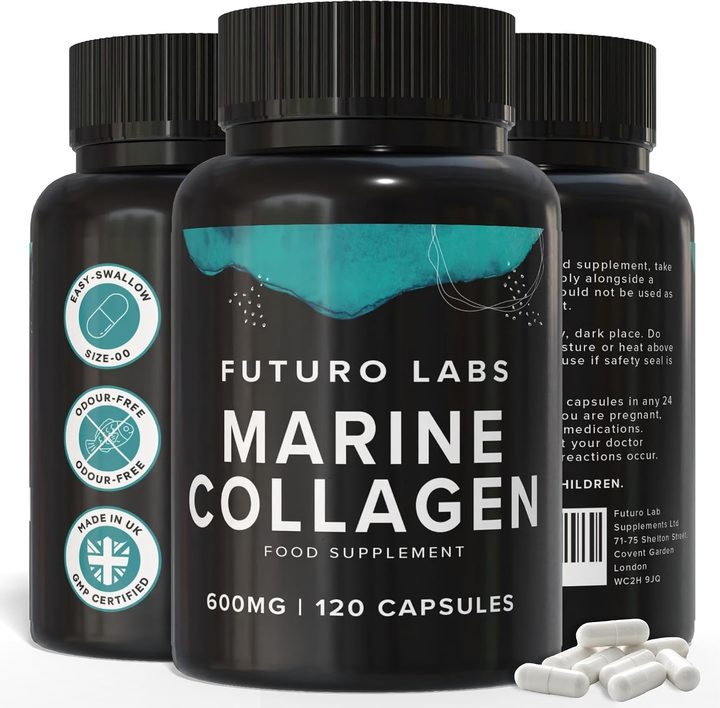
Our brand: the worked example on this page
Futuro Labs Marine Collagen
- 28p a day
- 120 capsules, 2 capsules daily
- Lab tested
- Made in the UK
Neither contestant, but the claims tier carried honestly: Futuro Labs Marine Collagen on Amazon UK, 1200mg hydrolysed type 1 with vitamin C at 15% NRV, the collagen-formation-for-cartilage sentence aboard, £16.99 for 60 days at 28p. Full label breakdown. The type 2 inspection card is on the type 2 joints page; the format question on the joints format page.
The two chairs inspected, and the botanical limbo that empties the second one
Stage the debate properly and it cancels itself, because neither chair holds an eligible contestant. Collagen's chair this section has inspected from every angle: no authorised claim for joints, cartilage, mobility or comfort at any dose, type or source, the routing myth broken by pooled digestion, the lawful joint vocabulary belonging entirely to the micronutrients, and the 40mg undenatured type 2 story a separate claim-free research bet with its own inspection card. Turmeric's chair needs the introduction most shoppers never get, and it is a regulatory story worth sixty seconds: turmeric and its extracted curcuminoids are botanicals, and botanical health claims in the UK and EU sit in a long-running limbo, thousands submitted, assessment paused for years, the claims neither authorised nor formally rejected but on hold, which is why turmeric labels lean on tradition-flavoured wording and golden imagery rather than the crisp contributes-to sentences authorised nutrients carry, and why, for this site's ruler, the chair is exactly as empty as collagen's: no authorised sentence exists to speak. Two products, two joint reputations, zero lawful claims between them, and a debate that cannot be scored on the axis the question assumes.
Curcumin's real file read fairly, the caution line, and the redirect that actually serves joints
Fairness requires reading curcumin's research file properly, because unlike most of this aisle it has one: a genuine stack of randomised trials in knee osteoarthritis, curcumin extracts against placebo and occasionally against anti-inflammatory drugs, reporting symptom improvements often enough that systematic reviews take it seriously, hedged by the file's standing problems, small trials, variable extracts and doses, publication bias concerns, and the molecule's famous absorption problem, plain curcumin being poorly absorbed and rapidly cleared, the reason products lean on piperine pairings and engineered formulations whose enhancement claims then need their own scrutiny. Read honestly, that is a more interesting file than collagen's joint folder, and still an unsettled one that has produced no authorised claim, so the site's verdict language holds: a research bet, not a proven treatment, priced and expected accordingly. The caution line curcumin specifically earns: concentrated turmeric or curcumin supplements can interact with medicines, blood thinners most cited, and sit poorly with some gallbladder and liver conditions, so anyone on medication or managing a condition clears it with a pharmacist or GP first, and the label's own warnings are read as law. Then the redirect this page owes every joint reader, unchanged by either contestant: what actually serves painful or ageing joints is the boring first-line trio, exercise and the strengthening of the muscles crossing the joint, weight management, and education with a professional pathway for flags, with the supplement aisle's only lawful joint-adjacent vocabulary sitting in the claims tier, vitamin C contributing to normal collagen formation for cartilage function, manganese to normal connective tissue formation, vitamin D to muscle function, mostly diet-met and cheaply topped where not, a tier both contestants can carry as cofactors but neither can replace.
| The contestant | The file | The verdict |
|---|---|---|
| Collagen | No joint claim at any dose, type or source | An empty chair: the routing myth's home ground |
| Turmeric the botanical | Claims on hold in the UK-EU botanical limbo | Equally empty: tradition wording, no authorised sentence |
| Curcumin the extract | Real OA trials, mixed, small, absorption-limited | The aisle's more interesting unsettled bet |
| The caution line | Interactions, blood thinners most cited | Pharmacist or GP first on any medication |
| The claims tier | C, manganese, D: authorised sentences | The only lawful joint-adjacent vocabulary |
| The first line | Exercise, weight, education | What actually serves joints, before any aisle |
The verdict, delivered to an empty stage
Is collagen better than turmeric for joints: neither can be, both chairs sitting empty of authorised claims, collagen's by the register's plain silence and turmeric's by the botanical limbo that has parked its submissions for years, with curcumin's genuine but unsettled OA file earning it the more interesting research-bet label, an absorption asterisk and a real medication caution, and the joint reader's actual answer lying outside the debate entirely, in exercise, weight management and the claims tier's authorised sentences. The worked example carries that tier without pretending it was a contestant: Futuro Labs Marine Collagen, 1200mg hydrolysed type 1 with 12mg vitamin C at 15% NRV, the collagen-formation-for-normal-cartilage-function sentence lawfully aboard, plus 1.5mg zinc, lab tested, UK made, £16.99 for 60 days at 28p a day, a cofactor carrier on a stage where the microphone belonged to the physio all along.
What to check on the label
- Both chairs are empty: no authorised claim for either contestant.
- The botanical limbo is real: turmeric's claims sit on hold, not approved.
- Curcumin's file is interesting and unsettled: small trials, absorption asterisk.
- Medication readers check first: curcumin interactions are pharmacist territory.
- Joints are served elsewhere: exercise, weight, and the C-manganese-D tier.
Our brand
The worked example: Futuro Labs Marine Collagen
Futuro Labs Marine Collagen: 2 capsules daily, 1200mg hydrolysed type 1 marine collagen with 12mg vitamin C and 1.5mg zinc (15% NRV each), 120 capsules for £16.99, 60 days at 28p a day, lab-tested, UK GMP made. Slim veggie-shell capsules, odour free. Fish derived: pescatarian, not vegetarian or vegan.
- Collagen per serving
- 1200mg hydrolysed type 1 marine (fish)
- Co-factors
- vitamin C 12mg (15% NRV), zinc 1.5mg (15% NRV)
- Serving
- 2 capsules a day
- Bottle
- 120 capsules, 60 days
- Price
- £16.99 (28p a day)
- Capsule
- slim size 00, veggie shell, odour free
Questions people also ask
Does turmeric work better than collagen for joints?
Neither holds an authorised claim: collagen's register silence and turmeric's botanical limbo empty both chairs, and curcumin's real OA trial file remains small, mixed and unsettled.
What is the botanical claims limbo?
UK and EU assessment of botanical health claims has been paused for years: thousands sit neither authorised nor rejected, which is why turmeric labels use tradition wording instead of contributes-to sentences.
Is curcumin worth trying for joint comfort?
As a flat-expectations research bet, arguably the aisle's most interesting: real trials with mixed results, an absorption problem, and a firm pharmacist-or-GP check first for anyone on medication.
Can I take collagen and turmeric together?
Nothing forbids the combination, and nothing endorses it: neither gains a claim beside the other, the medication caution still applies, and the first-line trio still outranks both.
What actually helps joints most?
Exercise strengthening the muscles that cross the joint, weight management and a professional pathway for flags, with vitamin C, manganese and vitamin D holding the aisle's only authorised sentences.
Sources
- The curcumin bioavailability literature: plain curcumin is poorly absorbed, which is why formulations and piperine co-administration dominate the research, and why label milligrams overstate what arrives. PubMed record
- EFSA Panel on Dietetic Products, Nutrition and Allergies. Scientific Opinion on the substantiation of health claims related to magnesium. EFSA Journal 2010;8(10):1807. https://efsa.onlinelibrary.wiley.com/doi/10.2903/j.efsa.2010.1807
- Futuro Labs Marine Collagen listing and label: 1200mg hydrolysed type 1 marine collagen per 2-capsule serving with 12mg vitamin C and 1.5mg zinc at 15% NRV each, 120 capsules, independently lab tested, UK made. https://www.amazon.co.uk/dp/B0C2J7N364
- The collagen peptide trial literature: randomised controlled studies of hydrolysed collagen supplementation across skin, joint and connective-tissue outcomes, typically at 2.5g to 15g daily, with small effects and frequent industry funding. PubMed record