Ghost Fitness/Collagen/Is UK collagen better than imported collagen?
Is UK collagen better than imported collagen?
The short answer
The flag is not a quality parameter: raw collagen is a global commodity, so UK usually means UK manufacture and regulation rather than UK fish. What discriminates is the certificate, testing panels and GMP, wherever the pouch was printed.
- What UK usually meansmanufactured and regulated here: rarely UK-caught raw material
- What the flag buysthe UK regulatory regime, labelling law and consumer recourse
- What it cannot buypurity: only the batch panels demonstrate that
- The settling documentthe certificate: testing and GMP, wherever printed
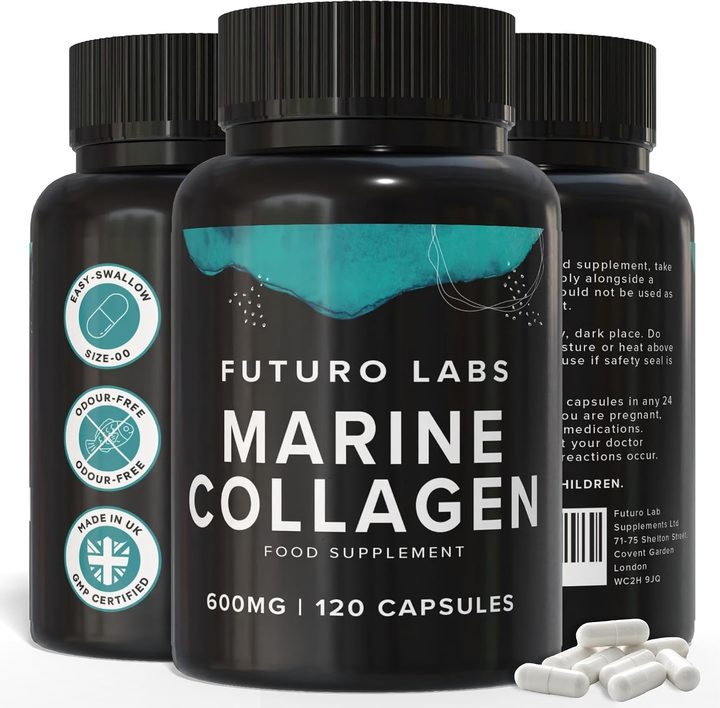
Our brand: the worked example on this page
Futuro Labs Marine Collagen
- 28p a day
- 120 capsules, 2 capsules daily
- Lab tested
- Made in the UK
UK made, and showing the part that matters: Futuro Labs Marine Collagen on Amazon UK, 1200mg hydrolysed type 1 marine, independently lab tested, UK GMP manufacture, £16.99 for 60 days at 28p. Full label breakdown. The five quality lines are on the quality page; the source contest on the bovine-marine page.
What UK on a collagen label actually means, and the supply chain behind the flag
The comparison assumes two distinct products, and the first honest move is dissolving the assumption: raw collagen is a global commodity, marine peptides processed at scale from fish skins in a handful of major producing regions worldwide, bovine likewise from international hide supply chains, and the overwhelming pattern in the UK market is imported raw hydrolysate that is then blended, encapsulated, tubbed and labelled here, which means UK collagen on a pouch almost always means UK-manufactured, UK-regulated, and only rarely UK-caught, a distinction the patriotic packaging blurs on purpose. Read precisely, then, the flag does tell you real things: manufacture under the UK regulatory regime, food supplement and labelling law with the claims register this whole site runs on, GMP expectations, allergen and labelling standards, and practical consumer recourse, a domestic business answerable to UK authorities and reachable when something is wrong, all genuine and worth something. What the flag cannot tell you is the thing the question means by better: the purity, identity and dose of the peptides in the tub, which were probably imported either way, whose heavy-metal and microbiology status is a property of the batch, not the border, and which only the testing certificate demonstrates, a UK-labelled untested tub being a mystery with a flag on it while a well-documented import is an open book with a different postmark.
The honest comparison, run on what actually varies, and the buyer's settled rule
Run the versus honestly and the rows sort themselves. Regulation and recourse: the UK-manufactured product wins on convenience and enforceability, a real but bounded advantage, since reputable products sold into the UK market must meet UK requirements regardless of where they were made, the difference being ease of accountability rather than a different rulebook on the shelf. Raw material: a draw by near-universal fact, both flags typically containing the same globally traded hydrolysates, the sourcing story on either pouch, wild-caught, North Atlantic, grass-fed, being marketing unless certified per the quality page's halo rules. Testing: the decisive row and flag-independent, batch panels for heavy metals and microbiology, identity and dose verification by a named method, dating and traceability, the five checkable lines discriminating between two UK products or two imports exactly as sharply as across the border. Price: divided into pence per day as ever, with the union-jack premium audited like any other halo, a flag adding pence must show what else it added. The settled rule that survives the comparison: prefer the certificate to the flag, take UK manufacture as a genuine tiebreaker worth having for its regulatory convenience, and never let it substitute for the panels, because the question's real axis was never geography, it was documentation, and documentation travels. This site's worked example happens to hold both, UK-made under GMP and independently tested with the panels shown, which is the combination, not the nationality, that this page endorses.
| The row | The verdict | Why |
|---|---|---|
| Raw material origin | A draw, near-universally | Both flags typically hold the same globally traded hydrolysates |
| Regulation and recourse | UK manufacture wins, boundedly | Domestic accountability and the UK regime: convenience, not a different rulebook |
| Purity and dose | Flag-independent: the decisive row | Batch panels and named-method verification discriminate, borders do not |
| Sourcing stories | Halos on both pouches | Wild-caught and grass-fed are marketing unless certified |
| Price | The division decides | A union-jack premium must show what else it bought |
| The settled rule | Certificate first, flag as tiebreaker | Documentation travels; geography never tested anything |
The verdict, stamped where it belongs
Is UK collagen better than imported collagen: the flag was never the axis, raw collagen being a global commodity that both pouches usually share, and UK on the label honestly meaning UK manufacture, regulation and recourse, a real, bounded advantage worth taking as a tiebreaker, while the decisive rows, purity, identity, dose and dating, are settled only by the certificate, which discriminates between two products of any nationality equally well. The buyer's rule: panels first, flag second, price divided third. The worked example holds the full combination rather than the nationality alone: Futuro Labs Marine Collagen, UK-made under GMP and independently lab tested with heavy-metal and microbiology panels, 1200mg hydrolysed type 1 with vitamin C and zinc at 15% NRV, £16.99 for 60 days at 28p a day, endorsed here for its documents, with the postmark as a pleasant extra.
What to check on the label
- Raw collagen is a global commodity: both flags usually share it.
- UK means manufacture and regulation: rarely UK-caught material.
- The certificate is the decisive row: panels discriminate, borders do not.
- Sourcing stories are halos either way: certified or decorative.
- Rule: panels, then flag, then pence: documentation travels.
Our brand
The worked example: Futuro Labs Marine Collagen
Futuro Labs Marine Collagen: 2 capsules daily, 1200mg hydrolysed type 1 marine collagen with 12mg vitamin C and 1.5mg zinc (15% NRV each), 120 capsules for £16.99, 60 days at 28p a day, lab-tested, UK GMP made. Slim veggie-shell capsules, odour free. Fish derived: pescatarian, not vegetarian or vegan.
- Collagen per serving
- 1200mg hydrolysed type 1 marine (fish)
- Co-factors
- vitamin C 12mg (15% NRV), zinc 1.5mg (15% NRV)
- Serving
- 2 capsules a day
- Bottle
- 120 capsules, 60 days
- Price
- £16.99 (28p a day)
- Capsule
- slim size 00, veggie shell, odour free
Questions people also ask
Is UK-made collagen higher quality than imported?
Not by the flag: raw hydrolysate is globally traded either way, and quality lives in batch testing, verified dose and GMP, which discriminate between products of any nationality.
What does UK on a collagen label actually mean?
Almost always UK manufacture and regulation rather than UK-caught fish: the regime, labelling law and consumer recourse, a real but bounded advantage.
Is imported collagen safe to buy?
Reputable products sold into the UK must meet UK requirements wherever made: judge any product, domestic or imported, by its panels, dating and traceability.
Should I pay more for a UK flag on the pouch?
Only if the pence bought something checkable alongside it: take UK manufacture as a tiebreaker between products whose certificates already match.
What is the one document that settles this comparison?
The testing certificate: heavy-metal and microbiology panels plus named-method dose verification, batch by batch, wherever the pouch was printed.
Sources
- Futuro Labs Marine Collagen listing and label: 1200mg hydrolysed type 1 marine collagen per 2-capsule serving with 12mg vitamin C and 1.5mg zinc at 15% NRV each, 120 capsules, independently lab tested, UK made. https://www.amazon.co.uk/dp/B0C2J7N364
- EFSA Panel on Dietetic Products, Nutrition and Allergies. Scientific Opinion on the substantiation of health claims related to magnesium. EFSA Journal 2010;8(10):1807. https://efsa.onlinelibrary.wiley.com/doi/10.2903/j.efsa.2010.1807
- The collagen peptide trial literature: randomised controlled studies of hydrolysed collagen supplementation across skin, joint and connective-tissue outcomes, typically at 2.5g to 15g daily, with small effects and frequent industry funding. PubMed record
- EFSA Panel on Dietetic Products. Scientific opinion on Dietary Reference Values for fats: Adequate Intake of 250mg combined EPA and DHA per day for adults. EFSA Journal 2010;8(3):1461. https://www.efsa.europa.eu/en/efsajournal/pub/1461