Ghost Fitness/Collagen/Which supplement has been shown to repair connective tissue?
Which supplement has been shown to repair connective tissue?
The short answer
Taken literally, one: vitamin C, whose repletion repairs the connective tissue damage its own deficiency causes, the scurvy case. Nothing else has outcome trials showing repair, only markers, mechanisms and symptom scores, which is not what shown means.
- What shown should meanoutcome trials, replicated, independent: tissue actually repairing
- What marketing meansa mechanism, a marker, a mouse, a symptom score
- The one literal passvitamin C repletion repairing deficiency damage: the scurvy case
- Everything elsemarkers and modest scores: suggestive, never shown
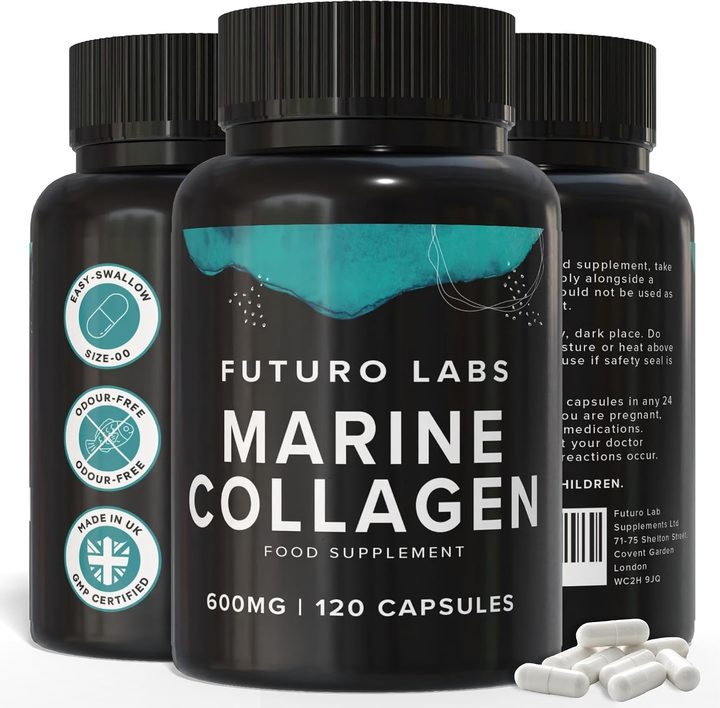
Our brand: the worked example on this page
Futuro Labs Marine Collagen
- 28p a day
- 120 capsules, 2 capsules daily
- Lab tested
- Made in the UK
The technically-passing nutrient, carried at threshold: Futuro Labs Marine Collagen on Amazon UK, 1200mg hydrolysed type 1 with 12mg vitamin C at 15% NRV, £16.99 for 60 days at 28p. Full label breakdown. The evidence pipeline is on the ligament page; the phrase's register owners on the connective tissue page.
The proof standard set first, because the question's verb is doing all the work
Shown is the strongest verb in evidence vocabulary and this page takes it literally, because the gap between what it should mean and what marketing means by it is where the whole aisle lives. Shown, properly: randomised outcome trials in humans where the tissue itself demonstrably repaired, healing measured, function restored, re-injury reduced, replicated by groups without a stake in the result. What marketing means by shown, in descending order of distance from that standard: a mechanism, the nutrient participates in tissue biology on paper; a model, cells or engineered tissue or a rodent responded; a marker, a blood indicator moved in a small human study; a score, participants reported feeling somewhat better in a sponsor-funded trial. All four are legitimate stages of science and none of the four is repair being shown, they are the pipeline's earlier stops wearing the final stop's verb, the exact inflation the ligament page's pipeline diagram exists to catch. Standard set, the candidates line up for testing, and the parade is short.
Every candidate tested, and the technically correct answer that survives
The parade, against the literal standard. Collagen and the gelatin-with-C protocol: mechanism yes, engineered-tissue models yes, human synthesis markers yes, repaired human tendons or ligaments in outcome trials, no, the stop-two grade its own pages assign, suggestive and unshown. UC-II: small sponsor-heavy trials moving joint symptom scores, tissue repair never demonstrated, unshown. Glucosamine and chondroitin: the category that actually reached the big fair tests and failed them, the rare honest case of shown-not-to at the standard the others never faced. Copper and manganese: maintenance sentences on the register, deficiency biology real, repair demonstrations, none, unshown. And then the candidate that survives the literal reading, stated precisely because precision is the whole point: vitamin C, in a person deficient in it, has been shown to repair connective tissue, the scurvy case, where deficiency demonstrably breaks collagen synthesis, wounds reopen, vessels and gums fail, and repletion demonstrably repairs the damage, healing restored, the single cleanest cause-and-repair demonstration in all of nutrition, documented from the age of sail to the modern case reports of scurvy in restrictive diets. The boundary travels with the answer: it is repair of deficiency damage in the deficient, sufficiency restoring normal function, and it licenses nothing about extra C repairing the tendinopathy of a well-fed lifter, the tendonitis page's line exactly, a deficient body builds badly, a sufficient body builds normally, a sufficient body given more builds no faster. So the question's literal answer is vitamin C, wearing an asterisk the size of the answer, and everything else on the shelf is a verb inflation away from honesty.
| The candidate | Its best evidence | Shown to repair? |
|---|---|---|
| Collagen, the pre-loading protocol | Engineered tissue, human synthesis markers | No: stop two of the pipeline, suggestive |
| UC-II | Small sponsor trials, symptom scores | No: scores are not tissue repair |
| Glucosamine and chondroitin | The big fair trials, failed | Shown not to, at the standard others never faced |
| Copper and manganese | Register maintenance sentences, deficiency biology | No repair demonstrations |
| Vitamin C, in deficiencyOurs | Scurvy: repletion demonstrably repairs the damage | Yes: the literal pass, asterisk attached |
| Vitamin C, in sufficiency | Normal function maintained | No: extra does not repair the well-fed |
The verdict, and the verb returned at its true size
Which supplement has been shown to repair connective tissue: taken at the word's honest weight, vitamin C and only vitamin C, in the person its own deficiency has damaged, the scurvy case standing as nutrition's one clean cause-and-repair demonstration, while every other candidate on the shelf holds mechanisms, models, markers or scores, the pipeline's earlier stops dressed in the final verb. The practical residue is the section's constant: keep C simply met, an ordinary diet or a label at 15% NRV, and give repair itself to the loading programmes and clinical pathways its pages describe. The worked example carries the technically-passing nutrient at exactly its honest threshold: Futuro Labs Marine Collagen, 1200mg hydrolysed type 1 with 12mg vitamin C at 15% NRV, lab tested, UK made, £16.99 for 60 days at 28p a day, an asterisk of a product beneath an answer that was always mostly a lesson in one verb.
What to check on the label
- Shown means outcome trials, replicated: tissue actually repairing.
- Markers, models and scores are not shown: earlier pipeline stops in costume.
- The literal pass is vitamin C in deficiency: the scurvy case, asterisk attached.
- Sufficiency licenses nothing extra: more C repairs no well-fed tendon.
- Glucosamine was shown not to: the one candidate that faced the real test.
Our brand
The worked example: Futuro Labs Marine Collagen
Futuro Labs Marine Collagen: 2 capsules daily, 1200mg hydrolysed type 1 marine collagen with 12mg vitamin C and 1.5mg zinc (15% NRV each), 120 capsules for £16.99, 60 days at 28p a day, lab-tested, UK GMP made. Slim veggie-shell capsules, odour free. Fish derived: pescatarian, not vegetarian or vegan.
- Collagen per serving
- 1200mg hydrolysed type 1 marine (fish)
- Co-factors
- vitamin C 12mg (15% NRV), zinc 1.5mg (15% NRV)
- Serving
- 2 capsules a day
- Bottle
- 120 capsules, 60 days
- Price
- £16.99 (28p a day)
- Capsule
- slim size 00, veggie shell, odour free
Questions people also ask
Has any supplement actually been shown to repair connective tissue?
Literally, one: vitamin C repairing the damage its own deficiency causes, the scurvy case. Everything else holds markers, mechanisms or symptom scores, which is not repair being shown.
Doesn't the collagen research show repair?
It shows synthesis markers rising in small studies and responses in engineered tissue: stop two of the evidence pipeline, suggestive and honestly graded, never a repaired human tendon in an outcome trial.
What would count as being shown?
Randomised human outcome trials with the tissue demonstrably healing, replicated by independent groups: the standard glucosamine actually faced, and failed.
Does extra vitamin C repair tendons or ligaments then?
No: the scurvy case is repletion repairing deficiency damage. A sufficient body given more builds no faster, which is why the register's C sentences are maintenance wording.
What should I actually do with this answer?
Keep vitamin C simply met, by diet or a label at 15% NRV, and give repair to the assessed, graded loading programmes that own it on every injury page here.
Sources
- The vitamin C deficiency literature: severe deficiency impairs collagen synthesis and produces connective tissue failure, the historical disease scurvy, essentially absent on ordinary modern diets. PubMed record
- The gelatin and vitamin C pre-exercise research (Shaw, Baar and colleagues): 15g gelatin with vitamin C taken about an hour before loading, studied for markers of collagen synthesis, the protocol behind the tendon-training conversation. PubMed record
- The glucosamine and chondroitin trial record: large independent randomised trials in osteoarthritis returned results that failed to support the category's promises, a cautionary benchmark for the whole joint shelf. PubMed record
- The undenatured type II collagen (UC-II) trial literature: small randomised studies at 40mg daily against joint outcomes, a different mechanism and dose to hydrolysed collagen, with no authorised claim resulting. PubMed record
- EFSA Panel on Dietetic Products, Nutrition and Allergies. Scientific Opinion on the substantiation of health claims related to magnesium. EFSA Journal 2010;8(10):1807. https://efsa.onlinelibrary.wiley.com/doi/10.2903/j.efsa.2010.1807