Ghost Fitness/Collagen/What is the best supplement for connective tissue?
What is the best supplement for connective tissue?
The short answer
Audit your week before your basket: protein, vitamin C, zinc, copper and manganese hold the connective tissue sentences, and an ordinary varied week clears all five. The supplement is the fallback for whichever line the audit fails.
- The five linesprotein, vitamin C, zinc, copper, manganese: the lawful vocabulary
- The audit's unityour actual week: seven days of real plates
- The usual resultan ordinary varied week clears all five
- The fallback rulesupplement the failed line, not the whole alphabet
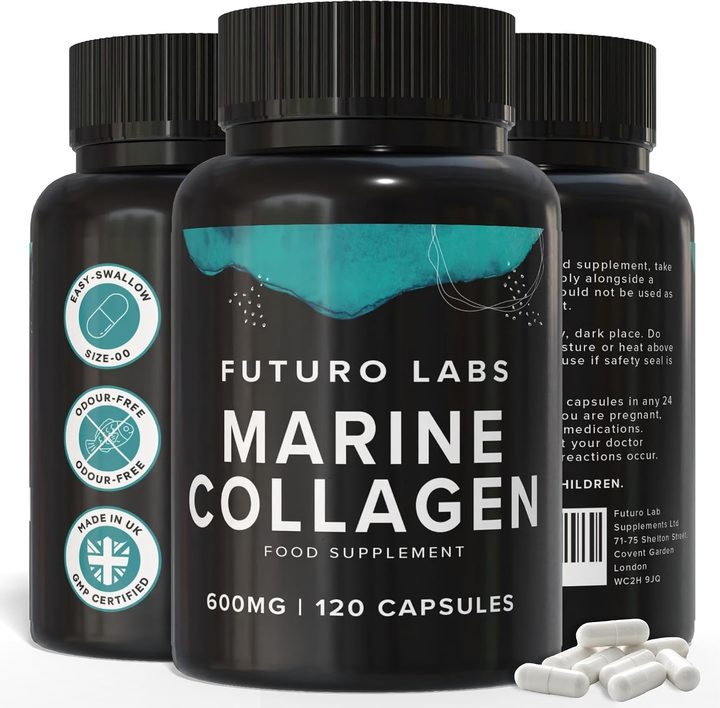
Our brand: the worked example on this page
Futuro Labs Marine Collagen
- 28p a day
- 120 capsules, 2 capsules daily
- Lab tested
- Made in the UK
The two-line fallback in one label: Futuro Labs Marine Collagen on Amazon UK, 1200mg hydrolysed type 1 with vitamin C and zinc at 15% NRV, £16.99 for 60 days at 28p. Full label breakdown. The phrase's register owners are on the connective tissue type page; the shown-test on the proof page.
Why the audit comes first, and how to run it on a real week
The connective-tissue vocabulary the register actually contains, protein's bulk-supply claims, vitamin C's collagen-formation sentences, zinc's protein synthesis, copper's maintenance of normal connective tissues, manganese's formation line, shares one property the aisle never advertises: it is almost entirely met by ordinary eating, which turns the honest version of this page from a product ranking into an audit, run on the only dataset that matters, your actual week. The method is a kitchen-table exercise: take the last seven days as you genuinely ate them, not the aspirational version, and check each line against the foods that clear it. Protein: did most days contain two or three proper protein servings, eggs, dairy, meat, fish, beans, tofu, toward the 1.2g-plus per kilogram the tissue pages use, with training weeks wanting more. Vitamin C: did most days contain fruit or veg with C in it, citrus, berries, peppers, potatoes even, the 80mg NRV being a satsuma and half a pepper. Zinc: did the week contain meat, dairy, beans, seeds or shellfish in normal amounts. Copper: nuts, seeds, shellfish, wholegrains, dark chocolate honourably included. Manganese: tea drinkers pass at breakfast, wholegrains, oats and nuts covering the rest. Five lines, seven days, ten minutes, and for most people eating anything like a varied diet, five passes, which is the audit's usual and slightly deflating result: the best supplement for connective tissue is, for most readers, the shopping they already did.
Reading a failed line, and the fallback bought at the right size
The audit earns its keep on the failed lines, and each has an honest reading. A failed protein line is the audit's most consequential result and the one with the clearest fix, more food protein first, distributed across the day, with whey as the practical topper, collagen explicitly not the fix here, its incomplete profile the standing reason. A failed C line, rare but real in fruit-and-veg-free weeks, is fixed for pennies by the fruit bowl or carried by any label at 15% NRV. Failed zinc, copper or manganese lines usually trace to very narrow diets, and the first fix is the food list above before any bottle, with a genuinely restricted eater, and anyone whose restriction has a medical or disordered dimension, owed a professional conversation rather than an aisle. The fallback rule then sizes the purchase: supplement the failed line, not the whole alphabet, a targeted top-up beating the connective-tissue complexes that bundle all five with botanicals at a multiple of the price, and the worked example's honest role here is precisely two lines of the five, vitamin C and zinc at 15% NRV riding its hydrolysate, a fair fallback for the reader whose audit failed those and who wanted the collagen anyway, never a substitute for the plate the protein line demands. Around the audit, the standing frames hold: no supplement repairs connective tissue, the shown-test page's scurvy asterisk aside, injuries take the graded curriculum, and the audit is nutrition's whole honest contribution, run once, revisited when the diet changes.
| The line | The foods that clear it | If the week fails it |
|---|---|---|
| Protein, 1.2g+ per kilogram | Eggs, dairy, meat, fish, beans, tofu: 2-3 servings daily | More food protein, whey topper: collagen is not this fix |
| Vitamin C, 80mg NRV | Citrus, berries, peppers, potatoes | The fruit bowl for pennies, or a label at 15% NRV |
| Zinc | Meat, dairy, beans, seeds, shellfish | Food list first; labels at 15% NRV carry the sentence |
| Copper | Nuts, seeds, shellfish, wholegrains | Widen the week before any bottle |
| Manganese | Tea, oats, wholegrains, nuts | Tea drinkers pass at breakfast |
| The fallback rule | Supplement the failed line only | Targeted top-ups beat five-in-one complexes |
The verdict, and the basket sized by the audit
What is the best supplement for connective tissue: for most readers, none, the audit of an ordinary varied week clearing all five lines of the register's actual vocabulary, protein, vitamin C, zinc, copper and manganese, at the cost of shopping already done, and for the rest, the targeted fallback for whichever line failed, food first, a top-up second, and never the five-plus-botanicals complex the aisle sells against this exact question. The worked example serves the fallback at its honest size: Futuro Labs Marine Collagen, 1200mg hydrolysed type 1 carrying vitamin C and zinc, two of the five lines, at 15% NRV each, lab tested, UK made, £16.99 for 60 days at 28p a day, a fair courier for a failed line or two, beneath a page whose best advice was ten minutes at the kitchen table.
What to check on the label
- Audit the week before the basket: seven real days, five lines, ten minutes.
- An ordinary varied week clears all five: the usual, deflating result.
- A failed protein line is the big one: fixed by food, never by collagen.
- Supplement the failed line only: targeted beats the five-in-one complex.
- Restricted diets earn a professional: before any aisle answers them.
Our brand
The worked example: Futuro Labs Marine Collagen
Futuro Labs Marine Collagen: 2 capsules daily, 1200mg hydrolysed type 1 marine collagen with 12mg vitamin C and 1.5mg zinc (15% NRV each), 120 capsules for £16.99, 60 days at 28p a day, lab-tested, UK GMP made. Slim veggie-shell capsules, odour free. Fish derived: pescatarian, not vegetarian or vegan.
- Collagen per serving
- 1200mg hydrolysed type 1 marine (fish)
- Co-factors
- vitamin C 12mg (15% NRV), zinc 1.5mg (15% NRV)
- Serving
- 2 capsules a day
- Bottle
- 120 capsules, 60 days
- Price
- £16.99 (28p a day)
- Capsule
- slim size 00, veggie shell, odour free
Questions people also ask
What is the single best supplement for connective tissue?
For most people, none: the register's five-line vocabulary, protein, vitamin C, zinc, copper and manganese, is cleared by an ordinary varied week, which the ten-minute audit confirms.
How do I know if I'm missing something?
Run the audit on your real week: protein servings most days, fruit and veg for C, and the zinc, copper and manganese food lists. A failed line names its own fix.
Can collagen cover my protein line?
No: it is incomplete, missing tryptophan and low in leucine, so the protein fix is food and complete sources, with collagen at most carrying the C and zinc lines beside it.
Are connective tissue complex supplements worth it?
Rarely: they bundle all five lines with botanicals at a multiple of the price, when the honest fallback is a targeted top-up for the one line your audit failed.
Does any of this repair damaged connective tissue?
No: sufficiency is a floor, not a repair, and injuries take the graded rehab curriculum on their own pages, with the scurvy case the proof page's lone literal exception.
Sources
- EFSA Panel on Dietetic Products, Nutrition and Allergies. Scientific Opinion on the substantiation of health claims related to magnesium. EFSA Journal 2010;8(10):1807. https://efsa.onlinelibrary.wiley.com/doi/10.2903/j.efsa.2010.1807
- Review literature on protein intake and muscle mass in older adults: higher protein intakes support the maintenance of muscle in ageing, the evidence base behind the register's protein and muscle-mass claims mattering more with age. PubMed record
- The vitamin C deficiency literature: severe deficiency impairs collagen synthesis and produces connective tissue failure, the historical disease scurvy, essentially absent on ordinary modern diets. PubMed record
- Futuro Labs Marine Collagen listing and label: 1200mg hydrolysed type 1 marine collagen per 2-capsule serving with 12mg vitamin C and 1.5mg zinc at 15% NRV each, 120 capsules, independently lab tested, UK made. https://www.amazon.co.uk/dp/B0C2J7N364