Ghost Fitness/Collagen/What fish is marine collagen made from?
What fish is marine collagen made from?
The short answer
Mostly whitefish processing byproducts: cod, pollock and haddock skins from wild fisheries, tilapia and pangasius from farms, occasionally salmon. Labels must declare fish as an allergen but rarely name the species; certificates and origin lines do.
- The wild manifestcod, pollock, haddock: whitefish skins from filleting lines
- The farmed manifesttilapia and pangasius: aquaculture's steady skin supply
- The label realityfish declared as allergen; species rarely named on the front
- Where species livesorigin statements, certificates, and supplier documents
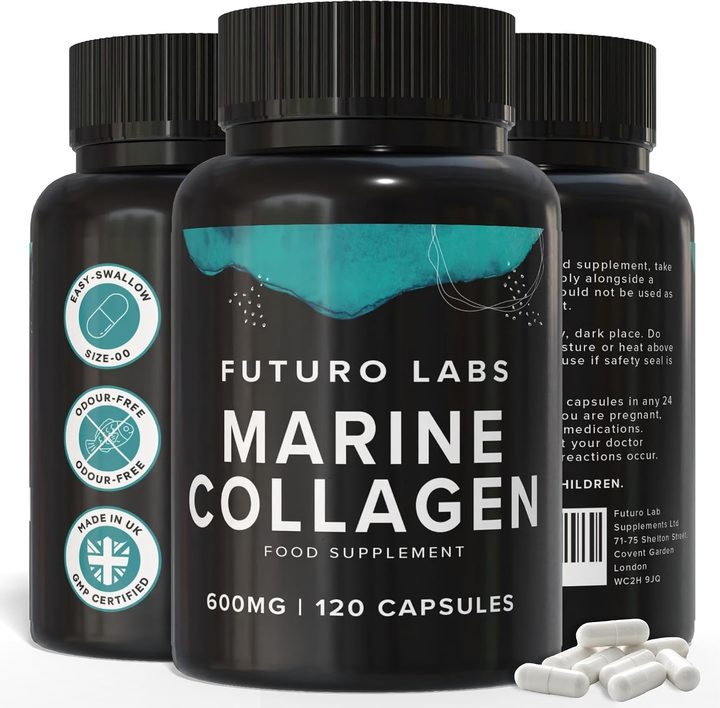
Our brand: the worked example on this page
Futuro Labs Marine Collagen
- 28p a day
- 120 capsules, 2 capsules daily
- Lab tested
- Made in the UK
Fish-derived and declared as exactly that: Futuro Labs Marine Collagen on Amazon UK, 1200mg hydrolysed type 1 marine, fish stated plainly as the allergen it is, heavy-metal tested per batch, £16.99 for 60 days at 28p. Full label breakdown. The factory tour is on the made-of page; the sustainability walk-back on the sourcing page.
The manifest read out: which fish, from which supply chains, and which parts
Marine collagen has a surprisingly short cast list, because the economics choose the fish before any formulator does: the raw material is skin, and skin arrives in industrial quantity only where filleting happens at scale, so the manifest reads off the world's biggest fillet lines. From wild-capture fisheries, the whitefish trio dominates, cod, Alaska pollock and haddock, their skins peeled by the tonne in processing plants and diverted from the waste stream into collagen extraction, cold-water species whose pale, low-fat skins suit the process well. From aquaculture, the steady suppliers are tilapia and pangasius, farmed at enormous scale with predictable, year-round skin output that manufacturers prize for consistency, and tilapia scales joining skins as a secondary stream with a demineralising step. Salmon appears at the margins, its skins abundant but fattier, demanding more degreasing, and a scattering of regional species fills local supply chains. The part matters as much as the species: overwhelmingly skin, secondarily scales, both type 1 tissues per the numeral pages, with fish-cartilage type 2 being the separate declared niche. What the manifest is not, anywhere, is a fishery run for collagen, every species on it being caught or farmed for its fillets first, the skins being the side-stream the sourcing page walks backwards.
Why the label rarely tells you, where the species actually lives, and when it is worth chasing
Now the honest label lesson: UK law makes one demand and most brands stop there, fish must be declared and emphasised as an allergen, so every marine tub says fish somewhere bold, and almost none says which, hydrolysed fish collagen or marine collagen peptides being the standard ingredient wording, the species living instead in supplier specifications, certificates of analysis and, on better labels, an origin line, wild-caught North Atlantic or similar, that narrows the manifest without naming a Latin binomial. That anonymity is usually harmless, the allergen warning covering the safety question since a fish allergy excludes all species alike, and the peptides pooling identically whatever swam above them, but three readers have honest reasons to chase the species and should know where to look: the sustainability-minded, for whom species plus waters plus certification is the whole audit, pursued through the brand's sourcing page or a direct question to the manufacturer, vague answers being themselves an answer; the kosher-observant, for whom fin-and-scale rules make species and certification inseparable, settled only by a certifying document; and the simply curious or preference-driven, cod-skin romance being a real marketing lane, verified the same way, by paperwork rather than packaging art. For everyone else, the working rules hold: read fish as the operative word, judge the tub by its testable file, the per-batch heavy-metals and microbiology certificates a marine raw material earns, the stated dose, the cofactors at 15% NRV, and let the manifest above satisfy the curiosity the front label declined to.
| The item | The answer | Where to verify |
|---|---|---|
| Wild whitefish | Cod, Alaska pollock, haddock skins | Origin lines, sourcing pages, supplier specs |
| Farmed supply | Tilapia and pangasius, skins and scales | The same paperwork: farms named or not |
| The margins | Salmon and regional species | Rarely labelled: ask the manufacturer |
| The part used | Skin overwhelmingly, scales second | Type 1 tissue either way |
| What the label must say | Fish, declared and emphasised | The allergen line: species not required |
| Who should chase species | Sustainability, kosher, preference readers | Certificates and documents, never packaging art |
The verdict, logged from the manifest
What fish is marine collagen made from: mostly the skins the world's biggest fillet lines produce, wild cod, pollock and haddock, farmed tilapia and pangasius, salmon at the fattier margins, all byproduct streams of fisheries and farms that never ran for collagen, with the label legally obliged to declare fish and rarely moved to name the species, which lives instead in origin lines, certificates and supplier answers worth chasing only by the sustainability, kosher and preference readers whose questions genuinely turn on it. The worked example states what the law and honesty require: Futuro Labs Marine Collagen, 1200mg hydrolysed type 1 from fish, declared plainly as the allergen it is, heavy-metal and microbiology tested per batch, UK made, £16.99 for 60 days at 28p a day, a tub judged, as every marine tub should be, by its file rather than its species romance.
What to check on the label
- The manifest is short: whitefish skins wild, tilapia and pangasius farmed.
- Skin is the part: scales second, both type 1, cartilage the niche.
- Labels declare fish, not species: the allergen line is the legal floor.
- Species lives in paperwork: origin lines, certificates, direct answers.
- Three readers should chase it: sustainability, kosher, preference.
Our brand
The worked example: Futuro Labs Marine Collagen
Futuro Labs Marine Collagen: 2 capsules daily, 1200mg hydrolysed type 1 marine collagen with 12mg vitamin C and 1.5mg zinc (15% NRV each), 120 capsules for £16.99, 60 days at 28p a day, lab-tested, UK GMP made. Slim veggie-shell capsules, odour free. Fish derived: pescatarian, not vegetarian or vegan.
- Collagen per serving
- 1200mg hydrolysed type 1 marine (fish)
- Co-factors
- vitamin C 12mg (15% NRV), zinc 1.5mg (15% NRV)
- Serving
- 2 capsules a day
- Bottle
- 120 capsules, 60 days
- Price
- £16.99 (28p a day)
- Capsule
- slim size 00, veggie shell, odour free
Questions people also ask
Which fish species are used for marine collagen?
Mostly cod, Alaska pollock and haddock skins from wild filleting, and tilapia and pangasius from farms, with salmon at the margins: the species the world's fillet lines produce skin from.
Why doesn't my label name the fish?
The law only requires fish declared as an allergen: species lives in supplier specifications, certificates and origin lines, which better brands surface and honest ones answer on request.
Does the species change the collagen?
Not usefully: skins and scales are type 1 tissues everywhere, the peptides pool identically after hydrolysis, and a fish allergy excludes every species alike.
Who should actually verify the species?
Sustainability readers, for whom species, waters and certification are the audit; kosher readers, whose fin-and-scale rules need certifying documents; and anyone paying a premium for a named-species story.
What should everyone else check instead?
The file: per-batch heavy-metals and microbiology certificates, the stated dose, vitamin C and zinc at 15% NRV, honest dates and the pence divided.
Sources
- The marine byproduct literature: fish skins and scales from filleting are studied as collagen raw materials, valorising processing side-streams from species including cod, pollock and tilapia. PubMed record
- The collagen manufacturing literature: raw hides and fish skins are cleaned, extracted to gelatine and enzymatically hydrolysed into low molecular weight peptides before filtration and spray-drying. PubMed record
- Futuro Labs Marine Collagen listing and label: 1200mg hydrolysed type 1 marine collagen per 2-capsule serving with 12mg vitamin C and 1.5mg zinc at 15% NRV each, 120 capsules, independently lab tested, UK made. https://www.amazon.co.uk/dp/B0C2J7N364
- EFSA Panel on Dietetic Products, Nutrition and Allergies. Scientific Opinion on the substantiation of health claims related to magnesium. EFSA Journal 2010;8(10):1807. https://efsa.onlinelibrary.wiley.com/doi/10.2903/j.efsa.2010.1807