Ghost Fitness/Collagen/Is marine collagen sustainably sourced?
Is marine collagen sustainably sourced?
The short answer
Broadly yes as upcycling: skins the filleting industry would discard become the raw material. The caveat is that a byproduct inherits its fishery, so sustainability is verified backwards, named species, named waters, credible certification, never by ocean-friendly wallpaper.
- The upcycling caseskins diverted from the waste stream: genuine valorisation
- The inheritance principlea byproduct is exactly as sustainable as its fishery
- The verification chainspecies, waters, management, certification: walked backwards
- The greenwash tellsocean imagery and vague words where documents should be
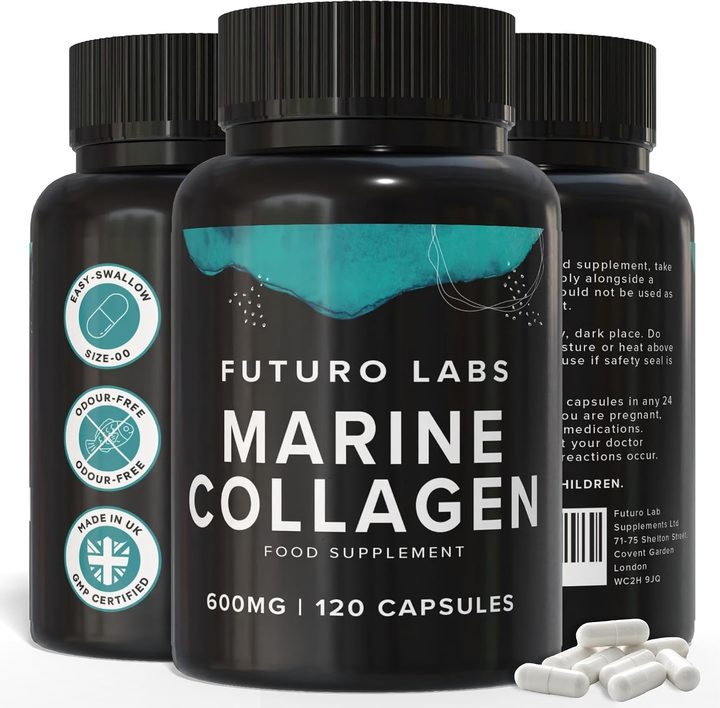
Our brand: the worked example on this page
Futuro Labs Marine Collagen
- 28p a day
- 120 capsules, 2 capsules daily
- Lab tested
- Made in the UK
Judged by paperwork, not wallpaper: Futuro Labs Marine Collagen on Amazon UK, 1200mg hydrolysed type 1 marine, fish declared, heavy-metal tested per batch, £16.99 for 60 days at 28p. Full label breakdown. The species manifest is on the what-fish page; the health-file review on the healthier page.
The upcycling case made properly, and the principle that stops it being a blank cheque
Start with the case marine collagen genuinely has, because it is real: the raw material is skin, skin is what filleting leaves behind, and before collagen extraction scaled up, those tonnes largely went to low-value meal, rendering or disposal, so diverting them into a food-grade ingredient is valorisation in the proper sense, more value from the same fish, no additional catch demanded, the sustainability pages' upcycling story told without exaggeration, and the reason both this section's source pages could retire the marine-versus-bovine sustainability duel in a sentence, each raw material being a side-stream of an industry that exists regardless. Then, immediately, the principle that stops the case becoming a blank cheque, and it is this page's keeper: a byproduct inherits its fishery. Skin from a well-managed, quota-governed cod or pollock stock inherits that management; skin from an overfished stock, a poorly governed fleet or a destructive gear type inherits those too, the byproduct label describing the material's position in the value chain, never the health of the water it came from, so upcycled and sustainable are related claims and not the same one, and the second must be earned upstream where the first is merely observed at the factory gate. Farmed supply runs the same principle through different questions, tilapia and pangasius skins inheriting their farms, feed sourcing, water management and welfare standards replacing quotas and stock assessments as the things a certificate would have audited.
The walk-back protocol for a shopper, the greenwash gallery, and the honest verdict
So verify backwards, tub to boat, in the four steps a shopper can actually take. Step one, species: does the brand name what the manifest page says most labels will not, because an unnamed fish cannot have an assessed stock. Step two, waters and method: wild or farmed, which ocean or which country's aquaculture, stated in an origin line or a sourcing page rather than implied by a wave graphic. Step three, management evidence: for wild supply, a recognised chain-of-custody certification such as the MSC's, or at minimum a named, publicly assessed fishery; for farmed, an aquaculture standard of similar standing; the certificate being the one document that audits the water the byproduct label never reaches. Step four, the manufacturer's answer: an emailed sourcing question to an honest brand returns specifics, and a reply of proprietary blends and ocean-friendly enthusiasm is itself a finding. The greenwash gallery to walk past on the way: wave-and-net packaging carrying no named fishery, sustainably sourced printed without a scheme or a species, ocean-positive vocabulary invented in-house, and the byproduct claim itself deployed as if it settled the upstream question this page just showed it cannot. The honest verdict, then, in the shape the question deserves: marine collagen is structurally well-placed to be sustainable, upcycling being its default architecture, and any particular tub is exactly as sustainable as the fishery or farm its paperwork can name, which most cannot, so the reader who genuinely weighs this buys the tub that shows its chain, and the reader who cannot find one at least knows the claim's true price: a species, a water, and a certificate, or wallpaper.
| The step | The question | Pass and fail |
|---|---|---|
| The structural case | Is the material a genuine side-stream? | Yes: skins from filleting, no added catch |
| The inheritance principle | What does the byproduct inherit? | Its fishery or farm, wholly: good or bad |
| Species and waters | Named, or implied by a wave graphic? | Origin lines pass; packaging art fails |
| Certification | A recognised chain of custody? | MSC-style schemes pass; in-house vocabulary fails |
| The manufacturer's answer | Do sourcing questions return specifics? | Specifics pass; ocean-friendly enthusiasm fails |
| The verdict | Structurally yes, tub by tub earned | As sustainable as the paperwork can name |
The verdict, delivered at the dockside
Is marine collagen sustainably sourced: structurally, yes, the industry's architecture being upcycling, skins that filleting would discard becoming the ingredient with no additional catch demanded, and specifically, only as much as each tub can prove, because a byproduct inherits its fishery, well-managed stocks passing their management downstream and troubled ones their trouble, so the claim is verified backwards through species, waters and a recognised certification, never forwards from wave-printed packaging. The worked example keeps its own claims inside its paperwork: Futuro Labs Marine Collagen, 1200mg hydrolysed type 1 from fish, declared plainly, heavy-metal and microbiology tested per batch, UK made, £16.99 for 60 days at 28p a day, sold on the file it can show, which is the only sustainability sentence this page lets any tub speak for free.
What to check on the label
- The upcycling case is real: skins diverted, no added catch.
- A byproduct inherits its fishery: the principle that decides everything.
- Verify backwards: species, waters, management, certification.
- Certificates audit the water: the byproduct label never does.
- Wallpaper is a finding: vague ocean-friendly replies answer the question.
Our brand
The worked example: Futuro Labs Marine Collagen
Futuro Labs Marine Collagen: 2 capsules daily, 1200mg hydrolysed type 1 marine collagen with 12mg vitamin C and 1.5mg zinc (15% NRV each), 120 capsules for £16.99, 60 days at 28p a day, lab-tested, UK GMP made. Slim veggie-shell capsules, odour free. Fish derived: pescatarian, not vegetarian or vegan.
- Collagen per serving
- 1200mg hydrolysed type 1 marine (fish)
- Co-factors
- vitamin C 12mg (15% NRV), zinc 1.5mg (15% NRV)
- Serving
- 2 capsules a day
- Bottle
- 120 capsules, 60 days
- Price
- £16.99 (28p a day)
- Capsule
- slim size 00, veggie shell, odour free
Questions people also ask
Is marine collagen environmentally friendly?
Structurally it is well-placed: the raw material is filleting's skin side-stream, upcycled with no additional catch. Each tub then earns the claim only as far back as its paperwork reaches.
Doesn't being a byproduct make it automatically sustainable?
No: a byproduct inherits its fishery, so skin from a well-managed stock inherits the management and skin from an overfished one inherits the problem. Upcycled and sustainable are different claims.
What should a genuinely sustainable label show?
The walk-back: a named species, stated waters or farm origin, and a recognised chain-of-custody certification such as the MSC's for wild supply, with specifics on request.
What are the greenwash warning signs?
Wave graphics without a named fishery, sustainably-sourced wording without a scheme, invented ocean-positive vocabulary, and the byproduct claim deployed as if it settled the upstream question.
How does farmed marine collagen compare?
Same principle, different audit: tilapia and pangasius skins inherit their farms, so feed sourcing, water management and a credible aquaculture standard replace quotas and stock assessments.
Sources
- The marine byproduct literature: fish skins and scales from filleting are studied as collagen raw materials, valorising processing side-streams from species including cod, pollock and tilapia. PubMed record
- The collagen manufacturing literature: raw hides and fish skins are cleaned, extracted to gelatine and enzymatically hydrolysed into low molecular weight peptides before filtration and spray-drying. PubMed record
- Futuro Labs Marine Collagen listing and label: 1200mg hydrolysed type 1 marine collagen per 2-capsule serving with 12mg vitamin C and 1.5mg zinc at 15% NRV each, 120 capsules, independently lab tested, UK made. https://www.amazon.co.uk/dp/B0C2J7N364
- EFSA Panel on Dietetic Products, Nutrition and Allergies. Scientific Opinion on the substantiation of health claims related to magnesium. EFSA Journal 2010;8(10):1807. https://efsa.onlinelibrary.wiley.com/doi/10.2903/j.efsa.2010.1807