Ghost Fitness/Collagen/Collagen powder vs protein powder: which is better?
Collagen powder vs protein powder: which is better?
The short answer
Collagen powder technically is a protein powder, the family's weakest member: missing tryptophan, a third of whey's leucine, near zero quality scores. For protein jobs pick a complete member; collagen works its own protocol job instead.
- The twistcollagen is inside the family it is being compared against
- The tree's branchesdairy, plant, blends, and the incomplete branch collagen sits on
- The quality gradientwhey at the top, collagen at the bottom, everything else between
- The seat's honest jobnot protein targets: the habit's cofactors or the protocol
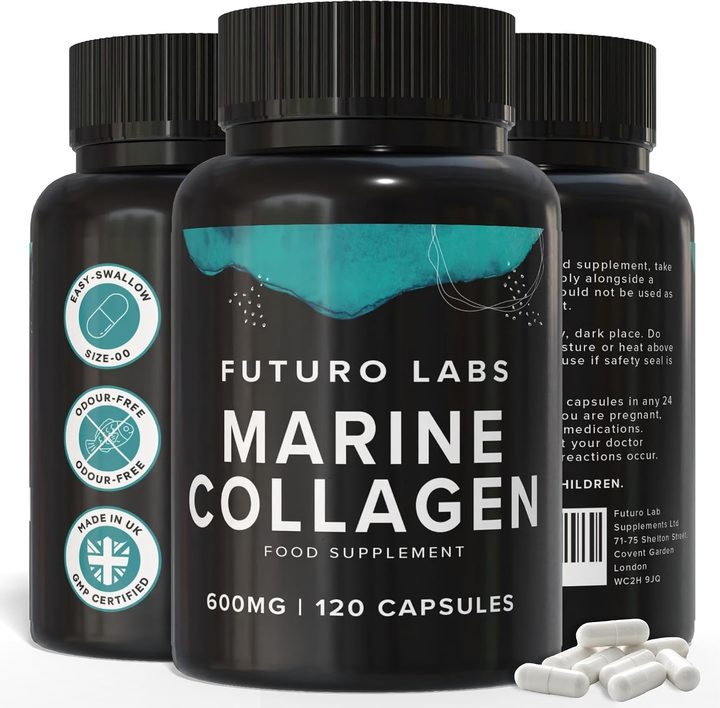
Our brand: the worked example on this page
Futuro Labs Marine Collagen
- 28p a day
- 120 capsules, 2 capsules daily
- Lab tested
- Made in the UK
The family's odd seat, labelled for its actual job: Futuro Labs Marine Collagen on Amazon UK, 1200mg hydrolysed type 1 with vitamin C and zinc at 15% NRV, £16.99 for 60 days at 28p, never sold as the protein branch. Full label breakdown. The whey interviews are on the two-jobs page; the two-rulers paradox on the source-of-protein page.
The twist named, and the family tree drawn with every branch in place
The comparison arrives with a category twist its sibling pages have circled and this one names outright: collagen powder is not outside the protein powder family looking in, it is a member, a powdered protein by any literal reading and by the labelling law's energy-share ruler, so the honest question is never collagen versus the family but where collagen sits within it, and the tree answers that. Draw it: the dairy branch, whey at the canopy, fast, complete, leucine-rich, the quality scales' top score and the register's muscle claims, with casein beside it, the same completeness released slowly; the plant branch, soy the complete elder, pea and rice the popular pair whose blends cover each other's amino gaps, the branch modern formulation has lifted within reach of dairy; the blend branch, multi-source powders engineered for completeness and texture; the specialty twigs, egg white and the clear protein drinks, complete proteins in lighter clothing; and then, on its own low branch, the incomplete line, collagen essentially alone on it among commercial powders, tryptophan absent, leucine at a third of the canopy's, PDCAAS and DIAAS at or near zero, a protein powder by membership and the family's weakest member by every measure the family is bought for.
Better decided branch by branch, the mixed-family blends priced, and the seat's real job
Better, decided by walking the tree with a goal in hand. For the protein jobs the family exists for, muscle building and maintenance, the daily target of 1.2-to-2.2g per kilogram, lean-mass guarding in a deficit, pick from the complete branches by preference and diet, whey as the default canopy choice, casein for slow-release niches, soy or a pea-rice blend for the plant-based reader, egg white for the dairy-and-soy-free, every one of them a defensible hire and collagen none of them, its grams sitting outside the target on the composition the quality pages document. For the mixed-family products, the collagen-plus-whey and beauty-protein blends, the dilution verdict imports whole, every collagen gram displacing a complete gram, dragging the scoop below plain members of either branch at similar money, the family photo where the weakest member stands in front. And for collagen's own seat, the honest job description this section has held constant: not the protein branches' work at all, but the two lanes its own pages defend, the daily habit at capsule or small-scoop scale bought for the vitamin C and zinc claim-holders an honest label carries at 15% NRV, and the 15g-with-C pre-loading protocol at powder scale for the connective-tissue reader with a physiotherapist in the loop, stop-two research with expectations flattened, jobs no complete member was studied for and no protein target measures. Better, then, resolves the way family questions do: for the family's purpose, any complete branch over collagen without hesitation; for collagen's purpose, collagen, on its own low branch, doing the one job the canopy never applied for.
| The branch | The members | The verdict for protein jobs |
|---|---|---|
| Dairy | Whey at the canopy; casein beside it | The default hires: complete, leucine-rich, claim-holding |
| Plant | Soy complete; pea-rice blends covering the gaps | The plant-based reader's defensible branch |
| Blends and specialty | Multi-source powders; egg white; clear proteins | Complete by design: hired on preference and diet |
| The incomplete branch | Collagen, essentially alone | The family's weakest member: outside every target |
| Mixed-family blends | Collagen stapled to whey | Dilution: the weakest member in front of the photo |
| Collagen's own seatOurs | The cofactor habit; the 15g protocol | Its real job, which no complete member applied for |
The verdict, read off the tree
Collagen powder vs protein powder: a member versus its family, and the tree settles it branch by branch, every complete branch, whey's canopy, casein, soy, the pea-rice blends, egg white, better than collagen for the protein jobs the family is bought for, collagen sitting alone on the incomplete branch with its absent tryptophan and near-zero quality score, and better than all of them only at its own two jobs, the cofactor habit and the pre-loading protocol, posts the canopy never applied for. The worked example labels the odd seat honestly: Futuro Labs Marine Collagen, 1200mg hydrolysed type 1 with 12mg vitamin C and 1.5mg zinc at 15% NRV, lab tested, UK made, £16.99 for 60 days at 28p a day, a protein powder by the letter, sold for everything but the family business.
What to check on the label
- Collagen is inside the family: a protein powder by the letter.
- And the weakest member: absent tryptophan, near-zero quality score.
- Complete branches take the protein jobs: whey, casein, soy, pea-rice, egg.
- Mixed blends dilute: the weakest member in front of the photo.
- Collagen keeps its own seat: the cofactor habit and the 15g protocol.
Our brand
The worked example: Futuro Labs Marine Collagen
Futuro Labs Marine Collagen: 2 capsules daily, 1200mg hydrolysed type 1 marine collagen with 12mg vitamin C and 1.5mg zinc (15% NRV each), 120 capsules for £16.99, 60 days at 28p a day, lab-tested, UK GMP made. Slim veggie-shell capsules, odour free. Fish derived: pescatarian, not vegetarian or vegan.
- Collagen per serving
- 1200mg hydrolysed type 1 marine (fish)
- Co-factors
- vitamin C 12mg (15% NRV), zinc 1.5mg (15% NRV)
- Serving
- 2 capsules a day
- Bottle
- 120 capsules, 60 days
- Price
- £16.99 (28p a day)
- Capsule
- slim size 00, veggie shell, odour free
Questions people also ask
Is collagen powder the same as protein powder?
It is one, by the letter: a powdered protein that passes the labelling ruler, and the family's weakest member by the quality ruler, missing tryptophan with a third of whey's leucine.
Which protein powder is actually best?
For protein jobs, any complete branch by preference and diet: whey as the default, casein for slow release, soy or pea-rice blends for plant-based readers, egg white for the allergen-avoiders.
Are collagen-protein blend powders a good compromise?
No: every collagen gram displaces a complete gram, dragging the scoop below plain members of either branch at similar prices. Buy the jobs separately.
Does collagen powder count toward protein goals at all?
Honestly, no: its composition keeps it outside the 1.2-to-2.2g-per-kilogram targets, which the complete branches carry.
What is collagen powder actually for, then?
Its own seat: the daily habit carrying vitamin C and zinc at 15% NRV, or the 15g-with-C pre-loading protocol beside connective-tissue training, expectations flat, physio informed.
Sources
- The protein quality literature: scoring systems such as PDCAAS and DIAAS rate proteins by essential amino acid completeness and digestibility, with collagen scoring at or near zero for lacking tryptophan. PubMed record
- Comparative protein research: the leucine content of a protein drives its muscle protein synthesis response, with whey outperforming collagen in direct comparisons. PubMed record
- Review literature on protein intake and muscle mass in older adults: higher protein intakes support the maintenance of muscle in ageing, the evidence base behind the register's protein and muscle-mass claims mattering more with age. PubMed record
- The gelatin and vitamin C pre-exercise research (Shaw, Baar and colleagues): 15g gelatin with vitamin C taken about an hour before loading, studied for markers of collagen synthesis, the protocol behind the tendon-training conversation. PubMed record