Ghost Fitness/Collagen/How much collagen should I take a day for weight loss?
How much collagen should I take a day for weight loss?
The short answer
Zero, at every rung: no collagen dose participates in weight loss, the ladder reading nothing from 500mg to 15g. The deficit does the losing, complete protein guards it, and collagen is the worst satiety protein on the shelf.
- The ladder against the goal500mg to 15g: every rung contributes zero to loss
- The registerno weight, satiety or metabolism claim at any dose
- The satiety mathsfullness strategies use 20-30g complete servings: collagen serves them worst
- What does the losinga sustained deficit, guarded by complete protein and training
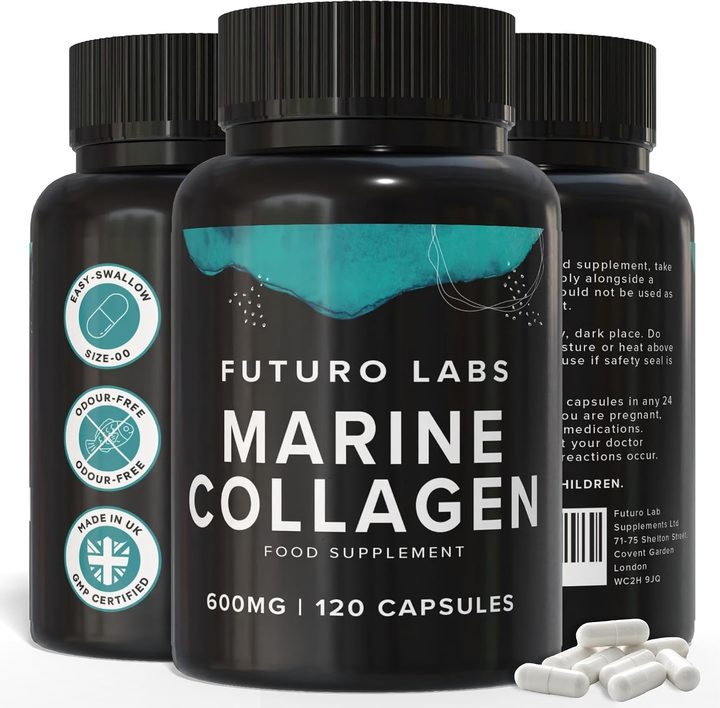
Our brand: the worked example on this page
Futuro Labs Marine Collagen
- 28p a day
- 120 capsules, 2 capsules daily
- Lab tested
- Made in the UK
Outside the diet entirely, on purpose: Futuro Labs Marine Collagen on Amazon UK, 1200mg hydrolysed type 1 with vitamin C and zinc at 15% NRV, £16.99 for 60 days at 28p, no loss claims at any rung. Full label breakdown. The timing version is on the when page; the deficit interview on the weight-loss page.
The ladder climbed against the goal, and every rung read out honestly
This site built a ladder for collagen doses, so climb it against this query's goal and read each rung for its contribution to weight loss, because the exercise settles the question more honestly than any single number could. Rung one, 500mg to 1g, the borderline and habit zones: zero contribution, the register holding no weight, satiety or metabolism claim for collagen at any dose, and the cofactor sentences these rungs honestly carry, vitamin C and zinc's maintenance lines, saying nothing about scales. Rung two, 2.5-to-10g, the trial band: zero again, the band's actual literature being skin instruments, not body composition, no trial anywhere producing weight loss from collagen at these or any grams. Rung three, 15g, the protocol: zero, a tendon-marker lane whose sixty-odd calories participate in the day's energy budget like any food and whose purpose lives in a joints diary. Every rung reads the same because the mechanism was never there, swallowed peptides pooling into the amino supply without touching appetite hormones, metabolic rate or fat oxidation in any demonstrated way, and the one adjacent idea the marketing leans on, protein for fullness, belongs to a different rung of a different ladder entirely: satiety strategies in the diet literature run on substantial complete-protein servings, 20-to-30g of whey, dairy, eggs or meat before or with meals, and collagen is the shelf's worst candidate for exactly that job, the missing tryptophan and bottom-rank quality scores that disqualify it from muscle work disqualifying it from the satiety research's materials too, the fullness tactic borrowed and unserviceable.
What a loss phase actually doses, collagen's honest place during one, and the careful gates
Give the reader the numbers a loss phase genuinely runs on, since dose was the question: the deficit, a sustained shortfall of roughly 300-to-500kcal daily for steady, keepable loss, built from food choices and honest tracking; the protein guard, complete protein raised to around 1.2g-plus per kilogram and spread across meals, the intake that tells a dieting body to spend fat rather than muscle, counted without collagen's grams as the accounting pages insist; and the training guard, resistance work kept up through the cut, the second half of the muscle-sparing pair. Those three numbers do all the losing this query was shopping for, and none of them is for sale in this aisle. Collagen's honest place during a loss phase is precisely its place outside one: the 28p habit for its cofactor sentences, its few calories logged like any food; or the protocol scoop for the lifter still training tendons through the cut; neither participating in the deficit and neither pretending to, with the blend warning worth one line, weight-loss collagen products dressing the zero-at-every-rung finding in slimming typography and deserving the ingredient-order forensics before any purchase. The careful gates close the page as this territory requires: sensible rates over crash speeds, no supplement standing in for meals without professional design, and the GP-or-dietitian conversation first for significant planned loss, any medication, or a fraught dieting history, the professional's numbers outranking every rung of every ladder this page just climbed.
| The rung | Contribution to loss | What it honestly carries |
|---|---|---|
| 500mg-1g: borderline and habit | Zero | The cofactor sentences, silent on scales |
| 2.5-10g: the trial band | Zero | Skin instruments, never body composition |
| 15g: the protocol | Zero | Tendon markers and sixty-odd calories |
| The satiety idea | Borrowed and unserviceable | Fullness runs on 20-30g complete servings |
| The numbers that lose | 300-500kcal deficit; 1.2g+/kg protein; training | None for sale in this aisle |
| The gates | Sensible rates; professionals for big plans | GP or dietitian outranks the ladder |
The verdict, weighed at every rung
How much collagen a day for weight loss: zero at every rung, the ladder from 500mg to 15g reading no contribution anywhere, no claim, no trial and no mechanism connecting the peptides to the scale, with the borrowed fullness tactic returned to the 20-to-30g complete servings it was studied on, which collagen serves worst of anything on the shelf. The numbers that lose are the deficit, the raised complete-protein guard and the training kept through the cut, professionally framed where the plan is ambitious. The worked example stays honestly outside the diet: Futuro Labs Marine Collagen, 1200mg hydrolysed type 1 with 12mg vitamin C and 1.5mg zinc at 15% NRV, lab tested, UK made, £16.99 for 60 days at 28p a day, priced for the sentences it holds, none of which ever mentioned a scale.
What to check on the label
- Zero at every rung: 500mg to 15g, no loss contribution anywhere.
- The satiety tactic is borrowed: fullness runs on complete 20-30g servings.
- Three numbers do the losing: deficit, protein guard, training.
- Count protein without collagen: the guard needs grams that work.
- Big plans see a professional: GP or dietitian before ambition.
Our brand
The worked example: Futuro Labs Marine Collagen
Futuro Labs Marine Collagen: 2 capsules daily, 1200mg hydrolysed type 1 marine collagen with 12mg vitamin C and 1.5mg zinc (15% NRV each), 120 capsules for £16.99, 60 days at 28p a day, lab-tested, UK GMP made. Slim veggie-shell capsules, odour free. Fish derived: pescatarian, not vegetarian or vegan.
- Collagen per serving
- 1200mg hydrolysed type 1 marine (fish)
- Co-factors
- vitamin C 12mg (15% NRV), zinc 1.5mg (15% NRV)
- Serving
- 2 capsules a day
- Bottle
- 120 capsules, 60 days
- Price
- £16.99 (28p a day)
- Capsule
- slim size 00, veggie shell, odour free
Questions people also ask
What dose of collagen helps with weight loss?
None: every rung from 500mg to 15g contributes zero, the register holding no weight, satiety or metabolism claim and no trial producing loss at any dose.
Doesn't collagen protein keep you full between meals?
The fullness tactic runs on substantial complete servings, 20 to 30g of whey, dairy, eggs or meat, and collagen's missing tryptophan and bottom-rank quality scores make it the shelf's worst candidate for it.
What numbers actually drive a weight-loss phase?
Three: a sustained 300 to 500kcal deficit, complete protein around 1.2g-plus per kilogram spread across meals and counted without collagen, and resistance training kept up throughout.
Can I keep my collagen habit while cutting?
Yes, in its honest place: the 28p cofactor habit or the protocol scoop, calories logged like any food, with neither participating in the deficit nor claiming to.
When should a weight-loss plan involve a professional?
Significant planned loss, medications, or any fraught dieting history: a GP or dietitian sets the numbers first, outranking every dose ladder including this one.
Sources
- The protein and energy-restriction literature: higher protein intakes during a calorie deficit are studied for satiety and for preserving lean mass, the guard rails of sensible weight management. PubMed record
- The tryptophan literature: an essential amino acid the body cannot synthesise, precursor to serotonin and niacin, absent from collagen and required from complete dietary protein. PubMed record
- Comparative protein research: the leucine content of a protein drives its muscle protein synthesis response, with whey outperforming collagen in direct comparisons. PubMed record
- Futuro Labs Marine Collagen listing and label: 1200mg hydrolysed type 1 marine collagen per 2-capsule serving with 12mg vitamin C and 1.5mg zinc at 15% NRV each, 120 capsules, independently lab tested, UK made. https://www.amazon.co.uk/dp/B0C2J7N364