Ghost Fitness/Collagen/When to take collagen for weight loss?
When to take collagen for weight loss?
The short answer
There is no effect to schedule: collagen holds no weight-loss claim at any hour. The deficit does the losing, and if protein before meals is your fullness strategy, a complete protein serves it, which collagen is not.
- The premise checkedtiming presupposes an effect: no loss effect exists to time
- The claims registerno weight, satiety or metabolism claim for collagen, at any hour
- The strategy it borrowsprotein-before-meals fullness: a complete-protein tactic
- What does the losinga sustained deficit, guarded by protein and training
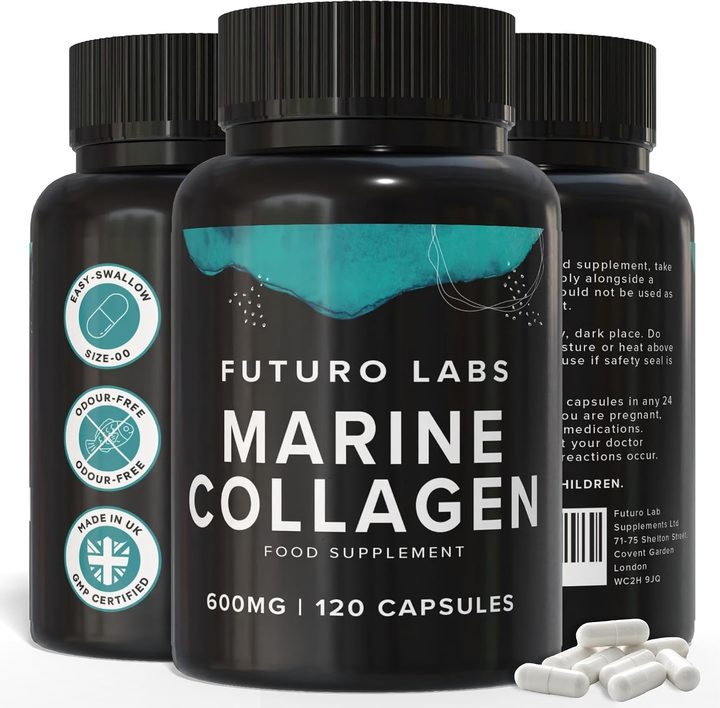
Our brand: the worked example on this page
Futuro Labs Marine Collagen
- 28p a day
- 120 capsules, 2 capsules daily
- Lab tested
- Made in the UK
Off the diet clock entirely: Futuro Labs Marine Collagen on Amazon UK, 1200mg hydrolysed type 1 with vitamin C and zinc at 15% NRV, £16.99 for 60 days at 28p, no loss claims at any hour. Full label breakdown. The deficit interview is on the weight-loss page; the timing audit on the best-time page.
The question behind the question, and the premise that dissolves on inspection
A when question smuggles in a premise, that there is an effect whose timing can be optimised, so inspect the premise before touching any clock: collagen holds no weight-loss claim, no satiety claim and no metabolism claim, at any dose, from any source, at any hour, the register's silence being total, and the trial literature contains no study in which collagen timing, or collagen at all, produced weight loss, which means the schedule this query asks for has nothing to schedule, morning collagen and evening collagen being identical non-participants in a deficit, and every timing rule sold around this topic, before breakfast to curb appetite, before bed to burn overnight, thirty minutes before meals, being a clock face drawn on an empty wall. Where did the question come from, then, because it did not come from nowhere: it borrows a real strategy from the protein literature, the fullness tactic, protein-rich servings before or with meals being studied for helping people feel satisfied inside a calorie budget, a legitimate tool of sensible dieting, and the borrowing is the tell, because that tactic belongs to protein doing protein's job, complete, leucine-carrying, satiety-studied, and collagen is the family's weakest member for exactly that work, tryptophan absent, quality scores near zero, no satiety literature of its own, so the marketing has taken a complete-protein tactic, stapled it to the least complete protein sold, and added a clock to make the ritual feel precise.
What a diet's real schedule looks like, where collagen honestly sits during one, and the gates
Give the reader what the question was reaching for, the schedule that actually serves a diet, and it has three entries, none of them collagen. Entry one, the deficit itself, the only thing that ever does the losing: a sustained, modest calorie shortfall, built from food choices across the whole day, no supplement creating one at any hour. Entry two, the guards, timed loosely and kept strictly: protein high and complete, around 1.2g-plus per kilogram spread across meals, the distribution mattering more than any single slot, and resistance training continued through the loss, the pair that tells the body to spend fat rather than muscle. Entry three, the fullness tactic done properly for the reader who wants it: a complete protein serving, whey, Greek yoghurt, eggs, before or with the meals that trouble the budget, the tool used with the material it was studied on. Collagen's honest place during a diet is exactly its place outside one, unchanged by the calendar: the 28p cofactor habit, taken whenever remembered for the vitamin C and zinc sentences, or the pre-loading protocol scoop for the lifter still training tendons through the cut, neither participating in the loss and neither pretending to. And the gates this careful-claims territory always closes with: sensible rates over crash speeds, no supplement standing in for meals without professional design, and the GP-or-dietitian conversation first for significant planned loss, any medication, or a history that makes dieting fraught, the professional schedule outranking every clock this page just erased.
| The entry | The finding | The action |
|---|---|---|
| The premise | Timing needs an effect; none exists | No collagen clock participates in loss |
| The register | No weight, satiety or metabolism claim | Every diet-clock pitch is a drawn clock face |
| The borrowed tactic | Protein-before-meals fullness | Run it with a complete protein, not collagen |
| The real schedule | Deficit, guards, distribution | Protein across meals; training kept up |
| Collagen's honest slot | The 28p habit or the protocol scoop | Unchanged by the diet, claiming nothing |
| The gates | Sensible rates; professional first for big plans | GP or dietitian outranks every clock |
The verdict, delivered off the clock
When to take collagen for weight loss: at no particular time, because there is no effect to time, the register holding no weight, satiety or metabolism claim for collagen at any hour and the timing rituals sold around it being borrowed from a complete-protein fullness tactic that collagen, the family's weakest member, serves worst. The schedule that matters belongs to the deficit and its guards, complete protein distributed across the day and training kept up, with a GP or dietitian designing anything ambitious. The worked example stays honestly off the diet clock: Futuro Labs Marine Collagen, 1200mg hydrolysed type 1 with 12mg vitamin C and 1.5mg zinc at 15% NRV, lab tested, UK made, £16.99 for 60 days at 28p a day, taken whenever you remember, for the sentences it lawfully holds, which never mentioned scales.
What to check on the label
- Check the premise first: no loss effect exists to schedule.
- The register is silent: no weight, satiety or metabolism claim, any hour.
- The tactic was borrowed: fullness belongs to complete proteins.
- The real schedule is the deficit's: protein distributed, training kept.
- Big plans see a professional: the GP gate outranks every clock.
Our brand
The worked example: Futuro Labs Marine Collagen
Futuro Labs Marine Collagen: 2 capsules daily, 1200mg hydrolysed type 1 marine collagen with 12mg vitamin C and 1.5mg zinc (15% NRV each), 120 capsules for £16.99, 60 days at 28p a day, lab-tested, UK GMP made. Slim veggie-shell capsules, odour free. Fish derived: pescatarian, not vegetarian or vegan.
- Collagen per serving
- 1200mg hydrolysed type 1 marine (fish)
- Co-factors
- vitamin C 12mg (15% NRV), zinc 1.5mg (15% NRV)
- Serving
- 2 capsules a day
- Bottle
- 120 capsules, 60 days
- Price
- £16.99 (28p a day)
- Capsule
- slim size 00, veggie shell, odour free
Questions people also ask
What time should I take collagen to lose weight?
No time: collagen holds no weight-loss, satiety or metabolism claim at any hour, so the schedule has nothing to schedule and the deficit alone does the losing.
Does collagen before meals reduce appetite?
That is a complete-protein tactic borrowed by the wrong powder: protein-before-meals fullness was studied on satiating, complete servings, and collagen has no satiety literature of its own.
What actually helps during a weight-loss diet?
The deficit and its guards: a modest sustained shortfall, protein around 1.2g-plus per kilogram spread across meals from complete sources, and resistance training kept up throughout.
Can I keep taking collagen while dieting?
Yes, in its honest slot: the 28p cofactor habit whenever remembered, or the protocol scoop before tendon work, neither participating in the loss and neither claiming to.
When should weight loss involve a professional?
Significant planned loss, medications in the picture, or any fraught dieting history: a GP or dietitian conversation first, the one schedule that outranks everything on this page.
Sources
- The protein and energy-restriction literature: higher protein intakes during a calorie deficit are studied for satiety and for preserving lean mass, the guard rails of sensible weight management. PubMed record
- Comparative protein research: the leucine content of a protein drives its muscle protein synthesis response, with whey outperforming collagen in direct comparisons. PubMed record
- Futuro Labs Marine Collagen listing and label: 1200mg hydrolysed type 1 marine collagen per 2-capsule serving with 12mg vitamin C and 1.5mg zinc at 15% NRV each, 120 capsules, independently lab tested, UK made. https://www.amazon.co.uk/dp/B0C2J7N364
- EFSA Panel on Dietetic Products, Nutrition and Allergies. Scientific Opinion on the substantiation of health claims related to magnesium. EFSA Journal 2010;8(10):1807. https://efsa.onlinelibrary.wiley.com/doi/10.2903/j.efsa.2010.1807