Ghost Fitness/Collagen/Is 1,000 mg of collagen enough?
Is 1,000 mg of collagen enough?
The short answer
Enough for what: at habit scale, 1000 to 1200mg is honest if the vitamin C and zinc ride at 15% NRV. For the skin-trial band you need 2.5g plus; for the protocol, 15g.
- The habit verdict1000-1200mg is enough for the lane where cofactors do the claiming
- The inversionat this scale, the real question is whether the C hits 15% NRV
- The trial band2.5 to 10g: 1000mg sits below every skin study
- The protocol15g: 1000mg is a fifteenth of the dose
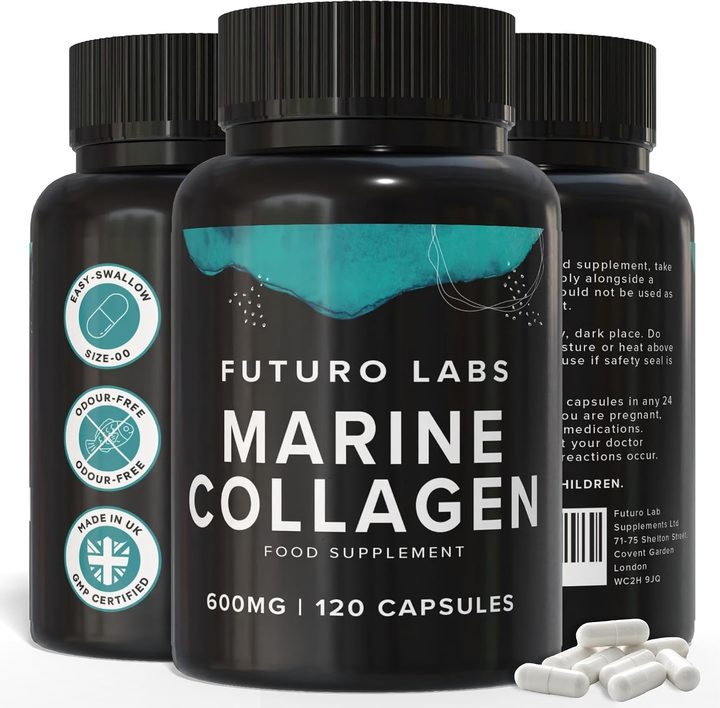
Our brand: the worked example on this page
Futuro Labs Marine Collagen
- 28p a day
- 120 capsules, 2 capsules daily
- Lab tested
- Made in the UK
The 1200mg answer to the 1000mg question: Futuro Labs Marine Collagen on Amazon UK, 1200mg hydrolysed type 1 with vitamin C and zinc at exactly the 15% NRV the inversion demands, £16.99 for 60 days at 28p. Full label breakdown. The unsexed dose table is on the woman's dose page; the token-dose forensics on the collagen vitamins page.
Enough for what: the three lanes measured against a single gram
Enough is a word that needs a destination, so measure 1000mg against each of the category's three lanes and let the answer split honestly. Against the skin-trial band: not enough, and not close, the studies that generated collagen's entire skin literature running 2.5-to-10g daily, meaning a 1000mg serving sits below the floor of every trial ever cited at you, so a gram-scale capsule sold on skin-study imagery is borrowing evidence from doses it does not contain, the scale-honesty test this site applies everywhere failing at the first glance. Against the protocol: not enough by an order of magnitude, the pre-loading lane running roughly 15g with vitamin C, fifteen of these servings, powder territory by arithmetic, and any 1000mg product wearing tendon-research language having failed before the label is turned. Against the habit lane, and here the answer flips: yes, honestly enough, because the habit was never a collagen-dose story at all, 1-to-2g being the scale at which collagen is bought as a carrier, the daily routine whose active claims belong entirely to the micronutrients riding along, which triggers this page's inversion, the reframe that settles the whole question: at habit scale, asking whether 1000mg of collagen is enough is asking about the passenger when the cargo decides, and the load-bearing question becomes whether the vitamin C and zinc aboard reach 15% NRV, the threshold at which the label's only lawful sentences activate, a 1000mg product with the cofactors at threshold being complete for its lane while a 5000mg pure powder with none aboard may lawfully promise nothing.
The inversion applied at the shelf, the 1200mg variant answered, and the honest ladder up from a gram
Apply the inversion at the shelf and the buying logic writes itself: for the habit purchase, read past the collagen milligrams to the cofactor lines first, C at 15% NRV and zinc likewise being the pass, their absence the fail, and only then sanity-check the collagen number against the token-dose forensics, 1000mg-plus clearing the garnish threshold that the 50-to-100mg beauty-vitamin dustings fail by a factor of ten or twenty, so a gram is comfortably a real habit dose and a dusting never was. The 1200mg variant answers itself inside the same frame, and happens to be the worked example's exact construction: 1200mg is enough for precisely what its label claims, which is the vitamin C collagen-formation family and zinc's skin, hair and nails maintenance at 15% NRV, two capsules metering the lane's whole honest offer at 28p a day, with the number's small margin over the round thousand being product design rather than potency, the point never having been the peptides. And the honest ladder for the reader whose goals outgrow the gram: wanting the skin-trial band means moving to powder at 2.5g-plus with expectations flattened to the instrument-measured modesty the trial pages grade; wanting the protocol means the 15g scoop with C before loading sessions, physio-framed; and wanting muscle means leaving the aisle entirely for whey, no collagen quantity at any rung ever counting toward protein targets, the enough question having exactly one answer there at every dose: no. Enough, then, is a lane property, and 1000mg passes the one lane it was ever honestly sold for.
| The lane | The requirement | Is 1000mg enough? |
|---|---|---|
| The cofactor habit | 1-2g with C and zinc at 15% NRV | Yes: if the cofactors ride, the lane is complete |
| The inversion | The cargo decides at this scale | The real check is the C's 15% NRV, not the peptides |
| The skin-trial band | 2.5 to 10g daily | No: below the floor of every cited study |
| The protocol | ~15g with C before loading | No: a fifteenth of the dose, powder territory |
| Muscle and protein targets | Complete proteins only | No, at any dose: whey's job forever |
| The garnish threshold | Beauty-vitamin dustings run 50-100mg | 1000mg clears it by ten to twenty times |
The verdict, decomposed and decided
Is 1,000mg of collagen enough: enough for the habit lane it is honestly sold in, provided the inversion's check passes, vitamin C and zinc riding at 15% NRV to speak the label's only lawful sentences, and not enough for the lanes that borrowed its marketing, the 2.5-to-10g skin-trial band, the 15g protocol, or any protein purpose at any dose, with 1200mg answering identically as the same lane with a design margin. The worked example is that answer manufactured: Futuro Labs Marine Collagen, 1200mg hydrolysed type 1 with 12mg vitamin C and 1.5mg zinc at exactly 15% NRV, lab tested, UK made, £16.99 for 60 days at 28p a day, enough for everything its panel claims, which is the only enough a label can honestly print.
What to check on the label
- Enough needs a lane: the answer splits by destination.
- The habit says yes: 1000-1200mg with cofactors at 15% NRV is complete.
- The inversion decides it: check the C's NRV before the peptide count.
- The trial band says no: every skin study ran 2.5g or more.
- The protocol says no by fifteen: 15g is powder territory.
Our brand
The worked example: Futuro Labs Marine Collagen
Futuro Labs Marine Collagen: 2 capsules daily, 1200mg hydrolysed type 1 marine collagen with 12mg vitamin C and 1.5mg zinc (15% NRV each), 120 capsules for £16.99, 60 days at 28p a day, lab-tested, UK GMP made. Slim veggie-shell capsules, odour free. Fish derived: pescatarian, not vegetarian or vegan.
- Collagen per serving
- 1200mg hydrolysed type 1 marine (fish)
- Co-factors
- vitamin C 12mg (15% NRV), zinc 1.5mg (15% NRV)
- Serving
- 2 capsules a day
- Bottle
- 120 capsules, 60 days
- Price
- £16.99 (28p a day)
- Capsule
- slim size 00, veggie shell, odour free
Questions people also ask
Is 1000mg of collagen a day enough to see benefits?
Enough for the habit lane, where the lawful benefits belong to the cofactors: with vitamin C and zinc at 15% NRV aboard, the lane is complete, and no felt change was ever promised at any dose.
Is 1200mg of collagen enough?
Same lane, same yes: 1200mg is the habit dose with a design margin, the worked example's exact construction, complete when its C and zinc ride at threshold.
Why do skin studies use so much more?
The trials ran 2.5 to 10g daily, so gram-scale capsules sit below every cited study: a product wearing trial imagery at 1000mg is borrowing evidence its dose does not contain.
Would taking more collagen work better?
Only by lane: 2.5g-plus enters the trial band's modest territory, 15g serves the protocol, and no quantity at any rung counts toward muscle or protein targets.
What matters more than the collagen milligrams?
At habit scale, the cargo: whether vitamin C and zinc reach 15% NRV, the threshold where the label's only lawful sentences activate, decides more than the peptide count ever did.
Sources
- The collagen and skin trial literature: randomised studies of oral collagen peptides on skin elasticity and hydration, mostly small, short and industry funded, with no authorised claim resulting. PubMed record
- The gelatin and vitamin C pre-exercise research (Shaw, Baar and colleagues): 15g gelatin with vitamin C taken about an hour before loading, studied for markers of collagen synthesis, the protocol behind the tendon-training conversation. PubMed record
- Futuro Labs Marine Collagen listing and label: 1200mg hydrolysed type 1 marine collagen per 2-capsule serving with 12mg vitamin C and 1.5mg zinc at 15% NRV each, 120 capsules, independently lab tested, UK made. https://www.amazon.co.uk/dp/B0C2J7N364
- EFSA Panel on Dietetic Products. Scientific opinion on Dietary Reference Values for fats: Adequate Intake of 250mg combined EPA and DHA per day for adults. EFSA Journal 2010;8(3):1461. https://www.efsa.europa.eu/en/efsajournal/pub/1461