Ghost Fitness/Collagen/What does collagen protein do?
What does collagen protein do?
The short answer
The noun: the body's most abundant protein, type 1 in skin, tendon and bone, type 2 in cartilage, made by fibroblasts with vitamin C as cofactor. The verb: the supplement digests to peptides, researched for connective tissue, wrong for muscle.
- The nouna quarter to a third of body protein; glycine, proline, hydroxyproline in a triple helix; types 1, 2 and 3 by tissue
- How the body makes itfibroblasts and their relatives; hydroxylation needs vitamin C; turnover in months to years
- The verbhide or fish skin to gelatin to peptides; digested to amino acids and small peptides; prolyl-hydroxyproline reaches blood
- Good for, by tierresearch for skin, joints and tendons at trial doses; a food protein for feeding; wrong for muscle; no claim
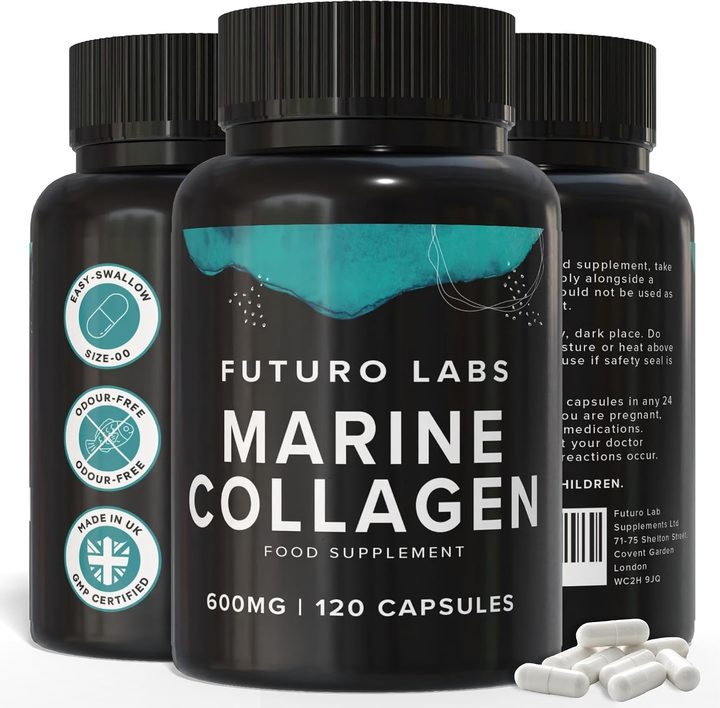
Our brand: the worked example on this page
Futuro Labs Marine Collagen
- 28p a day
- 120 capsules, 2 capsules daily
- Lab tested
- Made in the UK
The verb on its true terms: Futuro Labs Marine Collagen on Amazon UK, 2 capsules, 1200mg hydrolysed type 1 marine collagen with 12mg vitamin C at 15% NRV plus zinc, 120 for £16.99, 28p a day, lab tested and UK made, below the research band and taken for vitamin C's collagen formation sentence, the register's only collagen line. Full label breakdown. The three jobs a protein can do are on the is collagen protein good for you page; the manufacturing route on the how collagen is made page.
The noun: what collagen protein does in the body
What does collagen protein do is a definition question that has to be answered twice, once for the noun, collagen the body's protein, and once for the verb, collagen the supplement, because the two share a name and a chemistry and do very different things, and most of the aisle's confusion comes from letting the first answer stand in for the second. The noun first. Collagen is the most abundant protein in the human body, around a quarter to a third of all the protein a person carries, and it is a structural protein, the rope and the scaffold rather than the machinery: three chains wound into a triple helix, each chain a repeating sequence in which every third amino acid is glycine, with proline and hydroxyproline filling much of the rest, the hydroxyproline being the amino acid found almost nowhere else and the reason collagen can be detected in a food by measuring it. There are many types and three do most of the work. Type 1 forms the thick, strong fibres of skin's dermis, tendon, ligament, bone and the capsule around joints, tendon being almost entirely type 1 by dry weight, and it is the collagen supplements are made from and most trials are about. Type 2 forms the matrix of cartilage, a looser network holding water and proteoglycans that lets a joint surface bear load, and it is the collagen the undenatured type II supplement targets by a different proposed mechanism. Type 3 forms finer fibres alongside type 1 in skin, blood vessels and organs and is the collagen laid down first in healing tissue before type 1 replaces it. The body makes collagen in fibroblasts and their tissue-specific relatives, chondrocytes in cartilage and osteoblasts in bone, assembling the chains from glycine, proline and lysine, hydroxylating the proline and lysine with enzymes that require vitamin C as a cofactor, which is why severe vitamin C deficiency historically produced connective tissue failure and why vitamin C holds the register's collagen formation sentence, and then secreting and cross-linking the fibres outside the cell. Turnover is slow: dermal collagen is replaced over months, tendon and bone collagen over years, and the rate of synthesis falls with age and sharply in women after menopause, which is what collagen protein does when it stops doing enough, skin thinning and losing elasticity, tendons stiffening and adapting more slowly, joints losing cartilage matrix. That is the noun: the body's scaffold, made by its own cells from common amino acids with a vitamin's help, on a clock of months to years.
The verb: what collagen protein does when you eat it, and what it is good for by tier
The verb second, collagen protein as the supplement. It is the same protein taken from an animal, bovine hide, porcine skin or fish skin and scales, cleaned and extracted to gelatin, the partly unwound form that sets a jelly, and then hydrolysed by enzymes into peptides of a few hundred to a few thousand daltons, the fine powder in the tub, which no longer sets and dissolves in a warm drink. Eaten, it does what any protein does first: stomach acid and pancreatic enzymes cut the peptides further into free amino acids, a third of them glycine, and into small di- and tripeptides, which the gut absorbs, and these join the body's amino acid pool and are used wherever protein is being made that day, muscle, gut lining, enzymes, skin, with no address on the parcel, the reason a collagen dose cannot be sent to the knees. It then does the one thing that distinguishes it from other proteins, as research: small peptides, prolyl-hydroxyproline and hydroxyprolyl-glycine among them, survive digestion and circulate in the blood for hours after a dose, and in cell and animal work they act on fibroblasts and chondrocytes, prompting them to make more matrix, the proposed mechanism by which hydrolysed collagen might do more than an equal weight of its free amino acids, a hypothesis with human marker data behind it, a collagen synthesis marker doubling an hour after fifteen grams with vitamin C before loading, and no human outcome claim. What collagen protein is good for follows from that, by tier. Research tier, at trial doses: skin elasticity and hydration up a few percent by instrument at 2.5 to 10 grams over eight to twelve weeks; activity-related joint discomfort modestly down by questionnaire at around ten grams over twelve to twenty-four weeks; a tendon synthesis marker doubled before loading at fifteen grams, with one small clinical trial in Achilles tendinopathy beside exercise; and one bone density trial at five grams for a year, all small, mostly manufacturer-funded and claim-free. Food tier: four calories a gram, satiating as protein is, safe with no upper level, more expensive than whey. And the tier it fails: muscle, since it lacks tryptophan, carries a third of whey's leucine and does not drive muscle protein synthesis, so it is the wrong protein for the job the word protein usually means. It holds no authorised claim; the label's collagen sentence belongs to vitamin C, which contributes to normal collagen formation for the normal function of skin, cartilage, bones, teeth, gums and blood vessels, the cofactor named in the noun's paragraph. The worked example is the verb on its true terms: two capsules, 1200mg hydrolysed type 1 marine collagen with 12mg vitamin C plus zinc, 120 for £16.99 at 28p a day, lab tested and UK made, below the research band, taken for vitamin C's sentence and the habit. What does collagen protein do: as a noun, it holds the body together and is made by the body's own cells; as a verb, it feeds that process as any protein does, is researched for connective tissue at trial doses, and builds no muscle.
| The item | The noun: collagen in the body | The verb: collagen the supplement |
|---|---|---|
| What it is | A quarter to a third of body protein; a glycine-proline-hydroxyproline triple helix | The same protein from hide or fish skin, extracted to gelatin and hydrolysed into peptides |
| Types | 1 in skin, tendon, ligament, bone; 2 in cartilage; 3 in vessels and healing tissue | Type 1 hydrolysate in most tubs; undenatured type 2 a different product |
| Who makes it | Fibroblasts, chondrocytes, osteoblasts, with vitamin C as cofactor | A factory; eaten, it is digested and the body's cells decide what to make |
| The clock | Months in skin, years in tendon and bone; synthesis falls with age and after menopause | Trials read at 8 to 12 weeks for skin, 12 to 24 for joints |
| What happens when eaten | Not applicable | Amino acids and small peptides join the pool; prolyl-hydroxyproline reaches blood and acts on fibroblasts in cell work |
| Good for | Holding the body together | Research for skin, joints, tendons at trial doses; a food protein; wrong for muscle; no claim |
| The register | Vitamin C's collagen formation sentence describes the noun | Collagen holds no claim; the capsule carries vitamin C's line |
| The worked exampleOurs | Not applicable | Two capsules, 1200mg marine collagen with 12mg vitamin C, 28p a day, on its true terms |
What to check on the label
- Separate the noun from the verb: the body's scaffold from the tub.
- Know the types: 1 for skin and tendon, 2 for cartilage.
- Credit the cofactor: vitamin C holds the sentence.
- Expect digestion: no address on the parcel.
- Buy the verb for connective tissue: never for muscle.
Our brand
The worked example: Futuro Labs Marine Collagen
Futuro Labs Marine Collagen: 2 capsules daily, 1200mg hydrolysed type 1 marine collagen with 12mg vitamin C and 1.5mg zinc (15% NRV each), 120 capsules for £16.99, 60 days at 28p a day, lab-tested, UK GMP made. Slim veggie-shell capsules, odour free. Fish derived: pescatarian, not vegetarian or vegan.
- Collagen per serving
- 1200mg hydrolysed type 1 marine (fish)
- Co-factors
- vitamin C 12mg (15% NRV), zinc 1.5mg (15% NRV)
- Serving
- 2 capsules a day
- Bottle
- 120 capsules, 60 days
- Price
- £16.99 (28p a day)
- Capsule
- slim size 00, veggie shell, odour free
Questions people also ask
What is collagen protein good for?
By tier: research for skin elasticity and hydration by instrument at 2.5 to 10 grams over eight to twelve weeks, joint comfort by questionnaire at around ten grams over months, and tendon synthesis by marker with one small clinical trial, all claim-free; a food protein for feeding at four calories a gram; and the wrong protein for muscle, lacking tryptophan and most of whey's leucine.
What does collagen do in the body?
It is the body's scaffold: the most abundant protein, a quarter to a third of the total, type 1 forming the fibres of skin, tendon, ligament and bone, type 2 the cartilage matrix and type 3 the finer fibres of vessels and healing tissue, made by fibroblasts and their relatives with vitamin C as the enzyme cofactor and turned over on clocks of months to years.
Does eating collagen add collagen to your body?
Not directly: eaten collagen is digested to amino acids and small peptides that join the body's pool and are used wherever protein is made, with no address for skin or joints, and the research question is whether the small peptides that survive digestion prompt fibroblasts to make more, a hypothesis with marker data behind it and no outcome claim.
Is collagen protein a complete protein?
No: collagen lacks tryptophan entirely, scores near zero on the completeness scale and carries around a third of whey's leucine, so it is a source of protein by energy on a label and the wrong protein for muscle, which is why it is booked separately from the day's complete protein rather than counted within it.
Why does vitamin C matter for collagen protein?
Because the body cannot make collagen without it: the enzymes that hydroxylate proline and lysine in the collagen chains require vitamin C as a cofactor, severe deficiency historically caused connective tissue failure, and vitamin C therefore holds the register's sentence that it contributes to normal collagen formation, the only collagen sentence a label may carry.
Sources
- The collagen biology literature: collagen is the most abundant protein in the body, around a quarter to a third of total protein, with type I forming the fibres of skin, tendon, ligament and bone, type II the cartilage matrix and type III the finer fibres of skin, vessels and healing tissue, made by fibroblasts and related cells from glycine, proline and lysine, hydroxylated with vitamin C as the enzyme cofactor, and turned over on timescales from months to years by tissue. PubMed record
- The tendon composition literature: tendon's dry weight is dominated by type I collagen, with small quantities of minor collagens such as types III, V and XII contributing to fibril regulation and structure. PubMed record
- The collagen peptide absorption literature: after oral hydrolysed collagen, small peptides such as prolyl-hydroxyproline and hydroxyprolyl-glycine appear in blood for several hours alongside free amino acids, and in cell and animal work these peptides act on fibroblasts and chondrocytes, the mechanism proposed for why hydrolysed collagen might do more than an equal quantity of its free amino acids, a hypothesis with human marker data behind it and no human outcome claim. PubMed record
- Retained Regulation (EC) No 1924/2006 on nutrition and health claims made on foods, and the Great Britain nutrition and health claims register. https://www.gov.uk/government/publications/great-britain-nutrition-and-health-claims-nhc-register