Ghost Fitness/Collagen/Does collagen count as protein macros reddit?
Does collagen count as protein macros reddit?
The short answer
Three camps, one ledger. Count it fully: right about the label, since labels count nitrogen and the app copies the label. Count it at zero: right about the muscle target, since collagen carries almost no leucine, no tryptophan and scores near zero on quality scales. Count half: a compromise with no biology. So log the label's number, count none of it toward the protein target for muscle, and meet that target from complete sources first.
- Camp one, count it fullyright about the label: nitrogen is nitrogen; a ten-gram scoop logs as ten
- Camp two, count it at zeroright about the target: almost no leucine, no tryptophan, a quality score at or near zero
- Camp three, count halfno biology: there is no half-leucine
- The ledgerthe label's number in the app; none toward the muscle target; complete sources first, collagen on top
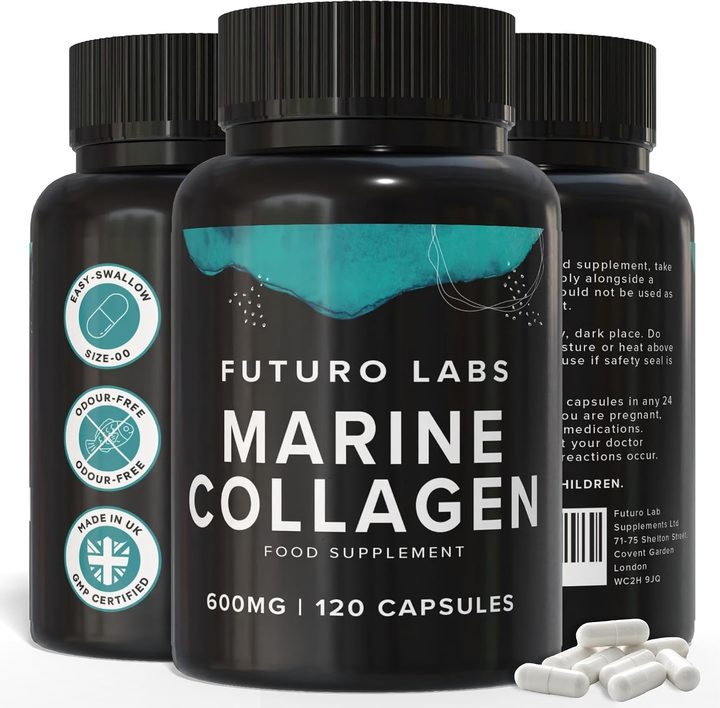
Our brand: the worked example on this page
Futuro Labs Marine Collagen
- 28p a day
- 120 capsules, 2 capsules daily
- Lab tested
- Made in the UK
A capsule dose too small to trouble any macro, taken for the vitamin C line: Futuro Labs Marine Collagen on Amazon UK, 2 capsules, 1200mg hydrolysed type 1 marine collagen with 12mg vitamin C at 15% NRV plus zinc, 120 for £16.99, 28p a day. Full label breakdown. The two-column tracker is on the two-column page; the three ledgers on the counting page.
The three camps, and what each is right about
Does collagen count as protein macros is a question that runs for hundreds of comments on any fitness forum, and the honest page reads the thread as three camps, because each camp is right about something and the argument only ends when the somethings are named. The first camp, count it fully: a gram of protein is a gram of protein, the tub says twenty grams a scoop and the app logs twenty, so it counts. This camp is right about the label. A nutrition label measures protein by nitrogen, since all protein contains nitrogen at a roughly fixed proportion, hydrolysed collagen is protein and contains nitrogen, and a tracking app copies the label, so a ten-gram scoop logs as ten grams of protein and the label is not lying, the counting pages' first fact. The second camp, count it at zero: collagen is not real protein, it is missing an amino acid, it does nothing for muscle, so it does not count. This camp is right about the muscle target. The 1.6 grams per kilogram a lifter sets exists to supply the leucine and the essential amino acids that switch muscle protein synthesis on and keep muscle on a cut, the protein intake literature's reason for the number, and collagen carries almost no leucine, a fraction of whey's ten percent, and no tryptophan at all, scoring at or near zero on the PDCAAS and DIAAS scales that rate essential amino acid completeness and digestibility, the protein quality literature's verdict, with the direct comparison trials finding whey producing the greater anabolic response, so toward the target a gram of collagen does none of the target's job. The third camp, count half: a compromise that sounds reasonable and has no biology behind it, since there is no half-leucine and no half-tryptophan, collagen either supplying the trigger or not, and it does not, so the half-count is a way of ending an argument rather than of tracking protein.
The ledger that settles the thread, how to log it, the swap the thread is really about, and the camps filed
The ledger that settles the thread is two lines that hold both truths at once. Line one, the macro: log the label's number, since the app tracks labels and a scoop is ten grams of protein by nitrogen, so the macro is honest and the count-it-fully camp keeps the app. Line two, the target: count none of it toward the protein target a lifter sets for muscle, since the target is about leucine and completeness and collagen supplies neither, so the count-it-at-zero camp keeps the muscle, the two-column page's tracker with the target in the complete column and the collagen in its own. How to log it in practice: enter collagen as its own food or under a name that flags it, read the day's total as two numbers, the complete protein that meets the target and the collagen beside it, and judge the day by the first, a lifter at 130 grams with 20 of collagen having eaten 110 toward the target and needing the gap filled from a complete source if 110 falls short. The swap the thread is really about is the one that costs muscle: a lifter who cuts a whey shake or a meat portion to make macro room for a collagen scoop, because the app shows the same total, has traded a leucine dose for a glycine dose at the same number, the one bad swap in collagen, and it is the reason the count-it-at-zero camp is the camp to listen to on a cut, where complete protein is what keeps the muscle, the protein distribution research wanting twenty-five to thirty grams of complete protein per main meal. The reason to take collagen is unchanged by any of it, a physiotherapist's tendon protocol at around 15 grams with vitamin C or the skin trials' dose, recorded as grams and taken on top of a complete diet, with the register holding no collagen claim and vitamin C's collagen formation sentence beside it. The camps filed: count it fully right about the label, count it at zero right about the target, count half with no biology, the two-line ledger that keeps both, the logging that reads one total as two, and the whey-for-collagen swap as the thread's real cost, with the worked example being a capsule dose too small to trouble any macro, £16.99 for 120 at 28p a day.
| The camp | What it says | What it is right about |
|---|---|---|
| Count it fully | A gram is a gram; the tub says twenty | The label: nitrogen is nitrogen; the app copies the label |
| Count it at zero | Not real protein; missing an amino acid; nothing for muscle | The muscle target: almost no leucine, no tryptophan, a quality score near zero |
| Count half | Split the difference | Nothing: there is no half-leucine |
| The ledger, line one | Log the label's number | The macro stays honest |
| The ledger, line two | Count none toward the muscle target | Complete sources first; collagen on top |
| The real cost in the thread | Cutting whey or meat to make macro room for collagen | A leucine dose traded for glycine at the same number |
The verdict, two camps right about two different things and a ledger with a line for each
Does collagen count as protein macros: the forum's three camps are settled by a two-line ledger, the count-it-fully camp being right about the label since a nutrition label measures nitrogen, collagen is nitrogen and the app copies the label, the count-it-at-zero camp being right about the muscle target since the 1.6 grams per kilogram exists to supply leucine and the essential amino acids and collagen carries almost no leucine, no tryptophan and a quality score at or near zero, and the count-half camp having no biology behind it, so the honest macro is the label's number in the app with none of it counted toward the protein target for muscle, which is met from complete sources first, and the thread's real cost is the lifter who cuts whey or meat to make macro room for a scoop. A capsule dose too small to trouble any macro: Futuro Labs Marine Collagen, 1200mg type 1 with 12mg vitamin C, 120 for £16.99 at 28p a day.
What to check on the label
- Let camp one keep the app: log the label's number.
- Let camp two keep the muscle: none toward the target.
- Dismiss camp three: no half-leucine.
- Read one total as two: complete protein and collagen.
- Never cut whey or meat for a scoop: the swap that costs muscle.
Our brand
The worked example: Futuro Labs Marine Collagen
Futuro Labs Marine Collagen: 2 capsules daily, 1200mg hydrolysed type 1 marine collagen with 12mg vitamin C and 1.5mg zinc (15% NRV each), 120 capsules for £16.99, 60 days at 28p a day, lab-tested, UK GMP made. Slim veggie-shell capsules, odour free. Fish derived: pescatarian, not vegetarian or vegan.
- Collagen per serving
- 1200mg hydrolysed type 1 marine (fish)
- Co-factors
- vitamin C 12mg (15% NRV), zinc 1.5mg (15% NRV)
- Serving
- 2 capsules a day
- Bottle
- 120 capsules, 60 days
- Price
- £16.99 (28p a day)
- Capsule
- slim size 00, veggie shell, odour free
Questions people also ask
Should I count collagen in my protein macros?
Log it, since the label counts nitrogen and the app copies the label, and count none of it toward the protein target you set for muscle, since that target exists to supply leucine and the essential amino acids and collagen carries almost no leucine and no tryptophan, so the day's total is read as two numbers, the complete protein and the collagen beside it.
Why do people say collagen is not a complete protein?
Because it lacks tryptophan entirely, an essential amino acid the body cannot make, and is low in leucine and the other essential amino acids relative to whey, milk and egg, scoring at or near zero on the PDCAAS and DIAAS quality scales, so it is protein by nitrogen on a label and incomplete by every measure that rates what protein does.
Is counting collagen at half a good compromise?
No: there is no half-leucine, collagen either supplies the trigger for muscle protein synthesis or it does not, and it does not, so a half-count is a way of ending a forum argument rather than of tracking protein, and the two-line ledger, the label's number in the app and none toward the muscle target, holds both truths without a compromise.
How do I log collagen in MyFitnessPal or a tracking app?
As its own food or under a name that flags it, so the day's protein total can be read as complete protein plus collagen, with the target judged by the complete number, since the app adds both by nitrogen into one figure and cannot separate them for you.
Can I use collagen to hit my protein macros on a cut?
Not without cost: a lifter who cuts a whey shake or a meat portion to make macro room for a collagen scoop has traded a leucine dose for a glycine dose at the same app number, at the moment a cut most needs complete protein to keep muscle, so the macro target is hit from complete sources and the collagen is added on top for its own reason.
Sources
- The protein quality literature: scoring systems such as PDCAAS and DIAAS rate proteins by essential amino acid completeness and digestibility, with collagen scoring at or near zero for lacking tryptophan. PubMed record
- The tryptophan literature: an essential amino acid the body cannot synthesise, precursor to serotonin and niacin, absent from collagen and required from complete dietary protein. PubMed record
- The direct comparison trials: randomised studies pitting whey against collagen peptides on muscle protein synthesis and lean mass, in which whey consistently produced the greater anabolic response. PubMed record
- The protein intake and resistance training literature: meta-analyses support intakes around 1.6g per kilogram of body weight daily for maximising resistance-training gains, with diminishing returns above. PubMed record