Ghost Fitness/Collagen/Is collagen protein the same as regular protein?
Is collagen protein the same as regular protein?
The short answer
Same class, different fingerprint: both are proteins, but collagen runs on glycine, proline and hydroxyproline, the signature amino acid labs use to detect it, while regular proteins carry balanced essentials. Same chemistry family, different nutritional species.
- Level one: chemistrysame class: both are proteins, chains of amino acids
- Level two: compositiondifferent fingerprint: glycine-proline-hydroxyproline dominance
- The signature aminohydroxyproline: nearly unique to collagen, the lab's marker
- Level three: nutritiondifferent species: incomplete versus balanced essentials
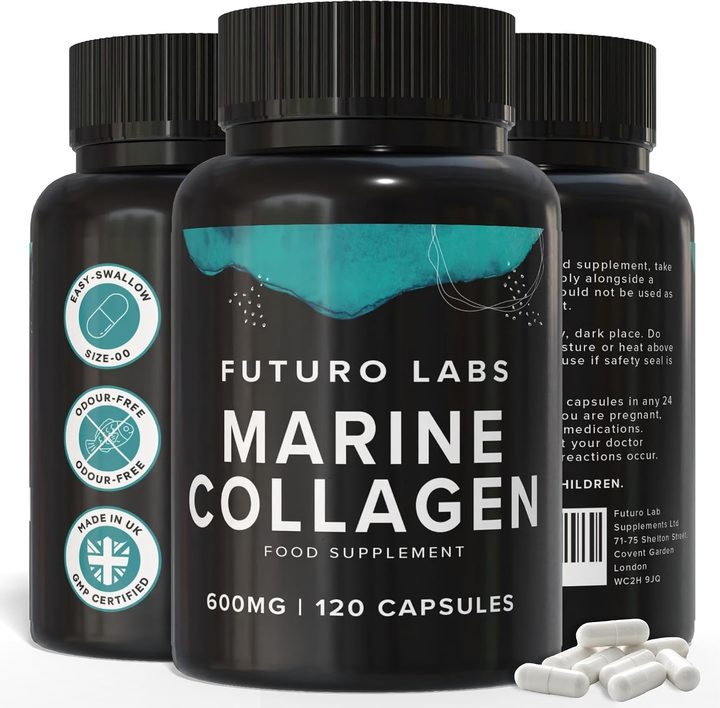
Our brand: the worked example on this page
Futuro Labs Marine Collagen
- 28p a day
- 120 capsules, 2 capsules daily
- Lab tested
- Made in the UK
Sold as the species it is: Futuro Labs Marine Collagen on Amazon UK, 1200mg hydrolysed type 1 with vitamin C and zinc at 15% NRV, £16.99 for 60 days at 28p, never counted as regular protein. Full label breakdown. The two rulers are on the source-of-protein page; the family tree on the protein powder page.
Levels one and two: the same class, and the fingerprint that separates the species
Same has three levels here, and walking them in order answers the question completely. Level one, chemistry: yes, the same, collagen is a protein by every definition, a chain of amino acids folded into structure, sitting in the same molecular class as whey, egg, soy and the steak on your plate, which is why the labelling ruler lets it wear the word and why the family-tree page seats it inside the protein powder family. Level two, composition, and here the sameness ends in a fingerprint: every protein is built from the same twenty-ish amino acid alphabet, but the spelling differs wildly, and collagen's spelling is the most distinctive in nutrition, roughly a third glycine, heavy in proline, and rich in hydroxyproline, an amino acid so nearly unique to collagen that laboratories use it as the marker, measuring a sample's hydroxyproline to calculate its collagen content, the analytical fingerprint by which a meat scientist detects connective tissue in a sausage and a supplement auditor verifies a tub, no other common dietary protein carrying it in meaningful amounts. Regular proteins, by contrast, spell themselves in balanced essentials, the leucine, tryptophan and companions muscle synthesis reads, so at level two the answer is a clean no: same alphabet, unmistakably different words, provably so in a lab.
Level three: the nutritional species, and what each level means at the shelf
Level three, nutrition, is where the fingerprint becomes consequence: collagen's distinctive spelling is structural genius and nutritional poverty, the glycine-proline-hydroxyproline repeat being exactly what builds a triple helix and exactly what a body cannot make complete tissue protein from alone, tryptophan absent entirely, leucine at a third of whey's, the quality scales scoring it at or near zero per the two-rulers page, which makes collagen and regular protein, in the sense the question means, different nutritional species inside the same chemical family, one carrying the essentials a target counts, the other carrying a specialist's profile no target does. What each level means at the shelf, compressed: level one explains the lawful protein vocabulary on collagen tubs, quantity claims earned by energy share; level two gives the reader a two-second verification trick, an amino profile listing hydroxyproline is collagen or contains it, and a protein powder's profile missing tryptophan has just confessed its species; and level three writes the standing buying rule, collagen's grams never count toward the 1.2-to-2.2g-per-kilogram targets regular proteins serve, its honest purchases being the habit with the vitamin C and zinc claim-holders aboard and the 15g pre-loading protocol, jobs its fingerprint suits and no regular protein was studied for. Same, then: at the chemistry, yes; at the fingerprint, no; at the dinner table, emphatically not, and the hydroxyproline line on any panel is the whole answer printed small.
| The level | The verdict | The evidence |
|---|---|---|
| Chemistry: is it a protein? | Yes, same class | Amino acid chains: the labelling ruler's whole jurisdiction |
| Composition: same spelling? | No: a distinctive fingerprint | Glycine a third, proline heavy, hydroxyproline the marker |
| The lab's proof | Hydroxyproline is the detector | Nearly unique to collagen: how content is quantified |
| Nutrition: same species? | No: incomplete versus balanced essentials | Tryptophan absent; near zero on quality scales |
| The shelf trick | Read the amino panel | Hydroxyproline present or tryptophan missing tells the species |
| The buying rule | Different jobs, never interchangeable | Targets count regular protein; collagen keeps its two lanes |
The verdict, delivered at all three levels at once
Is collagen protein the same as regular protein: same class, different fingerprint, different species, a protein by chemistry, unmistakable by composition, its hydroxyproline marker letting any laboratory prove the difference the marketing blurs, and a nutritional stranger to the targets regular proteins serve, tryptophan absent and the quality scales near zero. The purchase follows the levels: regular proteins for the targets, and collagen, if wanted, as the specialist its fingerprint makes it. The worked example is sold as exactly that species: Futuro Labs Marine Collagen, 1200mg hydrolysed type 1 with 12mg vitamin C and 1.5mg zinc at 15% NRV, lab tested, UK made, £16.99 for 60 days at 28p a day, a protein by class, a collagen by fingerprint, and never once pretending to be the other thing.
What to check on the label
- Same class, yes: collagen is a protein by every chemical definition.
- Different fingerprint, provably: glycine, proline, hydroxyproline.
- Hydroxyproline is the lab's marker: nearly unique, used to quantify collagen.
- Different nutritional species: tryptophan absent, targets uncounted.
- Read the amino panel: the two-second species check on any tub.
Our brand
The worked example: Futuro Labs Marine Collagen
Futuro Labs Marine Collagen: 2 capsules daily, 1200mg hydrolysed type 1 marine collagen with 12mg vitamin C and 1.5mg zinc (15% NRV each), 120 capsules for £16.99, 60 days at 28p a day, lab-tested, UK GMP made. Slim veggie-shell capsules, odour free. Fish derived: pescatarian, not vegetarian or vegan.
- Collagen per serving
- 1200mg hydrolysed type 1 marine (fish)
- Co-factors
- vitamin C 12mg (15% NRV), zinc 1.5mg (15% NRV)
- Serving
- 2 capsules a day
- Bottle
- 120 capsules, 60 days
- Price
- £16.99 (28p a day)
- Capsule
- slim size 00, veggie shell, odour free
Questions people also ask
Is collagen technically a real protein?
Yes, by class: a chain of amino acids like whey or egg, which is why labelling law lets tubs wear the word. The differences begin at composition and end at nutrition.
What makes collagen chemically different from other proteins?
Its fingerprint: roughly a third glycine, heavy proline, and hydroxyproline, an amino acid nearly unique to collagen that laboratories use as the marker to quantify it.
Can I use collagen like a normal protein powder?
Not for protein jobs: tryptophan is absent, leucine sits at a third of whey's, and the quality scales score it near zero, so its grams stay outside the daily targets.
How can I tell what species of protein a tub is?
The amino panel: hydroxyproline present means collagen is aboard, tryptophan missing means the front label's protein flash was a quantity claim only.
What is collagen actually good for, then?
Its specialist lanes: the daily habit carrying vitamin C and zinc at 15% NRV, and the 15g-with-C pre-loading protocol beside connective-tissue training, expectations flat.
Sources
- The hydroxyproline literature: this amino acid is nearly unique to collagen and is used analytically as its marker, the fingerprint by which laboratories quantify collagen content. PubMed record
- The protein quality literature: scoring systems such as PDCAAS and DIAAS rate proteins by essential amino acid completeness and digestibility, with collagen scoring at or near zero for lacking tryptophan. PubMed record
- Comparative protein research: the leucine content of a protein drives its muscle protein synthesis response, with whey outperforming collagen in direct comparisons. PubMed record
- Futuro Labs Marine Collagen listing and label: 1200mg hydrolysed type 1 marine collagen per 2-capsule serving with 12mg vitamin C and 1.5mg zinc at 15% NRV each, 120 capsules, independently lab tested, UK made. https://www.amazon.co.uk/dp/B0C2J7N364