Ghost Fitness/Collagen/Is 20 g of collagen the same as 20 g of protein?
Is 20 g of collagen the same as 20 g of protein?
The short answer
On the label, nearly: 20g of collagen declares about 18g of protein, the quantity currency exchanging one to one. In the quality currency your muscle jobs spend, collagen exchanges at almost nothing, missing tryptophan and trailing leucine.
- The label maths20g of collagen declares roughly 18g of protein: near parity
- The quantity currencylabel grams exchange one to one: the law counts nitrogen
- The quality currencymuscle jobs spend completeness and leucine: collagen holds neither
- The old scandalamino spiking: collagen once used to inflate protein counts
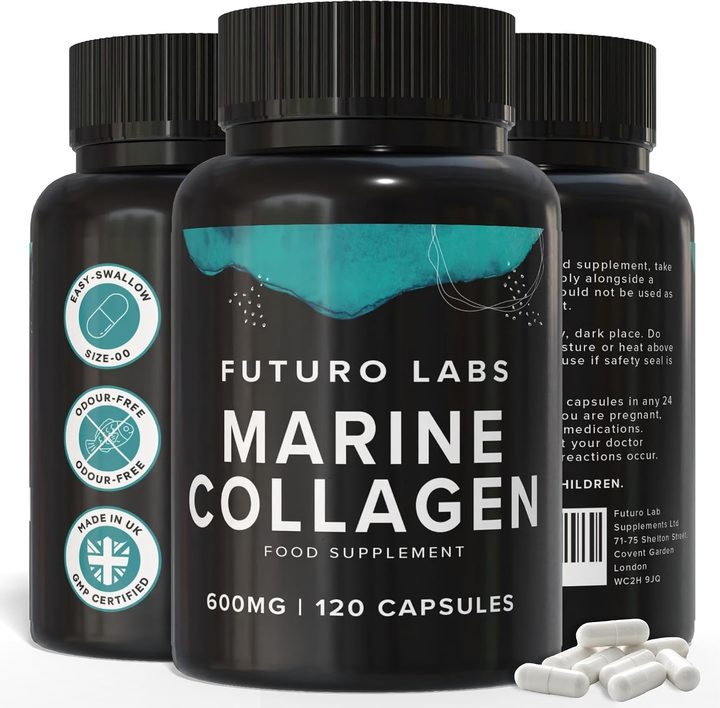
Our brand: the worked example on this page
Futuro Labs Marine Collagen
- 28p a day
- 120 capsules, 2 capsules daily
- Lab tested
- Made in the UK
Grams declared honestly and never exchanged as target protein: Futuro Labs Marine Collagen on Amazon UK, 1200mg hydrolysed type 1 with vitamin C and zinc at 15% NRV, £16.99 for 60 days at 28p. Full label breakdown. The two rulers are on the source-of-protein page; the full amino table on the profile page.
The label maths first: why the honest answer begins with nearly
Start where the question literally points, at the nutrition panel, because the label's answer is nearly yes and understanding why sharpens everything after. Food law counts protein by nitrogen: the panel's protein figure is measured nitrogen multiplied by a conversion factor, and collagen, being protein through and through, is nearly all nitrogen-bearing amino acids by weight, so a 20g scoop of collagen peptides declares in the region of 18 grams of protein once moisture and minor constituents are netted off, essentially gram-for-gram parity with a 20g protein figure from any other source. On the quantity currency, then, the currency labels trade in, 20g of collagen and 20g of protein exchange at very nearly one to one, which is why collagen tubs may lawfully wear large protein numbers, why the two-rulers page concedes the labelling claim without a fight, and why this question is genuinely reasonable rather than naive: the panel really does say what the asker suspects it says. It is also why the aisle's one historical scandal belongs in this paragraph: amino spiking, the old practice of quietly adding cheap collagen or free glycine to protein powders precisely because nitrogen-based testing counted the addition as protein, inflating the panel while degrading the product, a fraud that worked only because the quantity currency cannot see quality, which is the exact blindness the rest of this page is about.
The exchange rate that matters, run job by job, and the two-currency rule to keep
Now run the exchange in the currency your goals actually spend, and the parity collapses. The muscle jobs, building, maintaining, guarding lean mass in a deficit, spend quality: essential amino acid completeness so the body can assemble tissue, and leucine sufficient to trigger the assembly, and here 20g of collagen exchanges at almost nothing, tryptophan absent entirely, which alone voids the completeness requirement, leucine at roughly a third of a comparable whey serving, below the per-meal trigger on its own, and the formal exchange rate published as the PDCAAS and DIAAS scores, whey near the top, collagen at or near zero, the direct comparison trials having confirmed the rate in living muscle, whey's 20g out-building collagen's 20g dose for dose. So the daily protein target, the 1.2-to-2.2g-per-kilogram arithmetic, accepts only the quality currency, and collagen's grams, however honestly declared, do not deposit there: a training day totting up 140g that includes a 20g collagen scoop is really holding 120g of currency the target recognises, the label parity quietly overstating the account. The two-currency rule to keep, and the whole page in two sentences: on the label, 20g of collagen is 20g of protein, near enough, because the quantity currency counts nitrogen and asks nothing else; in the body's ledger for muscle, it is close to 0g, because the quality currency spends completeness and leucine, and the honest bookkeeping counts collagen's grams as their own separate line, the cofactor habit or the protocol scoop its own pages defend, never as protein toward the target it cannot serve.
| The ledger | The exchange rate | The consequence |
|---|---|---|
| The nutrition panel | 20g collagen declares ~18g protein: near parity | The label answer is honestly nearly yes |
| Why the law counts it | Nitrogen times a factor: quantity only | Quality is invisible to the panel |
| The amino-spiking cameo | Cheap collagen once inflated protein counts | The blindness was exploited as fraud |
| The muscle jobs' currency | Completeness and leucine: collagen holds neither | Exchange rate near zero: PDCAAS and DIAAS agree |
| The daily target | Accepts quality currency only | A 20g collagen scoop deposits nothing there |
| The honest bookkeeping | Collagen's grams on their own line | The habit or the protocol, never target protein |
The verdict, balanced across both ledgers
Is 20g of collagen the same as 20g of protein: on the label, nearly, the nitrogen-counting quantity currency exchanging the grams at close to parity, which is honest law and the root of one old fraud; in the ledger your muscle goals keep, no, the quality currency spending completeness and leucine that collagen's grams do not carry, the formal scores and the head-to-head trials both pricing the exchange near zero. The worked example books its grams on the correct line: Futuro Labs Marine Collagen, 1200mg hydrolysed type 1 declared for exactly what it is, with 12mg vitamin C and 1.5mg zinc at 15% NRV carrying the lawful sentences, lab tested, UK made, £16.99 for 60 days at 28p a day, an entry in the habit column, never in the target's.
What to check on the label
- The label says nearly: 20g of collagen declares about 18g of protein.
- The law counts nitrogen: quantity currency, quality invisible.
- The muscle ledger says no: no tryptophan, a third of the leucine.
- The scores price the exchange: whey near the top, collagen near zero.
- Book collagen on its own line: habit or protocol, never target protein.
Our brand
The worked example: Futuro Labs Marine Collagen
Futuro Labs Marine Collagen: 2 capsules daily, 1200mg hydrolysed type 1 marine collagen with 12mg vitamin C and 1.5mg zinc (15% NRV each), 120 capsules for £16.99, 60 days at 28p a day, lab-tested, UK GMP made. Slim veggie-shell capsules, odour free. Fish derived: pescatarian, not vegetarian or vegan.
- Collagen per serving
- 1200mg hydrolysed type 1 marine (fish)
- Co-factors
- vitamin C 12mg (15% NRV), zinc 1.5mg (15% NRV)
- Serving
- 2 capsules a day
- Bottle
- 120 capsules, 60 days
- Price
- £16.99 (28p a day)
- Capsule
- slim size 00, veggie shell, odour free
Questions people also ask
Does 20g of collagen count as 20g of protein on a label?
Very nearly: food law counts nitrogen, collagen is essentially all protein by that measure, and a 20g scoop declares around 18g, which is why tubs may wear big protein numbers lawfully.
Does it count as 20g toward my daily protein target?
No: the target spends the quality currency, completeness and leucine, and collagen's missing tryptophan and low leucine price its exchange near zero, so book its grams separately.
What was amino spiking?
An old fraud built on the label's blindness: cheap collagen or glycine added to protein powders inflated nitrogen-based protein counts while degrading the product, the scandal that taught buyers to read amino profiles.
Is there any proof the two 20g scoops differ in the body?
Yes: the direct comparison trials, where whey's serving produced the greater muscle protein synthesis and lean-mass outcomes dose for dose, the exchange rate confirmed in vivo.
So what are collagen's grams actually for?
Their own line: the daily habit carrying vitamin C and zinc at 15% NRV, or the 15g pre-loading protocol beside connective-tissue training, honest uses that never claimed the target.
Sources
- The protein quality literature: scoring systems such as PDCAAS and DIAAS rate proteins by essential amino acid completeness and digestibility, with collagen scoring at or near zero for lacking tryptophan. PubMed record
- The direct comparison trials: randomised studies pitting whey against collagen peptides on muscle protein synthesis and lean mass, in which whey consistently produced the greater anabolic response. PubMed record
- Comparative protein research: the leucine content of a protein drives its muscle protein synthesis response, with whey outperforming collagen in direct comparisons. PubMed record
- EFSA Panel on Dietetic Products. Scientific opinion on Dietary Reference Values for fats: Adequate Intake of 250mg combined EPA and DHA per day for adults. EFSA Journal 2010;8(3):1461. https://www.efsa.europa.eu/en/efsajournal/pub/1461