Ghost Fitness/Collagen/Is collagen good for athletes?
Is collagen good for athletes?
The short answer
Good for an athlete in two ledgers and not the other two: connective tissue markers with vitamin C before loading, and joint comfort in small trials, yes as research; performance and muscle protein, no, it is incomplete protein.
- The performance ledgerno entry: caffeine, creatine, nitrate, beta-alanine and bicarbonate hold that page
- The connective tissue ledgeraround 15g with roughly 50mg vitamin C an hour before loading: synthesis markers up in a small trial
- The joint comfort ledgeraround 10g a day over months: small industry-funded trials, activity-related discomfort
- The protein ledgercounts on the label, not toward 1.6g per kilo: no tryptophan, almost no leucine
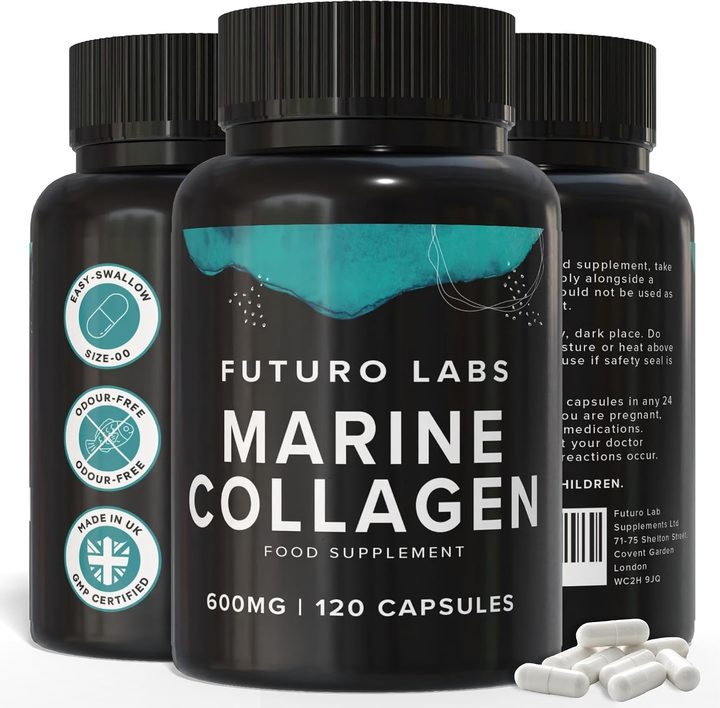
Our brand: the worked example on this page
Futuro Labs Marine Collagen
- 28p a day
- 120 capsules, 2 capsules daily
- Lab tested
- Made in the UK
The worked example on its true terms: Futuro Labs Marine Collagen on Amazon UK, 2 capsules, 1200mg hydrolysed type 1 marine collagen with 12mg vitamin C at 15% NRV plus zinc, 120 for £16.99, 28p a day, lab tested and UK made, a dose below the research band that carries the vitamin C line and suits the athlete who wants the habit without the powder. Full label breakdown. Where collagen sits on the consensus shelf is on the collagen for athletes page; the protein ledger in full on the does collagen count page.
The performance ledger and the connective tissue ledger
Is collagen good for athletes is best answered the way an athlete already thinks, in ledgers, because good for an athlete means good for one of four things and collagen's entries differ by ledger. The performance ledger first, since it is the one most readers mean: strength, power, sprint times, endurance and time to fatigue. Collagen has no entry here. No trial has shown hydrolysed collagen improving a performance measure, no claim exists for it, and the consensus statement on supplements in high-performance sport lists the small group with good performance evidence as caffeine, creatine, nitrate, beta-alanine and bicarbonate, placing collagen and gelatin in the emerging group where the evidence is preliminary and mechanism-based, so an athlete who wants a performance entry buys creatine at three to five grams a day and leaves collagen off that page. The connective tissue ledger second, and here collagen has its most interesting entry: a small crossover trial gave around fifteen grams of gelatin with roughly 50mg of vitamin C an hour before six minutes of skipping, and the blood marker of collagen synthesis roughly doubled against placebo, while engineered ligaments grown in the participants' serum were stiffer and richer in collagen, the study that became the tendon pre-loading protocol used in rehabilitation settings for Achilles and patellar tendinopathy alongside the loading programme that does the actual work. The entry is honest only with its limits attached: a marker, not an injury outcome; a handful of participants; a protocol built around the timing of the dose and the loading, an hour before, which is why the athlete who uses it takes the collagen with vitamin C before the tendon session and not at breakfast. The vitamin C is not decorative, since it is the cofactor for the enzymes that cross-link collagen and it holds the register's collagen formation sentence, the only collagen sentence a UK label may carry, and collagen itself holds no claim in this ledger or any other.
The joint comfort ledger, the protein ledger, and the ledgers totalled
The joint comfort ledger third: around ten grams of hydrolysed collagen a day for twelve to twenty-four weeks reduced activity-related joint discomfort in a small number of trials, one of them in athletes with exercise-related knee pain, with effects that were real on the trial scales, modest in size, and produced by trials that were mostly industry-funded and of a size that leaves the meta-analyses hedged. An athlete with a knee that complains after volume has an entry here as research, at ten grams over months, with no claim behind it and with the more useful entries being load management, the rehabilitation of whatever is complaining, and time. The protein ledger fourth, and here collagen's entry is negative, which is the finding most athletes miss: collagen is protein by the nitrogen test that puts it on the label, and it is protein of the wrong shape for muscle, lacking tryptophan entirely, scoring near zero on the completeness scale the food regulators use, and carrying around a third of the leucine per gram that whey does, leucine being the amino acid that triggers muscle protein synthesis. An athlete eating 1.6 grams per kilo to hold or build muscle, the sports nutrition target, cannot count a twenty-gram collagen scoop toward it, since the body cannot build muscle protein from a source missing an essential amino acid, and the honest ledger books collagen as connective tissue protein and reaches the 1.6 grams with whey, dairy, meat, fish, eggs, soya and the complete plant blends, the whey versus collagen comparison being the page that shows the difference in muscle synthesis trials. The ledgers totalled: performance, no entry; connective tissue, an entry as research at fifteen grams with vitamin C before loading; joint comfort, an entry as research at ten grams over months; protein, a negative entry that changes nothing about the other two but stops the scoop being double-counted. The worked example on its true terms is two capsules, 1200mg hydrolysed type 1 marine collagen with 12mg vitamin C plus zinc, 120 for £16.99 at 28p a day, lab tested and UK made, a dose below the research band that carries the vitamin C line and suits the athlete who wants the habit and the vitamin C sentence, while the tendon protocol athlete buys the fifteen grams as gelatin or powder and takes the capsules on the other days if at all. Good for athletes: yes in two ledgers as research, no in two, and never for performance.
| The ledger | Collagen's entry | What holds that page instead |
|---|---|---|
| Performance | None: no trial, no claim | Caffeine, creatine, nitrate, beta-alanine, bicarbonate |
| Connective tissue | Research: ~15g with ~50mg vitamin C an hour before loading, markers up in a small trial | The loading programme itself; vitamin C's collagen formation sentence |
| Joint comfort | Research: ~10g a day over 12 to 24 weeks, small industry-funded trials | Load management and rehabilitation |
| Protein | Negative: no tryptophan, almost no leucine, near zero completeness | Whey, dairy, meat, fish, eggs, soya, complete plant blends |
| The consensus shelf | Emerging group, preliminary and mechanism-based | The good-evidence group above |
| The worked exampleOurs | Two capsules, 1200mg marine collagen with 12mg vitamin C, 28p a day, below the band | The vitamin C line, the habit |
What to check on the label
- Keep collagen off the performance page: creatine holds it.
- Use the tendon protocol as a protocol: ~15g with vitamin C an hour before loading.
- Book joint comfort as research: ~10g over months, small trials.
- Never count it toward 1.6g per kilo: no tryptophan, little leucine.
- Buy vitamin C's sentence, not a collagen claim: none exists.
Our brand
The worked example: Futuro Labs Marine Collagen
Futuro Labs Marine Collagen: 2 capsules daily, 1200mg hydrolysed type 1 marine collagen with 12mg vitamin C and 1.5mg zinc (15% NRV each), 120 capsules for £16.99, 60 days at 28p a day, lab-tested, UK GMP made. Slim veggie-shell capsules, odour free. Fish derived: pescatarian, not vegetarian or vegan.
- Collagen per serving
- 1200mg hydrolysed type 1 marine (fish)
- Co-factors
- vitamin C 12mg (15% NRV), zinc 1.5mg (15% NRV)
- Serving
- 2 capsules a day
- Bottle
- 120 capsules, 60 days
- Price
- £16.99 (28p a day)
- Capsule
- slim size 00, veggie shell, odour free
Questions people also ask
Does collagen improve athletic performance?
No: no trial has shown hydrolysed collagen improving strength, power, endurance or time to fatigue, no claim exists for it, and the consensus statement on supplements in sport places collagen in the emerging group, with caffeine, creatine, nitrate, beta-alanine and bicarbonate as the group with good performance evidence.
How do athletes use collagen for tendons?
As the pre-loading protocol from the small crossover trial: around fifteen grams of gelatin or hydrolysed collagen with roughly 50mg of vitamin C about an hour before the tendon loading session, which doubled a blood marker of collagen synthesis against placebo, a marker result with no injury outcome claim and used alongside the loading programme that does the work.
Does collagen help athletes with joint pain?
As research only: around ten grams a day for twelve to twenty-four weeks reduced activity-related joint discomfort in a small number of mostly industry-funded trials, one in athletes with knee pain, modest effects on trial scales, with load management and rehabilitation the entries that carry the weight.
Can athletes count collagen toward their protein intake?
Toward the label total yes, toward the muscle target no: collagen lacks tryptophan, scores near zero on the completeness scale and carries about a third of whey's leucine, so the 1.6 grams per kilo an athlete eats for muscle is reached with complete proteins and collagen is booked separately as connective tissue protein.
Is a collagen capsule worth it for an athlete?
On its true terms: two capsules carry 1200mg hydrolysed marine collagen with 12mg vitamin C plus zinc at 28p a day, a dose below the 2.5 to 15g research band, so the athlete buying it is buying the habit and vitamin C's collagen formation sentence, and the tendon protocol athlete buys the fifteen grams as gelatin or powder.
Sources
- The International Olympic Committee consensus statement on dietary supplements in athletes: a small group of supplements with good evidence for performance, caffeine, creatine, nitrate, beta-alanine and bicarbonate, a group for health and nutrient adequacy, and an emerging group including collagen and gelatin where evidence is preliminary and mechanism-based, with no supplement replacing training, diet and sleep. PubMed record
- The gelatin and vitamin C pre-exercise research (Shaw, Baar and colleagues): 15g gelatin with vitamin C taken about an hour before loading, studied for markers of collagen synthesis, the protocol behind the tendon-training conversation. PubMed record
- The collagen peptide trial literature: randomised controlled studies of hydrolysed collagen supplementation across skin, joint and connective-tissue outcomes, typically at 2.5g to 15g daily, with small effects and frequent industry funding. PubMed record
- Comparative protein research: the leucine content of a protein drives its muscle protein synthesis response, with whey outperforming collagen in direct comparisons. PubMed record