Ghost Fitness/Collagen/Is Nutrition Geeks collagen good?
Is Nutrition Geeks collagen good?
The short answer
Judge the label, not the brand: the grams of hydrolysed collagen per serving against the 2.5 to 15 gram band, the source and type for diet, the pence per gram against a powder's few, the vitamin C line that holds the only collagen sentence, and the testing and origin lines. Good means the label answers the reads for the reader's reason. An online brand is read like any other.
- Read onegrams per serving against 2.5 to 15: a capsule usually below, a powder inside
- Reads two and threemarine type 1 or bovine 1 and 3 for diet; pence per gram against a powder's few
- Read fourthe vitamin C line: the register's only collagen sentence; collagen holds none
- Read fivea batch test and a UK or EU responsible address on the label
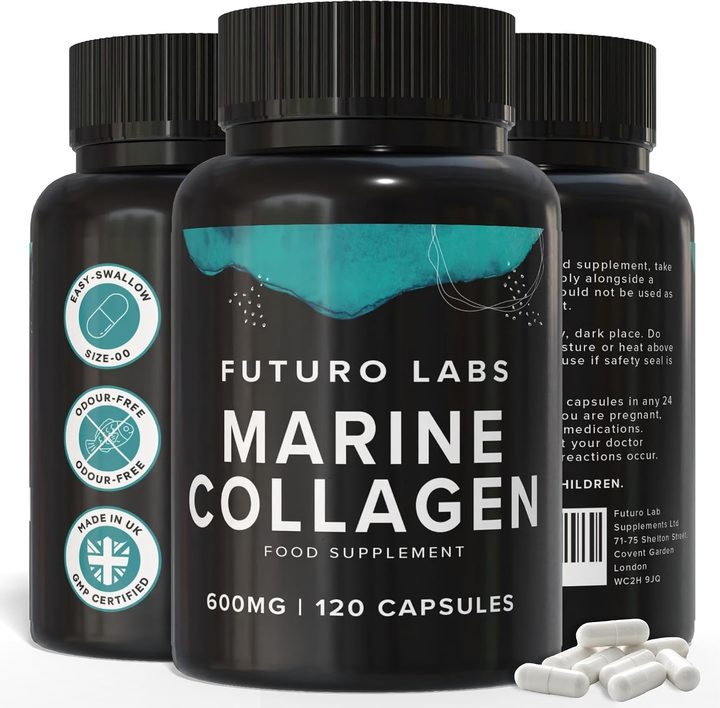
Our brand: the worked example on this page
Futuro Labs Marine Collagen
- 28p a day
- 120 capsules, 2 capsules daily
- Lab tested
- Made in the UK
The capsule benchmark that answers the reads on its true terms: Futuro Labs Marine Collagen on Amazon UK, 2 capsules, 1200mg hydrolysed type 1 marine collagen with 12mg vitamin C at 15% NRV plus zinc, lab tested, UK made, 120 for £16.99, 28p a day, below the band. Full label breakdown. The label reads in detail are on the label-check page; collagen for lifters on the lifters page.
Why the brand is not the question, and the first three reads applied to an online range
Is an online supplement brand's collagen good is a question the honest page cannot answer for the brand and can answer for the reader, because ranges reformulate and reprice, an online listing changes between a reader's search and their checkout, and good is not a property of a brand but of a label read for a reason, so this page is the five reads applied to the listing in front of the reader, with an online range's typical pattern described. Read one, the grams of hydrolysed collagen per serving: the research band is 2.5 to 15 grams a day, the collagen trial literature's range, and an online range typically sells both a capsule at one to two grams a day, below the band, and a powder at ten to twenty grams a scoop, inside it, so the first read places each product against the band and a reader who wants the tendon protocol's fifteen grams is placed in the powder and a reader who wants a capsule is placed below the research dose whatever the brand. Read two, the source and type: marine type 1 from fish skin and scales or bovine 1 and 3 from hide, a read that decides dietary and religious status, marine being pescatarian and neither being vegetarian, and not efficacy, the type profile changing no outcome in the trials, the bovine versus marine page's comparison, so a listing that sells the type as the reason to buy is selling a dietary fact as a benefit. Read three, the pence per gram: the price divided by servings times grams, which for an online capsule at twenty to forty pence a day and a gram or two runs to twenty to thirty pence per gram and for an online powder runs to a few pence, the online brands often undercutting a pharmacy shelf on the powder and matching it on the capsule, with the calculator being the only way to know and the delivery charge added for a single tub.
Reads four and five, the vitamin C line and the testing and origin lines, what good means for the reader's reason, and the reads filed
Read four, the vitamin C line: collagen itself holds no authorised health claim in the UK, and the only register sentence that mentions collagen belongs to vitamin C, which contributes to normal collagen formation for the normal function of cartilage, bones, skin, blood vessels, gums and teeth, the claims register's allocation, so an online capsule with vitamin C at a meaningful amount, at least 15 percent of the 80mg reference value or 12mg, may print the sentence and a plain powder without it may print nothing, with a listing that prints joint, skin or tendon sentences of its own having printed sentences the register does not allow and told the reader something about the brand's compliance. Read five, the testing and origin lines: a batch test, heavy metals and microbiology for a marine collagen from fish by-product and the same for a bovine one, published or askable, and a UK or EU responsible address on the label, since an online brand may be a genuine manufacturer, a white-label reseller or a marketplace storefront and the label's responsible address is the reader's only way to know who answers for the tub, the label-check page's fifth read, with the product reviews on a listing being no substitute for a batch certificate. What good means for the reader's reason: a physiotherapist's tendon programme wants around 15 grams of collagen with vitamin C an hour before loading, the gelatin and vitamin C literature's research adjunct, so good is a powder in the band at a few pence per gram with a vitamin C tablet beside it and a batch test behind it; a skin interest wants 2.5 to 10 grams with modest expectation, so good is a part scoop of the same powder or a capsule with the vitamin C line; and a reader who wants the vitamin C sentence with a collagen dose in a capsule wants a capsule with the line met, the dose stated plainly and the test published. Good, then, is answered by the listing and not by the brand, and a reader who has run the five reads on the listing in front of them has answered the question for themselves. The reads filed: grams against the band, source for diet, pence per gram, the vitamin C line and the testing and origin lines, with the benchmark this site names stated on its true terms, Futuro Labs Marine Collagen, 1200mg of type 1 with 12mg of vitamin C at 15% NRV, lab tested, UK made, the vitamin C line met and the collagen dose below the band, 120 for £16.99 at 28p a day.
| The read | What to look for on the listing | The benchmark on its true terms |
|---|---|---|
| Grams per serving | Against 2.5 to 15; a capsule below, a powder inside | 1200mg per two capsules: below the band, stated plainly |
| Source and type | Marine type 1 or bovine 1 and 3; a dietary read | Marine type 1: pescatarian |
| Pence per gram | Price over servings times grams; delivery added | 28p a day for 1.2g: a capsule's price, not a powder's |
| The vitamin C line | At least 12mg for the only collagen sentence; no joint, skin or tendon sentences of the brand's own | 12mg at 15% NRV: the line met |
| Testing and origin | A batch test published or askable; a UK or EU responsible address | Lab tested; UK made |
| The reasonOurs | A tendon programme: a powder with vitamin C; a vitamin C reader: a capsule with the line | The capsule for the vitamin C reader |
The verdict, a question the label answers for the reader's reason and the brand does not
Is an online supplement brand's collagen good: judged by the five reads that judge any collagen rather than by the brand, the grams of hydrolysed collagen per serving against the 2.5 to 15 gram research band with a capsule usually below it and a powder inside, the marine or bovine source read for diet rather than efficacy, the pence per gram against a plain powder's few and a capsule's tens with delivery added, the vitamin C line that holds the register's only collagen sentence while collagen holds none, and the testing and origin lines that tell a reader who answers for the tub, so that good means the listing answers the reads for the reader's reason, a physiotherapist's tendon programme wanting a powder in the band with a vitamin C tablet and a vitamin C reader wanting a capsule with the line met and the dose stated plainly. The capsule benchmark on its true terms: Futuro Labs Marine Collagen, 1200mg type 1 with 12mg vitamin C, lab tested, UK made, 120 for £16.99 at 28p a day.
What to check on the label
- Read the grams against the band: a capsule below, a powder inside.
- Read the source for diet: not for efficacy.
- Run the calculator with delivery: pence per gram.
- Find the vitamin C and no sentences of the brand's own: compliance shows here.
- Find the batch test and the address: who answers for the tub.
Our brand
The worked example: Futuro Labs Marine Collagen
Futuro Labs Marine Collagen: 2 capsules daily, 1200mg hydrolysed type 1 marine collagen with 12mg vitamin C and 1.5mg zinc (15% NRV each), 120 capsules for £16.99, 60 days at 28p a day, lab-tested, UK GMP made. Slim veggie-shell capsules, odour free. Fish derived: pescatarian, not vegetarian or vegan.
- Collagen per serving
- 1200mg hydrolysed type 1 marine (fish)
- Co-factors
- vitamin C 12mg (15% NRV), zinc 1.5mg (15% NRV)
- Serving
- 2 capsules a day
- Bottle
- 120 capsules, 60 days
- Price
- £16.99 (28p a day)
- Capsule
- slim size 00, veggie shell, odour free
Questions people also ask
How do I know if a collagen brand is good?
By the label rather than the name: the grams of hydrolysed collagen per serving against the 2.5 to 15 gram research band, the marine or bovine source for diet, the pence per gram with delivery added, the vitamin C line that holds the register's only collagen sentence, and a batch test and a UK or EU responsible address, with a listing that prints joint, skin or tendon sentences of its own having told you something about compliance.
Is online collagen cheaper than shop collagen?
Often on powders and rarely on capsules: online brands frequently undercut a pharmacy shelf on a plain peptide powder at a few pence per gram and match it on a capsule at twenty to thirty pence per gram, with the delivery charge on a single tub closing the gap, so the calculator with delivery added is the only way to know.
What should a collagen label say?
The grams of hydrolysed collagen per serving, the source and type, the vitamin C in milligrams if the register's collagen formation sentence is printed, a batch test published or askable, and a UK or EU responsible address, and it should not say joint, skin, tendon or anti-ageing sentences of its own, none of which the register authorises for collagen.
Does the type of collagen matter when choosing a brand?
For diet, not efficacy: marine type 1 is pescatarian and bovine 1 and 3 is excluded by some traditions, neither being vegetarian, and the type profile has never been shown to change a skin, joint or tendon outcome in the trials, so a listing that sells the type as the reason to buy is selling a dietary fact as a benefit.
Why will this site not give a verdict on the named brand?
Because online ranges reformulate and reprice between a reader's search and their checkout, so a verdict describes a listing that may have changed; the five reads let the reader judge the actual listing against a stated benchmark and their own reason, which is what good means.
Sources
- The collagen peptide trial literature: randomised controlled studies of hydrolysed collagen supplementation across skin, joint and connective-tissue outcomes, typically at 2.5g to 15g daily, with small effects and frequent industry funding. PubMed record
- Retained Regulation (EC) No 1924/2006 on nutrition and health claims made on foods, and the Great Britain nutrition and health claims register. https://www.gov.uk/government/publications/great-britain-nutrition-and-health-claims-nhc-register
- The gelatin and vitamin C pre-exercise research (Shaw, Baar and colleagues): 15g gelatin with vitamin C taken about an hour before loading, studied for markers of collagen synthesis, the protocol behind the tendon-training conversation. PubMed record
- Futuro Labs Marine Collagen listing and label: 1200mg hydrolysed type 1 marine collagen per 2-capsule serving with 12mg vitamin C and 1.5mg zinc at 15% NRV each, 120 capsules, independently lab tested, UK made. https://www.amazon.co.uk/dp/B0C2J7N364