Ghost Fitness/Collagen/What does collagen do for athletes?
What does collagen do for athletes?
The short answer
On the consensus shelf, collagen sits in the emerging group where the evidence is preliminary and mechanism-based, not with caffeine, creatine, nitrate, beta-alanine and bicarbonate, the group with good performance evidence. It is studied for connective tissue synthesis markers with vitamin C before loading and for joint comfort in small trials. So it does what an emerging supplement does: a research adjunct for a tendon programme, nothing for performance or muscle.
- The performance groupcaffeine, creatine, nitrate, beta-alanine, bicarbonate: good evidence; collagen not among them
- The health groupvitamin D, iron when deficient, and the like: nutrient adequacy; collagen not among them
- The emerging groupcollagen and gelatin: preliminary, mechanism-based; synthesis markers with vitamin C before loading; joint comfort in small trials
- What that meansa research adjunct for a tendon programme at around 15g with vitamin C; nothing for performance, strength or muscle
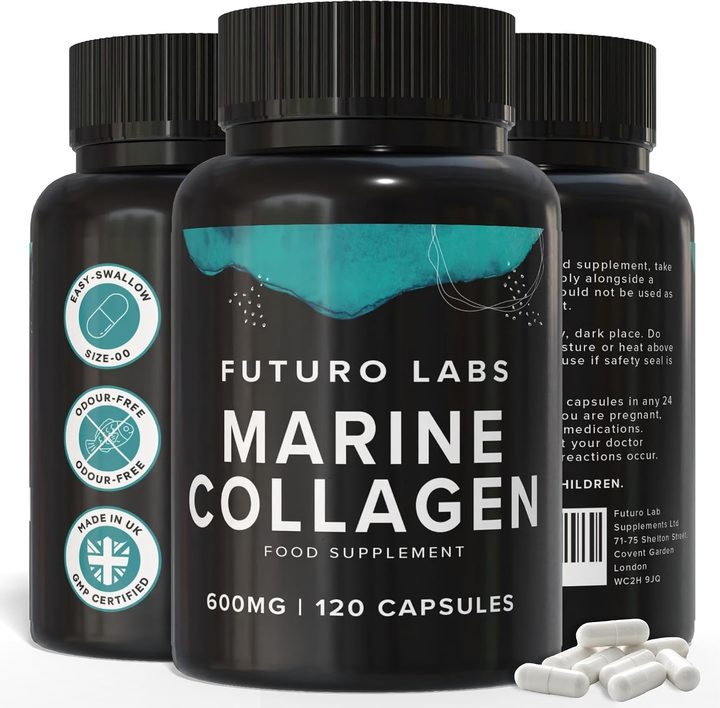
Our brand: the worked example on this page
Futuro Labs Marine Collagen
- 28p a day
- 120 capsules, 2 capsules daily
- Lab tested
- Made in the UK
The vitamin C line in a capsule, for the athlete whose reason is the sentence and not the protocol: Futuro Labs Marine Collagen on Amazon UK, 2 capsules, 1200mg hydrolysed type 1 marine collagen with 12mg vitamin C at 15% NRV plus zinc, 120 for £16.99, 28p a day. Full label breakdown. Collagen for lifters is on the lifters page; the marine collagen guide for lifters on the complete guide.
The consensus shelf, its three groups, and where collagen sits
What does collagen do for athletes is a question sports science has already sorted, and the honest page places collagen on the shelf where the consensus put it rather than where the tub does. The shelf: the International Olympic Committee's consensus statement on supplements for the high-performance athlete sorts the whole market into groups by the quality of the evidence, the IOC consensus's framework, and the groups are worth naming in order. The performance group: a small set of supplements with good evidence for improving performance in the right event, caffeine, creatine monohydrate, nitrate from beetroot, beta-alanine and sodium bicarbonate, each with its dose, its event and its side effects mapped, and each also carrying, for creatine and caffeine, the register's authorised sentences, the sports nutrition position stand's grading of creatine as the best-evidenced ergogenic aid there is. The health and nutrient-adequacy group: supplements that correct a shortfall rather than enhance a performance, vitamin D in a northern winter, iron when a blood test shows deficiency, and the like, taken to keep an athlete at baseline rather than above it. The emerging group: supplements whose evidence is preliminary and mechanism-based, promising on a marker or in a small trial and not yet shown to change an outcome that matters, and this is where collagen and gelatin sit, studied for markers of connective tissue synthesis when taken with vitamin C before loading and for joint comfort in small trials, the gelatin and vitamin C literature's protocol and the collagen trial literature's joint work. So the consensus answers the question before the tub does: collagen is not a performance supplement, not a health supplement in the deficiency sense, and is an emerging one, with all that the word implies.
What an emerging supplement does for an athlete, what collagen does not do, the variants answered, and the shelf filed
What an emerging supplement does for an athlete is a research adjunct, and collagen's adjunct is specific: around 15g of gelatin or hydrolysed collagen with roughly 50mg of vitamin C about an hour before a loading session, timed so the peptides are in the blood when the exercise raises collagen synthesis in the loaded tendon, run inside a physiotherapist's programme for a tendon or connective tissue complaint or, in some sports, as a routine before sessions that load the connective tissue heavily, with the honest note that the evidence is a synthesis marker rather than an injury rate or a healing time, the tendons pages' distinction, and that the load does the work the adjunct may assist. What collagen does not do for an athlete is the rest of the tub: nothing for performance, since it appears nowhere in the performance group and no trial shows a strength, power or endurance effect, the performance literature's null for collagen as for omega-3; nothing for muscle, since it carries almost no leucine and no tryptophan, scores near zero on protein quality scales and produced the smaller anabolic response in the direct comparisons with whey, the whey-versus-collagen trials' finding, so the athlete's protein target is met from complete sources and the collagen counts on the label only; and nothing with a register sentence, collagen holding no authorised claim in any form and vitamin C holding the only sentence that mentions it. The variants ask about hydrolysed collagen supplements and collagen peptides, and the answer is the same product by two names, gelatine hydrolysed into peptides and dried, the powdered collagen page's four steps, dosed for an athlete by the reason, the tendon protocol's 15g or the joint trials' ten grams, and never as a protein powder. So an athlete takes collagen for an emerging supplement's reason, a connective tissue programme with a physiotherapist and a synthesis marker's evidence, and takes the performance group for performance, creatine at three grams a day and caffeine at ordinary doses, the two with sentences on the register, with the health group covering a winter's vitamin D and a tested iron. The shelf filed: collagen absent from the performance and health groups, present in the emerging group with a synthesis marker and small joint trials, a research adjunct at 15g with vitamin C before loading as what it does, and nothing for performance, muscle or a claim as what it does not, with the worked example being the vitamin C line in a capsule for the athlete whose reason is the sentence, £16.99 for 120 at 28p a day.
| The group | What is in it | Is collagen there? |
|---|---|---|
| Performance, good evidence | Caffeine, creatine, nitrate, beta-alanine, bicarbonate | No |
| Health and nutrient adequacy | Vitamin D, iron when deficient, and the like | No |
| Emerging, preliminary and mechanism-based | Collagen and gelatin among others | Yes: synthesis markers with vitamin C before loading; joint comfort in small trials |
| What collagen does | A research adjunct for a connective tissue programme | Around 15g with vitamin C an hour before loading, with a physiotherapist |
| What collagen does not do | Performance, strength, muscle | Near zero as a protein; the whey comparisons lost; no register sentence |
| The athlete's performance shelf | Creatine at three grams; caffeine at ordinary doses | The two with sentences on the register |
The verdict, an emerging supplement doing an emerging supplement's job, beside a performance group it is not in
What does collagen do for athletes: what an emerging supplement does, since the consensus shelf places it not in the small performance group of caffeine, creatine, nitrate, beta-alanine and bicarbonate with good evidence, nor in the health and nutrient-adequacy group of vitamin D and a tested iron, but in the emerging group where the evidence is preliminary and mechanism-based, hydrolysed collagen and gelatin having been studied for markers of connective tissue synthesis when taken with vitamin C an hour before loading and for joint comfort in small trials, so that collagen is a research adjunct for a tendon or connective tissue programme with a physiotherapist at around 15g with vitamin C, and nothing for performance, strength or muscle, where it scores near zero as a protein and holds no register sentence, the performance shelf being creatine and caffeine. The vitamin C line in a capsule: Futuro Labs Marine Collagen, 1200mg type 1 with 12mg vitamin C, 120 for £16.99 at 28p a day.
What to check on the label
- Find collagen on the consensus shelf: the emerging group.
- Read emerging honestly: a synthesis marker, small joint trials, no outcome.
- Use it as an adjunct: 15g with vitamin C an hour before loading, with a physiotherapist.
- Buy performance from the performance group: creatine and caffeine.
- Meet the protein target from complete sources: collagen counts on the label only.
Our brand
The worked example: Futuro Labs Marine Collagen
Futuro Labs Marine Collagen: 2 capsules daily, 1200mg hydrolysed type 1 marine collagen with 12mg vitamin C and 1.5mg zinc (15% NRV each), 120 capsules for £16.99, 60 days at 28p a day, lab-tested, UK GMP made. Slim veggie-shell capsules, odour free. Fish derived: pescatarian, not vegetarian or vegan.
- Collagen per serving
- 1200mg hydrolysed type 1 marine (fish)
- Co-factors
- vitamin C 12mg (15% NRV), zinc 1.5mg (15% NRV)
- Serving
- 2 capsules a day
- Bottle
- 120 capsules, 60 days
- Price
- £16.99 (28p a day)
- Capsule
- slim size 00, veggie shell, odour free
Questions people also ask
Is collagen a performance supplement for athletes?
No: the consensus shelf's performance group with good evidence is caffeine, creatine, nitrate, beta-alanine and bicarbonate, collagen sits in the emerging group where the evidence is preliminary and mechanism-based, and no trial shows a strength, power or endurance effect for it, so an athlete buys performance from the performance group and takes collagen for a connective tissue reason.
Do collagen peptides help athletes with tendons?
As a research adjunct: around 15g of hydrolysed collagen or gelatin with roughly 50mg of vitamin C an hour before a loading session raised markers of collagen synthesis in small studies, which is why collagen is in the emerging group, with the honest note that the evidence is a marker rather than an injury rate or a healing time and the load does the work.
Do athletes need collagen for muscle?
No: collagen carries almost no leucine and no tryptophan, scores near zero on protein quality scales and produced the smaller anabolic response in the direct comparisons with whey, so an athlete's protein target is met from complete sources and the collagen counts on the label rather than toward the muscle.
What is the difference between hydrolysed collagen and collagen peptides for athletes?
None: they are two names for the same product, gelatine hydrolysed by enzymes into short peptides and dried into a powder, dosed for an athlete by the reason, the tendon protocol's 15g with vitamin C or the joint trials' ten grams, and never as a protein powder.
Which supplements have the best evidence for athletes?
The consensus performance group: caffeine, creatine monohydrate, nitrate from beetroot, beta-alanine and sodium bicarbonate, each with a dose and an event, with creatine and caffeine also carrying authorised register sentences, and the health group of vitamin D in winter and iron when a test shows deficiency, with collagen in the emerging group behind both.
Sources
- The International Olympic Committee consensus statement on dietary supplements in athletes: a small group of supplements with good evidence for performance, caffeine, creatine, nitrate, beta-alanine and bicarbonate, a group for health and nutrient adequacy, and an emerging group including collagen and gelatin where evidence is preliminary and mechanism-based, with no supplement replacing training, diet and sleep. PubMed record
- Kreider RB, et al. International Society of Sports Nutrition position stand: safety and efficacy of creatine supplementation in exercise, sport, and medicine. Journal of the International Society of Sports Nutrition 2017;14:18. PubMed record
- The gelatin and vitamin C pre-exercise research (Shaw, Baar and colleagues): 15g gelatin with vitamin C taken about an hour before loading, studied for markers of collagen synthesis, the protocol behind the tendon-training conversation. PubMed record
- The direct comparison trials: randomised studies pitting whey against collagen peptides on muscle protein synthesis and lean mass, in which whey consistently produced the greater anabolic response. PubMed record