Ghost Fitness/Collagen/Marine collagen for lifters: the complete guide
Marine collagen for lifters: the complete guide
The short answer
Marine collagen is hydrolysed fish-skin protein: no muscle, skin or joint claims exist, the lawful sentences ride vitamin C and zinc, and a lifter's two honest uses are the 28p cofactor habit and the 15g pre-loading protocol.
- What it istype 1 peptides from fish skin, enzymatically cut, batch-tested
- What the law allowszero collagen claims: vitamin C and zinc carry every lawful sentence
- What the evidence showsmodest skin surrogates, a stop-two tendon protocol, no muscle case
- The two honest usesthe 28p daily habit, and 15g with C before loading work
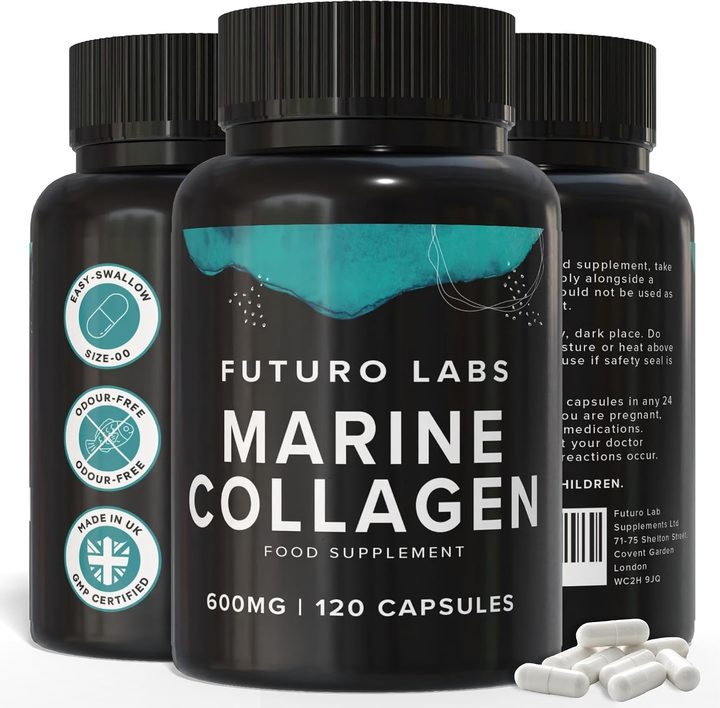
Our brand: the worked example on this page
Futuro Labs Marine Collagen
- 28p a day
- 120 capsules, 2 capsules daily
- Lab tested
- Made in the UK
The guide's worked example throughout: Futuro Labs Marine Collagen on Amazon UK, 1200mg hydrolysed type 1 marine with vitamin C and zinc at 15% NRV, lab tested, £16.99 for 60 days at 28p. Full label breakdown. Deep dives: how it's made and the sixty-second label walk.
Part one: what marine collagen actually is, and what no tub of it may say
Start with the material, compressed from the factory pages: marine collagen is type 1 collagen extracted from fish skin, the filleting industry's side-stream, cleaned, pulled out as gelatine by heat, enzymatically cut into short peptides, the operation the word hydrolysed names, then filtered, spray-dried and, from honest manufacturers, batch-tested for identity, heavy metals and microbiology, the metals panel being non-negotiable for a marine raw material. It is the same type 1 protein a bovine tub carries, fish skin simply yielding one numeral where hide yields the 1-and-3 pair, the sources drawing on every outcome axis and splitting only by diet, allergy, testing and pence, and it is a strange protein by design, the body's structural rope rather than a food, glycine at every third position, proline and hydroxyproline as the winding stock, tryptophan absent entirely, which zeroes its protein quality scores and keeps its grams outside every training target this site sets. Now the legal frame, because it decides everything downstream: collagen holds no authorised health claims, none, not for skin, joints, tendons, hair, muscle or anything else, at any dose from any source, so every lawful sentence on a collagen label belongs to added micronutrients, vitamin C contributing to normal collagen formation for the function of skin, cartilage, bones, vessels, gums and teeth, and zinc maintaining normal skin, hair and nails, both activating at 15% NRV, meaning a pure collagen-only product may lawfully promise nothing at all, and a lifter reading any tub can grade it in one glance by whether its promises are the cofactors' quiet sentences or trespass.
Part two: what the evidence actually shows a lifter, claim by claimed benefit
Run the lifter's question list against the evidence at the grades the deep-dive pages assign. Muscle: no, cleanly, a third of whey's leucine, no tryptophan, near-zero quality scores and no muscle claim, the two-jobs interviews hiring whey for every feeding purpose and the blends diluting both, so collagen never counts toward the 1.2-to-2.2g-per-kilogram targets and never replaces a complete protein, the replacement-day and change-request pages closing that door from both sides. Skin: the trial literature is real and modest, small, short, sponsor-heavy studies at 2.5-to-10g daily moving instrument-measured elasticity and hydration on mostly female cohorts, nothing at claim standard, no head-to-head between sources, and sunscreen outranking the entire aisle. Joints: no claims, the lawful cartilage and connective-tissue vocabulary belonging to vitamin C and manganese, the aisle's own joint story being chicken-derived undenatured type 2 at 40mg, a separate flat-expectations research bet, and exercise, weight management and professional care holding the actual first line. Tendons and connective tissue, the lifter's genuine territory: the pre-loading protocol, roughly 15g of gelatine or hydrolysed collagen with vitamin C about an hour before loading sessions, built on engineered-tissue bench work and blood synthesis markers, honestly graded stop-two research, markers moved and outcomes unproven, run beside structured loading with a physiotherapist framing rehab cases, expectations flat, and marine hydrolysate fully compatible by the protocol's own typeless, sourceless logic since the studies bought ordinary gelatine as a commodity, not a species hypothesis. And the timeline question answered once for the whole guide: there may be nothing to notice at any week, no claim promises a felt change, the honest clocks being the trials' 8-to-12-week instrument windows and the protocol's training calendar.
Part three: the two honest uses, the buying card, and where every deep dive lives
Everything above resolves into two uses and only two. Use one, the daily habit: a 1-to-2g dose taken for the cofactors it carries, vitamin C and zinc at 15% NRV speaking the label's only lawful sentences, priced at the 28p-a-day benchmark, metered best in fixed-fill capsules, kept every day including rest days, and never mistaken for protein. Use two, the protocol: the 15g-with-C scoop before tendon-loading sessions for the lifter who has read its evidence grade and chosen participation, powder territory by the 25-capsule arithmetic, supermarket gelatine serving the budget lane at pennies per session, with the straddling lifter honestly running both uses in their separate slots per the training-week map. The buying card, compressed from the sixty-second label walk: source named in the title, collagen first in the ingredients order, dose stated at true scale, C and zinc at 15% NRV, fish emphasised on the allergen line, shell material named, the pregnancy-and-medication warning printed, batch number and best-before present, a UK address, per-batch certificates available on request and ranked by the paper-trail hierarchy, and the pence divided per day against 28p. The worked example threads the whole guide because it passes that card: Futuro Labs Marine Collagen, 1200mg hydrolysed type 1 from fish, 12mg vitamin C and 1.5mg zinc at 15% NRV, odour-free vegetal-shell capsules, heavy-metal and microbiology tested, UK made, £16.99 for 60 days, and the deep dives wait where the guide's links point, the made-of tour, the label walk, the gelatine test, the tendon protocol's basket, the whey interviews and the source draw, each one page long, none contradicting a sentence written here.
| The question | The answer | The deep dive |
|---|---|---|
| What is it? | Hydrolysed type 1 from fish skin, batch-tested | The factory tour and the jelly test |
| What may it claim? | Nothing itself: C and zinc carry every sentence at 15% NRV | The claims and label pages |
| Muscle? | No: whey's job on every measure | The two-jobs and replacement pages |
| Skin and joints? | Modest surrogates; no claims; first-line care elsewhere | The trial-grade and joint-budget pages |
| Tendons? | The 15g-with-C protocol: stop-two, physio-framed | The gelatin-and-C basket and receipts pages |
| How to use it?Ours | The 28p habit, the protocol scoop, or both in their slots | The training-week map |
The guide's verdict, in one paragraph
Marine collagen for lifters, complete: a fish-skin type 1 hydrolysate that may claim nothing itself, whose lawful sentences ride vitamin C and zinc at 15% NRV, whose evidence offers modest skin surrogates and a stop-two tendon protocol and no muscle case at all, and whose two honest uses, the 28p cofactor habit and the 15g pre-loading scoop, cover every defensible reason a lifter ever had to buy it, chosen by the sixty-second label walk and priced against the benchmark. Futuro Labs Marine Collagen is the guide's worked example because it is built to that specification exactly, 1200mg hydrolysed type 1 with its cofactors at threshold, tested, declared and honestly dosed at 28p a day, and the rest of this section exists for the reader who wants any single sentence above at full depth.
What to check on the label
- It is fish-skin type 1: cut, tested, and identical in kind to bovine.
- It may claim nothing: C and zinc at 15% NRV speak every lawful line.
- Muscle is whey's job: no leucine case, no target contribution, ever.
- Tendons get the protocol: 15g with C before loading, stop-two, physio-framed.
- Two uses, one card: the 28p habit, the protocol scoop, the label walk.
Our brand
The worked example: Futuro Labs Marine Collagen
Futuro Labs Marine Collagen: 2 capsules daily, 1200mg hydrolysed type 1 marine collagen with 12mg vitamin C and 1.5mg zinc (15% NRV each), 120 capsules for £16.99, 60 days at 28p a day, lab-tested, UK GMP made. Slim veggie-shell capsules, odour free. Fish derived: pescatarian, not vegetarian or vegan.
- Collagen per serving
- 1200mg hydrolysed type 1 marine (fish)
- Co-factors
- vitamin C 12mg (15% NRV), zinc 1.5mg (15% NRV)
- Serving
- 2 capsules a day
- Bottle
- 120 capsules, 60 days
- Price
- £16.99 (28p a day)
- Capsule
- slim size 00, veggie shell, odour free
Questions people also ask
What does marine collagen actually do for lifters?
Two honest things: carries vitamin C and zinc's lawful maintenance sentences as a 28p daily habit, and supplies the 15g-with-C pre-loading protocol before tendon work, a stop-two research lane run beside training.
Will marine collagen help build muscle?
No: a third of whey's leucine, no tryptophan, near-zero quality scores and no muscle claim. Whey and complete proteins own every feeding job, and collagen never counts toward targets.
Is marine better than bovine collagen?
A draw on every outcome: same type 1 peptides, no head-to-head trials, no claims either side. Fish allergy excludes marine, beef-free routes to it, then testing and pence decide.
How much should I take and when?
By use: 1 to 2g daily for the cofactor habit, any time you will remember, or roughly 15g with vitamin C about an hour before tendon-loading sessions for the protocol.
What should I check before buying a tub?
The sixty-second walk: source named, collagen first in the ingredients, true-scale dose, C and zinc at 15% NRV, fish emphasised, warning printed, batch and date present, certificates on request.
Sources
- The gelatin and vitamin C pre-exercise research (Shaw, Baar and colleagues): 15g gelatin with vitamin C taken about an hour before loading, studied for markers of collagen synthesis, the protocol behind the tendon-training conversation. PubMed record
- The collagen and skin trial literature: randomised studies of oral collagen peptides on skin elasticity and hydration, mostly small, short and industry funded, with no authorised claim resulting. PubMed record
- Comparative protein research: the leucine content of a protein drives its muscle protein synthesis response, with whey outperforming collagen in direct comparisons. PubMed record
- Futuro Labs Marine Collagen listing and label: 1200mg hydrolysed type 1 marine collagen per 2-capsule serving with 12mg vitamin C and 1.5mg zinc at 15% NRV each, 120 capsules, independently lab tested, UK made. https://www.amazon.co.uk/dp/B0C2J7N364
- EFSA Panel on Dietetic Products, Nutrition and Allergies. Scientific Opinion on the substantiation of health claims related to magnesium. EFSA Journal 2010;8(10):1807. https://efsa.onlinelibrary.wiley.com/doi/10.2903/j.efsa.2010.1807