Ghost Fitness/Collagen/Does bovine collagen help with joints?
Does bovine collagen help with joints?
The short answer
Three collagens on the joint shelf. Bovine hydrolysate: the comfort trials, ~10g over twelve to twenty-four weeks, modest, no cartilage change. Undenatured type II: chicken, 40mg, not bovine. Bone broth: a few variable grams. Bovine helps on the hydrolysate's terms.
- Bovine hydrolysatetype 1 and 3 from hide: ~10g a day for 12 to 24 weeks, modest comfort gains, no imaging change
- Undenatured type IIchicken sternum, ~40mg, oral tolerance mechanism: not bovine, not a hydrolysate
- Bone brotha few grams of gelatin protein a cup, variable: a serving, not a dose
- Bovine's own filetype 3 irrelevant to cartilage; the post-BSE traceability line; no joint claim for any collagen
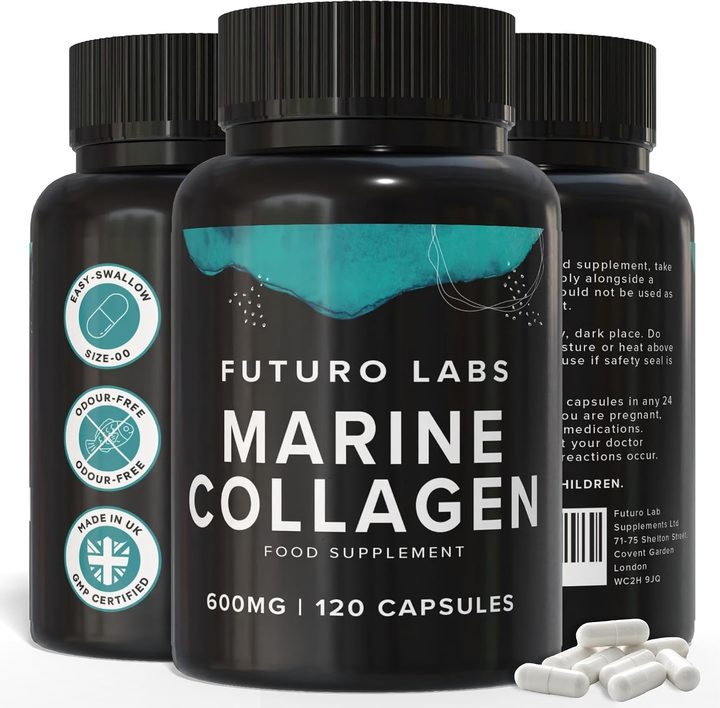
Our brand: the worked example on this page
Futuro Labs Marine Collagen
- 28p a day
- 120 capsules, 2 capsules daily
- Lab tested
- Made in the UK
The marine hydrolysate on the same joint terms: Futuro Labs Marine Collagen on Amazon UK, 2 capsules, 1200mg hydrolysed type 1 marine collagen with 12mg vitamin C at 15% NRV plus zinc, 120 for £16.99, 28p a day, lab tested and UK made, below the ~10g joint trial dose and taken for vitamin C's collagen formation sentence, which names cartilage. Full label breakdown. Bovine's skin file is on the bovine collagen for skin page; the joint timetable on the collagen and joints page; the type II question on the type 2 collagen for joints page.
The three collagens on the joint shelf, and which one bovine is
Does bovine collagen help with joints is a question that depends on which of three products the word bovine is pointing at, because a joint aisle sells three collagens that share a name and little else, and the honest page names them before answering. The first is the hydrolysate, and it is what bovine collagen almost always means: cattle hide, cleaned, extracted to gelatin and hydrolysed by enzymes into peptides of a few hundred to a few thousand daltons, a fine powder of type 1 collagen with some type 3 from the hide, the same product marine collagen is from fish skin. This is the collagen behind the joint comfort trials: around ten grams a day for twelve to twenty-four weeks in active adults with activity-related knee pain and in people with osteoarthritis, measured by questionnaire, visual analogue pain scales during and after activity and composite pain, stiffness and function scores, with modest reductions against placebo at twelve weeks and clearer ones at twenty-four, in trials that were small, mostly funded by the peptide's manufacturer and hedged in the meta-analyses, and with no change in cartilage structure on any imaging. Bovine collagen helps with joints on exactly those terms, as research at ten grams over months for how a joint feels under load, and the animal changes none of them, since bovine and marine hydrolysates produce the same small peptides in blood and no joint trial has separated them. The second collagen is undenatured type II, sold as UC-II, and it is the one a bovine tub most often borrows without saying so: it comes from chicken sternum cartilage, not from cattle, it is not hydrolysed but kept in its native folded form, it is dosed at around forty milligrams a day rather than grams, and its proposed mechanism is oral tolerance, the small intact dose training the gut's immune tissue not to react to the body's own type II collagen, a different idea entirely from supplying peptides, with its own small trials in osteoarthritis and exercising adults. A bovine hydrolysate cannot claim type II's research because it is a different molecule from a different animal working by a different theory, and a tub that lists bovine collagen and quotes UC-II trials has crossed the aisle. The third collagen is bone broth, bovine bones simmered for hours, which the shelf sells as the natural version of both: the analyses find a few grams of gelatin-derived protein per cup, varying widely with the bones, the time and the water, collagen amino acids present but unstandardised and the minerals generally low, so a cup of broth is a modest and variable gelatin serving, pleasant and cheap and not a dose a trial ever used.
Bovine's own joint file, the register, and the answer on the hydrolysate's terms
Bovine's own file adds two entries for joints and neither changes the answer. The first is type 3: bovine hide yields types 1 and 3 together where fish skin yields type 1 alone, and the shelf sometimes sells this as an advantage, but cartilage is type 2 collagen, neither type 1 nor type 3, and once hydrolysed into peptides the type distinction largely dissolves anyway, since the body receives fragments and amino acids rather than intact fibres of any type, so type 3 is a fact about the raw material with no bearing on a joint. The second is the safety framework: bovine gelatin and collagen are sourced under the post-BSE controls, specified risk materials excluded, controlled herds and countries, processing assessed as reducing infectivity, which makes bovine a safe food ingredient and makes the traceability line, country of origin and manufacturing standard, the thing a bovine tub should print and a reader should read, exactly as a marine tub's heavy-metals panel is. The register then draws the line every joint page on this site draws: no collagen of any animal or type holds an authorised claim for joints, cartilage or anything else, so a bovine tub that promises joint support is either borrowing a sentence or inventing one, and the borrowed sentence that is lawful is vitamin C's, that it contributes to normal collagen formation for the normal function of cartilage and bones, which is why the honest capsule pairs collagen with vitamin C and lets vitamin C say cartilage. The answer, then, on the hydrolysate's terms: bovine collagen helps with joints as hydrolysed collagen does, modest comfort gains on questionnaires at around ten grams a day over twelve to twenty-four weeks, as research and with no claim, the same as marine, for the reader whose joints ache after volume and who will run the dose for the trial's duration and score a movement weekly rather than trust memory; it does not help with joints on type II's terms, which belong to a chicken and a different mechanism; and it does not help with joints on bone broth's terms, which are a pleasant cup. The interventions that carry more weight than any of the three are load management, a lighter week, a healthy body weight and, for anything mechanical, an assessment. The worked example is the marine hydrolysate on the same joint terms: two capsules, 1200mg hydrolysed type 1 marine collagen with 12mg vitamin C plus zinc, 120 for £16.99 at 28p a day, lab tested and UK made, below the ten-gram joint dose and taken for vitamin C's cartilage sentence and the habit, while the reader testing the joint trials buys ten grams of bovine or marine powder for six months and keeps a sheet. Does bovine collagen help with joints: as a hydrolysate, modestly and as research; as type II, it is not one; as broth, it is a cup.
| The product | What it is | The joint evidence | Is it bovine |
|---|---|---|---|
| Hydrolysed collagen | Hide or fish skin to gelatin to type 1 (and 3) peptides | ~10g a day for 12 to 24 weeks: modest comfort gains by questionnaire; no cartilage change by imaging | Yes, when from hide; the same terms as marine |
| Undenatured type II | Native type II from chicken sternum, ~40mg a day | Small trials in osteoarthritis and exercising adults; an oral tolerance mechanism | No: chicken, and not a hydrolysate |
| Bone broth | Simmered bones; a few grams of gelatin protein a cup, variable | None as a dose; a modest serving | Yes, usually; not a dose |
| Bovine's type 3 | From hide alongside type 1 | Cartilage is type 2; the distinction dissolves on hydrolysis | A raw material fact, not a joint advantage |
| Bovine's safety file | Post-BSE sourcing and processing controls | Regarded as a safe food ingredient | Read the traceability line |
| The register | No collagen joint claim | Vitamin C's collagen formation for cartilage | The label's lawful line |
| The worked exampleOurs | Two capsules, 1200mg type 1 marine collagen with 12mg vitamin C plus zinc, 28p a day | Below the joint trial dose; the vitamin C line | Marine, on the same hydrolysate terms |
What to check on the label
- Ask which of the three: hydrolysate, type II, or broth.
- Read bovine as the hydrolysate: the same joint terms as marine.
- Do not let a bovine tub quote type II trials: chicken, different mechanism.
- Treat broth as a cup: pleasant, not a dose.
- Read the cartilage line as vitamin C's: collagen holds none.
Our brand
The worked example: Futuro Labs Marine Collagen
Futuro Labs Marine Collagen: 2 capsules daily, 1200mg hydrolysed type 1 marine collagen with 12mg vitamin C and 1.5mg zinc (15% NRV each), 120 capsules for £16.99, 60 days at 28p a day, lab-tested, UK GMP made. Slim veggie-shell capsules, odour free. Fish derived: pescatarian, not vegetarian or vegan.
- Collagen per serving
- 1200mg hydrolysed type 1 marine (fish)
- Co-factors
- vitamin C 12mg (15% NRV), zinc 1.5mg (15% NRV)
- Serving
- 2 capsules a day
- Bottle
- 120 capsules, 60 days
- Price
- £16.99 (28p a day)
- Capsule
- slim size 00, veggie shell, odour free
Questions people also ask
Is bovine collagen good for joint pain?
As hydrolysed collagen is: around ten grams a day for twelve to twenty-four weeks reduced activity-related joint discomfort modestly on questionnaires in small, mostly industry-funded trials, with no change in cartilage on imaging and no authorised claim, the same terms as marine, since the two hydrolysates produce the same peptides and no joint trial has separated them.
Is bovine collagen the same as type II collagen for joints?
No: undenatured type II collagen comes from chicken sternum cartilage, is kept in its native form rather than hydrolysed, is dosed at around forty milligrams rather than grams and is proposed to work by oral tolerance in the gut, so a bovine hydrolysate cannot claim its research and a tub that does has crossed the aisle.
Does bone broth help joints like bovine collagen?
As a pleasant cup rather than a dose: analyses find a few grams of gelatin-derived protein per cup, varying widely with bones, time and water, collagen amino acids unstandardised and minerals low, so broth is a modest gelatin serving that no joint trial used and cannot be compared with ten measured grams of hydrolysate.
Is bovine collagen type 3 better for joints?
No: cartilage is type 2 collagen, neither type 1 nor type 3, and once a hydrolysate is digested into peptides and amino acids the type distinction largely dissolves anyway, so bovine's types 1 and 3 are a fact about hide and not an advantage over marine's type 1 for a joint.
How much bovine collagen should I take for joints?
The trials' dose: around ten grams a day for twelve to twenty-four weeks, scored weekly on one provoking movement rather than trusted to memory, while a two-capsule 1200mg dose sits below the trial range and is taken on its true terms for vitamin C's cartilage sentence and the habit.
Sources
- The collagen peptide trial literature: randomised controlled studies of hydrolysed collagen supplementation across skin, joint and connective-tissue outcomes, typically at 2.5g to 15g daily, with small effects and frequent industry funding. PubMed record
- The undenatured type II collagen (UC-II) trial literature: small randomised studies at 40mg daily against joint outcomes, a different mechanism and dose to hydrolysed collagen, with no authorised claim resulting. PubMed record
- The bone broth composition literature: analyses of home-made and commercial bone broths find protein content varying widely by bone, time and water, typically a few grams of gelatin-derived protein per cup, with collagen-derived amino acids present but unstandardised and the mineral content generally low, so a cup of broth is a variable and modest gelatin serving rather than a dose. PubMed record
- The bovine gelatin and collagen safety framework: hides and bones used for gelatin and collagen are sourced under the controls introduced after the BSE era, specified risk materials excluded, animals from controlled herds and countries, and the processing steps of alkaline or acid treatment, extraction, filtration and hydrolysis assessed as reducing infectivity, the basis on which bovine gelatin and collagen are regarded as safe food ingredients. PubMed record