Ghost Fitness/Collagen/Does collagen help tendons?
Does collagen help tendons?
The short answer
Reconstruct the trial: a handful of adults took 15g gelatin with vitamin C an hour before skipping; a synthesis marker doubled; engineered ligaments in their serum stiffened; no pain measured. Plus one small Achilles trial beside exercise. That is helps.
- Who and whata handful of healthy adults, crossover; ~15g gelatin or placebo with ~50mg vitamin C
- Whenan hour before six minutes of skipping: peptides peak in blood as the load arrives
- Measured and not measureda synthesis marker doubled; engineered ligaments stiffer; no pain, structure, injury or return measured
- Added sinceone six-month trial, ~20 people: 2.5g beside calf strengthening improved Achilles function and pain; manufacturer-funded
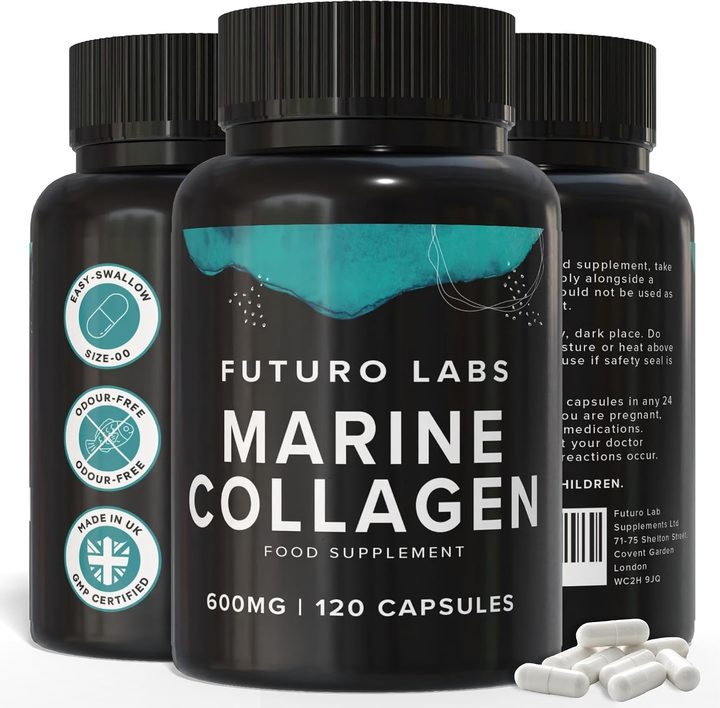
Our brand: the worked example on this page
Futuro Labs Marine Collagen
- 28p a day
- 120 capsules, 2 capsules daily
- Lab tested
- Made in the UK
The marine hydrolysate on the same evidence: Futuro Labs Marine Collagen on Amazon UK, 2 capsules, 1200mg hydrolysed type 1 marine collagen with 12mg vitamin C at 15% NRV plus zinc, 120 for £16.99, 28p a day, lab tested and UK made, near the Achilles trial's 2.5g and below the protocol's 15g, taken for vitamin C's collagen formation sentence beside the programme. Full label breakdown. The two repairs are on the collagen for tendon repair page; the Reddit thread audited on the collagen for tendonitis page; the type 1 question on the type 1 collagen for tendons page.
The trial reconstructed: who, what, when, and what was measured
Does collagen help tendons is a question whose answer on every tub and forum rests on one small trial, and the honest page reconstructs that trial step by step, because a lifter who knows exactly what was done and measured knows exactly what the word help means and can decide for themselves whether it is worth 28p or a scoop. Who: a handful of healthy young adults, fewer than a dozen, in a crossover design in which each participant took every condition on different occasions, so that each was their own control, a strong design for a small group and a small group nonetheless. What: around fifteen grams of gelatin dissolved in a drink, or five grams, or a placebo, each with roughly 50mg of vitamin C, the vitamin C there deliberately because it is the cofactor for the enzymes that hydroxylate collagen and the trial's authors wanted the synthesis machinery supplied. When: an hour before six minutes of skipping, the timing chosen because the small peptides from digested gelatin peak in the blood within an hour or two of a dose and the skipping, a rhythmic load on the Achilles and patellar tendons, was meant to tell the tendons to use what was arriving, the whole idea of the protocol being that substrate and signal should be in the blood when the load asks for them. Measured, first: a blood marker of collagen synthesis, the N-terminal propeptide of type I procollagen, which rises when the body is making type I collagen anywhere, and it roughly doubled after the fifteen-gram dose against placebo in the hours after the skipping, with the five-gram dose producing a smaller rise. Measured, second: the participants' blood serum, drawn after each dose, was used to grow engineered ligaments in the laboratory, and the ligaments grown in post-gelatin serum came out stiffer and richer in collagen than those grown in post-placebo serum, a demonstration that something in the blood after a gelatin dose made ligament-forming cells build better matrix in a dish. Not measured: tendon pain, tendon structure on ultrasound or MRI, tendon stiffness in the leg, injury, recovery from injury, return to sport, or anything a lifter would notice in their own body, because the trial was a mechanism study and not a treatment trial, and it never claimed otherwise.
What the reconstruction tells a lifter, the one trial added since, and marine on the same evidence
The reconstruction tells a lifter three things the tub does not. First, that help meant a synthesis marker doubling in the blood of a handful of people for a few hours and a dish of engineered ligaments stiffening, which is a real physiological effect and the honest basis for the pre-loading protocol, and which is not a healed tendon, a less painful tendon or a faster return, none of which the trial measured. Second, that the protocol's terms come from the trial's design and not from the shelf: fifteen grams, not a capsule; gelatin or hydrolysed collagen, the trial having used gelatin; with vitamin C, the cofactor; an hour before loading, not at breakfast or bedtime, because the whole mechanism depends on the timing. Third, that the participants were healthy and uninjured, so the trial says nothing directly about a painful or torn tendon, and the protocol's use in rehabilitation is an extrapolation from mechanism, which is a reasonable thing for a physiotherapist to try beside a programme and not a proven treatment. One trial has been added since and it deserves the same exactness: around twenty people with chronic Achilles tendinopathy were randomised to 2.5 grams a day of specific collagen peptides or placebo, both groups doing a six-month calf-strengthening programme, and the collagen group improved more on a validated Achilles function and pain score and returned to running sooner, a small, manufacturer-funded result obtained beside the loading that is the established treatment, the one collagen tendon trial with a clinical outcome, at a dose a sixth of the protocol's and untimed, so that the two collagen approaches to tendons have never been compared. Put together, collagen helps tendons in exactly this sense: a marker and a dish in a handful of healthy people, and one small trial of modest benefit beside exercise in twenty patients, no claim, and the loading programme doing the work in every setting. The secondary searches, marine collagen for tendons and is marine collagen good for tendons, have the same answer, because the marker trial used gelatin, a mammalian product, the Achilles trial used mammalian peptides, and marine hydrolysate is the same type 1 collagen from a fish producing the same small peptides in blood, so marine is good for tendons on the same evidence and no more, chosen over bovine by allergy, diet, faith and the tub's testing file rather than by any tendon result. The worked example is the marine hydrolysate on that evidence: two capsules, 1200mg hydrolysed type 1 marine collagen with 12mg vitamin C plus zinc, 120 for £16.99 at 28p a day, lab tested and UK made, near the Achilles trial's 2.5 grams and well below the protocol's fifteen, taken for vitamin C's collagen formation sentence beside the programme, while the protocol lifter buys the grams as gelatin or powder for the hour before the session. Does collagen help tendons: in the size of a doubled marker and a stiffer dish, plus one small trial beside calf raises, and no larger.
| The step | What was done | What it means for the word help |
|---|---|---|
| Who | A handful of healthy young adults, crossover design | Strong design, small group, uninjured |
| What | ~15g gelatin (or 5g, or placebo) with ~50mg vitamin C in a drink | Gelatin, grams, with the cofactor: the protocol's terms |
| When | An hour before six minutes of skipping | Peptides in blood as the load arrives: the timing is the mechanism |
| Measured | A collagen synthesis marker roughly doubled; engineered ligaments in post-dose serum stiffer | A real physiological effect in blood and in a dish |
| Not measured | Tendon pain, structure, injury, return to sport | Nothing a lifter would feel; a mechanism study |
| Added since | ~20 Achilles tendinopathy patients, 2.5g daily for six months beside calf strengthening: better function and pain than placebo | One small manufacturer-funded clinical outcome, beside exercise |
| Marine | Same type 1 hydrolysate, same peptides; trials used mammalian sources | Good for tendons on the same evidence, no more |
| The worked exampleOurs | Two capsules, 1200mg marine collagen with 12mg vitamin C, 28p a day | Near the Achilles trial dose, below the protocol; the vitamin C line beside the programme |
What to check on the label
- Know the trial's size: a handful of healthy people, a marker and a dish.
- Copy its terms if you run the protocol: ~15g with vitamin C, an hour before loading.
- Add the one clinical trial at its size: twenty people, six months, beside calf raises.
- Expect nothing the trial did not measure: pain, structure, injury.
- Choose marine or bovine by allergy and file: not by tendon evidence.
Our brand
The worked example: Futuro Labs Marine Collagen
Futuro Labs Marine Collagen: 2 capsules daily, 1200mg hydrolysed type 1 marine collagen with 12mg vitamin C and 1.5mg zinc (15% NRV each), 120 capsules for £16.99, 60 days at 28p a day, lab-tested, UK GMP made. Slim veggie-shell capsules, odour free. Fish derived: pescatarian, not vegetarian or vegan.
- Collagen per serving
- 1200mg hydrolysed type 1 marine (fish)
- Co-factors
- vitamin C 12mg (15% NRV), zinc 1.5mg (15% NRV)
- Serving
- 2 capsules a day
- Bottle
- 120 capsules, 60 days
- Price
- £16.99 (28p a day)
- Capsule
- slim size 00, veggie shell, odour free
Questions people also ask
What is the evidence that collagen helps tendons?
One small crossover trial in healthy adults in which around fifteen grams of gelatin with vitamin C an hour before skipping roughly doubled a blood marker of collagen synthesis and stiffened engineered ligaments grown in their serum, plus one small six-month trial in which 2.5 grams of specific peptides beside calf strengthening improved Achilles tendinopathy function and pain against placebo in around twenty people.
Is marine collagen good for tendons?
On the same evidence as any hydrolysate and no more: the marker trial used gelatin and the Achilles trial used mammalian peptides, marine is the same type 1 collagen from fish producing the same small peptides in blood, so marine is chosen over bovine by fish allergy, diet, faith and the tub's testing file rather than by any tendon result.
How should I take collagen for my tendons?
As the trial did if you want the mechanism: around fifteen grams of gelatin or hydrolysed collagen with roughly 50mg of vitamin C about an hour before the loading session the physiotherapist set, or as the Achilles trial did, 2.5 grams a day beside a strengthening programme, the two approaches never having been compared, and neither instead of the programme.
Did the collagen tendon trial measure tendon pain?
No: the marker trial measured a blood marker of collagen synthesis and the stiffness of engineered ligaments grown in the participants' serum, in healthy uninjured adults, and measured no pain, structure, injury or return to sport, so the protocol's use in rehabilitation is an extrapolation from mechanism, while the later Achilles trial did measure pain and function in twenty patients.
Does taking collagen help tendons recover after training?
Not in the sense of next-day recovery, which no trial measured and which tendons do not do like sore muscle; the studied lane runs before loading rather than after, with the peptides and vitamin C in the blood as the session arrives, and tendons adapt to training over months under progressive load rather than recovering overnight.
Sources
- The gelatin and vitamin C pre-exercise research (Shaw, Baar and colleagues): 15g gelatin with vitamin C taken about an hour before loading, studied for markers of collagen synthesis, the protocol behind the tendon-training conversation. PubMed record
- The Achilles tendinopathy collagen trial: a small randomised placebo-controlled trial giving 2.5 grams a day of specific collagen peptides alongside a calf-strengthening programme for six months reported greater improvement in a tendon function and pain score and earlier return to running than the exercise programme with placebo, around twenty participants, manufacturer-funded, the one collagen tendon trial with a clinical outcome, in tendinopathy alongside loading and not in rupture repair. PubMed record
- The collagen peptide absorption literature: after oral hydrolysed collagen, small peptides such as prolyl-hydroxyproline and hydroxyprolyl-glycine appear in blood for several hours alongside free amino acids, and in cell and animal work these peptides act on fibroblasts and chondrocytes, the mechanism proposed for why hydrolysed collagen might do more than an equal quantity of its free amino acids, a hypothesis with human marker data behind it and no human outcome claim. PubMed record
- The tendinopathy and loaded-joint pain literature: pain at the patellar, Achilles, rotator cuff and elbow tendons in lifters is a load-management problem, treated by progressive tendon loading, technique and volume adjustment, with rest alone and passive treatments performing poorly, and no supplement, omega-3 included, altering the course in the trials. PubMed record