Ghost Fitness/Omega-3/Does fish oil lower testosterone in women?
Does fish oil lower testosterone in women?
The short answer
For two women. The woman with polycystic ovary syndrome: meta-analyses of small trials report modest reductions in testosterone and better insulin markers on omega-3 at gram doses over weeks to months, a research finding for a gynaecologist's adjunct and no claim. The woman without: testosterone is a small number set by the ovaries and adrenals and unmoved on fish oil in the trials. A modest research yes under care; no otherwise.
- The woman with PCOSmodest testosterone reductions and better insulin markers at gram doses over weeks to months; small trials; no guideline; no claim
- The routeinsulin drives ovarian androgen output in PCOS; omega-3's insulin effect is the plausible lever
- The woman without PCOStestosterone a tenth of a man's, set by the ovaries and adrenals; unmoved on fish oil
- The instructiona gynaecologist's adjunct for the first; the audit for both
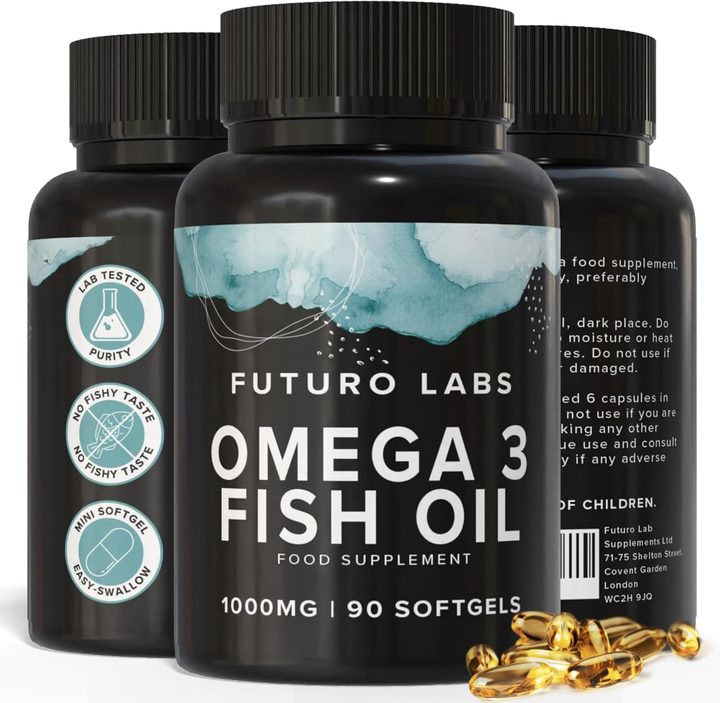
Our brand: the worked example on this page
Futuro Labs Omega 3 Fish Oil
- 17p a day
- 90 softgels, 1 softgel daily
- Lab tested
- Made in the UK
A softgel for the audit, with any PCOS use a gynaecologist's conversation: Futuro Labs Omega 3 Fish Oil on Amazon UK, 1 softgel with food, 180mg EPA and 120mg DHA, 90 for £14.99 at 17p. Full label breakdown. Whether DHA raises testosterone in women is on the DHA and females page; the female body more broadly on the female body page.
The woman with polycystic ovary syndrome, what the small trials found and the route they suggest
Does fish oil lower testosterone in women is a question two women ask for opposite reasons, and the honest page answers each, because the evidence is real for one and absent for the other. The first woman has polycystic ovary syndrome, in which the ovaries make more testosterone than they should, driving the acne, the hair growth and the irregular cycles that define the condition, and who has read that fish oil might lower it. What the trials found: the meta-analyses of omega-3 in PCOS pool small randomised trials, usually a few dozen women each, at gram doses of EPA and DHA over eight to twelve weeks or longer, and report modest reductions in testosterone alongside improvements in insulin resistance markers, fasting insulin and the HOMA index, and in triglycerides, the PCOS and omega-3 literature's finding, with the trials small, short and mixed enough that the reviews call for larger ones and no guideline on PCOS has adopted omega-3 as a treatment. The route the trials suggest is the reason the finding is plausible: in PCOS, insulin resistance is central, raised insulin drives the ovaries to make more androgen, and anything that improves insulin sensitivity, weight loss above all, metformin, exercise, tends to lower testosterone with it, so a modest omega-3 effect on insulin markers would carry a modest testosterone effect behind it, which is what the trials see, a downstream effect of a metabolic one rather than a direct action on the ovary. What it means for the first woman is a conversation and not a shelf decision: the treatments that work in PCOS, weight management, the combined pill, metformin and anti-androgens as a gynaecologist chooses, stay the treatment, and a gram or more of omega-3 a day is a research adjunct to raise with the gynaecologist, taken with their knowledge if at all, with no register claim behind it, since no omega-3 claim mentions any hormone.
The woman without polycystic ovary syndrome, what sets her testosterone, the two readers who ask, and the two women filed
The second woman does not have PCOS, and for her the answer is no, because the physiology gives fish oil nothing to lower. Testosterone in a woman is a small number, around a tenth of a man's, made by the ovaries and the adrenal glands under the pituitary's control, cycling gently across the month, falling slowly across the decades and rising in the conditions that raise it, PCOS above all and a few rarer ones, the female testosterone literature's account, and the trials that measured the hormone panel on fish oil in women without PCOS report it unmoved, the ovarian and pituitary hormones sitting where they were on a softgel as on placebo, so a woman without PCOS taking fish oil does not lower her testosterone, and she also does not raise it, the DHA-and-females page's answer to the mirror question. The two readers who ask are worth naming. A lifter who fears that fish oil will lower her testosterone and cost her strength or muscle can stop fearing it, since the trials find it unmoved and the strength trials in trained women find no loss on omega-3, and a lifter with symptoms of a genuinely low or high testosterone, a lost cycle, new hair growth, acne in her twenties, has a GP and a blood test rather than a supplement audit. A woman with PCOS symptoms who has not been diagnosed, irregular or absent cycles, hair growth, acne and weight that resists, has a GP and the diagnosis first, since PCOS is a diagnosis made by a clinician on criteria and not a self-assessment, and the omega-3 finding is for the diagnosed woman under care. The register has no hormone claim for omega-3 in either direction, and the softgel is taken by both women by the oily-fish audit for the heart claim, one for a low-fish plate and none for two oily portions a week. The two women filed: the woman with PCOS with modest research reductions in testosterone through insulin at gram doses, a gynaecologist's adjunct and no claim, the woman without PCOS with a small testosterone set by the ovaries and adrenals and unmoved, and the audit for both, with the worked example being a softgel for the audit, £14.99 for 90 at 17p.
| The woman | The evidence | The answer |
|---|---|---|
| With polycystic ovary syndrome | Small trials: modest testosterone reductions and better insulin markers at gram doses over weeks to months | A modest research yes; a gynaecologist's adjunct; no claim |
| The route in PCOS | Insulin drives ovarian androgen; omega-3's insulin effect carries a testosterone effect behind it | Downstream of a metabolic effect, not a direct one |
| Without PCOS | Testosterone a tenth of a man's, set by the ovaries and adrenals; unmoved on fish oil in the trials | No |
| The lifter who fears a loss | Unmoved; no strength loss in the trials | Nothing to fear |
| The undiagnosed reader with symptoms | PCOS is a clinician's diagnosis on criteria | A GP first; the finding is for the diagnosed woman under care |
| The register | No hormone claim for omega-3 | A softgel for the audit |
The verdict, a modest research effect through insulin in one condition, and nothing to lower in a woman without it
Does fish oil lower testosterone in women: for two women differently, the woman with polycystic ovary syndrome having a modest research yes, meta-analyses of small trials reporting modest reductions in testosterone alongside better insulin markers at gram doses over weeks to months, plausibly through the insulin that drives ovarian androgen in the condition, a finding no guideline has adopted and no claim covers, so a gynaecologist's adjunct to the treatment that works rather than a shelf decision, and the woman without PCOS having a no, her testosterone a small number set by the ovaries and adrenals and unmoved on fish oil in the trials, with a lifter's fear of a loss answered by the same trials and symptoms of a high or low testosterone answered by a GP and a blood test. A softgel for the audit: Futuro Labs Omega 3 Fish Oil, one with food, 180mg EPA and 120mg DHA, 90 for £14.99 at 17p a day.
What to check on the label
- Ask which woman: with PCOS or without.
- Read the PCOS trials as research: modest, small, through insulin, no guideline.
- Raise it with the gynaecologist: an adjunct, never the treatment.
- Expect nothing to move without PCOS: unmoved in the trials.
- Take symptoms to a GP: a diagnosis before a supplement.
Our brand
The worked example: Futuro Labs Omega 3 Fish Oil
Futuro Labs Omega 3 Fish Oil: 1 softgel daily with food, 1000mg fish oil providing 180mg EPA and 120mg DHA (300mg combined), 90 softgels for £14.99, 17p a day, lab-tested purity, UK GMP made. Gelatin shell, so not vegetarian.
- Fish oil per softgel
- 1000mg
- EPA / DHA per softgel
- 180mg / 120mg (300mg combined)
- Serving
- 1 softgel a day
- Bottle
- 90 softgels, 90 days
- Price
- £14.99 (17p a day)
- Softgel
- mini softgel, no fishy taste
Questions people also ask
Does omega-3 help PCOS?
Modestly in research: meta-analyses of small trials at gram doses over weeks to months report modest reductions in testosterone and improvements in insulin resistance markers and triglycerides, a plausible effect through insulin that no guideline has adopted, so it is a gynaecologist's conversation as an adjunct to weight management, the pill, metformin or anti-androgens as they choose.
How much fish oil for PCOS?
The trials used gram doses of EPA and DHA a day, three standard softgels or a concentrate, for eight to twelve weeks or longer, and a woman with diagnosed PCOS raises that with her gynaecologist rather than buying it from a page, since the finding is a research adjunct with no claim and the treatment that works stays the treatment.
Does fish oil affect female hormones?
Not outside PCOS: the trials that measured the hormone panel in women without the condition report the ovarian and pituitary hormones unmoved on fish oil, testosterone included, so a woman without PCOS neither lowers nor raises anything on a softgel, and one with a lost cycle, new hair growth or acne has a GP and a blood test.
Will fish oil lower my testosterone and hurt my lifting?
No: the trials find testosterone unmoved in women without PCOS and no strength loss on omega-3 in trained women, and even in PCOS the modest reduction is toward a normal level rather than below it, so a lifter has nothing to fear from a softgel for her strength or muscle.
Is there an omega-3 claim for testosterone or hormones?
No: the authorised omega-3 claims are heart, brain function, vision, triglycerides and blood pressure, no omega-3 claim mentions any hormone in either direction, and the softgel is taken by the oily-fish audit for the heart claim, one for a low-fish plate and none for two oily portions a week.
Sources
- The omega-3 and polycystic ovary syndrome literature: meta-analyses of small trials report modest reductions in testosterone and improvements in insulin markers with omega-3 supplementation in women with the syndrome, a direction opposite to the boost the shelf implies, with no effect in healthy women and no authorised claim. PubMed record
- The female testosterone physiology literature: women produce testosterone in the ovaries and adrenal glands at roughly a tenth of male levels, with excess presenting as the features of polycystic ovary syndrome and deficiency being a clinical question, and no supplement trial addressing testosterone in women. PubMed record
- Retained Regulation (EC) No 1924/2006 on nutrition and health claims made on foods, and the Great Britain nutrition and health claims register. https://www.gov.uk/government/publications/great-britain-nutrition-and-health-claims-nhc-register
- EFSA Panel on Dietetic Products. Scientific opinion on the substantiation of health claims related to EPA and DHA and normal function of the heart (250mg daily condition of use). EFSA Journal 2010;8(10):1796. https://www.efsa.europa.eu/en/efsajournal/pub/1796