Ghost Fitness/Omega-3/Does DHA increase testosterone in females?
Does DHA increase testosterone in females?
The short answer
No, and the one file points the other way. In healthy women, whose testosterone is a tenth of a man's and made by the ovary and adrenal, DHA and omega-3 change nothing. In polycystic ovary syndrome, meta-analyses of small trials report modest reductions in testosterone with omega-3, the direction reversed from the shelf's boost. No testosterone claim exists. A woman with an androgen question has a GP and a blood test.
- Healthy womenno effect: testosterone a tenth of a man's, made by the ovary and adrenal, unmoved by a fat
- Polycystic ovary syndromemeta-analyses of small trials: modest reductions in testosterone and better insulin markers with omega-3
- The directionreversed from the shelf's boost: lower, not higher, in the one condition with a file
- The claim and the routenone for DHA or omega-3; a GP, a blood test and a gynaecologist for hair, acne or cycles
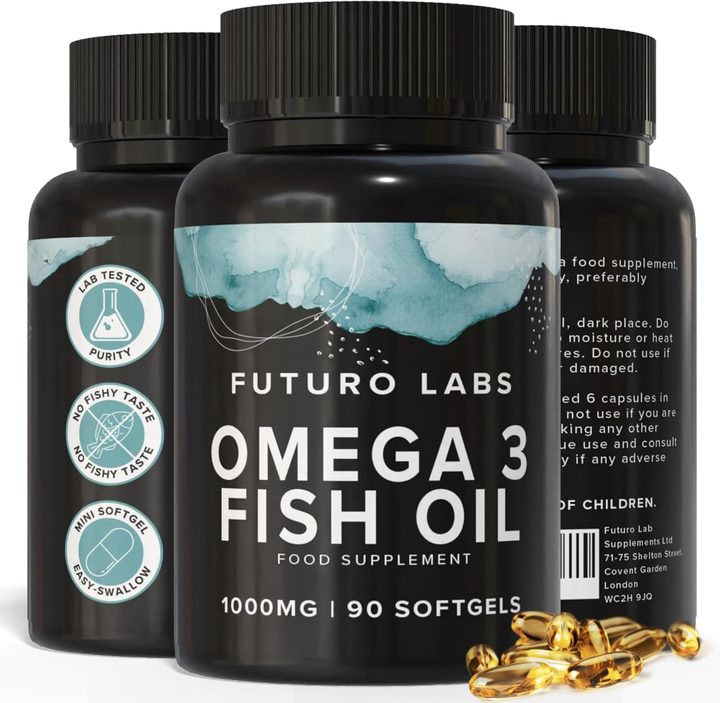
Our brand: the worked example on this page
Futuro Labs Omega 3 Fish Oil
- 17p a day
- 90 softgels, 1 softgel daily
- Lab tested
- Made in the UK
DHA for its own sentences, brain and vision at 250mg, with no hormone word: Futuro Labs Omega 3 Fish Oil on Amazon UK, 1 to 3 softgels with food, 180mg EPA and 120mg DHA each, 90 for £14.99 at 17p. Full label breakdown. The four testosterone directions are on the testosterone page; the women's page on the women's page.
No in healthy women, whose testosterone is made and governed in ways a fat does not reach
Does DHA increase testosterone in females is a question the careful-claims flag answers no, and the interesting half is that in the one condition where anyone has looked, the direction runs the other way. Healthy women first: a woman's testosterone is about a tenth of a man's, made in the ovaries and the adrenal glands from cholesterol under the pituitary's signalling, the same pathway as a man's at a different scale, and it is governed by the menstrual cycle, by body fat, by insulin, by sleep and by the medicines that touch the pituitary or the ovary, none of which a membrane fat adjusts, the female androgen physiology's account. No trial in healthy women shows DHA or omega-3 raising testosterone, no mechanism suggests it should, and the register holds no testosterone, hormone or fertility sentence for DHA or omega-3, DHA's own sentences being the maintenance of normal brain function and normal vision at 250mg a day and the maternal claim in pregnancy, so a DHA-heavy product sold to women for hormones or vitality is an ordinary DHA with an unlawful sentence, the hormonal-imbalance page's finding for the fish oil shelf. A woman who asks the question because she has heard that fish oil boosts testosterone has heard a men's-shelf story that was never true for men either, the men's page having found testosterone unmoved in every trial, and a woman who asks because she has symptoms of raised androgens has a different question the second half answers.
The one condition with a file, in which the direction is reversed, the route for an androgen question, and the question filed
Polycystic ovary syndrome is the one condition in which omega-3 and female testosterone have been studied together, and it is the condition of raised androgens, irregular cycles, insulin resistance and the hair, acne and weight that follow, common enough that a share of women asking this question have it or suspect it. The trials: small randomised studies giving omega-3, usually one to three grams of EPA and DHA a day for eight to twelve weeks, to women with the syndrome, pooled in meta-analyses that report modest reductions in total testosterone and improvements in insulin resistance markers against placebo, a direction reversed from the boost the shelf implies, small effects in small trials of mixed quality, and an adjunct at most beside the evidenced management of the syndrome, weight management, the metabolic medicines, hormonal treatment and a gynaecologist, the polycystic ovary syndrome literature's summary and not a claim on any label. So DHA does not increase testosterone in females, and in the women whose testosterone is the problem, omega-3 has a small file for lowering it, which is the opposite of what the question feared and still not a treatment. The route for a woman with an androgen question: a GP, since excess hair, acne, irregular cycles or a change in voice or muscle have causes from the syndrome to thyroid and adrenal conditions and to medicines, a morning blood test for the hormones, and a gynaecologist or endocrinologist for the diagnosis and its management, with any omega-3 taken by the oily-fish audit for DHA's own sentences and mentioned as part of the picture. The question filed: no increase in healthy women, a modest decrease in polycystic ovary syndrome on small trials, no claim for DHA or omega-3, and a GP with a blood test for the androgen question, with the worked example being DHA for its own sentences with no hormone word, 120mg a softgel and the brain and vision claims at two or three, £14.99 for 90 at 17p.
| The reader | The evidence | The direction |
|---|---|---|
| A healthy woman | No trial effect; testosterone made by the ovary and adrenal under pituitary signalling a fat does not touch | Unchanged |
| A woman with polycystic ovary syndrome | Meta-analyses of small trials at one to three grams: modest reductions in testosterone and better insulin markers | Lower, not higher; an adjunct at most |
| The shelf's story | Fish oil boosts testosterone | Never true for men, and reversed in the one female condition with a file |
| The register | No testosterone, hormone or fertility sentence for DHA or omega-3 | Brain and vision at 250mg; the maternal claim |
| The androgen question | Hair, acne, cycles, voice, muscle | A GP, a morning blood test, a gynaecologist or endocrinologist |
| DHA's honest place | Its own sentences by the oily-fish audit | Mentioned as part of the picture |
The verdict, no rise in healthy women, a small fall in the one condition studied, and no claim in either
Does DHA increase testosterone in females: no, a healthy woman's testosterone being a tenth of a man's, made by the ovary and adrenal under signalling a membrane fat does not adjust, with no trial showing DHA or omega-3 raising it and no claim existing, and in the one condition with a file, polycystic ovary syndrome, the direction reversed, meta-analyses of small trials at one to three grams reporting modest reductions in testosterone and better insulin markers, an adjunct at most beside a gynaecologist's management, so that a woman with an androgen question has a GP, a morning blood test and a specialist rather than a softgel, and DHA is taken for its own brain and vision sentences. DHA for its own sentences: Futuro Labs Omega 3 Fish Oil, one to three softgels with food, 180mg EPA and 120mg DHA each, 90 for £14.99 at 17p.
What to check on the label
- Expect no rise in a healthy woman: the ovary and adrenal are not a fat's business.
- Know the one condition's direction: lower in polycystic ovary syndrome, on small trials.
- Drop the men's-shelf story: never true for men either.
- Take an androgen question to a GP: a morning blood test, a specialist.
- Take DHA for its own sentences: brain and vision, no hormone word.
Our brand
The worked example: Futuro Labs Omega 3 Fish Oil
Futuro Labs Omega 3 Fish Oil: 1 softgel daily with food, 1000mg fish oil providing 180mg EPA and 120mg DHA (300mg combined), 90 softgels for £14.99, 17p a day, lab-tested purity, UK GMP made. Gelatin shell, so not vegetarian.
- Fish oil per softgel
- 1000mg
- EPA / DHA per softgel
- 180mg / 120mg (300mg combined)
- Serving
- 1 softgel a day
- Bottle
- 90 softgels, 90 days
- Price
- £14.99 (17p a day)
- Softgel
- mini softgel, no fishy taste
Questions people also ask
Does fish oil raise testosterone in women?
No: a healthy woman's testosterone is made by the ovary and adrenal under pituitary signalling that a membrane fat does not adjust, no trial shows DHA or omega-3 raising it, and no testosterone or hormone claim exists for either, the men's-shelf boost story never having been true for men.
Does omega-3 lower testosterone in PCOS?
Modestly, on small trials: meta-analyses of studies giving one to three grams of EPA and DHA a day for eight to twelve weeks to women with polycystic ovary syndrome report modest reductions in total testosterone and better insulin markers, an adjunct at most beside a gynaecologist's management and not a treatment or a claim.
Is DHA good for women's hormones?
Not as a claim: DHA's sentences are the maintenance of normal brain function and normal vision at 250mg and the maternal claim in pregnancy, with no hormone, balance or fertility sentence, so a DHA product sold to women for hormones is an ordinary DHA with an unlawful sentence.
What should a woman do about symptoms of high testosterone?
See a GP: excess hair, acne, irregular cycles or a change in voice or muscle have causes from polycystic ovary syndrome to thyroid and adrenal conditions and medicines, sorted by a morning blood test and a gynaecologist or endocrinologist, with any omega-3 mentioned as part of the picture.
Should women with PCOS take fish oil?
By the oily-fish audit for DHA's and omega-3's own sentences, and with the gynaecologist's knowledge if the syndrome is diagnosed, the small trials' modest androgen and insulin effects being an adjunct beside weight management, the metabolic medicines and hormonal treatment rather than a reason on their own.
Sources
- The omega-3 and polycystic ovary syndrome literature: meta-analyses of small trials report modest reductions in testosterone and improvements in insulin markers with omega-3 supplementation in women with the syndrome, a direction opposite to the boost the shelf implies, with no effect in healthy women and no authorised claim. PubMed record
- The female testosterone physiology literature: women produce testosterone in the ovaries and adrenal glands at roughly a tenth of male levels, with excess presenting as the features of polycystic ovary syndrome and deficiency being a clinical question, and no supplement trial addressing testosterone in women. PubMed record
- The omega-3 and testosterone literature: randomised trials of fish oil in men report no consistent change in testosterone, a large cohort of young men found fish oil use associated with better semen parameters and higher testis volume with testosterone essentially unchanged, and small trials in women with polycystic ovary syndrome are mixed, with no authorised testosterone claim for omega-3. PubMed record
- EFSA Panel on Dietetic Products. Scientific opinion on health claims related to DHA: maintenance of normal brain function and normal vision (250mg DHA daily condition of use). EFSA Journal 2010;8(10):1734. https://www.efsa.europa.eu/en/efsajournal/pub/1734