Ghost Fitness/Omega-3/Does omega-3 increase estrogen?
Does omega-3 increase estrogen?
The short answer
No: the trials that measured oestrogen with fish oil found no change in women or men, and no hormone claim exists for omega-3. The confusion is traced to flax, whose lignans are phytoestrogens with a weak hormonal action that fish oil, an animal fat with no lignans, does not share. The menopause trials of fish oil for hot flushes are mixed and mostly null. An oestrogen question belongs to a GP.
- Fish oil and oestrogenno change in the trials that measured it, in women or men; no hormone claim
- The confusionflax lignans are phytoestrogens with a weak hormonal action; fish oil has none
- The menopause filefish oil for hot flushes: mixed and mostly null trials
- The reader with the questionthe pill, HRT, gynaecomastia, a hormone-sensitive condition: a GP
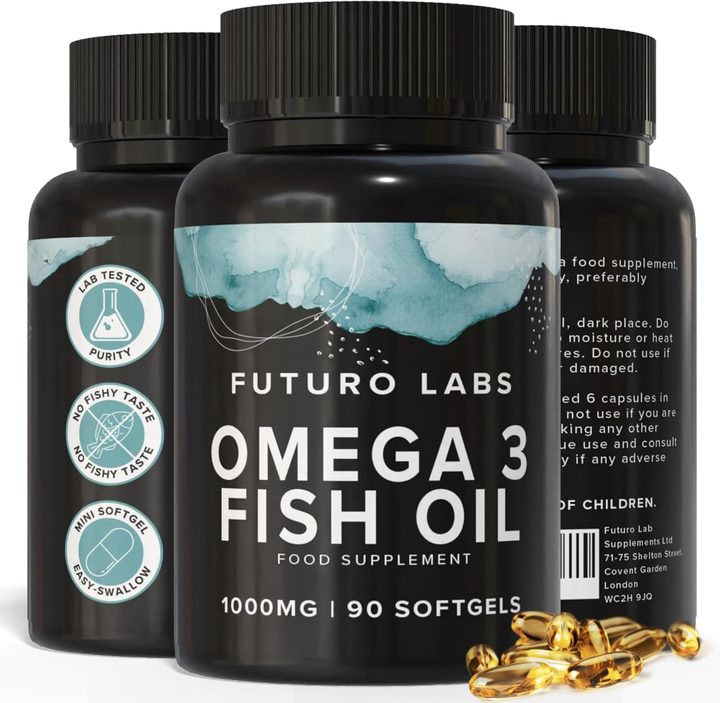
Our brand: the worked example on this page
Futuro Labs Omega 3 Fish Oil
- 17p a day
- 90 softgels, 1 softgel daily
- Lab tested
- Made in the UK
A fish oil with no lignans and no hormone word: Futuro Labs Omega 3 Fish Oil on Amazon UK, 1 softgel with food, 180mg EPA and 120mg DHA, 90 for £14.99 at 17p. Full label breakdown. The testosterone directions are on the testosterone page; the women's page on the women's page.
No, on the trials, and the confusion traced to the plant omega-3 aisle
Does omega-3 increase oestrogen is answered no on the trials and then by tracing a confusion, because the question usually arrives from somewhere and the somewhere is a different aisle. The trials: the randomised trials of fish oil that measured sex hormones, in women of reproductive age, in women through the menopause and in men, find no change in oestrogen with EPA and DHA at supplement doses, no rise and no fall, the hormone literature's null, and no mechanism suggests one, oestrogen being made in the ovary, the adrenal and fat tissue from cholesterol under pituitary signalling that a membrane fat does not adjust, the testosterone page's finding applied to the other hormone, and the register holding no oestrogen, hormone or menopause sentence for omega-3, whose entries are heart, brain, vision, triglycerides, blood pressure and the maternal claim. The confusion: the plant omega-3 aisle does carry a hormonal ingredient, and it is flax. Flaxseed is the richest common source of ALA, the plant omega-3, and it is also the richest common source of lignans, plant compounds that are converted by gut bacteria into weak phytoestrogens, molecules that bind oestrogen receptors faintly and that the menopause literature has studied for hot flushes with modest and mixed results, so a reader who takes ground flax for their omega-3 is taking a phytoestrogen alongside it, the oestrogen effect belonging to the lignans and not to the ALA, and a reader who reads that flax affects oestrogen and generalises to omega-3 has generalised from a seed to a fish. Fish oil is an animal fat, carries no lignans and no phytoestrogen of any kind, and shares nothing of flax's hormonal action, the confusion resolved by the aisle.
The menopause file, the readers whose question is really about oestrogen, and the question filed
The menopause file, since the question often comes from there: fish oil has been tested for hot flushes in randomised trials with mixed and mostly null results, some small trials reporting fewer or milder flushes and the larger ones reporting no difference from placebo, the menopause literature's summary, so a woman who takes fish oil through the menopause takes it for its own sentences, the heart claim at 250mg and the DHA sentences, and not for the flushes, whose evidenced treatments are HRT and the non-hormonal medicines a GP discusses, with the bone note that magnesium, calcium and vitamin D hold the bone sentences and omega-3 holds none. The readers whose question is really about oestrogen deserve their routes. A woman on the pill or HRT: no interaction with a fish oil, a fat sharing no pathway with an oral hormone, and no change to the hormone the pill or the patch supplies. A man worried about gynaecomastia or feminisation: fish oil raises no oestrogen and lowers no testosterone, the fear having no more evidence than the hope on the testosterone page, and breast tissue in a man being a GP's examination for the causes that do exist, weight, medicines, alcohol and the rare tumour. A reader with a hormone-sensitive condition, an oestrogen-receptor-positive breast cancer or endometriosis: fish oil has no oestrogenic action and is taken with the oncologist's or gynaecologist's knowledge like any supplement, while flax and soy, which do have phytoestrogen content, are the ones that conversation is about. A reader whose oestrogen is genuinely the question, with symptoms of too little or too much, has a GP and a blood test, since the causes are the ovary, the pituitary, the thyroid, weight, medicines and age and none of them is a fat. The question filed: fish oil does not increase oestrogen on the trials and holds no hormone claim, the confusion belonging to flax's lignans, the menopause file being mixed and mostly null, and the readers with a real oestrogen question having a GP, with the worked example being a fish oil with no lignans and no hormone word, one softgel at 17p, £14.99 for 90.
| The item | The finding | The consequence |
|---|---|---|
| Fish oil and oestrogen | No change in trials in women or men; no mechanism; no claim | No |
| Flax | The richest common source of ALA and of lignans, which gut bacteria convert to weak phytoestrogens | The hormonal action belongs to the seed, not the omega-3 |
| Fish oil's lignan content | None | No phytoestrogen, no hormonal action |
| Hot flushes | Fish oil trials mixed and mostly null | HRT and the non-hormonal medicines; a GP |
| The pill, HRT, a hormone-sensitive condition | No interaction; no oestrogenic action | Flax and soy are the conversation, not fish oil |
| A real oestrogen question | Ovary, pituitary, thyroid, weight, medicines, age | A GP and a blood test |
The verdict, no on the trials, a confusion that belongs to a seed, and a GP for the real question
Does omega-3 increase oestrogen: no, the trials that measured sex hormones with fish oil finding no change in women or men and no hormone claim existing for omega-3, with the confusion traced to flax, whose lignans are converted by gut bacteria into weak phytoestrogens that give the plant omega-3 aisle a real if modest hormonal ingredient fish oil does not share, the menopause trials of fish oil for hot flushes being mixed and mostly null, and the readers whose question is really about oestrogen, a woman on the pill or HRT, a man worried about feminisation and a reader with a hormone-sensitive condition, having no interaction to fear from a fish oil and a GP for the question itself. A fish oil with no lignans: Futuro Labs Omega 3 Fish Oil, one softgel with food, 180mg EPA and 120mg DHA, 90 for £14.99 at 17p a day.
What to check on the label
- Expect no oestrogen change: the trials find none, in either sex.
- Trace the confusion to flax: lignans, not omega-3.
- Read the menopause file as null: HRT and a GP for flushes.
- Take it with the pill or HRT without a thought: no interaction.
- Take a real oestrogen question to a GP: a blood test, not a softgel.
Our brand
The worked example: Futuro Labs Omega 3 Fish Oil
Futuro Labs Omega 3 Fish Oil: 1 softgel daily with food, 1000mg fish oil providing 180mg EPA and 120mg DHA (300mg combined), 90 softgels for £14.99, 17p a day, lab-tested purity, UK GMP made. Gelatin shell, so not vegetarian.
- Fish oil per softgel
- 1000mg
- EPA / DHA per softgel
- 180mg / 120mg (300mg combined)
- Serving
- 1 softgel a day
- Bottle
- 90 softgels, 90 days
- Price
- £14.99 (17p a day)
- Softgel
- mini softgel, no fishy taste
Questions people also ask
Does fish oil affect estrogen levels?
No: randomised trials that measured sex hormones with fish oil in women of reproductive age, women through the menopause and men found no change in oestrogen at supplement doses, no mechanism suggests one, and no hormone claim exists for omega-3.
Why do people think omega-3 raises estrogen?
Because of flax: flaxseed is the richest common source of plant omega-3 and also of lignans, which gut bacteria convert into weak phytoestrogens, so a reader who reads that flax affects oestrogen has generalised from the seed's lignans to omega-3 in general, while fish oil is an animal fat with no lignans and no hormonal action.
Does fish oil help menopause symptoms?
Not on the trials: fish oil for hot flushes has been tested with mixed and mostly null results, the larger trials finding no difference from placebo, so a woman through the menopause takes it for its own sentences and takes the flushes to a GP for HRT or the non-hormonal medicines.
Can I take fish oil with the pill or HRT?
Yes: a fat shares no pathway with an oral or transdermal hormone, so a fish oil neither interacts with the pill, the patch or HRT nor changes the hormone they supply.
Is fish oil safe with an oestrogen-sensitive condition?
It has no oestrogenic action, so a fish oil is taken with the oncologist's or gynaecologist's knowledge like any supplement, while flax and soy, which contain phytoestrogens, are the ingredients that conversation is actually about.
Sources
- The omega-3 and menopause literature: randomised trials of fish oil for hot flushes report mixed and mostly null results, trials measuring oestrogen find no change with omega-3, and flax, whose lignans are phytoestrogens, is the plant omega-3 source with a hormonal action that fish oil does not share. PubMed record
- The omega-3 and testosterone literature: randomised trials of fish oil in men report no consistent change in testosterone, a large cohort of young men found fish oil use associated with better semen parameters and higher testis volume with testosterone essentially unchanged, and small trials in women with polycystic ovary syndrome are mixed, with no authorised testosterone claim for omega-3. PubMed record
- The alpha-linolenic acid conversion literature: the plant omega-3 ALA from flax, chia, walnuts and rapeseed is converted to EPA at a few percent and to DHA at well under one percent in most adults, higher in women of childbearing age and lower on a high omega-6 diet, so plant sources do not reliably supply EPA and DHA. PubMed record
- The magnesium and bone literature: higher magnesium intake associates with higher bone mineral density in observational studies, magnesium being part of bone's mineral matrix and a cofactor in vitamin D activation, the basis of the maintenance-of-normal-bones claim. PubMed record