Ghost Fitness/Omega-3/Does omega-3 increase testosterone?
Does omega-3 increase testosterone?
The short answer
No, in every direction the variants ask. In men, randomised trials of fish oil report no consistent change in testosterone. In women, no increase, with small mixed trials in polycystic ovary syndrome. It does not decrease testosterone either. A large cohort of young men found fish oil use associated with better semen parameters while testosterone stayed essentially unchanged. No claim exists; zinc holds the maintenance sentence.
- Men, increaseno consistent change in randomised trials of fish oil
- Women, increaseno effect in healthy women; small mixed trials in polycystic ovary syndrome
- Decreaseno: nothing lowers it either
- The cohortyoung men: fish oil use associated with better semen parameters and testis volume; testosterone essentially unchanged; an association
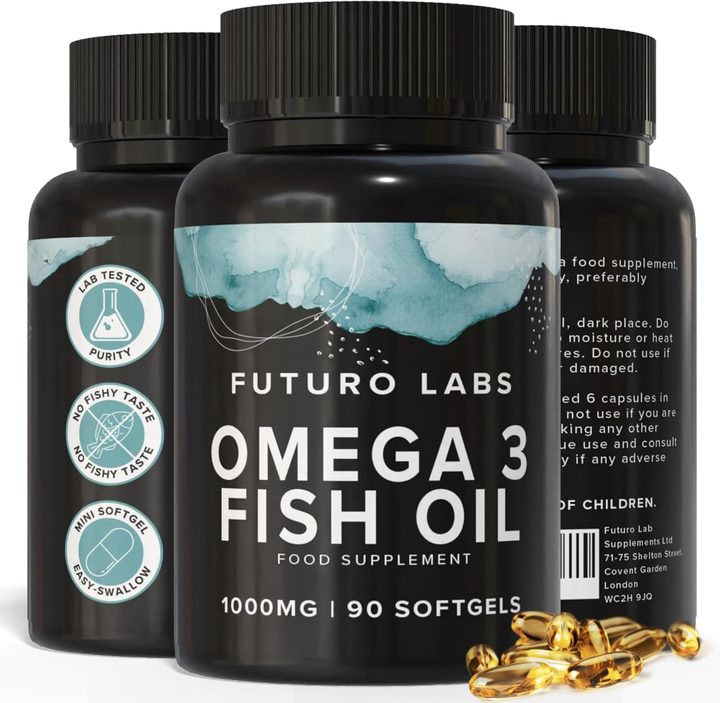
Our brand: the worked example on this page
Futuro Labs Omega 3 Fish Oil
- 17p a day
- 90 softgels, 1 softgel daily
- Lab tested
- Made in the UK
Omega-3 for its own sentences, with no hormone word: Futuro Labs Omega 3 Fish Oil on Amazon UK, 1 softgel with food, 180mg EPA and 120mg DHA, 90 for £14.99 at 17p. Full label breakdown. The men's three files are on the fish oil for males page; the testosterone levers on the ZMA testosterone page.
Four directions, and the first three graded, men, women and the decrease question
Does omega-3 increase testosterone, and the variants asking about fish oil, about women and about a decrease, are answered no in four directions, each graded on its own file, with the careful-claims flag on this page holding the line that no hormone claim exists for omega-3. Direction one, an increase in men: the randomised trials that gave fish oil to men and measured testosterone, small trials over weeks to months at gram-and-above doses, report no consistent change, some finding a slight rise, some a slight fall and most nothing, the pooled picture being a hormone unmoved by a fat, and no mechanism suggesting it should move, testosterone being made in the testis from cholesterol under pituitary signalling that a membrane fat does not adjust, the testosterone literature's summary. Direction two, an increase in women: no effect in healthy women, whose testosterone is a tenth of a man's and made by the ovary and adrenal, and a small mixed file in polycystic ovary syndrome, where a few trials of fish oil report modest changes in androgens and metabolic markers and others none, a condition with its own evidenced treatments and a GP, so a woman asking whether fish oil raises her testosterone has an empty file and a woman asking whether it lowers it in polycystic ovary syndrome has a mixed one and a gynaecologist. Direction three, a decrease: nothing in the trials lowers testosterone in men either, the fear that fish oil suppresses hormones having no more evidence than the hope that it boosts them, so a lifter's testosterone is neither raised nor lowered by a softgel and sits where his physiology, his sleep, his body fat and his training put it.
The fourth direction, the cohort that is not a trial, the missing claim, the real levers, and the directions filed
Direction four is the file that fuels the story and it deserves exact description: a large cohort study of young men attending a fitness examination found that those who reported taking fish oil supplements had higher semen volume, higher sperm counts, larger testis volume and lower levels of the pituitary hormones that drive the testis, with testosterone itself essentially unchanged and calculated free testosterone very slightly higher, an association in a cohort rather than a trial, in which fish oil users may differ from non-users in the many ways health-conscious people do, and a finding about the testis and semen rather than about testosterone, which is why it appears on the fertility pages as a suggestive file and not on this one as a hormone effect. The missing claim: omega-3 holds no testosterone, hormone or fertility sentence on the register, whose omega-3 entries are heart, brain, vision, triglycerides and blood pressure, and the maintenance-of-normal-testosterone sentence belongs to zinc, at 15% NRV or more, a maintenance claim meaning that adequate zinc keeps a man's testosterone where his physiology puts it and no more, so a fish oil sold for testosterone has stepped outside the register and a men's-health formula pairing fish oil with zinc has borrowed zinc's sentence for both. The real levers are the ones every testosterone page here ends on: seven to nine hours of sleep, body fat in a healthy range, resistance training, less alcohol, and a GP with a morning blood test for a man with symptoms, since low testosterone is diagnosed and treated rather than supplemented. The directions filed: no increase in men on the trials, no increase in women and a mixed file in polycystic ovary syndrome, no decrease, and a cohort in which fish oil went with better semen parameters while testosterone stayed put, with no claim and zinc holding the sentence, and the worked example being omega-3 for its own sentences with no hormone word, one softgel at 17p, £14.99 for 90.
| The direction | The evidence | The grade |
|---|---|---|
| An increase in men | Randomised trials: no consistent change; no mechanism | No |
| An increase in women | No effect in healthy women; small mixed trials in polycystic ovary syndrome | No; a gynaecologist for the condition |
| A decrease | Nothing in the trials lowers it | No |
| The cohort | Young men: fish oil use with better semen parameters and testis volume; testosterone essentially unchanged | An association about the testis, not a hormone effect |
| The claim | None for omega-3; zinc holds the maintenance sentence | A fish oil sold for testosterone is outside the register |
| The levers | Sleep, body fat, training, alcohol, a GP | Where testosterone is actually moved |
The verdict, a hormone unmoved by a fat in every direction
Does omega-3 increase testosterone: no, in every direction the variants ask, randomised trials of fish oil in men reporting no consistent change, no increase in healthy women and a small mixed file in polycystic ovary syndrome that belongs to a gynaecologist, no decrease either, and the large cohort of young men that fuels the story having found fish oil use associated with better semen parameters and testis volume while testosterone stayed essentially where it was, an association about the testis rather than a hormone effect, with no testosterone claim for omega-3, zinc holding the maintenance sentence, and a man's testosterone moved by sleep, body fat, training, alcohol and a GP rather than by a softgel. Omega-3 for its own sentences: Futuro Labs Omega 3 Fish Oil, one softgel with food, 180mg EPA and 120mg DHA, 90 for £14.99 at 17p a day.
What to check on the label
- Expect no rise in men: the trials find none.
- Expect no rise in women: an empty file, and a mixed one in polycystic ovary syndrome.
- Expect no fall either: a hormone unmoved.
- Read the cohort as semen, not testosterone: an association about the testis.
- Pull the real levers: sleep, body fat, training, alcohol, a GP.
Our brand
The worked example: Futuro Labs Omega 3 Fish Oil
Futuro Labs Omega 3 Fish Oil: 1 softgel daily with food, 1000mg fish oil providing 180mg EPA and 120mg DHA (300mg combined), 90 softgels for £14.99, 17p a day, lab-tested purity, UK GMP made. Gelatin shell, so not vegetarian.
- Fish oil per softgel
- 1000mg
- EPA / DHA per softgel
- 180mg / 120mg (300mg combined)
- Serving
- 1 softgel a day
- Bottle
- 90 softgels, 90 days
- Price
- £14.99 (17p a day)
- Softgel
- mini softgel, no fishy taste
Questions people also ask
Does fish oil raise testosterone in men?
No: randomised trials giving fish oil to men at gram-and-above doses over weeks to months report no consistent change in testosterone, some a slight rise, some a slight fall and most nothing, and no mechanism suggests a membrane fat adjusts the testis's cholesterol-to-testosterone pathway.
Does fish oil increase testosterone in women?
No: healthy women show no effect, and the small trials in polycystic ovary syndrome, where fish oil has been tested against raised androgens and metabolic markers, are mixed, a condition with its own evidenced treatments and a gynaecologist rather than a softgel.
Does omega-3 lower testosterone?
No: nothing in the trials lowers testosterone in men, the fear that fish oil suppresses hormones having no more evidence than the hope that it boosts them, so a lifter's testosterone sits where sleep, body fat and training put it.
What did the fish oil and semen study actually find?
A large cohort of young men in which fish oil users had higher semen volume, higher sperm counts, larger testis volume and lower pituitary hormones, with testosterone essentially unchanged, an association in a cohort rather than a trial and a finding about the testis and semen rather than about testosterone.
Which supplement can claim to support testosterone?
Zinc, whose register sentence is a contribution to the maintenance of normal testosterone levels in the blood at 15% NRV or more, a maintenance claim meaning adequate zinc keeps a man's testosterone at his own normal and nothing more; omega-3 holds no hormone sentence at all.
Sources
- The omega-3 and testosterone literature: randomised trials of fish oil in men report no consistent change in testosterone, a large cohort of young men found fish oil use associated with better semen parameters and higher testis volume with testosterone essentially unchanged, and small trials in women with polycystic ovary syndrome are mixed, with no authorised testosterone claim for omega-3. PubMed record
- The omega-3 and male fertility literature: DHA is concentrated in sperm membranes, observational studies associate higher fish and omega-3 intake with better semen parameters, and small randomised trials report improved sperm quality with omega-3 supplementation in men with poor parameters, with no authorised fertility claim. PubMed record
- The female testosterone physiology literature: women produce testosterone in the ovaries and adrenal glands at roughly a tenth of male levels, with excess presenting as the features of polycystic ovary syndrome and deficiency being a clinical question, and no supplement trial addressing testosterone in women. PubMed record
- The lifestyle and testosterone literature: sleep restriction lowers testosterone in healthy young men within a week, weight loss raises it in men with obesity, resistance training raises it acutely and supports it chronically, and treating a genuine deficiency of zinc or vitamin D restores it, while no supplement raises it above a man's own normal. PubMed record