Ghost Fitness/Omega-3/Does omega-3 increase progesterone?
Does omega-3 increase progesterone?
The short answer
No, on the whole hormone panel. Trials that measured reproductive hormones with fish oil find progesterone unmoved, and the same panel shows oestrogen, follicle-stimulating and luteinising hormone, testosterone and cortisol unmoved too. Progesterone is made by the corpus luteum under pituitary signalling that a dietary fat does not adjust. The polycystic ovary syndrome trials are mixed. No hormone claim exists. A real progesterone question has a clinic.
- Progesteroneunmoved in the trials that measured it with fish oil in women of reproductive age
- The rest of the paneloestrogen, follicle-stimulating and luteinising hormone, testosterone in healthy women, cortisol: unmoved
- The physiologythe corpus luteum after ovulation, under pituitary signalling; no way in for a membrane fat
- The real questiona short luteal phase, recurrent loss, a fertility workup: a clinic and a day-twenty-one blood test
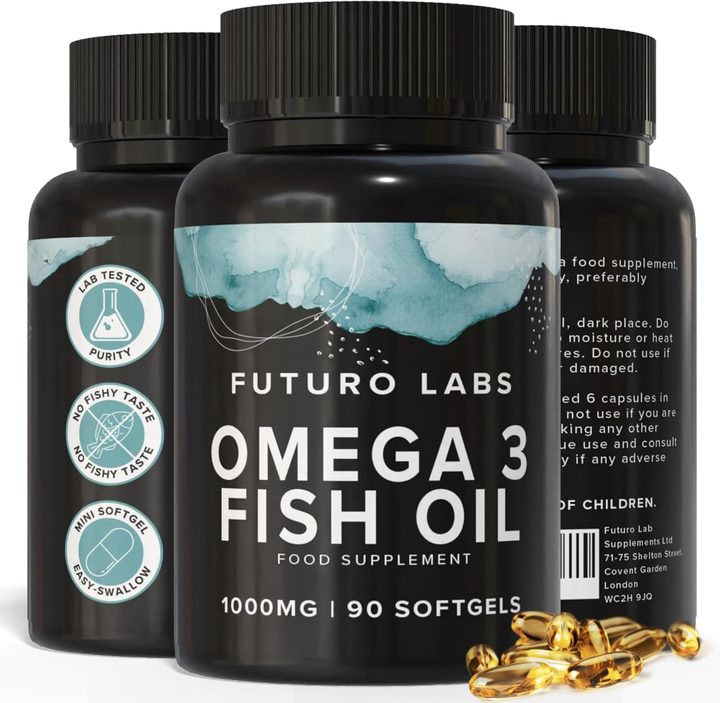
Our brand: the worked example on this page
Futuro Labs Omega 3 Fish Oil
- 17p a day
- 90 softgels, 1 softgel daily
- Lab tested
- Made in the UK
A fish oil with no hormone word, by the oily-fish audit: Futuro Labs Omega 3 Fish Oil on Amazon UK, 1 softgel with food, 180mg EPA and 120mg DHA, 90 for £14.99 at 17p. Full label breakdown. The oestrogen page is here; the testosterone directions on the testosterone page.
No, on the hormone panel, because omega-3 has been measured against the whole set and moved none of it
Does omega-3 increase progesterone is answered no by the hormone panel, because fish oil has been measured against the whole set of hormones a reader might hope it moves and it moved none of them, and seeing the panel together is more convincing than one line from it. Progesterone: the trials of fish oil in women of reproductive age that measured it, across the cycle and in the luteal phase, find no consistent change at supplement doses, the reproductive hormone literature's null. Oestrogen: unmoved in women through the menopause and women of reproductive age, the oestrogen page's finding. Follicle-stimulating and luteinising hormone: the pituitary signals that run the cycle, unmoved. Testosterone: unmoved in men on the randomised trials and in healthy women, with a mixed file in polycystic ovary syndrome, the testosterone pages' four directions. Cortisol: unmoved in the trials that measured the stress hormone with fish oil, the magnesium and cortisol pages' finding transferred. A panel of six, and a fat that reads as a placebo on every line, which is what the physiology predicts: progesterone is made by the corpus luteum, the structure left in the ovary after ovulation, under the pituitary's luteinising hormone, for around two weeks until either a pregnancy sustains it or it fades and a period follows, a loop of glands and signals into which a dietary fat built into cell membranes has no entry, the same reason the testosterone and oestrogen pages give and the reason no hormone claim exists for omega-3 on the register, whose sentences are heart, brain, vision, triglycerides, blood pressure and the maternal claim.
The polycystic ovary syndrome file, the fertility hope behind the question, the clinic that answers it, and the panel filed
The polycystic ovary syndrome file is the one place the panel is not simply null, and it is mixed rather than positive: trials of fish oil in women with the condition report modest changes in androgens, insulin markers and lipids in some and none in others, the condition's own evidenced treatments being lifestyle, the metabolic medicines and the hormonal ones a gynaecologist prescribes, so a woman with the condition takes omega-3 for its own sentences and the condition to her clinic, the female testosterone page's grading. The fertility hope behind the question deserves an honest route, because a reader asking about progesterone is often asking about conceiving: a short luteal phase, spotting before a period, recurrent early loss or a fertility workup are progesterone questions in the clinical sense, answered by a blood test on around day twenty-one of the cycle, by tracking ovulation and, where progesterone is low, by the luteal support a fertility clinic prescribes, none of which a supplement provides, with omega-3's own fertility file being small trials on egg quality that reach no claim and zinc holding the register's fertility sentence. What omega-3 is for in that reader is what it is for in anyone, the heart claim at 250mg by the oily-fish audit and the maternal claim's 200mg of DHA more once a pregnancy is established, from a body oil or an algal DHA and never a liver oil. What it is not for is a hormone, any hormone, in either direction, the panel closing every line. The panel filed: progesterone, oestrogen, follicle-stimulating and luteinising hormone, testosterone and cortisol all unmoved by fish oil at supplement doses, the corpus luteum's loop closed to a dietary fat, polycystic ovary syndrome mixed and a clinic's, no hormone claim, and a real progesterone question answered by a day-twenty-one test and a fertility clinic, with the worked example being a fish oil with no hormone word, one softgel at 17p, £14.99 for 90.
| The hormone | The finding with fish oil | The note |
|---|---|---|
| Progesterone | Unmoved in women of reproductive age | Made by the corpus luteum under pituitary signalling |
| Oestrogen | Unmoved in reproductive-age and menopausal women | The flax confusion belongs to lignans |
| Follicle-stimulating and luteinising hormone | Unmoved | The pituitary's cycle signals |
| Testosterone | Unmoved in men and healthy women; mixed in polycystic ovary syndrome | The condition's own treatments |
| Cortisol | Unmoved | The stress hormone's levers are sleep and load |
| The register | No hormone or fertility claim | A day-twenty-one test and a clinic for a real question |
The verdict, a panel of six hormones and a fat that moves none of them
Does omega-3 increase progesterone: no, on the whole hormone panel, the trials that measured reproductive hormones with fish oil in women of reproductive age finding progesterone unmoved and the same panel showing oestrogen, follicle-stimulating and luteinising hormone, testosterone in healthy women and cortisol unmoved too, progesterone being made by the corpus luteum after ovulation under pituitary signalling that a membrane fat has no way into, the polycystic ovary syndrome trials being mixed and the condition's own clinic's, no hormone or fertility claim existing for omega-3, and a real progesterone question, a short luteal phase, recurrent loss or a fertility workup, being answered by a day-twenty-one blood test and a fertility clinic. A fish oil with no hormone word: Futuro Labs Omega 3 Fish Oil, one softgel with food, 180mg EPA and 120mg DHA, 90 for £14.99 at 17p a day.
What to check on the label
- Read the whole panel: six hormones, none moved.
- Know where progesterone comes from: the corpus luteum under the pituitary.
- Read polycystic ovary syndrome as mixed and a clinic's: not a softgel's.
- Take a real progesterone question to a clinic: a day-twenty-one test.
- Take omega-3 for its own sentences: and the maternal claim once pregnant.
Our brand
The worked example: Futuro Labs Omega 3 Fish Oil
Futuro Labs Omega 3 Fish Oil: 1 softgel daily with food, 1000mg fish oil providing 180mg EPA and 120mg DHA (300mg combined), 90 softgels for £14.99, 17p a day, lab-tested purity, UK GMP made. Gelatin shell, so not vegetarian.
- Fish oil per softgel
- 1000mg
- EPA / DHA per softgel
- 180mg / 120mg (300mg combined)
- Serving
- 1 softgel a day
- Bottle
- 90 softgels, 90 days
- Price
- £14.99 (17p a day)
- Softgel
- mini softgel, no fishy taste
Questions people also ask
Does fish oil raise progesterone levels?
No: the trials of fish oil in women of reproductive age that measured progesterone across the cycle and in the luteal phase find no consistent change at supplement doses, progesterone being made by the corpus luteum after ovulation under pituitary signalling that a dietary fat built into membranes has no way into.
Which hormones does omega-3 affect?
None measurably at supplement doses: progesterone, oestrogen, follicle-stimulating and luteinising hormone, testosterone in men and healthy women, and cortisol all read as unmoved in the trials, with polycystic ovary syndrome the one mixed file and no hormone claim on the register.
Can omega-3 help a short luteal phase or low progesterone?
No: a short luteal phase, spotting before a period or recurrent early loss are clinical progesterone questions answered by a blood test on around day twenty-one, ovulation tracking and, where progesterone is low, the luteal support a fertility clinic prescribes, none of which a supplement provides.
Is omega-3 good for polycystic ovary syndrome?
The file is mixed: trials report modest changes in androgens, insulin markers and lipids in some women and none in others, the condition's evidenced treatments being lifestyle, the metabolic medicines and the hormonal ones a gynaecologist prescribes, with omega-3 taken for its own sentences beside them.
What is omega-3 actually for in a woman trying to conceive?
The same sentences as anyone, the heart claim at 250mg by the oily-fish audit, and once a pregnancy is established the maternal claim's 200mg of DHA more for the foetal brain and eye from a body oil or an algal DHA, with the fertility question itself belonging to a clinic and zinc holding the register's fertility sentence.
Sources
- The omega-3 and reproductive hormone literature: trials measuring progesterone, oestrogen, follicle-stimulating and luteinising hormone with fish oil in women of reproductive age find no consistent change at supplement doses, with the polycystic ovary syndrome trials mixed and the luteal phase governed by the corpus luteum under pituitary signalling that a dietary fat does not adjust. PubMed record
- The omega-3 and testosterone literature: randomised trials of fish oil in men report no consistent change in testosterone, a large cohort of young men found fish oil use associated with better semen parameters and higher testis volume with testosterone essentially unchanged, and small trials in women with polycystic ovary syndrome are mixed, with no authorised testosterone claim for omega-3. PubMed record
- The female testosterone physiology literature: women produce testosterone in the ovaries and adrenal glands at roughly a tenth of male levels, with excess presenting as the features of polycystic ovary syndrome and deficiency being a clinical question, and no supplement trial addressing testosterone in women. PubMed record
- The omega-3 and menopause literature: randomised trials of fish oil for hot flushes report mixed and mostly null results, trials measuring oestrogen find no change with omega-3, and flax, whose lignans are phytoestrogens, is the plant omega-3 source with a hormonal action that fish oil does not share. PubMed record