Ghost Fitness/Omega-3/Does omega-3 increase oestrogen?
Does omega-3 increase oestrogen?
The short answer
By the one lever. In men and postmenopausal women, oestrogen is made largely by the aromatase enzyme in body fat converting androgens to oestradiol, so the level tracks body fat and aromatase activity. Fish oil changes neither: no fat loss in the reviews, no aromatase effect in any trial. The trials measuring oestradiol on fish oil report no consistent change. The lifter's fear and the menopausal hope are both answered no.
- The leveraromatase in adipose tissue converts androgens to oestradiol; oestrogen tracks body fat and enzyme activity
- Fish oil and body fatno weight or fat loss in the systematic reviews
- Fish oil and aromataseno inhibition or induction in any trial; oestradiol unchanged on fish oil in men and women
- The two readersthe lifter's fear of gynaecomastia and water: no; the menopausal hope of a rise: no, and a GP's HRT conversation
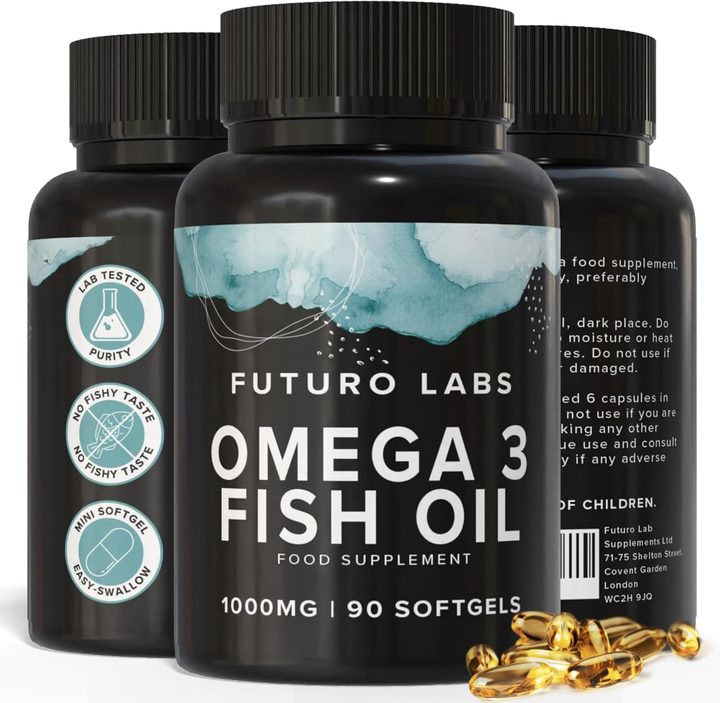
Our brand: the worked example on this page
Futuro Labs Omega 3 Fish Oil
- 17p a day
- 90 softgels, 1 softgel daily
- Lab tested
- Made in the UK
A fat with no place on the oestrogen lever: Futuro Labs Omega 3 Fish Oil on Amazon UK, 1 softgel with food, 180mg EPA and 120mg DHA, 90 for £14.99 at 17p. Full label breakdown. The US-spelled version of the question is on the estrogen page; testosterone on the testosterone page.
The one lever that sets oestrogen in men and after the menopause, and why fish oil is not on it
Does omega-3 increase oestrogen is a question asked by two readers with opposite hopes, a lifter who fears that a raised oestrogen will bring gynaecomastia and water, and a woman after the menopause who hopes that a fallen one might lift, and the honest page answers both by naming the one lever that sets oestrogen in both of them and showing that fish oil is not on it. The lever: in men, and in women after the ovaries stop, circulating oestrogen is not made mainly in the gonads but by the aromatase enzyme, which sits in adipose tissue and in a few other sites and converts androgens, testosterone and androstenedione, into oestradiol and oestrone, so the level of oestrogen tracks two things, how much body fat there is to hold the enzyme and how active the enzyme is, the aromatase physiology literature's account, which is why oestrogen rises with weight gain in men, why gynaecomastia is a feature of obesity, why the drugs that lower oestrogen in breast cancer are aromatase inhibitors, and why the things that raise it are body fat, alcohol, some medications and the drugs bodybuilders misuse. Fish oil's place on that lever is nowhere, on both arms. Body fat: the systematic reviews of omega-3 and weight find no meaningful loss of weight, fat or waist at any dose, so a softgel does not reduce the tissue that holds the enzyme, and it does not add to it either, at nine calories. Aromatase: no trial has found fish oil to inhibit or to induce the enzyme, so a softgel neither slows nor speeds the conversion, and the trials that measured oestradiol in men and in women taking fish oil against placebo report no consistent change, the same literature's trial arm, so the level neither rises, the lifter's fear, nor lifts, the menopausal hope.
The lifter's fear answered, the menopausal hope answered, the premenopausal note, and the lever filed
The lifter's fear answered: gynaecomastia and water from a raised oestrogen have three real causes in a gym, a rising body fat that raises aromatase output, the anabolic steroids and their aromatising esters that flood the enzyme with substrate, and a handful of medications, and a fish oil softgel is none of them, so a lifter with tender or enlarged breast tissue looks at the body fat, at anything being injected and at the medicine cabinet, and sees a GP if none of those explains it, since gynaecomastia has a short list of medical causes worth ruling out and a softgel is not on it. The menopausal hope answered: a woman after the menopause whose oestrogen has fallen and who hopes that omega-3 might raise it has the same physiology working against the hope, since a fat that does not touch aromatase cannot raise what aromatase makes, and the omega-3 and menopause trials find no change in oestradiol and at most a small and inconsistent effect on hot flushes that the reviews do not consider reliable, the menopause literature's shape, so the conversation about a fallen oestrogen is a GP's HRT conversation and not a supplement's, with the softgel taken by the audit for the heart claim as before. The premenopausal note: before the menopause, oestrogen is made by the ovaries under the pituitary's control and cycles monthly, and fish oil does not change that either, the progesterone and hormone panel pages finding the six ovarian and pituitary hormones unmoved on fish oil, so the answer holds for every reader. The register's authorised claims mention no hormone for omega-3, and oestrogen, testosterone, progesterone and the rest belong, where they belong at all, to other nutrients' maintenance claims and to a GP. The lever filed: aromatase in body fat as the lever that sets oestrogen in men and after the menopause, fish oil off both arms of it with no fat loss and no enzyme effect, trials reporting oestradiol unchanged, the lifter's fear and the menopausal hope both answered no, and the worked example being a fat with no place on the oestrogen lever, £14.99 for 90 at 17p.
| The item | The physiology | Fish oil's place |
|---|---|---|
| Where oestrogen comes from in men and after the menopause | Aromatase in adipose tissue converting androgens | Not made or changed by a fat |
| What raises it | Body fat, alcohol, some medications, aromatising steroids | A softgel is none of these |
| What lowers it | Fat loss, aromatase inhibitors | No fat loss in the reviews; no enzyme effect in any trial |
| The trials | Oestradiol measured on fish oil in men and women | No consistent change |
| The lifter's fear | Gynaecomastia and water | Body fat, steroids, medications, a GP; not the softgel |
| The menopausal hope | A fallen oestrogen lifted | No; a GP's HRT conversation |
The verdict, oestrogen tracks body fat and an enzyme, and fish oil touches neither
Does omega-3 increase oestrogen: no, because in men and in women after the menopause oestrogen is made largely by the aromatase enzyme in body fat converting androgens to oestradiol, so that the level tracks body fat and aromatase activity, and fish oil changes neither, the systematic reviews finding no weight or fat loss and no trial finding an aromatase effect, with the trials that measured oestradiol on fish oil in men and women reporting no consistent change, so that the lifter's fear of gynaecomastia and water is answered by body fat, steroids, medications and a GP rather than the softgel, and the menopausal hope of a lifted oestrogen is answered by a GP's HRT conversation, with the ovarian and pituitary hormones before the menopause unmoved too. A fat with no place on the oestrogen lever: Futuro Labs Omega 3 Fish Oil, one with food, 180mg EPA and 120mg DHA, 90 for £14.99 at 17p a day.
What to check on the label
- Name the lever: aromatase in body fat.
- Take fish oil off both arms: no fat loss, no enzyme effect.
- Read the trials: oestradiol unchanged in men and women.
- Answer gynaecomastia with its real causes: body fat, steroids, medications, a GP.
- Take a fallen oestrogen to a GP: an HRT conversation, not a softgel.
Our brand
The worked example: Futuro Labs Omega 3 Fish Oil
Futuro Labs Omega 3 Fish Oil: 1 softgel daily with food, 1000mg fish oil providing 180mg EPA and 120mg DHA (300mg combined), 90 softgels for £14.99, 17p a day, lab-tested purity, UK GMP made. Gelatin shell, so not vegetarian.
- Fish oil per softgel
- 1000mg
- EPA / DHA per softgel
- 180mg / 120mg (300mg combined)
- Serving
- 1 softgel a day
- Bottle
- 90 softgels, 90 days
- Price
- £14.99 (17p a day)
- Softgel
- mini softgel, no fishy taste
Questions people also ask
Can fish oil cause gynaecomastia or man boobs?
No: gynaecomastia comes from a raised oestrogen, which in men is made by aromatase in body fat, and its real causes are rising body fat, aromatising anabolic steroids and a handful of medications, none of which a fish oil softgel is or affects, the trials measuring oestradiol on fish oil in men reporting no change, so tender or enlarged breast tissue looks at those causes and a GP.
Does omega-3 raise oestrogen levels in women?
No: after the menopause oestrogen is made by aromatase in adipose tissue, which fish oil neither inhibits nor induces, and before it the ovaries make it under the pituitary's control with the hormone panel unmoved on fish oil, so the trials in women report no consistent change in oestradiol and a fallen oestrogen is a GP's HRT conversation.
Does fish oil lower oestrogen?
No: lowering oestrogen in men and postmenopausal women means losing body fat or inhibiting aromatase, and fish oil does neither, the systematic reviews finding no fat loss and no trial finding an enzyme effect, so the level stays where body fat and the enzyme put it.
What actually raises oestrogen in men?
Body fat above all, since adipose tissue holds the aromatase that converts testosterone to oestradiol, then alcohol, some medications and the aromatising anabolic steroids, which is why gynaecomastia is a feature of obesity and of steroid misuse and why a lifter with the symptom audits those before anything on a shelf.
Does omega-3 help menopause symptoms?
Not reliably: the trials find no change in oestradiol and at most a small and inconsistent effect on hot flushes that the reviews do not consider reliable, so the menopause conversation is a GP's, including HRT, with the softgel taken by the oily-fish audit for the heart claim as before.
Sources
- The aromatase physiology literature: oestrogen in men and postmenopausal women is made largely by the aromatase enzyme in adipose tissue converting androgens, so circulating oestrogen tracks body fat and aromatase activity, and supplements that change neither body fat nor the enzyme do not change oestrogen, fish oil trials reporting no consistent change in oestradiol in men or women. PubMed record
- The visceral fat literature: fat around the organs is reduced by a sustained calorie deficit, by aerobic exercise even without weight loss, by adequate sleep and by less alcohol, while trials of omega-3 supplementation measuring waist circumference and visceral fat by imaging find no consistent reduction. PubMed record
- The omega-3 and menopause literature: randomised trials of fish oil for hot flushes report mixed and mostly null results, trials measuring oestrogen find no change with omega-3, and flax, whose lignans are phytoestrogens, is the plant omega-3 source with a hormonal action that fish oil does not share. PubMed record
- The omega-3 and testosterone literature: randomised trials of fish oil in men report no consistent change in testosterone, a large cohort of young men found fish oil use associated with better semen parameters and higher testis volume with testosterone essentially unchanged, and small trials in women with polycystic ovary syndrome are mixed, with no authorised testosterone claim for omega-3. PubMed record