Ghost Fitness/Omega-3/Does omega-3 increase breast size?
Does omega-3 increase breast size?
The short answer
No. Breast size is two tissues, fat and gland, and each is set by something omega-3 does not touch: the fat by body weight, and the gland by oestrogen, progesterone and prolactin, which the trials find unmoved by fish oil. The healthy-fats lore confuses a dietary fat with body fat. The one small breast file is cyclical breast pain, with mixed results. No claim exists.
- The fatset by body weight; a softgel's nine calories is no route to it
- The glandset by oestrogen, progesterone and prolactin; all unmoved by fish oil in the trials
- The lorehealthy fats confused with body fat
- The one breast filecyclical breast pain: fish oil and evening primrose oil trials small and inconsistent; no claim
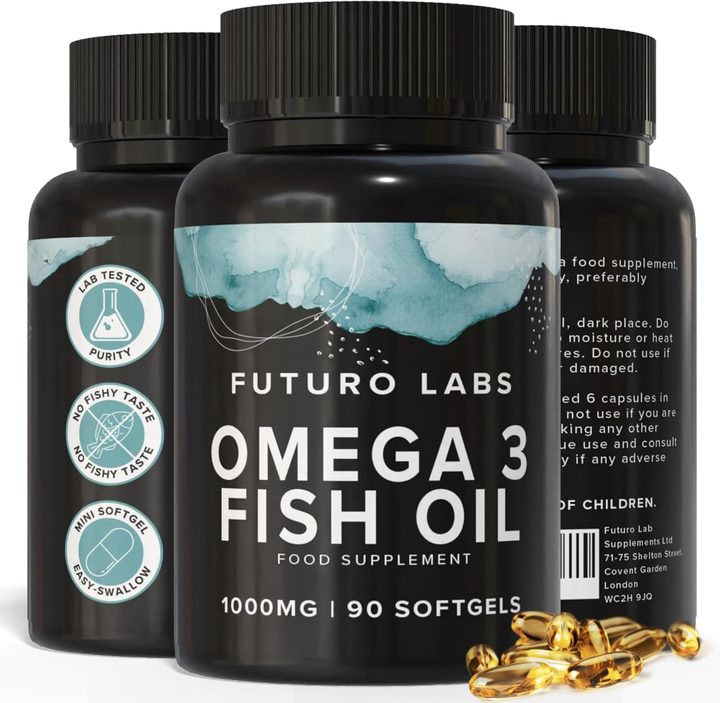
Our brand: the worked example on this page
Futuro Labs Omega 3 Fish Oil
- 17p a day
- 90 softgels, 1 softgel daily
- Lab tested
- Made in the UK
A fish oil taken for its own sentences: Futuro Labs Omega 3 Fish Oil on Amazon UK, 1 softgel with food, 180mg EPA and 120mg DHA, 90 for £14.99 at 17p. Full label breakdown. The oestrogen page is here; the female tissue tour on the female body page.
What breast tissue is made of, and what sets each part, none of which is a fat in a softgel
Does omega-3 increase breast size is answered no by describing what a breast is made of, because the answer follows from the anatomy. A breast is two tissues. The fat, which makes up most of the volume in most women and which is body fat like any other, laid down and removed with body weight, so that a breast grows when a woman gains weight and shrinks when she loses it, the fat stores tracking the energy balance the weight loss pages describe, and a softgel of fish oil, at nine calories, being no route to more body fat anywhere, the healthy-fats lore confusing a dietary fat, a class of molecule, with body fat, a store of energy, the two having a name in common and nothing else. The gland, the milk-producing tissue and its ducts, which develops at puberty and swells before a period and in pregnancy, set by oestrogen, progesterone and prolactin, so that breast size changes across the cycle, on the pill, in pregnancy and at the menopause because those hormones change, and the trials that measured sex hormones with fish oil find oestrogen and progesterone unmoved in women at supplement doses, the oestrogen and progesterone pages' finding, with no mechanism by which a membrane fat would raise a hormone the ovary makes from cholesterol under pituitary signalling. Two tissues, two controllers, weight and hormones, and omega-3 touching neither, which is the whole answer before any file is opened.
The lore's origin, the one small breast file, the register, and the question filed
The lore's origin deserves naming because it is repeated with confidence: the healthy-fats-grow-breasts story comes from the true observation that gaining weight grows breasts and the false step that eating a healthy fat is a way to gain weight in one place, when fat is stored where a woman's genetics store it and no food chooses the site, and from the plant-oestrogen story, flax and soy carrying weak phytoestrogens that the oestrogen page describes and fish oil carrying none, so a reader who read that omega-3-rich flax affects oestrogen has generalised from a seed's lignans to a fish's oil. The one small breast file is not about size: cyclical breast pain, the tenderness and heaviness of the days before a period, has small trials of evening primrose oil and of fish oil reporting small and inconsistent effects against placebo, the mastalgia literature's finding, with the evidenced first steps being reassurance, a well-fitted supportive bra and simple analgesia, and a GP for a lump, a one-sided change or pain that persists, so a woman with breast pain has that route and a woman hoping for size has none on this shelf. The register holds no breast, hormone, oestrogen or body-composition claim for omega-3, whose sentences are heart, brain, vision, triglycerides, blood pressure and the maternal claim, the last being the one place a breast appears, in the breastfed infant's brain and eye rather than the breast's size. A woman whose question is really about her body shape has the levers that exist, weight, training and time, and a woman whose question is about a change in one breast has a GP promptly. The question filed: breast size set by body weight and by oestrogen, progesterone and prolactin, omega-3 changing none of them, the lore confusing dietary fat with body fat and flax with fish, the one breast file being cyclical pain with mixed results, and no claim, with the worked example being a fish oil taken for its own sentences, one softgel at 17p, £14.99 for 90.
| The item | The finding | The consequence |
|---|---|---|
| The fat of the breast | Body fat, laid down and removed with body weight | A softgel's nine calories is no route to it |
| The gland of the breast | Set by oestrogen, progesterone and prolactin | All unmoved by fish oil in the trials |
| The healthy-fats lore | A dietary fat confused with body fat; flax's lignans confused with fish oil | No mechanism |
| Cyclical breast pain | Fish oil and evening primrose oil trials small and inconsistent | A supportive bra, analgesia, a GP for a lump or a one-sided change |
| The register | No breast, hormone or body-composition claim | The maternal claim concerns the infant's brain, not the breast |
| The real levers for shape | Weight, training, time | Not a shelf |
The verdict, two tissues, two controllers, and a fat that touches neither
Does omega-3 increase breast size: no, breast size being the fat of the breast, which is body fat laid down and removed with body weight, and the gland, which is set by oestrogen, progesterone and prolactin, with omega-3 touching neither, a softgel's nine calories being no route to body fat anywhere and the trials finding the hormones unmoved by fish oil, the healthy-fats lore confusing a dietary fat with body fat and flax's lignans with a fish's oil, the one small breast file being cyclical breast pain with small and inconsistent trials, and no breast, hormone or body-composition claim existing on the register. A fish oil for its own sentences: Futuro Labs Omega 3 Fish Oil, one softgel with food, 180mg EPA and 120mg DHA, 90 for £14.99 at 17p a day.
What to check on the label
- Know the two tissues: fat and gland.
- Know their controllers: body weight and three hormones.
- Drop the healthy-fats lore: a molecule class, not a store.
- Read the one breast file as pain, not size: and mixed at that.
- Take a one-sided change to a GP: promptly.
Our brand
The worked example: Futuro Labs Omega 3 Fish Oil
Futuro Labs Omega 3 Fish Oil: 1 softgel daily with food, 1000mg fish oil providing 180mg EPA and 120mg DHA (300mg combined), 90 softgels for £14.99, 17p a day, lab-tested purity, UK GMP made. Gelatin shell, so not vegetarian.
- Fish oil per softgel
- 1000mg
- EPA / DHA per softgel
- 180mg / 120mg (300mg combined)
- Serving
- 1 softgel a day
- Bottle
- 90 softgels, 90 days
- Price
- £14.99 (17p a day)
- Softgel
- mini softgel, no fishy taste
Questions people also ask
Can fish oil make your breasts bigger?
No: breast size is body fat, which tracks body weight, and glandular tissue, which is set by oestrogen, progesterone and prolactin, and a softgel of fish oil at nine calories adds no body fat anywhere while the trials find the hormones unmoved, so nothing in a fish oil reaches either tissue.
Why do people say healthy fats increase breast size?
Two confusions: that gaining weight grows breasts, which is true, and that eating a healthy fat is a way to gain weight in one place, which is not, since fat is stored where genetics store it; and that flax affects oestrogen, which its lignans weakly do, generalised to fish oil, which carries none.
Does omega-3 help breast pain?
Only on small and inconsistent trials: fish oil and evening primrose oil have been tested for cyclical breast pain with mixed results against placebo, the evidenced first steps being a well-fitted supportive bra and simple analgesia, and a GP for a lump, a one-sided change or pain that persists.
Does omega-3 affect the hormones that control breast tissue?
No: the trials that measured oestrogen and progesterone with fish oil in women find them unmoved at supplement doses, no mechanism suggests a membrane fat would raise a hormone the ovary makes from cholesterol under pituitary signalling, and no hormone claim exists for omega-3.
Is there any supplement that increases breast size?
No supplement holds a claim for it and none has a trial behind it, the plant-oestrogen products carrying weak phytoestrogens with no size effect shown, and the only things that change breast size are body weight, the hormonal changes of the cycle, the pill, pregnancy and the menopause, and surgery.
Sources
- The cyclical breast pain literature: trials of evening primrose oil and fish oil for cyclical mastalgia report small and inconsistent effects against placebo, with the evidenced first steps being reassurance, a supportive bra and simple analgesia, and breast size being determined by fat and glandular tissue under oestrogen, progesterone, prolactin and body weight, none of which omega-3 changes. PubMed record
- The omega-3 and menopause literature: randomised trials of fish oil for hot flushes report mixed and mostly null results, trials measuring oestrogen find no change with omega-3, and flax, whose lignans are phytoestrogens, is the plant omega-3 source with a hormonal action that fish oil does not share. PubMed record
- The omega-3 and reproductive hormone literature: trials measuring progesterone, oestrogen, follicle-stimulating and luteinising hormone with fish oil in women of reproductive age find no consistent change at supplement doses, with the polycystic ovary syndrome trials mixed and the luteal phase governed by the corpus luteum under pituitary signalling that a dietary fat does not adjust. PubMed record
- Commission Regulation (EU) No 536/2013 authorising health claims for DHA and EPA: maintenance of normal blood triglyceride concentrations (2g DHA+EPA/day) and normal blood pressure (3g DHA+EPA/day), with a supplemental limit note of 5g/day. https://eur-lex.europa.eu/legal-content/EN/TXT/?uri=CELEX%3A32013R0536